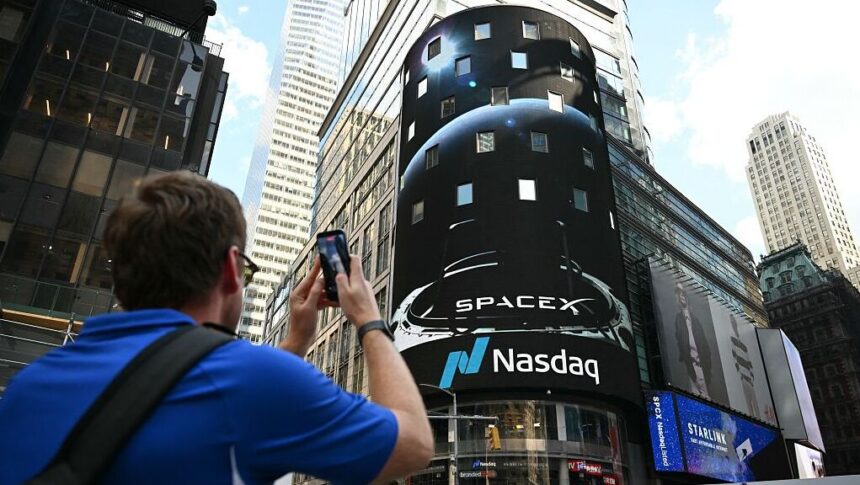
If global speculation, buzz and pent-up demand were fuel, the SpaceX IPO would have built up enough to blast a fleet of rockets to the moon.
Elon Musk’s private firm launched into the public sphere June 12 with a valuation of US$1.77 trillion (1). That’s more than 430 times what it cost to send the Artemis II crew to the moon for their lunar flyby.
Must Read
The buzz has been building for months, with institutional and retail investors worldwide lining up for this investment moonshot. Competition is fierce.
If you have SpaceX FOMO, you’re not alone. But it’s a good idea to pause before buying a stock because you fear missing out.
A new survey from Marketwise (2) reveals just how many Americans make investment decisions based on FOMO (fear of missing out) — and what emotional investing can cost you.
Investors regret trades based on FOMO and other emotions
This May, MarketWise surveyed 1,000 American retail investors about their trading habits and the role emotion plays in their decisions.
While only 20% of respondents described themselves as emotional investors, 48% admitted they’d made a FOMO-driven investment in the past 12 months, buying a stock, ETF or crypto at an all-time high.
A full 42% admitted that they’d lost money as a result, with an average loss of $1,606. This is the opposite of the “buy low, sell high (3)” mantra.
Meanwhile, one in four admitted that they panic-sold stock during a war, election or other geopolitical event — and lived to regret it a few weeks later when the market recovered.
More self-described emotional investors said they’d consulted AI on trading decisions, particularly when experiencing FOMO, seeking reassurance. Of those, 34% made money following AI’s advice while 12% lost money.
Are financial influencers better? Not for these investors. Of the 1,000 respondents, 52% said they’d followed a finfluencer, but of those, 34% lost money as a result; only 18% made money.
The findings also suggest that emotional investing is a generational thing, decreasing with age. Only 23% of boomers admitted to emotional trades, while 41% of Gen Z did so.
Emotional investors tend to prioritize different sources than self-described rational investors, with Reddit the top source for 42% of emotional investors and financial news outlets the top source for 46% of rational investors.