

At a glance
Expert’s Rating
Pros
- Top-quality bright display
- Great cameras
- Two-day battery life possible
- Seven years of Android updates
Cons
- Large and unwieldy
- Very expensive
- Tensor chip can’t run high end games
- HiLight is laughably useless
Our Verdict
The Pixel 11 Pro XL is a great phone in daily use, but one that is harder to recommend than previous models. It costs more, yet has less RAM than the previous generation, plus some headline Gemini Intelligence features are not available in the UK at launch. The Tensor G6 chip also cannot cope with some games. But the build quality is superb, the cameras are excellent, and the Android software is the best you can get – it just depends if you can live with the trade-offs and the cost.
Price When Reviewed
This value will show the geolocated pricing text for product undefined
Best Pricing Today
Price When Reviewed
From $1,299
Best Prices Today: Google Pixel 11 Pro XL

Google’s Pixel 11 series serves as a refined version of what the firm debuted with 2024’s Pixel 9. The largest non-folding model, the Pixel 11 Pro XL, is a well-built smartphone with great cameras, slick software and an excellent display, but at £1,279/$1,299, is a wallet-busting prospect.
That higher price is down to the global RAM crisis pushing up component prices, but nevertheless it means the 11 Pro XL is a tough sell in 2026, especially when you factor in the Tensor G6’s shortcomings and a lack of anything truly better than its predecessor.
But I still enjoyed using the 11 Pro XL for the last few weeks because of the overall product, which is very thoughtfully put together by Google. But you can also get the Pixel 11 for £879/$899, and there are fewer compromises than ever between that phone and the Pro versions this time around.
Design & Build
- Matte glass back and shiny sides, unless you get the black one
- HiLight light replaces temperature sensor
- Big and heavy
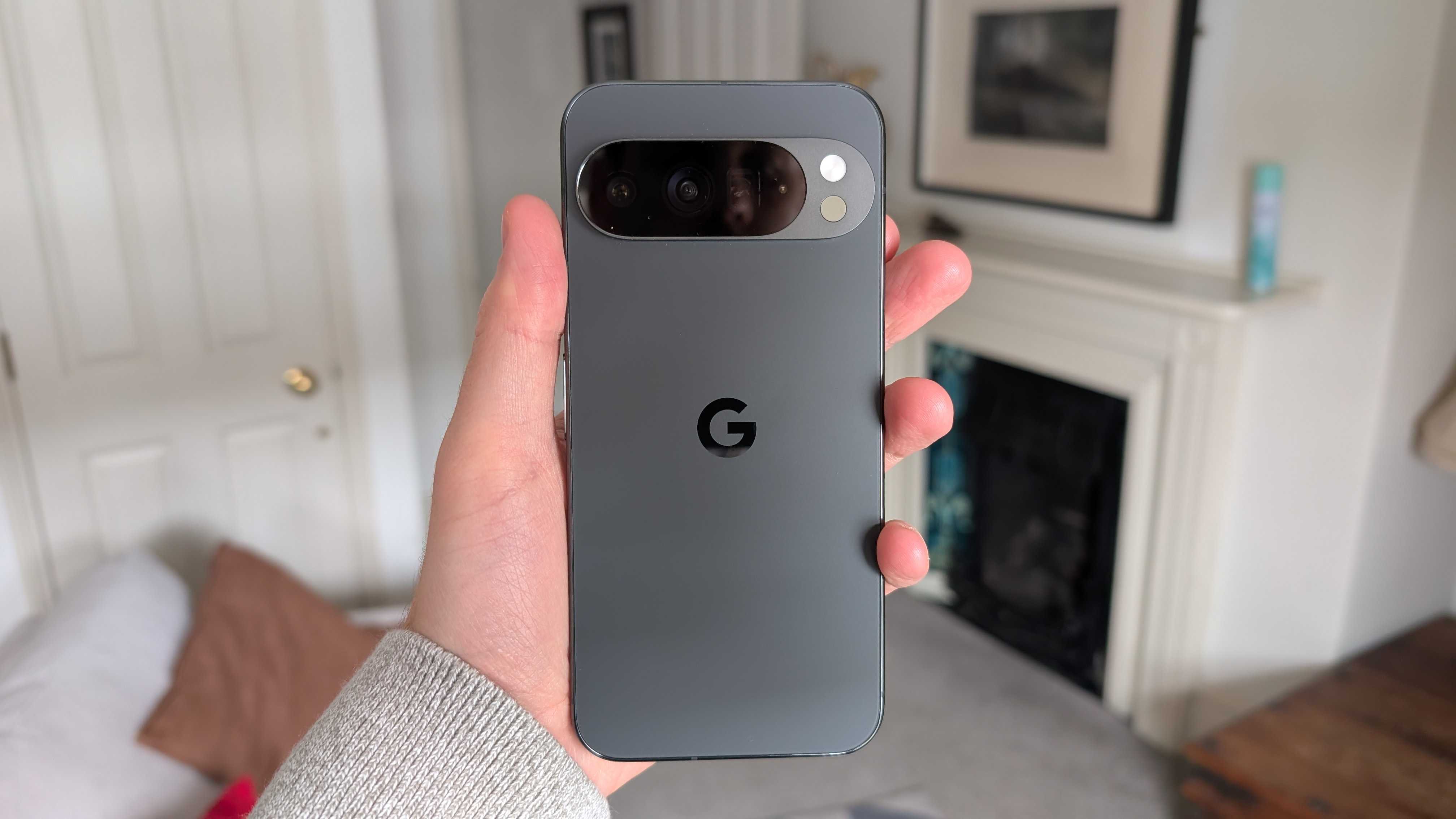
The Pixel 11 Pro XL’s main selling point is its big, beautiful display, and along with a bigger battery. Otherwise, the design is the same as the smaller 11 Pro, with attractive Canyon (pinkish), Olive and Fog (tested here) colours coming with matte glass backs to hide fingerprints, but gaudy glossy aluminium side rails that pick up grease in seconds.
Perhaps that’s why Google has made an all-matte Obsidian (black) model, so you should go for that one if you want to avoid wiping down your phone all the time – though chances are you’ll lob it in a case either way.

If you do, you’ll make this massive phone even chunkier. I normally rock a case on my phone, but I’ve been using the 11 Pro XL without one as it’s just so large and heavy at 226g. The trade-off is superb build quality and a device that feels just as premium as the iPhone 17 Pro Max and Samsung Galaxy S26 Ultra.
There’s IP68 dust and water resistance and a screen Google says is two times more scratch resistant than the 10 Pro’s, even though the spec sheet confirms it’s the same Gorilla Glass Victus 2.

Henry Burrell / Foundry
Around the back, the camera bar is thinner and completely covered in black glass, and the temperature sensor seen since 2022’s Pixel 8 Pro is gone in favour of a flash that doubles as HiLight, one of the 11 Pro XL’s key new features.
Unfortunately, it’s really not that interesting or useful. It’s a multi-coloured light that only works when the phone is face down (something I don’t tend to do without a case for fear of scratching the display) and swirls into colourful life when you say “Hey Google” and Gemini whirs into gear.
HiLight’s only other function is to light up when a chosen contact calls you. Set in the contacts app, you can assign one of five colours to a person. This is very limiting, and doesn’t even kick in when one of those contacts texts or messages in an app such as WhatsApp. It’s just phone calls.

Henry Burrell / Foundry
In some ways, I like how Google is sort of suggesting we use our phones too much, and we should put them face down and only be notified when an important person in your life is calling you, which as we all know these days, probably means it’s fairly urgent.
But if you wanted to eke more utility out of HiLight, at launch it’s less useful than the Glyph lights of various Nothing phones, and even the LED notification lights seen on older Android phones from a decade ago. Progress this is not and Google’s hasn’t promised much will be done to expand its functionality over time.
The phone’s haptics are excellent, from the pips you get when typing on the keyboard to the slow rumble when you hold down the home button or bar to bring up Circle to Search. Haptics are often overlooked on phones and can make expensive handsets feel cheap. That’s not the case here, so well done, Google.
As usual, the phone is IP68 dust- and water-resistant and feels very well made.
Screen & Speakers
- 6.8-inch 120Hz LTPO OLED
- Crystal clear and very bright
- Dual stereo speakers
The Pixel 11 Pro XL’s best feature is its screen, a beautiful 6.8-inch OLED panel you’re upgrading to by opting for it over the 6.3-inch version on the 11 Pro. It’s very bright, with up to 3600 nits possible, and I’ve never not been able to see what was on the display, even in very bright sunny conditions. In high brightness mode it hits 2400 nits, which is more than enough.
You get a 120Hz refresh rate with 1344 x 2992 resolution and LTPO tech, which means it can refresh at just 1Hz, such as when there is just text on the screen or when showing the nicely minimalist always-on display options. It saves battery, but can kick in at the top rate when necessary.

Henry Burrell / Foundry
It’s very well calibrated, with a vibrancy that doesn’t seem over-saturated like some rival phones’ displays can do. I kept the colour mode on ‘adaptive’, and there’s a ‘natural’ mode too, but you can’t adjust it other than that. Google also includes a Comfort View, which is like Apple’s True Tone and adjusts colour according to ambient light, while a Night Light setting cuts out blue light to help you doomscroll under the covers for longer (don’t do that!).
Dual stereo speakers are great for hands-free calls or video calls, and I found them bassy and full enough to listen to podcasts when working or cooking, but music sounds thin, as you’d expect from most phone speakers.
The ultrasonic fingerprint sensor is under the screen and very responsive, though you can also rely on the face unlock function built into the selfie camera. Google has also certified this for biometrics, unlike many Android rivals, so it also works like Apple’s FaceID in banking apps to confirm your identity and log in.
Specs & Performance
- Mostly solid performance
- Tensor G6 can’t handle high-end gaming
- Less RAM as standard than 10 Pro XL
Two things might irk anyone thinking of splashing out £1,279/$1,299 on the base 256GB Pixel 11 Pro XL: that it only has 12GB RAM compared to the equivalent (and cheaper) 10 Pro XL from 2025, and that the phone cannot cope with high-end mobile games such as Genshin Impact.
You have to spend £1,399/$1,419 on the 512GB 11 Pro XL (the one Google sent me for testing) to get 16GB RAM, and even this model could not play Genshin Impact without looking like this:

Henry Burrell / Foundry
It’s unacceptable in 2026 for a phone this expensive to fail in this way. Rival phones of the same price – and cheaper phones with mid-range Snapdragon chipsets – can play it. I also found sluggish performance and difficulty rendering Wuthering Waves and Call of Duty Mobile, though the latter was better.
I personally don’t play mobile games, so the Pixel’s deficiency here wouldn’t affect my daily use, but it’s still a big mark against the phone.
Gaming aside, the Pixel 11 Pro XL ran faultlessly in my testing. The Tensor chip is geared towards AI performance, and Gemini works very efficiently. Asking it to set tasks in Google Tasks, something I do often, is very quick, and the interface can keep up with voice or text prompts.
But the 11 Pro XL relies on being connected to mobile data or Wi-Fi for many of its AI tools, as much of the processing doesn’t happen on the device. Camera tools such as Magic Capture and Video Boost require the cloud, perhaps a reason why Google thinks it can get away with less RAM this year but it’s still a shame.
Pixel 11 Pro XL benchmarks
- Geekbench 6 single core: 1605
- Geekbench 6 multicore: 4766
- 3DMark Wildlife Extreme: 3409
- 3DMark Wildlife Extreme Stress Test: 76.9% stability
- Charging with Belkin 45W charger from 0% in 15 minutes: 21%
- Charging with Belkin 45W charger from 0% in 30 minutes: 37%
Cameras
- 50Mp f/1.7 main sensor
- 48Mp f/1.7 ultrawide
- 48Mp f/2.8 5x periscope telephoto
- 42Mp selfie camera
The bottom line when it comes to the Pixel 11 Pro XL’s cameras is that while they are excellent and versatile, they lag behind Chinese rivals. The Xiaomi 17 Ultra, Vivo X300 Ultra and Oppo Find X9 Ultra all offer superior results, and the Xiaomi and Oppo cost roughly the same as the Pixel. All have downsides elsewhere, of course.
But the Pixel is close behind, with a simpler shooting experience that better suits the average phone user with some more advanced new features under the surface. This includes Camera Looks, which offers several photo filters in styles such as Digi, which mimics old school digital cameras, Black Tie, which is just black and white, and Classic, which has a filmic feel.


The 50Mp main lens is upgraded over the 10 Pro, and produces crisp, contrasty shots that the Pixel has become known for. If anything, the shots are too sharp, taking away some realism, but overall I was pleased most of the time I tapped the shutter button, which is more than I can say for point-and-shoot photography on Samsung phones these days.
The Pixel copes very well with motion, making it a good choice for photos of wriggling pets and children, and the upgraded half-inch 5x periscope telephoto sensor makes this the best zoom yet on a Google phone. Shots are well-detailed, and if you’re standing far enough back, you can get excellent street photography and portrait shots.
I’m not a fan of SuperRes Zoom, a software feature that kicks in when you zoom in 30x or more and this year it can go to an insane 120x (previously 100x). It uses Google’s AI to make up details that the camera can’t see and make things look a little sharper. In worse cases, it creates images that were never there. Smartphone cameras should not be able to lie in this way – it’s a cynical feature.
Video quality is solid but still not on par with the smoothness and clarity you can get on the latest iPhones. In the default settings, sometimes video can look washed out, but for casual smartphone shots of kids, pets, holidays and gigs, it’ll do just fine. But again I return to the price tag of this phone, and ask whether that is really good enough. This ‘Pro’ Pixel certainly isn’t pro when it comes to video.
Battery Life & Charging
- One to two days of battery life
- 45W wired charging and 25W wireless
- Pixelsnap puts Samsung to shame
The 11 Pro XL has a 5115mAh battery, a number that suggests Google has crammed as much battery in as possible, but the firm is still using lithium ion rather than the newer, higher capacity Silicon-Carbon technology.
It means this phone easily has a day of battery life and can push to two with lighter use, but lags behind battery beasts such as the OnePlus 15 and Vivo X300 Ultra in this regard. Our usual PCMark benchmark for battery life failed on multiple goes, so you’ll have to take my word for it.
There’s no charger in the box, but in my testing using a 45W Belkin charger and cable, the phone charged to 37% in 30 minutes. Google says the phone can get to 75% in that time, but that will only be the case if you have the right fast charging tech (PPS in this case).

Henry Burrell / Foundry
Better is the Pixelsnap magnets integrated into the phone’s body, even though Google didn’t announce any new own-brand devices this year.
Along with the iPhone range, Google and Motorola are the only major phone makers doing this right now, meaning the Pixel 11 Pro XL works with a slew of Qi2 charging and MagSafe accessories, making wireless charging much easier. It’s also great for car mounts without needing to buy a case with circular magnets in it, which buyers of Samsung and all other Android brands currently have to settle for.
Wireless charging at 25W isn’t that zippy, but you’ll actually use it because of the magnets and its Qi2.2 for better alignment. Stick a magnetic charger somewhere in the house and it’s a great charging point without the mess of cables.
Software & Apps
- Seven years of updates
- Gemini, but not all of it
- Clean Android 17 at launch
I really like Google’s Android design. The firm has moved away from the ‘stock’ look of older Pixels and Nexus phones and has evolved into using a playful design with little bouncy animations that give using the phone a bit of character. Other Android skins are functional, but very serious. Google’s is friendly and pleasant to use.
Google has gone even further in on Gemini, its AI assistant that has now fully enveloped the older Google Assistant. Using your voice or typing, Gemini can do something as basic as set a reminder or an alarm, right up to doing a deep web search or giving you advice on how to fix the leak in your sink.

Henry Burrell / Foundry
Gemini Intelligence is Google’s latest branding of phone-based AI, but I was unable to test most of the features as they are not available in the UK at launch. Proactive Assistance is a new tool that can collate what’s on your screen with other data like your location to give suggestions on actions throughout the UI, like in the At a Glance widget on the home screen or in suggested words in chat apps.
I cannot tell you if this is useful or if it works as advertised. One cool new tool I could test is called Rambler, which is an improved voice-to-text model. It is so much better than Google’s older voice-to-text system, and wipes the floor with the iPhone’s. The perk here is Rambler allows you to ramble, hence the name, and will take out all your pauses and uhms and ahhs, and will even understand to remove what you ask it to without transcribing the whole thing.
As an example, I can send my spouse a shopping list by dictating a message, but if I listed juice then later said, “actually, we have juice, remove juice”, it’ll edit the original list but not include those words. It’s very clever and works pretty much perfectly in my testing.

Henry Burrell / Foundry
The Pixel 11 Pro XL also has AirDrop compatibility without having to install any app, so you can natively share photos and files with Apple devices, a great feature if you want to use a Mac or if your friends and family all have iPhones. It’s also available on some of the latest Samsung Galaxy phones.
Other AI tools such as video creation and daily briefs require a pricey Google Gemini subscription, but nifty things such as Rambler don’t. Gemini is quite annoying a lot of the time, but I also found if I wanted to ignore it on the Pixel, it mostly stayed out of my way.
Google says it will support the Pixel 11 Pro XL with seven years of Android updates to Android 24, and security patches for the same length of time to 2033. That’s class-leading longevity, matching Samsung, but you’ll probably have to get a battery replacement at some stage if you want to make this phone last that long.
Price & Availability
The Google Pixel 11 Pro XL costs from £1,279/$1,299 for 256GB storage and 12GB RAM. That goes up to £1,399/$1,419 for 512GB/16GB, while a £1,629/$1,649 1TB/16GB version is available but only in the Obsidian colour.
Samsung charges the same £1,279/$1,299 for the Galaxy S26 Ultra with the same 12/256GB configuration, but Google charged less for 16/256GB in 2025 on the Pixel 10 Pro XL.
Apple’s iPhone 17 Pro Max costs from £1,199/$1,199 with 256GB storage, and other high-end Android phones such as the Xiaomi 17 Ultra cost £1,299 too. But to me, Google’s main competitor here is itself. The regular Pixel 11, while not exactly cheap, offers triple cameras and a very similar design, with practically identical software experience, for £899/$899 and the same 12/256GB setup.
Check out our top 10 best phones to see the official rankings.
Should you buy the Google Pixel 11 Pro XL?
The Pixel 11 Pro XL is a luxury phone purchase, both because it is very expensive and because it feels like the ultimate smartphone summation of what Google has been pushing for since the Pixel 6 Pro in 2021. The camera bar design is truly at its maturity, and though HiLight is a miss, the cameras themselves are excellent, attached to a large phone with a wonderful display and the best battery life on a Pixel ever.
But gamers need not apply, as the Tensor G6 chipset can’t handle popular demanding titles. Instead, this is a phone geared towards everyday use and AI tools, from the handy Rambler voice-to-text feature all the way up to image generation and Gemini Intelligence, which doesn’t work in the UK for now.
Premium build and great-looking Android software are all present and correct, and the Pixel feels more polished and refined than ever. But when you’re being asked to shell out nearly £1,300/$1,300 on a phone, it doesn’t feel right that it can’t handle demanding mobile games or that it has less RAM than the previous generation.
Don’t get me wrong, I still loved using the Pixel 11 Pro XL and any non-gaming Android fans who buy it will likely love the software and cameras. But Google has gone all in on AI software, and at this price, you should also get hardware that is just as capable as the Pixel’s main premium rivals.
Specs
- Android 17
- 6.8-inch, 1344 x2992, OLED, 120Hz
- Under screen ultrasonic fingerprint sensor
- Tensor G6
- 12GB / 16GB RAM
- 256GB / 512GB / 1TB storage
- Camera:
- 50Mp main sensor
- 48Mp ultrawide
- 48Mp 5x telephoto
- 42Mp selfie camera
- Up to 8K @ 30fps rear video
- Stereo speakers
- Single SIM + eSIM
- Wi-Fi 802.11 a/b/g/n/ac/6e/7
- Bluetooth 6.0
- 5115mAh battery
- 45W wired charging
- 25W wireless charging
- 162.7 x 76.5 x 8.5 mm
- IP68 certified
- 226g
- Colours: Olive, Obsidian, Canyon, Fog