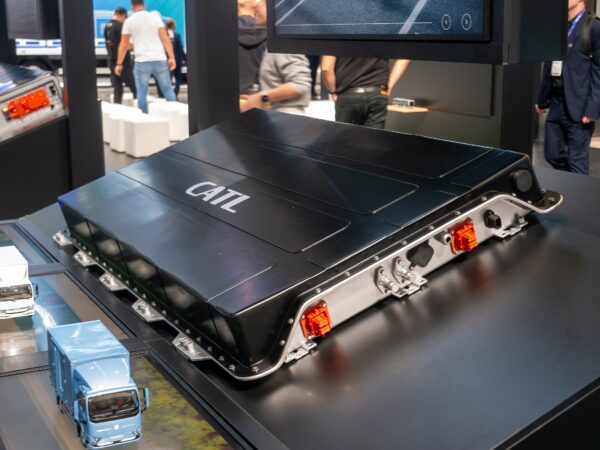
When Western policymakers discuss China’s dominance in electric vehicle batteries, the focus typically falls on Beijing: its industrial policy, state subsidies, and national strategic planning. Yet this emphasis obscures the role of local governments in cultivating industrial ecosystems and the symbiotic relationship between development zones and globally competitive firms.
Few cases illustrate this dynamic better than Ningde’s Dongqiao Economic and Technological Development Zone. Fujian’s local authorities helped create an attractive environment for CATL to establish and expand its operations in Ningde. As CATL grew into the world’s leading EV battery manufacturer, its presence in turn attracted suppliers, research institutions, skilled labor, and supporting industries to Dongqiao, transforming the zone into one of the world’s most significant battery clusters.
This was not a one-way relationship: Dongqiao enabled CATL’s rise, while CATL elevated Dongqiao into a globally competitive manufacturing hub.
Understanding this relationship is essential for explaining CATL’s competitiveness. The company’s success cannot be reduced to subsidies alone. Rather, it reflects the advantages of industrial agglomeration, local state capacity, and sustained technological innovation. Research on industrial clusters has long shown that firms embedded in dense networks of suppliers, talent, and knowledge institutions gain productivity and innovation advantages that are difficult to replicate elsewhere. Ningde’s battery ecosystem suggests that China’s industrial strength may be rooted not only in national policy, but also in the local institutions and regional clusters that translate policy into competitive advantage.
The Local Roots of National Champions
China’s economic development zones (EDZs) have served as deliberate instruments for cultivating industrial champions at both the national and provincial level. Operating across multiple tiers of government, these zones offer preferential land, tax incentives, and streamlined approvals to attract and retain strategically targeted firms.
The establishment of EDZs often generates significant positive effects on capital investment, employment, output, productivity, and wages, with gains driven primarily by new firm entry and the agglomeration economies that form as co-located businesses share suppliers, labor markets, and knowledge networks. Capital-intensive industries, such as battery manufacturing, benefit disproportionately. Additionally, EDZ designation tends to boost county-level patent activity by 15–25 percent, pointing to a direct link between zone status and technological upgrading.
Dongqiao illustrates these dynamics. CATL was founded in the zone in 2011, and Fujian’s provincial and local authorities actively expanded the surrounding supply chain by attracting investments in cathode and anode materials, separators, electrolytes, and intelligent manufacturing equipment. By the end of 2025, more than 90 upstream and downstream companies had clustered in Ningde, enabling vertically integrated production from raw materials through finished battery systems.
CATL’s Dongqiao-based production bases alone reached 330 GWh of capacity, with a further 170 GWh under construction. Ningde’s lithium battery cluster has since been designated a national advanced manufacturing cluster, a recognition that reflects not just CATL’s scale, but the depth of the industrial ecosystem that Dongqiao helped seed.
From National Champion to Global Leader
Ningde entered the 2000s among the poorest cities on China’s southeastern coast. Like every poor Chinese city in the 2000s, Ningde officials were trying to hit investment attraction targets by leveraging whatever channels were available. In 2004, Ningde officials identified Zeng Yuqun, a Ningde native and ATL co-founder running one of the world’s largest consumer electronics battery businesses, as a recruitment target. Officials pursued him for four years before preferential land terms, tax incentives, labor recruitment assistance, and the completion of new rail and road links finally secured his commitment to invest in a single factory in 2008.
In 2011, Zeng founded CATL after acquiring 85 percent of ATL’s EV battery division. Meanwhile, the central government’s 2015 battery whitelist, which restricted new energy vehicle purchasing subsidies to domestically produced batteries, excluded foreign competitors from subsidy eligibility. That created a protected domestic market that CATL, having already invested heavily in manufacturing capacity, was well positioned to exploit. In the years that followed, Ningde officials actively recruited upstream suppliers to co-locate around CATL, building out the local supply chain that would become one of the cluster’s defining advantages.
Yet the local government’s active efforts to establish CATL’s supply chain in Dongqiao and the central government’s market-shaping strategies alone did not propel CATL to become the global leader in EV batteries. Many Chinese battery manufacturers, such as CALB, EVE Energy, and Gotion, operated in nearly identical policy environments, yet none have approached CATL’s scale.
What set CATL apart was its commitment to climbing the technological value chain through increasingly substantial research investment. The firm progressed from assembling EV battery cells, using tacit knowledge drawn from consumer electronics manufacturing, to developing its own cell chemistry, to unveiling a cell-to-pack architecture that eliminated an entire layer of design in 2019. From 2018 to 2025, CATL’s total research expenditure grew from 1.91 billion yuan to 22.1 billion yuan, remaining between 4.6 percent and 7.1 percent of revenue even as the company grew fourteenfold.
CATL first claimed the top position in global EV battery market share in 2017, but most of its revenue came from the domestic Chinese market. In 2019, the battery whitelist was removed, and subsidies were gradually phased out by 2022. To cope with the loss of subsidy revenue, CATL lowered prices to increase consumer demand, a move made possible by its supply chain depth and manufacturing scale.
Thereafter, the Chinese EV market exploded in scale, and CATL’s revenue skyrocketed from 45.8 billion yuan in 2019 to 328.6 billion yuan in 2022. As a result, CATL has begun to form deep ties with automakers around the globe like BMW, Tesla, Volkswagen, and Mercedes-Benz, and to expand production abroad, with factories in Hungary and Germany.
Today, the company Ningde officials once brought home to meet investment targets has become deeply embedded in the global EV industry. What began as a product of Chinese industrial policy is now an indispensable part of global supply chains.
Conclusion
CATL’s rise is, in part, a Beijing story: national subsidies and a protected domestic market gave the company room to grow. But it is just as much a Ningde story. Local officials spent four years courting a hometown entrepreneur, then spent years more building the roads, land deals, and supplier networks that turned a single factory into a self-reinforcing cluster.
CATL, in turn, transformed Dongqiao from a coastal backwater into one of the world’s most important battery hubs, attracting the talent and capital that now anchor the region’s economy. Neither side could have produced this outcome alone, and national policy alone certainly could not have, given how many similarly subsidized competitors never scaled.
For policymakers in Washington and Brussels, the lesson is that competing with China’s industrial strength requires understanding it accurately, as a layered system in which provincial and municipal governments do as much work as Beijing, and where firms still must out-innovate their domestic rivals to win. Industrial policy debates that focus only on national subsidies, while ignoring the local institutions that translate policy into competitive advantage, will misread both the challenge and the response it demands.