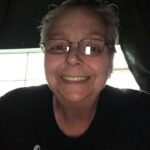
Nothing prepares you for the moment you’re told you have cancer.
But I’ll go one further. Nothing prepares you for telling other people that you have cancer.
I warned my wife, while getting in a cab after leaving a midtown Manhattan hospital post-colonoscopy, that what I was about to tell her was “not great.” The king of understatement, maybe. The newspaper reports taught me I was supposed to be “devastated.” I just had no idea what was going on. It felt numb.
The “not great” news came in August 2023 — colon cancer. I was 44 and in pretty good health. I went to the gym regularly and ran marathons. (OK, one marathon.) My diet was pretty good. My only symptom was blood in my stool. Easily ignored. But I’ll be forever glad I paid enough attention to get it looked at.
There was some good news. I could do something about it. I’m not going to say I caught it “early.” That’s the word every cancer patient wants to hear. But “early enough” is good, too.
There was a six-hour surgery, the first I’d ever had in my life. Then, 12 rounds of chemotherapy lasting six months. Oxaliplatin, a brutal yet effective chemo drug, will knock you on your ass, make no mistake. And then, just when I thought there was plain sailing ahead, another surgery on my liver.
I’m in a good place today. For more than a year, there’s been “no evidence of disease.” Numbness did give way to anger. But right now I just feel very, very lucky.
This wasn’t supposed to happen to someone like me. This was something that affected “old people,” I thought. The average age for a colon cancer diagnosis in men is 66. Sure, in social media terms, at 44, all I’m good for is peddling testosterone replacement therapy. But in the real world, that’s young.
And my story is far from unique.
In young people, the incidence of colorectal cancer, which is what colon cancer is grouped within, is rising. Generation Z, millennials and Generation X are more likely to develop it during their 30s and 40s than earlier generations, which is worrying enough.
But it comes at a time when cancer experts are alarmed by historically significant cuts in federal budgets, largely driven by the Trump administration’s crackdown on “woke” (The New York Times wrote in September, “Trump Is Shutting Down the War on Cancer”), and Health Secretary Robert F. Kennedy Jr.’s anti-science beliefs jeopardizing breakthroughs.
If you speak to doctors, patients, survivors, and pretty much anyone involved in the field, they’re nervous.
Illustration: JS; Photo: Graeme Demianyk
The person getting colorectal cancer, according to Dr. John Marshall, clinical director of oncology for Georgetown University Hospital and chief medical consultant at the nonprofit Colorectal Cancer Alliance, is someone “who’s trying not to get cancer.”
Marshall is based in Washington, D.C., which is “a young city to begin with,” and populated by “people who are very aware, and very educated, and this is a lot of who we’re seeing.”
“No family history. They’re in their 30s and 40s, they are sensitive to their symptoms…so they’re fit,” he told JS. “They frequently are exercisers. They’re frequently aware of their diets and what they’re eating, and exposure to things.”
Colorectal cancer really is trending younger. The phrase you often hear is “young onset.” High-profile examples include “Dawson’s Creek” actor James Van Der Beek, who was diagnosed with colorectal cancer at the age of 47. “Black Panther” star Chadwick Boseman was diagnosed with colorectal cancer in 2016. He died of the disease four years later at age 43.
While the death rate from colorectal cancer has, for decades, been falling in older adults, deaths have been increasing among young people since the mid-2000s. In 1995, 11% of cases occurred in people 54 years or younger. By 2019, that had grown to 20%. Cases of colon cancer among Americans ages 20 to 34 are projected to increase by 90% by 2030.
The trend is why guidelines now suggest people begin screening for colorectal cancer – usually a colonoscopy or stool test – soon after turning 45, not 50. (Author’s plea: if you are in your mid-40s and haven’t been screened, please figure it out now with your primary care physician.)
Experts say the surge in colorectal cancer could have something to do with changes in people’s gut bacteria, which can be affected by a bunch of things: diet, antibiotic use, microplastics and exposure to environmental chemicals.
I’d like to know; of course I would. Too many Pop-Tarts as a kid? Overindulging at college? A steak too many while training for that one marathon?
“To be honest, we all don’t know,” Marshall said.
And yet, despite the trend, treatments are largely not moving on. Twentysomethings are getting the same care as men and women in their 60s did 25 years ago. Other cancers are streets ahead in terms of treatments. Breast cancer now has far higher cure rates as a result. Colorectal cancer is frozen in time.
“Part of the reason why I’m still giving the same post-operative treatment in colon cancer that I have been giving for 20 years – and that may be the only cancer where that’s true – is that the pharmaceutical industry sees risk,” Marshall said.
This is where the federal government steps in, funding the research that the pharmaceutical industry can’t imagine will yield a profit. Or at least it should.
Between the end of February and mid-August, funding ceased for 383 studies by the National Institutes of Health (NIH), the nation’s primary medical research agency. More than 100 of the canceled grants were for cancer research. Sen. Bernie Sanders (I-Vt.), ranking member of the Senate Health Committee, has said the “war on science is an attack against anyone who has ever loved someone with cancer.”
While Congress has pushed back, the Trump administration wants to shrink the agency’s yet-to-be-approved budget by $18 billion, or nearly 40%.
Cancer campaigners argue that federal government funding is crucial. The American Cancer Society notes that federally funded research is one reason the cancer death rate has dropped 34% since the early 1990s.
For its part, the White House has criticized the NIH for “wasteful spending, misleading information, risky research, and the promotion of dangerous ideologies that undermine public health.”
Marshall said some of the most important discoveries, like immunotherapy, emerged from federally funded science that “then gets taken up by industry to monetize it.”
He added, “The investment in federally funded research has been an incredible engine of innovation over the decades. So the threat is all around us that we will come to a screeching halt.”
It couldn’t come at a worse time, especially since clinicians and researchers are excited about emerging treatments for colorectal cancer. In any case, federal government backing gives cancer patients and survivors something you’d struggle to put a monetary value on: hope. All of us want to beat this disease and thrive.

Illustration: JS; Photo: Diana Zepeda
What people don’t really know about cancer is how lonely it is. There’s the heavy lifting of treatment, but you also feel like people are worried about being awkward in your presence and saying a clumsy thing. I think it’s part of the reason why I looked for humor in this terrible business.
“This terrible business” is the phrase I used to describe my cancer, in a mock Victorian English accent, because it sounds like a euphemism Winston Churchill would use (I was reading a biography of the wartime British leader when in treatment). I know no one else is laughing. Maybe other Cancer Guys. But it’s also just a way to say, “It’s OK. You can be normal with us.”
When I spoke to Diana Zepeda, I felt she understood this gallows humor. Diana, a finance professional from Washington, D.C., was 33 when she was “frozen with terror” by her colorectal cancer diagnosis eight years ago. Chemotherapy, surgeries and radiation followed. It’s been a rough, serious journey. But one of the first things she made clear to me is not to take what she says too seriously.
“I’m very much not a media-trained or polished person, and I joke around a lot,” she said. Diana recounts how she’d mentioned in an interview that she thought her early symptoms – largely stomach cramps – were just because she was eating lunch regularly from a food truck.
“The headline, everywhere, was ‘Woman Blames Her Cancer On Food Trucks,’” she said. “I was mortified.”
For Diana, science can’t wait.
“I was 33, and I’m 41 now,” she said. “I don’t think I really expected to get to my 40s, and I’m living long enough where I get to confuse, ‘oh, is this due to chemo, or is it I’m just aging now?’ So I feel like if I could just hold on long enough – two, five more years – I can just live long enough to see the cure.”
She recognizes she’s benefited from previous advances, especially as a woman and person of color.
“Any other time in history, there’s no way I’d have survived. It’s the only time in history where I’m still alive. Right now. I’ll take it,” she said.

Illustration: JS; Photo: Liz Healy
Liz Healy, of New York, was 45 when she was diagnosed with colorectal cancer and kidney cancer in 2022. A mother, grandmother and an executive at firms including IBM and Deloitte, she had no symptoms beyond more bloating and gas than normal. While on vacation with her family in Vermont, she got hit by an out-of-control skier and broke her tailbone. Scans discovered the cancers and that they had spread throughout her body.
“My life changed in a heartbeat,” she said, detailing the surgeries, multiple rounds of chemotherapy and clinical trials that have left her body “beat up in so many more ways than I ever imagined.” I spoke to her just after she took part in her fourth New York City Marathon. She didn’t make it past mile 12 as her leg gave out. The cancer had metastasised to her femur.
In February, Liz participated in an immunotherapy clinical trial in Boston, hoping it would end “just playing Whack-a-Mole” with more surgery and chemotherapy. The trial didn’t work for her, but the prospect of new treatments and the federal government funding science helps keep her going.
“You feel seen. That my life matters,” she said of taxpayer support for cancer research. “I love this country, and the fact that federal funding is being spent on something that could potentially save my life and allow more time with my child… you feel like someone gives a shit about me.”

Illustration: JS; Photo: Jessica Acosta
My treatments were fairly traditional: surgery and chemotherapy. But even the old-school approach was elevated by occasional advances.
The tumor in my liver was zapped by “ablation,” a technique that’s only been in use since the 2000s that deploys focused radiation to burn the thing out. It’s much less invasive.
Every three months, I take a circulating tumor DNA (ctDNA) test that checks whether any fragments of a tumor are bouncing around my bloodstream. That was only available around a year before I was diagnosed, and it spotted the liver tumor recurrence before the scans.
But others have borne witness to treatments that approach the miraculous.
Jessica Acosta, a writer from San Diego, was 29 when she was diagnosed with colorectal cancer. At first, her symptoms – constipation, blood in her stool – were written off as irritable bowel syndrome. But Jessica had been diagnosed with Lynch syndrome, a genetic condition that increases the risk of cancer. So she pushed hard for a colonoscopy. It found a 6-centimeter mass.
“I wasn’t even 30. I was 29,” Jessica said. “I had just started figuring out a career. My wife and I were recently new to San Diego. We were finally finding our footing in our community, and then all of a sudden it was… nope.”
The diagnosis sent her on a remarkable journey. Because of the Lynch syndrome, Jessica’s type of tumor meant immunotherapy was an appropriate treatment. Her oncologist told her about the treatment that revs up the immune system to attack the cancer. “Up until this point in my life, I’ve never heard that word before,” she says.
On the other side of the country, a clinical trial at New York City’s Memorial Sloan Kettering Cancer Center had delivered extraordinary results: all the participants saw their tumors disappear. A treatment that doesn’t involve surgery, or chemotherapy, and has a 100% success rate is something you want to be involved with. There was one catch: Jessica was around 2,400 miles away.
To overcome the geographical hurdle, her oncologist in California followed the Sloan Kettering trial despite never having administered the particular drug before. “I was ready to say yes if she said an 80% success rate,” Jessica said.
The treatment delivered results. After just three months of infusions, halfway through the course, the tumor was gone, literally flushed down the toilet. “I ended up passing the mass in the bathroom,” she explained. “We were all in shock, my entire care team, my wife and I were… how?”
The form of immunotherapy, which received the Food and Drug Administration’s approval in December 2024, would not have been available to Jessica if she had been diagnosed a year earlier. “It’s incredible to see how much science can happen in such a short period of time,” she said. “Do I wish that it never happened? Yeah, absolutely. Am I grateful for the timing of it all? Absolutely.”
Jessica has since campaigned on Capitol Hill, fighting the cuts to federal funding that put potential life-saving treatments at risk, using her story to illustrate how cancer research can literally save lives. “Look at me,” she said.

Illustration: JS; Photo: Marissa Lio
Micah Lio, a pharmaceutical salesman from Cleveland, was 29 when he was diagnosed with colorectal cancer in 2021. He died last year at age 33.
I became aware of Micah’s story when his wife, Marissa, spoke movingly at a town hall event for the Colorectal Cancer Alliance in November this year. The nonprofit launched Project Cure CRC, a push to raise private funding from foundations, philanthropists and anyone else to offset the federal cuts. In the next few years, it will invest millions of dollars in research.
Marissa described Micah as “truly larger than life … six foot eight, a former college football player, but somehow his spirit was even bigger.” He began experiencing stomach issues and fatigue while training for a half-marathon in Baltimore, where they were living at the time.
She said she thought it was just the training and the commute to work in Washington, D.C., that was taking its toll. But after finally getting a referral for a colonoscopy, doctors confirmed the colorectal cancer. It had metastasized to his liver and lungs.
They got married shortly after his diagnosis. “His strength carried our wedding day forward, and that day remains a perfect memory in my mind,” she said at the Colorectal Cancer Alliance event.
His illnesses spread further. Micah’s treatments included brain surgery, pelvic radiation and seemingly endless rounds of chemotherapy. They were always told that if a new treatment wasn’t developed, they would eventually run out of options.
“I’m devastated, and I’m angry,” Marissa said. “My husband was young and healthy and full of life. He had so much left to give, but science didn’t move fast enough for him.”
She added, “There are other Micahs out there right now, and they deserve more time.”

Illustration: JS; Photo: Marissa Lio
I think most people fighting cancer would push back at being called “brave.” I have. But I’d use any credit I have in my so-called “Bank of Cancer” to say how remarkable and heroic I think everyone who shared their story with me is. But bravery won’t cure cancer. It’s science that will deliver the life-saving treatments that are just around the corner. And I believe we all need to think hard about whether we want to put that at risk.