As Spirit Airlines goes dark, airfares climb and the global jet fuel crisis reshapes summer travel, millions of Americans have quietly arrived at the same conclusion: skip the airport entirely.
AAA projects that 21.7 million Americans will take a cruise in 2026 — a 53% jump over pre-pandemic 2019 levels and the highest figure ever recorded in the history of the US cruise industry. The number represents a fundamental shift in how Americans think about vacations, driven not just by wanderlust but by a cold-eyed comparison of what travel actually costs right now.
Why Cruises Are Winning in 2026
The economics are impossible to ignore. The average domestic US airfare has climbed to $465 — and that is before checked bag fees, seat selection charges and the fuel surcharges that airlines are now openly adding to tickets. Spirit Airlines, which provided the only sub-$100 fare option on dozens of US routes, ceased operations entirely on May 2. Budget airline trade groups are already lobbying Congress for a $2.5 billion bailout to prevent further collapses.
Against that backdrop, a seven-night Caribbean cruise — covering accommodation, meals, entertainment and transportation between ports — can still be booked from $599 per person. The all-in nature of cruise pricing has become its single most powerful selling point in 2026. There are no bag fees, no seat upgrades, no fuel surcharges tacked on at checkout.
“Consumers are becoming much more sophisticated about the true cost of travel,” said Stacy Lastoe, senior travel analyst at AAA. “When people actually sit down and compare a cruise to a comparable hotel-and-flight package, the cruise wins on value almost every time.”
A New Generation of Ships

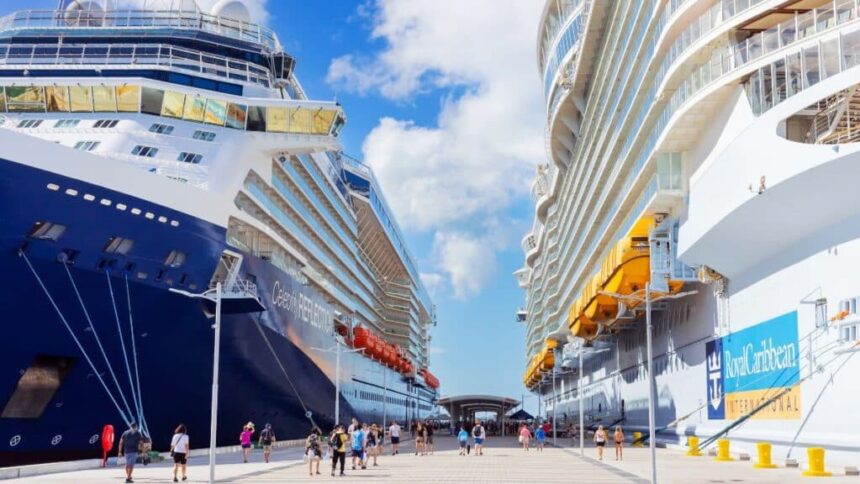
The timing of the demand surge coincides with what the industry is calling its most ambitious fleet expansion in decades. Royal Caribbean’s Icon of the Seas — launched in 2024 and immediately the world’s largest cruise ship — has driven record interest from travelers who had never previously considered cruising. MSC Cruises opened a permanent homeport in La Romana, Dominican Republic in 2026. Norwegian Cruise Line debuted two new vessels purpose-built for Alaska and Mediterranean itineraries.
The new generation of ships bears almost no resemblance to the cruise experience of a decade ago. Category offerings now include adults-only rooftop retreats, celebrity chef restaurants, surf simulators, thermal spa complexes and interior cabins designed with floor-to-ceiling LED “virtual ocean view” screens. Premium cabin categories on the newest ships rival five-star boutique hotels at a fraction of the equivalent land cost.
The Routes Driving Growth
Caribbean itineraries remain the most booked, accounting for roughly 35% of all US cruise departures. But the fastest growth is coming from less traditional routes.
Alaska sailings are up 28% year over year as travelers seek dramatic scenery without the complexity of international flights. Mediterranean cruises — which allow passengers to visit Rome, Barcelona, Athens and Santorini in a single trip — are drawing travelers who might otherwise have booked a European flight itinerary now complicated by the fuel crisis and ongoing strikes. Short Bahamas and Mexico runs departing from Florida and Texas ports are attracting first-time cruisers making a low-commitment entry into the category.
What to Watch
The industry’s primary challenge heading into summer is port congestion. Several Caribbean destinations — including Nassau, St. Maarten and Cozumel — are managing record passenger volumes, and overtourism pressure is growing at the most popular stops. A handful of ports have already introduced per-passenger arrival caps for 2026 and 2027.
For now, though, the data tells a simple story. In a year defined by aviation chaos, the cruise industry is having the best twelve months in its history.
Sources: AAA 2026 Cruise Outlook Report · CBS News, “What does Spirit Airlines’ shutdown mean for travelers?” May 5, 2026