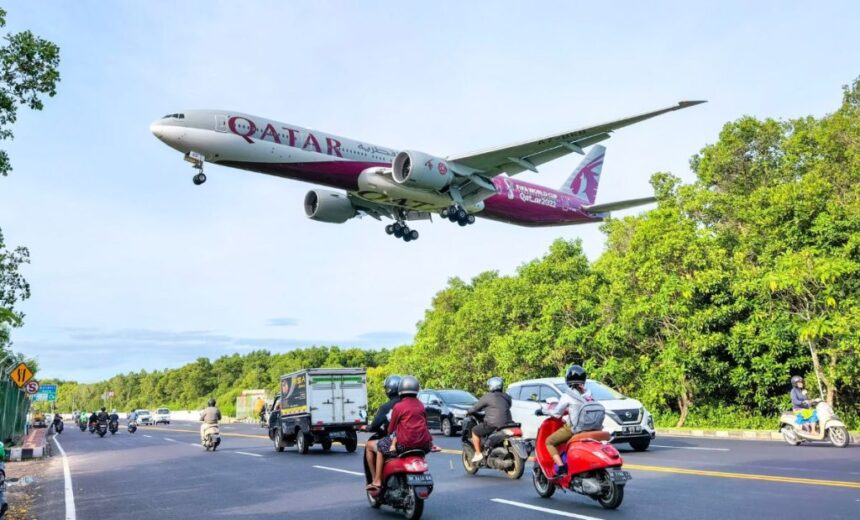
Qatar Airways is accelerating efforts to rebuild its global network, targeting over 120 destinations by mid-May 2026 as it navigates ongoing regional instability.
The airline’s recovery plan comes amid continued operational challenges linked to the Middle East conflict, which has significantly disrupted air travel across the region.
Gradual Recovery Amid Regional Conflict
The Doha-based carrier, Qatar Airways, confirmed that all flights to and from its hub at Hamad International Airport are continuing to operate through specially designated flight corridors. These routes have been coordinated with the Qatar Civil Aviation Authority to maintain safe operations during the ongoing Iran-related conflict.
The airline had previously served around 170 destinations worldwide before the conflict erupted roughly a month ago. The revised schedule, while a significant step toward recovery, still reflects a reduced global footprint.
According to reporting from Travel Weekly, the airline is cautiously rebuilding capacity while monitoring geopolitical developments that could affect airspace availability and flight safety.
Expanded Network to Include Key International Routes
The updated schedule, which is currently planned through June 15, includes several major European gateways. Among the destinations confirmed are:
- London Heathrow
- London Gatwick
- Manchester
- Birmingham
- Edinburgh
- Dublin
These routes highlight the airline’s focus on restoring connectivity between the Middle East and key transatlantic and European markets. Industry analysts note that maintaining links to major aviation hubs is critical for sustaining global passenger flows and cargo operations.
In addition to Europe, Qatar Airways is expected to progressively reinstate routes across Asia, Africa, and the Americas, depending on operational feasibility and demand recovery.
Operational Uncertainty Remains
Despite the planned expansion, the airline has emphasized that schedules remain highly dynamic. Flights may still be subject to last-minute changes or cancellations due to operational, regulatory, or safety constraints.
In an official statement, the airline said: “Passengers are kindly asked not to arrive at their departure airport unless they hold a valid, confirmed ticket for travel.”
The statement continued with a direct acknowledgment of the challenges passengers are facing: “We deeply apologise for any inconvenience caused during this period of disruption and thank our passengers for their patience and understanding.”
The airline reiterated that passenger and crew safety remains its highest priority, a stance echoed across the aviation industry as carriers adapt to rapidly changing geopolitical risks.
Broader Impact on Global Aviation

The disruption affecting Qatar Airways is part of a wider aviation impact stemming from the Middle East conflict. Airspace closures, rerouted flights, and increased fuel costs have affected multiple international carriers.
Organizations such as the International Air Transport Association (IATA) have warned that prolonged instability in key air corridors can lead to reduced capacity, higher fares, and longer travel times globally.
Airlines operating in and around the Gulf region have had to redesign flight paths, often adding hours to journey times and increasing operational complexity. This has also placed pressure on airline scheduling systems and airport operations.
Outlook for Qatar Airways
Looking ahead, Qatar Airways’ ability to restore its full 170-destination network will depend largely on geopolitical developments and the reopening of restricted airspace.
The airline’s mid-May target of 120 destinations represents a significant milestone in its recovery strategy, signaling cautious optimism within the sector.
However, industry observers suggest that full normalization could take several months, particularly if regional tensions persist.
For now, Qatar Airways continues to balance operational resilience with safety considerations, aiming to gradually rebuild one of the world’s most extensive global route networks while maintaining passenger confidence.