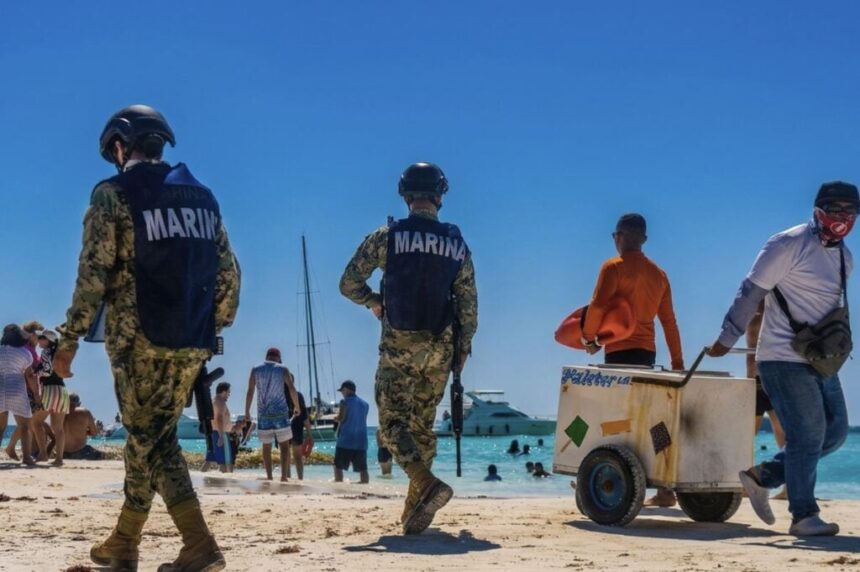
Easter in the Mexican Caribbean brings packed resorts, massive beach parties, and peak-season crowds. With an estimated 1.2 million travelers touching down this month for Holy Week, Quintana Roo is taking zero chances with traveler safety.
Starting March 27, the state is rolling out a massive security shield. Over 7,000 military personnel, federal agents, and local police are actively deploying across Cancun, Tulum, and Playa del Carmen.
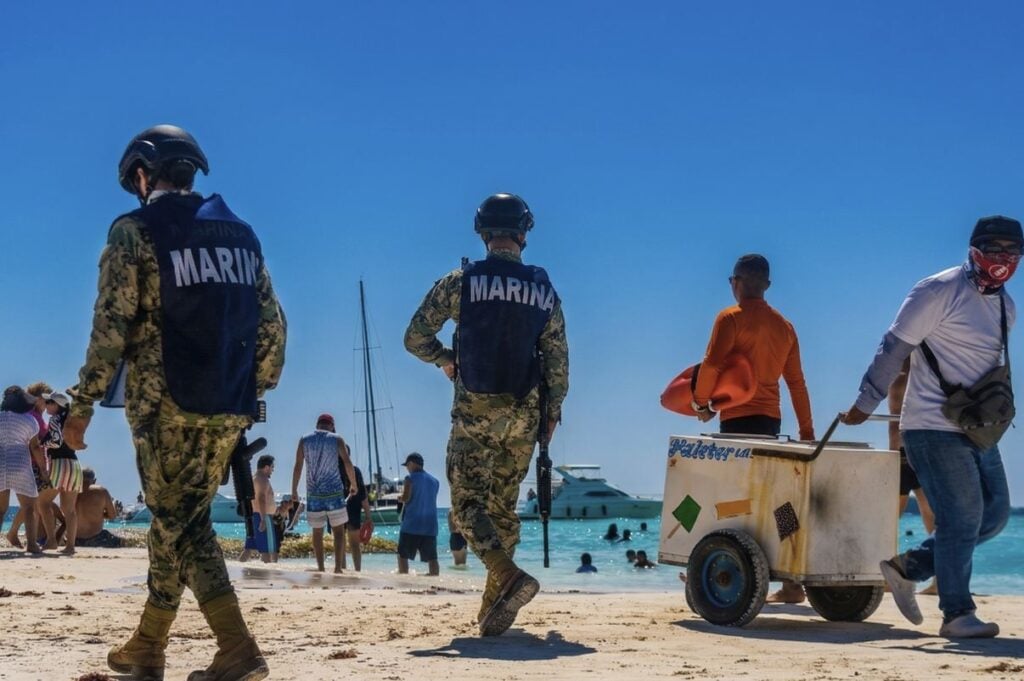
If you are flying down for a spring getaway, the heavy presence of armed forces might catch you off guard. Here is the ground truth on what this deployment actually looks like and how it impacts your vacation.
The Beach Patrol Culture Shock
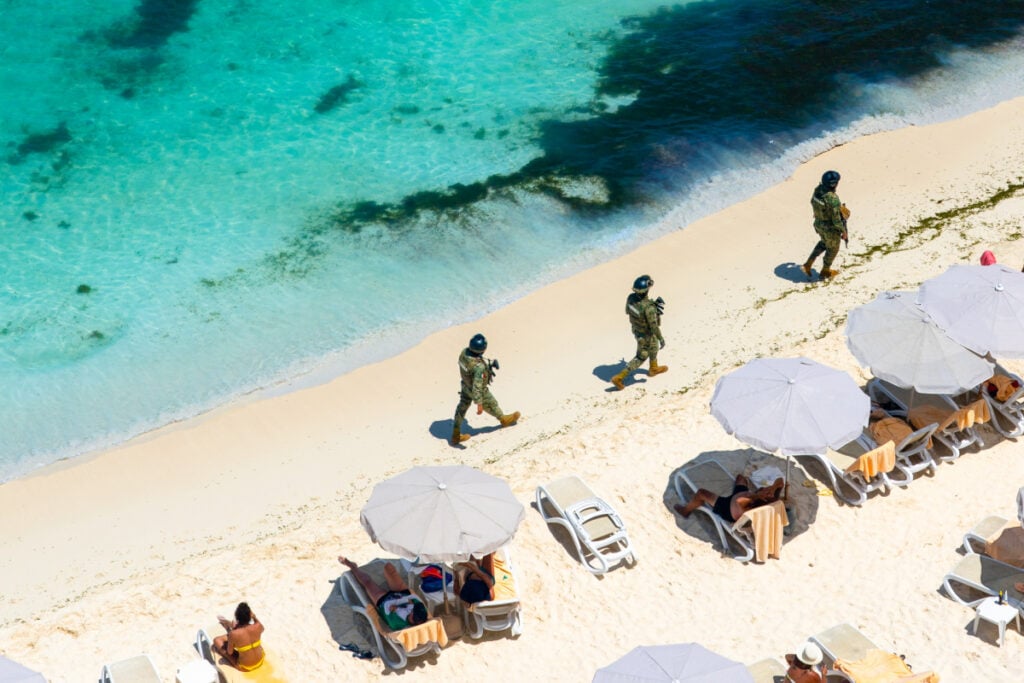
For the average American or Canadian tourist, seeing the military patrolling a public beach is a culture shock. Domestic crowd control in the U.S. rarely involves the armed forces. In Mexico, however, deploying the Navy and National Guard during peak travel windows is the standard, highly effective protocol.
This massive visual presence is not a response to an active threat; it is a strict deterrent. The overarching goal of the 11-municipality deployment is to create a seamless protective net that stops petty crime and manages the massive influx of visitors before issues arise.
Is Cancun Safe?
Despite the heavy wording of the U.S. State Department’s Level 2 travel advisory, the ground truth is much more relaxed. According to the our live Traveler Safety Index, visitors feel overwhelmingly secure in the Mexican Caribbean.
Cancun currently holds a massive 91% confidence score based on 1,425 recent votes.
For the small fraction of tourists who reported a negative experience, the issues had absolutely nothing to do with physical danger. The two biggest problems currently being reported are:
- Scams: 25 reports
- Transport: 21 reports
Ultimately, according to the Traveler Safety Index, the biggest risk to your Easter vacation right now is to your wallet, not your physical well-being.
The Tactical Breakdown: Who Is On The Ground
Managing over a million tourists requires a highly coordinated, inter-agency logistics plan. The state has activated exactly 7,244 personnel, dividing them into specialized units to cover every aspect of the travel experience:
- The National Guard (979 Troops): Tasked with federal infrastructure. You will see these troops securing the Cancun International Airport terminals, patrolling the operational Maya Train stations, and running transit checkpoints along Highway 307.
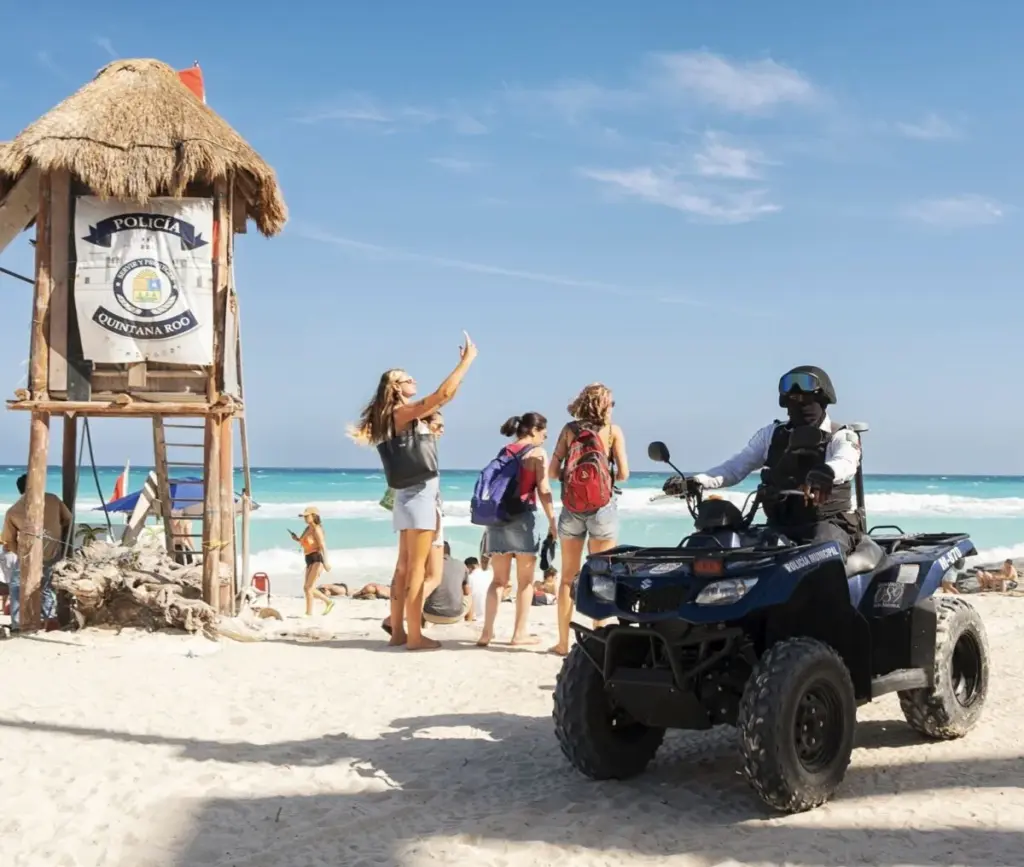
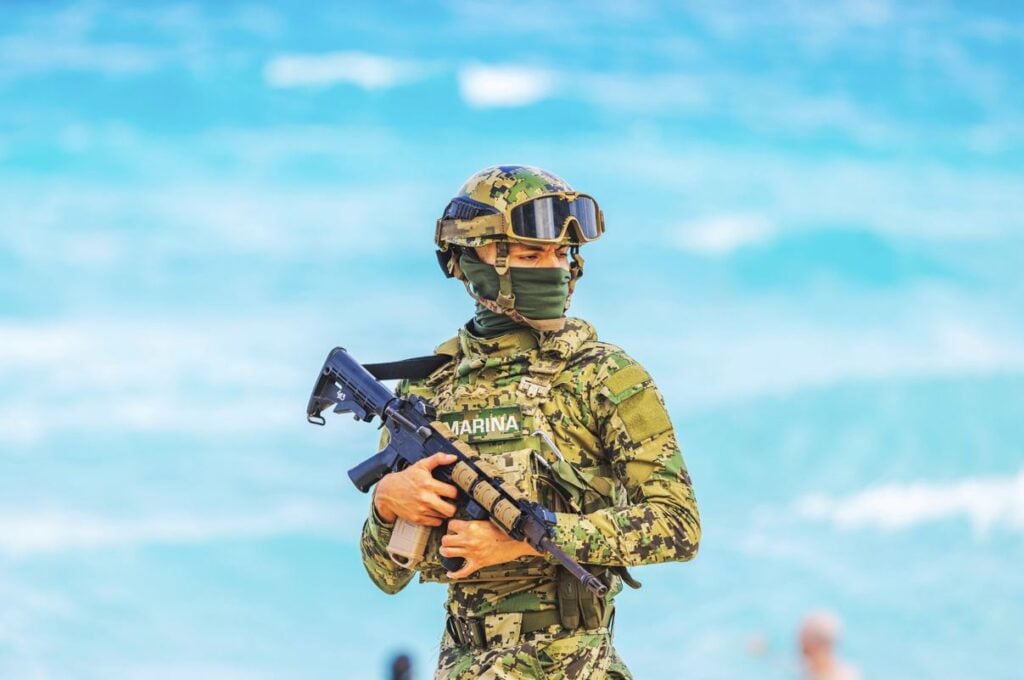
- The Mexican Navy (472 Personnel): The Navy takes the coastlines. They are responsible for maritime safety, protecting the busy ferry routes to Cozumel and Isla Mujeres, and walking the public beaches to maintain order.
- The Tourist Police (217 Officers): This is your frontline resource. These bilingual officers are stationed heavily in the Cancun Hotel Zone and Playa del Carmen’s 5th Avenue specifically to assist international travelers, provide directions, and resolve minor disputes.
- State and Local Police (5,560 Officers): The bulk of the force handles the day-to-day logistics, from highway patrols managing the intense coastal traffic to rapid response units standing by in downtown sectors.
- The Army (233 Troops): Providing heavy ground support and reinforcing the mobile checkpoints at municipal borders.
The High-Surveillance Zones
Authorities are placing these forces exactly where you want to spend your time. The security blanket is cast heavily over the highest-density tourist hubs.
Travelers will see fixed checkpoints and roving patrols at the major jungle cenotes, popular beach clubs, open-air shopping centers, and transportation hubs.
When the sun goes down, the strategy shifts to the nightlife districts. The physical patrols in the Party Center are backed by the state’s C5 surveillance network. Hundreds of high-definition cameras actively monitor the crowded bars and nightclubs, allowing dispatchers to instantly route tactical units to de-escalate any late-night disputes.
Enjoy Your Trip
The heavy tactical presence on the ground does not mean you are in danger. It means the local government is aggressively protecting the region’s massive tourism economy.
Savvy travelers know exactly what to do when a squad of Marines walks past their beach lounger: absolutely nothing. Give a respectful nod, order another drink, and know that the state is doing the heavy lifting to keep your vacation secure.
Before your trip ensure to check the latest Travel Alerts & Entry Requirements for your destination on our new Traveler Dashboard.