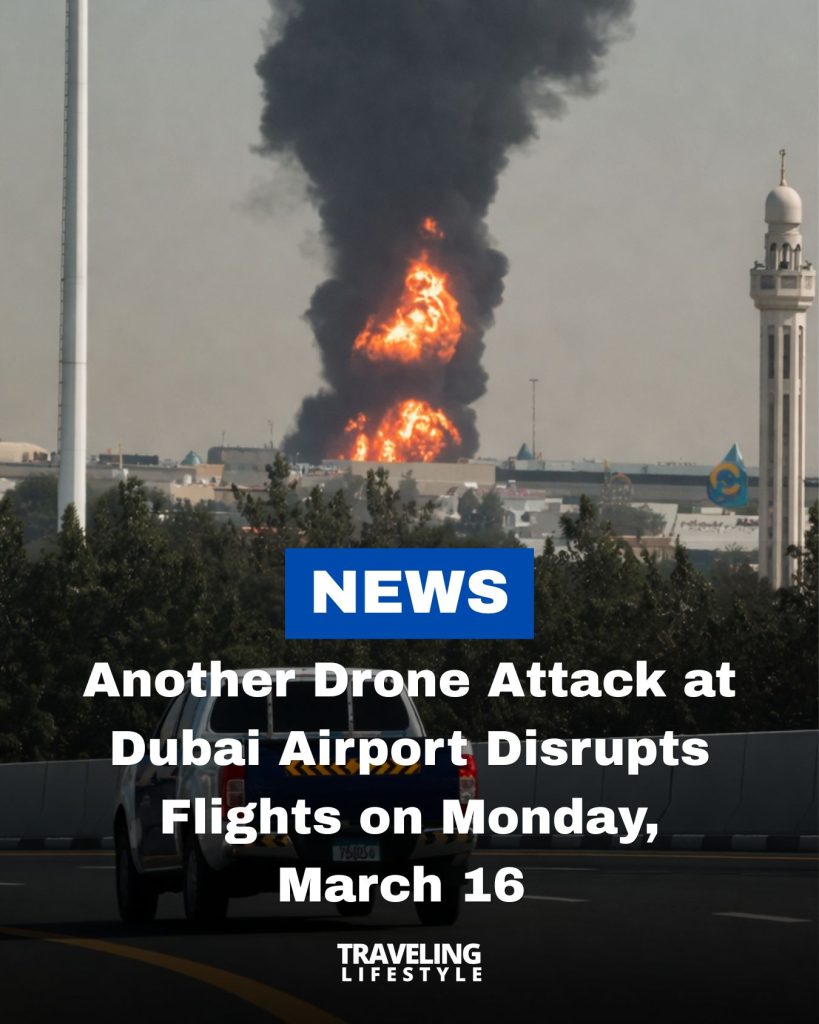
Dubai has imposed a sweeping ban on all foreign airlines entering its airports following escalating regional tensions and a series of drone attacks linked to Iran. The unprecedented move effectively restricts international access to Dubai to domestic carriers only, marking one of the most significant disruptions to global aviation in recent years.
The United Arab Emirates (UAE) government confirmed that landing permissions for all foreign carriers into Dubai International Airport (DXB) and Al Maktoum International Airport (DWC) are suspended indefinitely. The decision comes after the latest drone strike caused a fire at a fuel tank facility near DXB, forcing temporary closures and widespread flight disruptions.
Escalating Conflict Triggers Aviation Shutdown
The ban is directly tied to the deteriorating security situation across the Middle East. Multiple Iranian retaliatory strikes have targeted key infrastructure, including major airports in the UAE, Bahrain, Kuwait, and Qatar.
Dubai International, one of the world’s busiest airports, has faced repeated disruptions since late February. A previous attack prompted evacuations and emergency response measures, while the most recent strike led to dozens of flight diversions and cancellations.
Only UAE Carriers Allowed to Operate
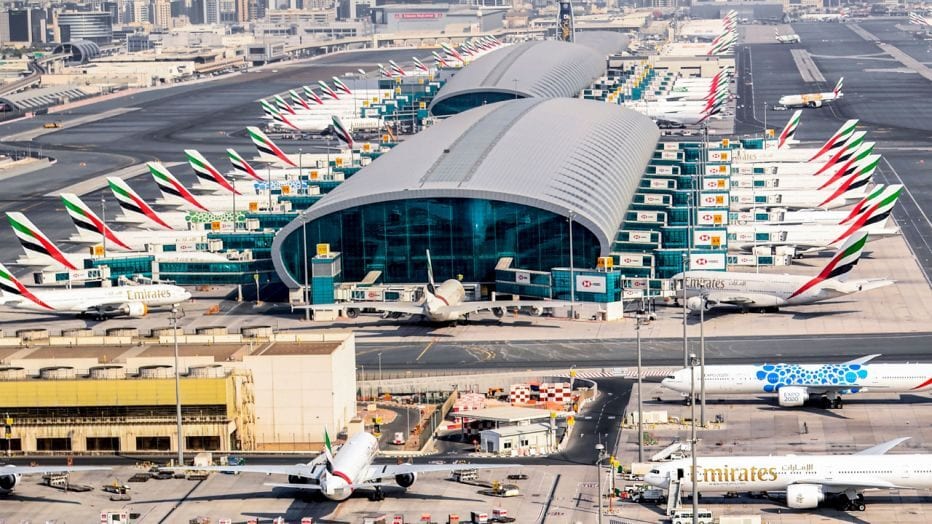
Under the new restrictions, only UAE-based airlines such as Emirates, Etihad Airways, and flydubai are permitted to operate flights into and out of Dubai. Even these carriers are running limited and irregular schedules due to ongoing security concerns and airspace instability.
The move has triggered frustration among international airlines, particularly those heavily reliant on Dubai routes. An aviation industry official told ch-aviation: “If foreign carriers cannot operate while local airlines continue multiple daily flights, this creates an uneven playing field.”
Major global airlines including British Airways, Lufthansa, and Virgin Atlantic have already suspended or rerouted flights, with some aircraft forced to turn back mid-journey due to safety risks.
Widespread Disruptions Across the Region
The aviation impact extends beyond Dubai. Airports across the Gulf region have also been targeted, further complicating flight operations and increasing uncertainty for travelers.
In Abu Dhabi, a drone strike at Zayed International Airport resulted in casualties, while Bahrain and Kuwait airports were also hit, though with fewer injuries reported. These incidents have led to heightened security protocols and ongoing airspace closures across multiple countries.
Airlines have emphasized that safety remains the top priority. A Virgin Atlantic spokesperson stated: “We have strict criteria that must be met for a flight to continue into the region, and those conditions were not satisfied.”
What This Means for Travelers
For travelers, the situation remains fluid and unpredictable. Flights into Dubai are currently limited, subject to sudden changes, and largely restricted to UAE carriers. Delays, reroutes, and cancellations are expected to continue in the short term.
Passengers are advised to closely monitor airline updates and consider alternative routes or destinations where possible. Travel advisories from multiple governments have also warned of heightened risks in the region.
Outlook Remains Uncertain
While Dubai airports have reopened after temporary closures, a full return to normal operations appears unlikely in the near term. The continuation of geopolitical tensions and security threats will determine how long the restrictions remain in place.
For now, Dubai—long a global aviation hub—is operating under extraordinary constraints, with its connectivity significantly reduced and dependent on evolving regional stability.
Sources
https://www.thestreet.com/travel/all-foreign-airlines-banned-dubai
https://www.ch-aviation.com
https://www.reuters.com/world/middle-east/
https://www.bbc.com/news/world-middle-east