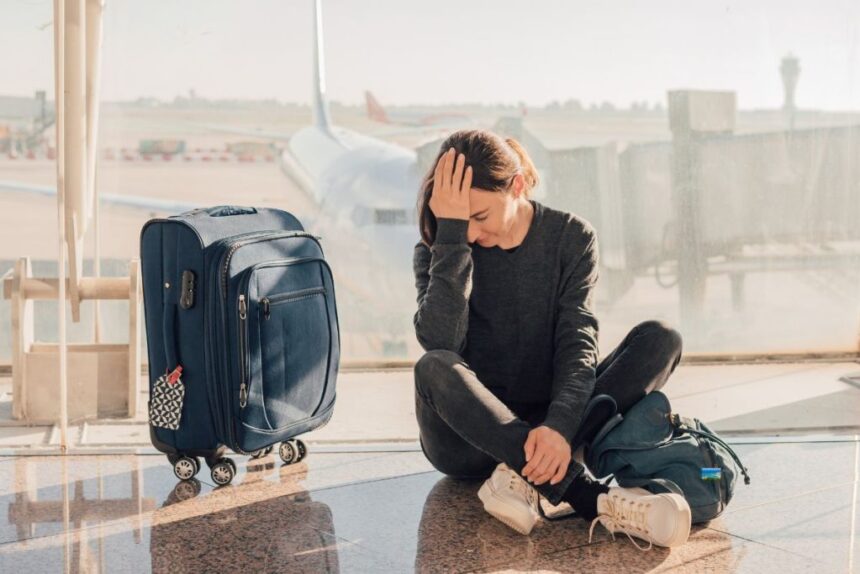
The United States aviation system faced one of its worst operational days of 2026 on March 9, with 4,929 flight disruptions nationwide, including 602 cancellations and 4,327 delays. Severe thunderstorms, strong winds, and peak spring break travel demand combined to create widespread chaos at major airports, leaving more than 750,000 passengers affected across the country.
Major travel hubs including Atlanta, Orlando, Miami, Philadelphia, Chicago, and Dallas–Fort Worth experienced heavy disruption as airlines struggled to recover from weekend storms that destabilized flight schedules and aircraft positioning.
According to aviation data, about 4.2% of flights were cancelled and more than 30% experienced delays, making Monday one of the most disruptive travel days of the year so far.
Atlanta Airport Becomes Ground Zero for the Crisis
Hartsfield-Jackson Atlanta International Airport—the world’s busiest airport—became the epicenter of the disruption. Delta Air Lines alone cancelled 102 flights and delayed dozens more, paralyzing operations at its primary hub.
The chaos began when severe thunderstorms with hail and strong winds struck Atlanta on March 6, forcing ramp closures and even evacuations of the air traffic control tower. The operational fallout continued through the weekend and into Monday.
Aircraft and crews became stranded in the wrong locations, while gates filled quickly with delayed arrivals. Some passengers reportedly waited hours on aircraft before being able to disembark.
One traveler, John Sidor, described the ordeal after arriving from Norfolk, Virginia. His plane landed shortly after midnight but remained on the tarmac for hours.
“We landed around midnight but didn’t get to a gate until nearly four in the morning,” Sidor said. “My wife had been waiting at the airport the entire time. We finally left together around 7 AM.”
Delta acknowledged the disruption but emphasized the weather-related cause. A company statement said, “We apologize to our customers, as we know that a delay on the tarmac waiting for an arrival gate is frustrating. The safety of our customers and crew is our highest priority.”
Orlando Spring Break Travelers Face Major Delays
Orlando International Airport—one of the busiest gateways for spring break tourism—recorded 314 disruptions, including 19 cancellations and 295 delays, as thousands of families attempted to return home from vacation.
With Orlando serving as a hub for visitors to Disney World, Universal Studios, and major cruise ports, the timing of the disruptions created severe ripple effects.
Flights were largely sold out due to peak travel demand, leaving stranded travelers with limited rebooking options. Families with children faced crowded terminals, luggage backlogs, and hotel shortages as delays stretched through the day.
Airlines most affected included Spirit Airlines, Southwest Airlines, JetBlue, and Frontier, all of which operate large networks through Orlando.
Miami, Philadelphia, and Dallas Add to Nationwide Disruption
The crisis extended across multiple regions of the country.
Miami International Airport logged 233 disruptions, heavily affecting routes connecting the United States to the Caribbean and Latin America. Travelers faced missed connections and overnight delays due to tight international schedules.
Philadelphia International Airport recorded 128 disruptions, with regional airline PSA Airlines experiencing particularly severe cancellations that disrupted smaller feeder routes connecting to American Airlines’ network.
Meanwhile, Dallas–Fort Worth International Airport reported 58 cancellations and 68 delays, largely linked to thunderstorms in Texas and operational issues affecting regional carriers.
Chicago O’Hare also struggled with disruptions after 19 cancellations by regional airline SkyWest, highlighting the vulnerability of smaller feeder networks that support major airline hubs.
Weather and Operational Fragility Drive the Crisis

Experts say the disruption illustrates how severe weather combined with peak travel demand can quickly overwhelm airline operations.
Thunderstorms across the Southeast, Midwest, and Texas disrupted aircraft rotations and crew schedules. At the same time, spring break travel pushed flights close to full capacity, leaving airlines with few available seats to rebook affected passengers.
Regional carriers such as PSA Airlines and SkyWest—critical for short-haul connections—also reported significant cancellations, amplifying delays across the national network.
Industry analysts expect continued disruptions through mid-March, as airlines reposition aircraft and crews while managing ongoing spring break traffic.
What Travelers Should Expect This Week
Travel experts warn that passengers flying in the coming days should prepare for continued delays.
Travelers are advised to monitor airline apps closely, enable real-time notifications, and allow extra time at airports. Flexible tickets and travel insurance may also help reduce risks during periods of operational instability.
If possible, experts suggest delaying travel until after March 16 when spring break demand begins to ease, allowing airlines to stabilize schedules.
For now, the combination of weather volatility and heavy passenger volume means the US aviation network remains under pressure—turning what should be a busy travel week into one of the most challenging periods for air travel in 2026.
Sources:
- flightaware.com
- transportation.gov
- faa.gov
- delta.com
- atl.com
- orlandoairports.net