For decades, the airplane cabin was one of the last genuinely quiet places left in public life. No phone calls. No FaceTime. No Zoom. Just the hum of the engines and whatever you brought to read. British Airways just ended that era — and the aviation industry may never be the same.
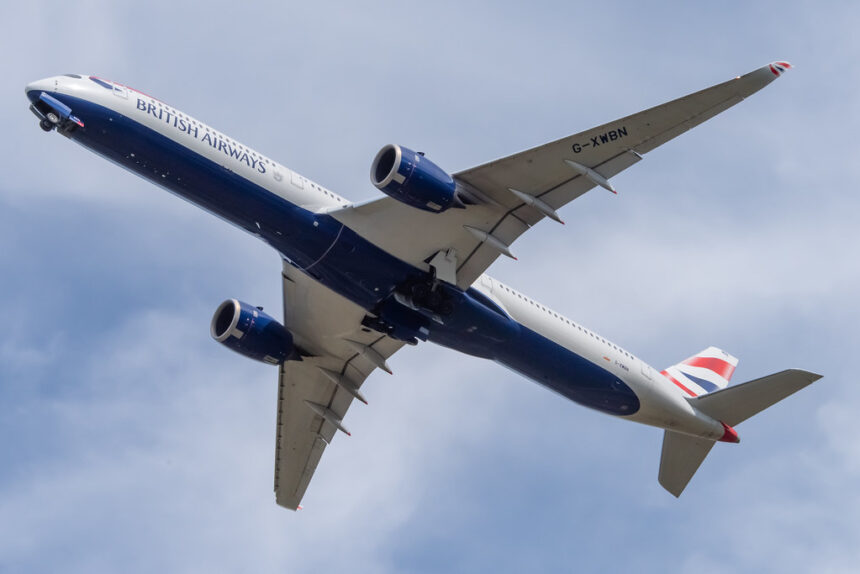
On March 19, 2026, British Airways launched its first Starlink-powered Wi-Fi flight, becoming the first major UK airline to officially permit passengers to make live voice and video calls at 30,000 feet. The policy change, quietly embedded in the airline’s updated connectivity guidelines, marks the most significant shift in cabin culture since the introduction of in-seat entertainment screens.
How Starlink Made It Possible
The technology behind the change is SpaceX’s Starlink satellite network — a constellation of more than 10,000 low-Earth orbit satellites that delivers download speeds of up to 500 Mbps aboard aircraft. That is faster than most home broadband connections and represents a generational leap from the patchy, slow Wi-Fi that frustrated passengers for years.
“We know that staying connected matters to people, whether they’re traveling for work or heading off on holiday,” said Sean Doyle, British Airways’ Chairman and Chief Executive. “Starlink will give our customers fast, reliable Wi-Fi that transforms the onboard experience.”
BA plans to install Starlink across all 300+ aircraft in its fleet within two years — covering long-haul routes to the United States, Asia and the Middle East, where the business case for connectivity is strongest.
The Rules — And the Reality
British Airways has not opened the cabin to a free-for-all. Its policy asks passengers to “keep your voice low and use headphones” when making calls. But aviation etiquette experts are openly skeptical that guidelines will translate into quiet skies. “We’ve all been on Amtrak where people make phone calls the entire time,” said Gary Leff, aviation analyst at View from the Wing. “We know how this is going to go.”
A survey conducted as recently as 2013 found that nearly 60% of air passengers were opposed to in-flight voice calls — a figure that may have shifted with the rise of AirPods and remote working culture, but has never been formally revisited.
What This Means for US Travelers
In the United States, the Federal Communications Commission prohibits traditional cellular calls aboard aircraft. But Wi-Fi calling — the technology British Airways is using — falls outside that ban entirely. There is no US law explicitly prohibiting it. Airlines have simply chosen not to allow it. Until now.
That distinction is not lost on the US industry. United Airlines is actively rolling out Starlink across its entire domestic fleet. Alaska Airlines begins installation this autumn. American Airlines, asked directly by USA Today whether it would follow its closest international partner’s lead, declined to comment.
The question now is not whether in-flight calls come to American skies. It is when.
Sources: AFAR, “Annoying or About Time? This Major Airline Now Allows Inflight Phone Calls,” April 2026 · Travel and Tour World, “British Airways Lets Passengers Make In-Flight Phone Calls,” March 19, 2026