When you think of Greek islands, the first image your brain conjures is probably Santorini’s blue church domes and caldera views, or maybe Mykonos’ iconic string of windmills on a hill and colorful harborside houses.
The powerhouse duo may be Greece’s top two most popular destinations, but if you’re asking us, they’re far from being the most rewarding, especially when it comes to beaches.
Between Santorini’s rugged volcanic coast, largely made up of craggy descents and pebbly stretches, and Mykonos’ windswept, club-heavy shorelines, they’re not somewhere you go for swimming and lounging by the sea, necessarily.
Now, if it’s Greece’s postcard-ready sandy beaches and clear turquoise seas you’re after, this lesser-known island hideaway has just been featured in the World’s 50 Best Beaches:
Is Kefalonia The Best Island In Greece For Beaches?
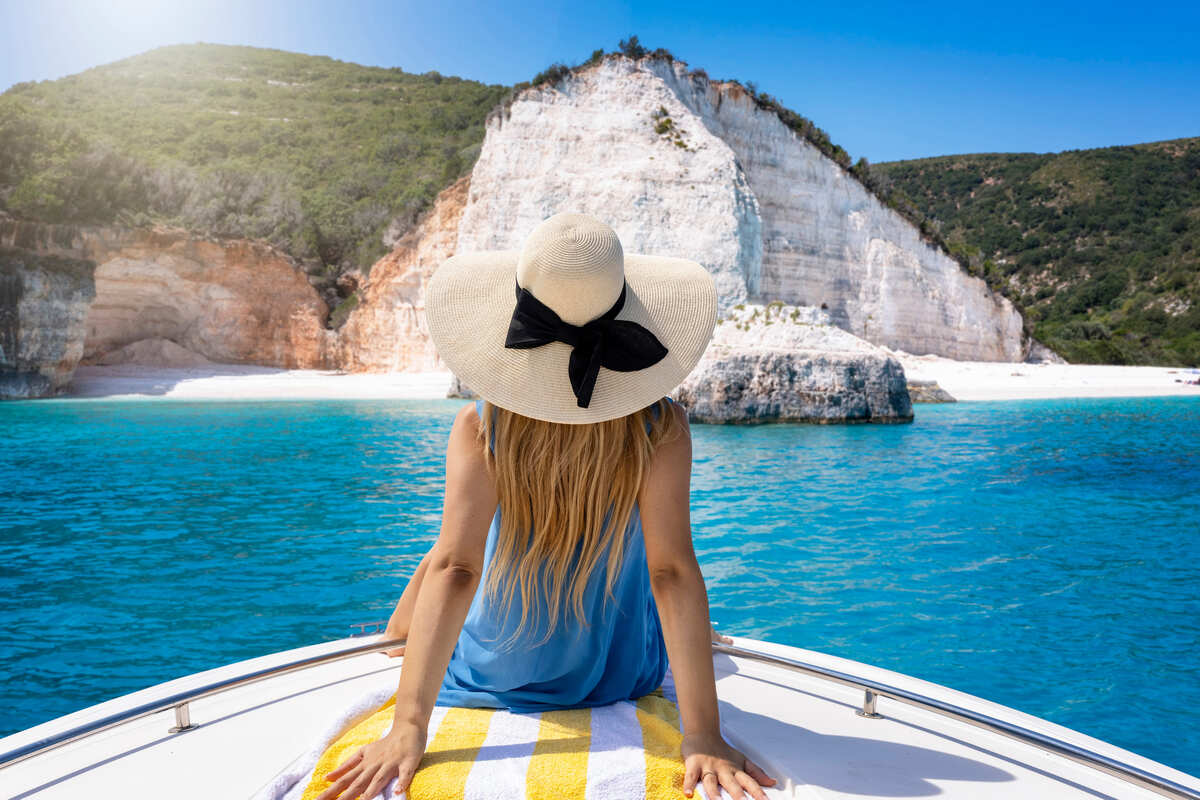
Located on the Ionian side of Greece—the side that faces Italy—Kefalonia is an island paradise best known for its indented coastline, interspersed with cliff-backed bays, limestone sea walls, and short strips of mixed white pebble and sand.
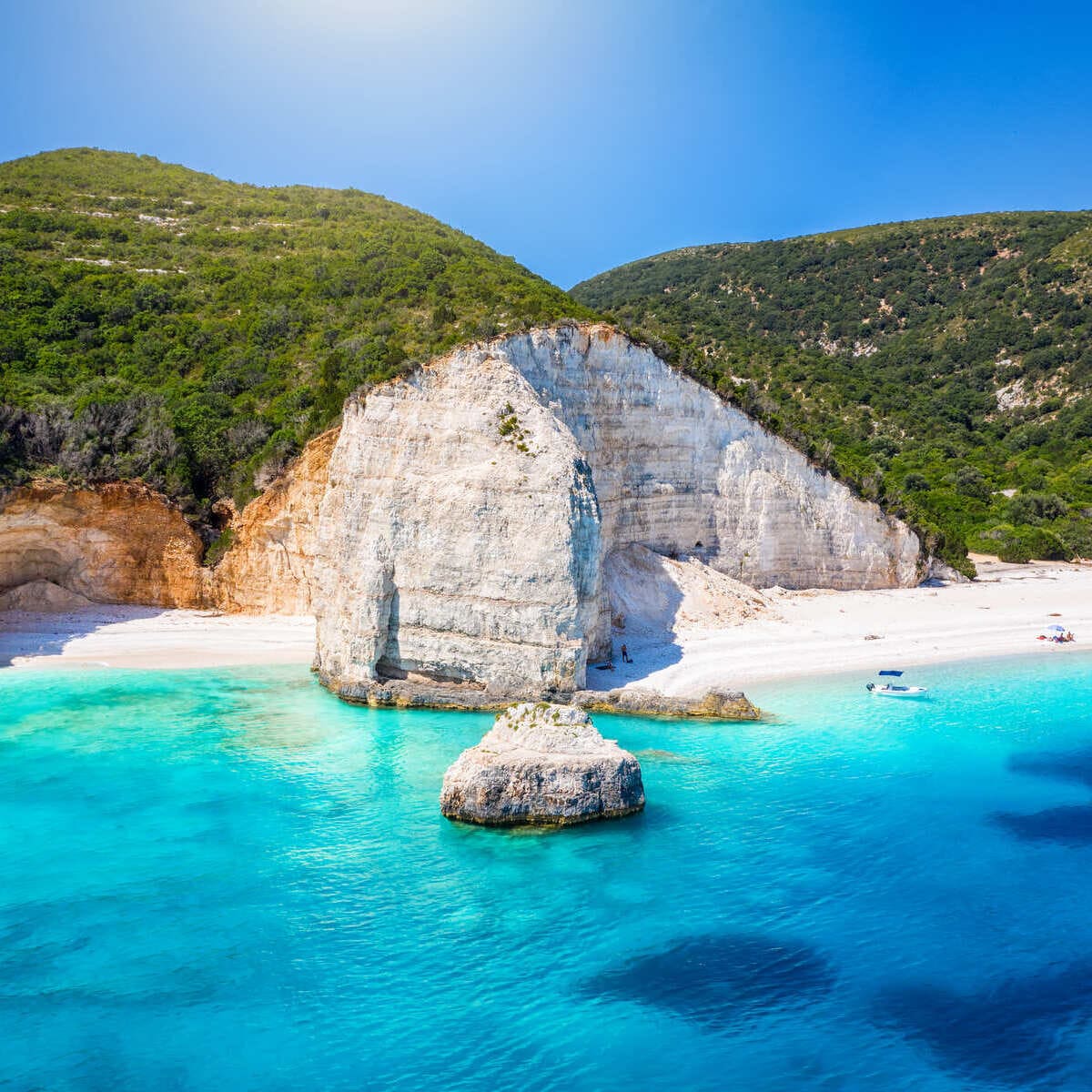
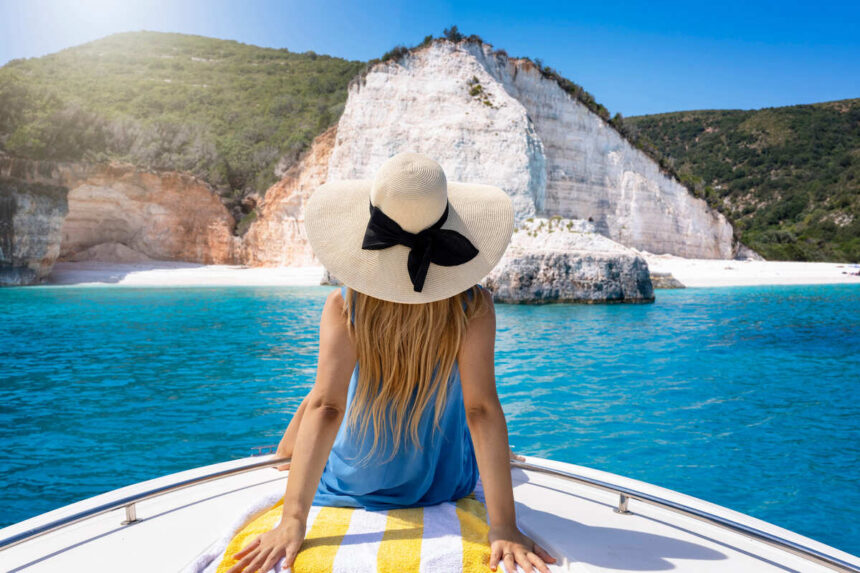
Fteri Beach, one of these hard-to-access, small pebbly coves backed by towering cliffs, was just ranked the second best beach in the world by the experts behind World’s 50 Best Beaches, closely behind Sardinia‘s Cala Goloritzé.
In Greece, it beats out other heavyweights like Voutoumi, Porto Katsiki, and even Crete’s iconic Elafonissi Beach, which chart at Nos. 3, 5, and 15, respectively.
At this point, you’re probably wondering why this beach is so special. Well, other than the powdery white sands and crystalline seas, of course, its challenging access is key to understanding its appeal with beachgoers.
How To Get To Fteri Beach On Kefalonia
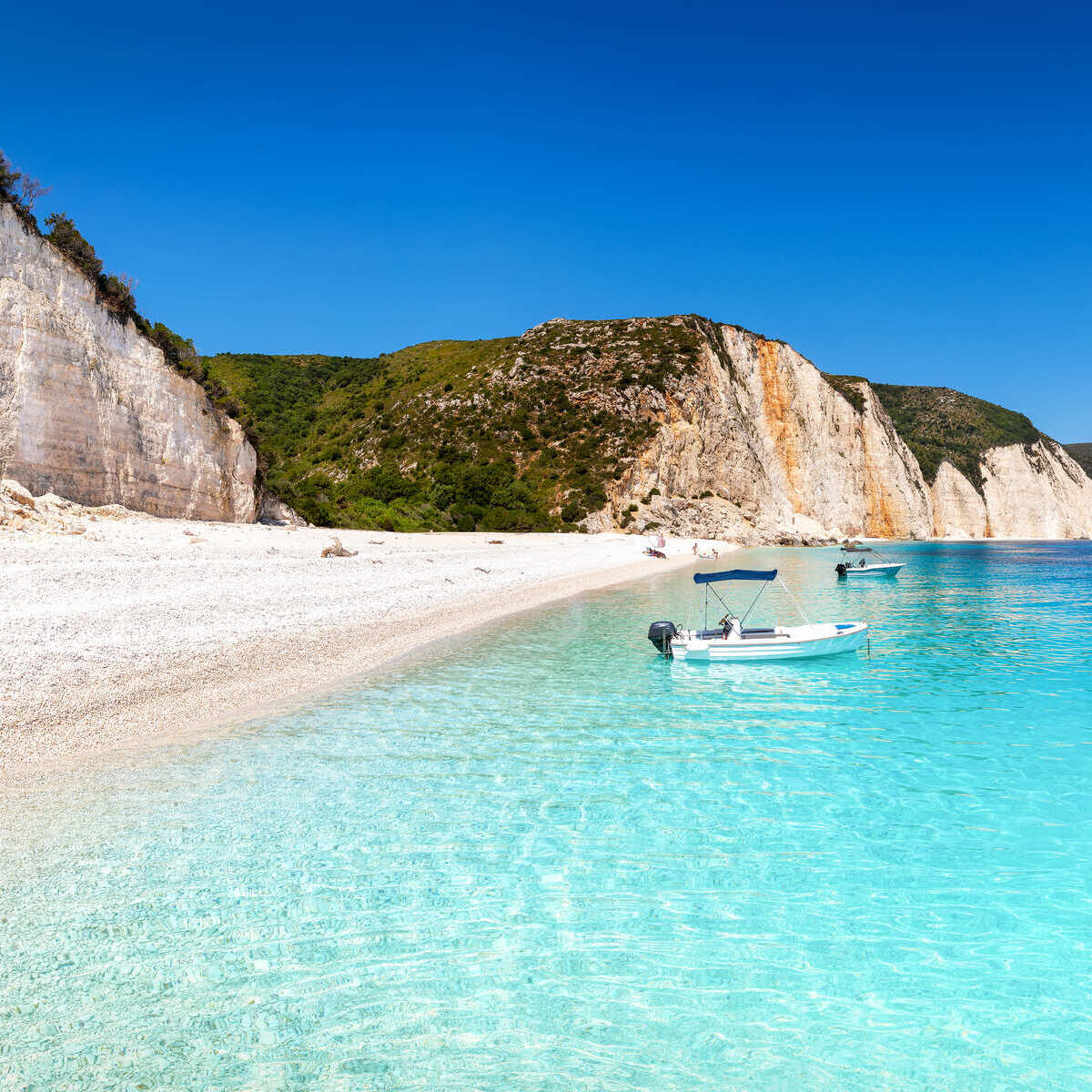
You can only get there hiking down from the small village of Zola, on the northwest coast, and that takes about 40 minutes, or by taking a water taxi. If you’re walking, sneakers are highly recommended as the route can get a little rough in parts, and you’ll need good shoes to walk across Fteri’s white pebbles.
Naturally, taking the taxi is a lot faster and more convenient: a 5–10 minute glide from the harbor to the beach.
There’s a Fteri Water Taxi running from Zola Harbor in the high season, offering pickups and drop-offs at Fteri, and even other nearby beaches like Amidi and Kamari.
According to travelers who have been, the best time to visit is the morning, before the taxi boats arrive, as the beach is usually nearly empty.
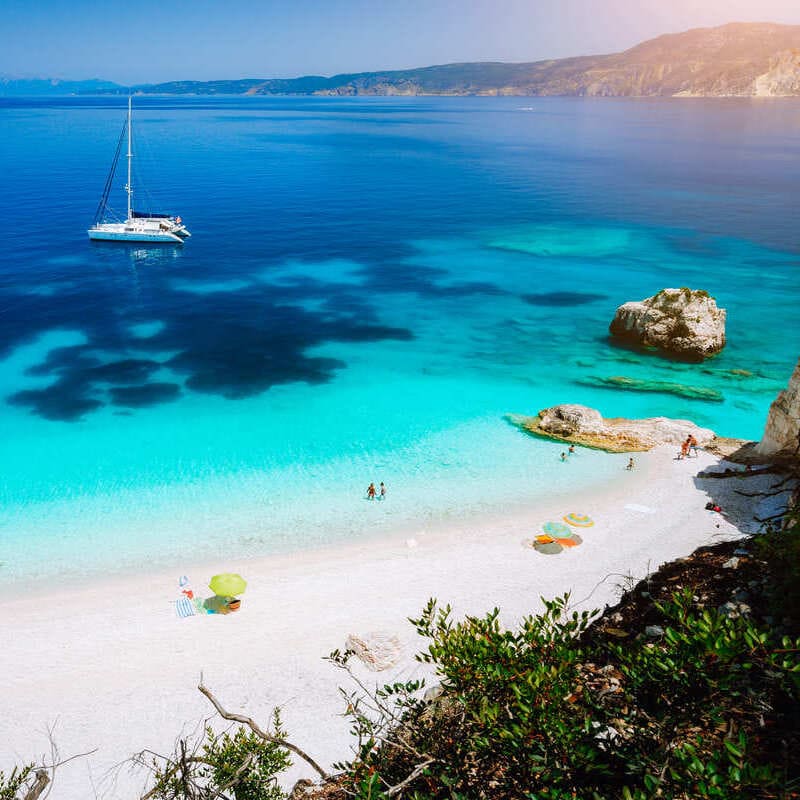
Once the taxis are operational, they start dropping people off every 30 minutes (or more frequently, even).
As for the water, they have that pool-like translucent shade closer to shore, that gradually turns that gorgeous gatorade-blue so typical of the Ionian Sea.
Oh, a piece of advice? Kefalonia is a proper wild beach, with no amenities like on many of Kefalonia’s mainline beaches, so make sure you bring your own sunscreen, bottle of water, snacks, and beach attire, as you won’t be able to purchase them from a kiosk.
Kefalonia Is Full Of Turquoise-Water Bays
Fteri Beach may be the star of the show today, but it’s far from being Kefalonia’s only paradisiacal cove with surreal waters.
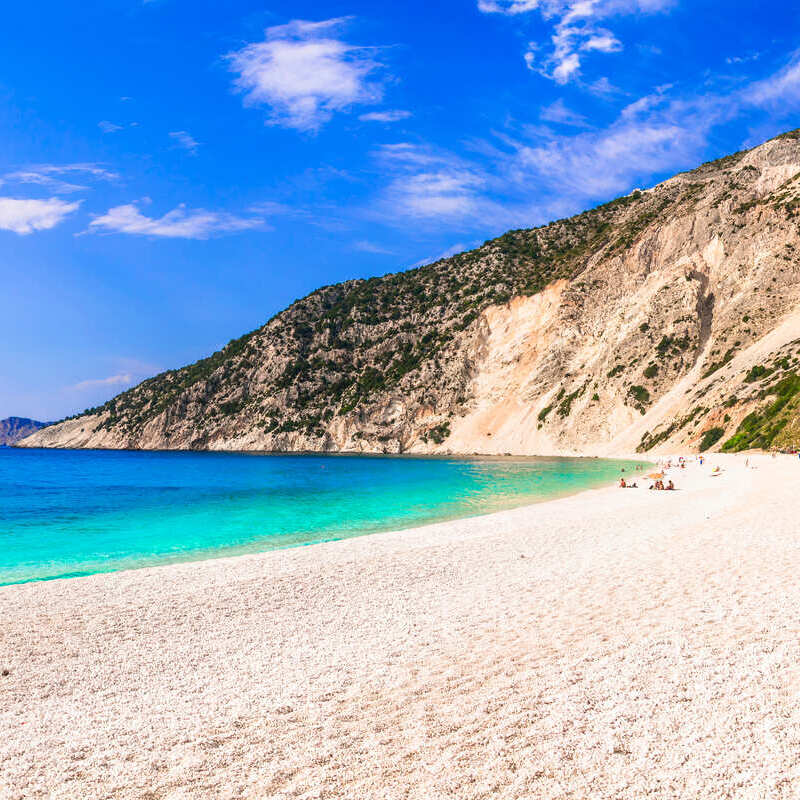
In fact, the most popular beach on the island is Myrtos, similar to Fteri in many ways, except it’s far easier to drive to with a car. White pebbles, neon-blue seas, and imposing cliffs.
Petani is the family-friendly, amenity-packed alternative: you park at the top of the cliffs, then you walk the short way down. It has sunbeds and umbrellas to rent, and a couple of beach bars and restaurants nearby.
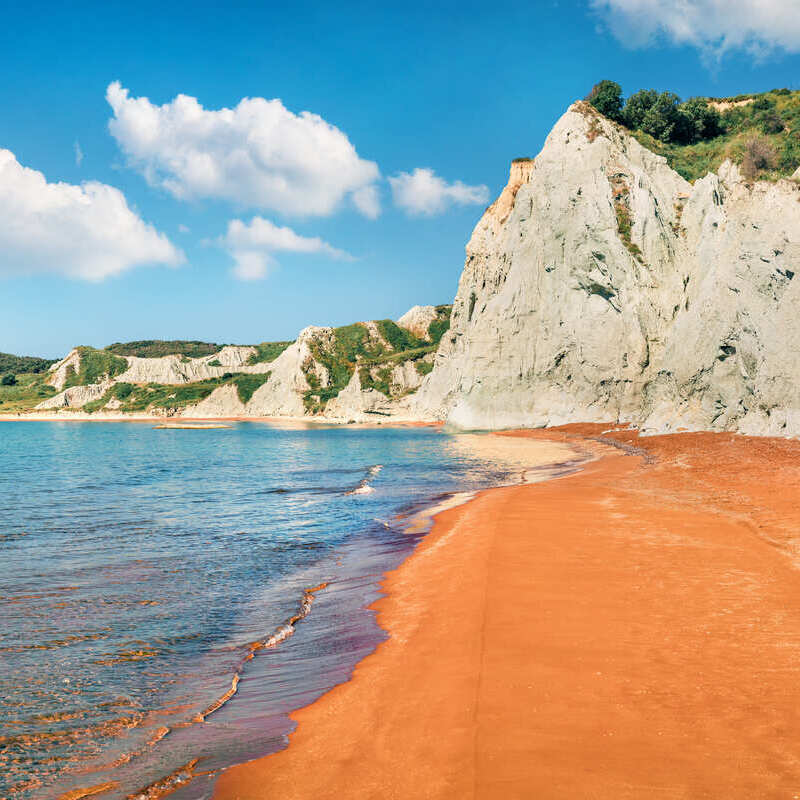
You’ve probably heard of Crete’s pinkish Elafonissi Beach, but did you have any idea Kefalonia hosts its very own red-sanded strip?
With soft, clay-like sands, Xi Beach straddles the southern coast of the island, in the Paliki peninsula, and it has a full setup of sunbed rentals, seasonal cafés, and water sports. It gets busier than most, sure, but the deep-ocher sands and the azure waters are unique in Greece.
Where To Stay On Kefalonia
If you’re looking for a place to stay, Argostoli, the quaint Kefalonian capital nestled on a coastal hill overlooking the Ionian Sea, is probably your top pick.
A lively harbor town, it’s filled with shops, restaurants, and even the nightlife isn’t all that bad, thanks to a bar-lined central promenade, easy to walk to at night for after-dinner drinks.
For a quieter island experience and easier access to Paliki peninsula beaches (like Xi), Lixouri is a popular alternative.


Kefalonia’s second-largest settlement, it’s still big and well-equipped for tourism, yet serene enough to feel worlds away from the main hub.
A short ferry hop away from the gorgeous Melissani Cave, one of Kefalonia’s top natural wonders, Sami is a great base for exploring, and of course, if your primary goal is to be a short 5 min water taxi ride from the dreamy Fteri Beach, Zola is where you should crash for the long weekend.
This spring, you can find accommodation on Kefalonia Island from as cheap as $46-a-night, though a modest hotel room in one of the main towns would average $65–$90.