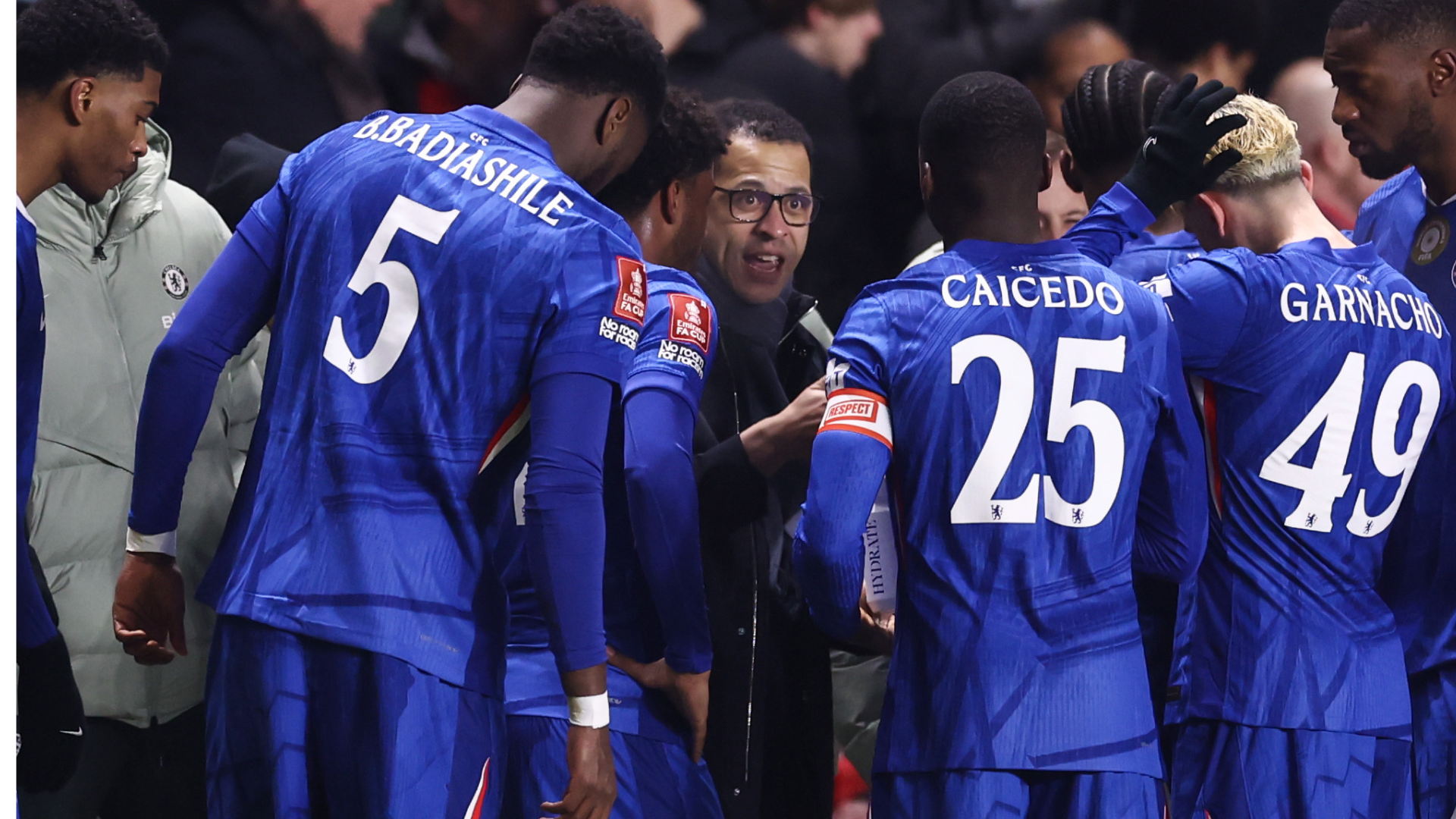
Anyone looking for signs of Chelsea’s era under new management would have been left wanting on Saturday night. The scoreline might have been more impressive than most in the dog days of Enzo Maresca’s tenure, a 5-1 win at Charlton Athletic of the Championship, but this was still a team that hoarded possession and that was prepared to be patient in its pursuit of high quality chances.
As Liam Rosenior explained after the game, he had doing “nothing tactical, nothing technical” with his new squad. The former Strasbourg manager believes he has inherited a “good team” that has been “well-coached.” This is not a club intent on reinventing the wheel.
New manager, same Chelsea
Chelsea are not changing. No wonder. Those who can deliver the most profound impact on Chelsea’s squad, their fitness, the tone of the club, arguably even the playing style are all in situ.
There are at least five directors at Chelsea whose impact on the first team might be said to eclipse Rosenior’s. Co-sporting directors Laurence Stewart and Paul Winstanley might have drawn the ire of supporters but CBS Sports sources suggest there is no evidence that those frustrations are shared by their employers. The most recent appointment, Dave Fallows, leads areas that include “scouting and data, loans and player pathways.” As with Winstanley and Stewart he is contracted until 2031.
Joe Shields was appointed in 2022 as “co-director of recruitment and talent”. Two years later Sam Jewell came from Brighton becoming the sporting director for global recruiting. This quintet were established as the sporting leadership team in November. Conspicuous in their absence from that list of power brokers was the first team head coach.
That group is to say nothing for Behdad Eghbali, who has certainly taken a hands on approach to this particular slice of the Clearlake Capital portfolio. It is something of a ritual for Stamford Bridge regulars to see him walking across the field in the direction of the dressing room.
A head coach with limited power
Into this fray, Rosenior will function as a voice among many. It would be wrong to suggest that Maresca was not consulted on Chelsea’s transfer business but he did not have the deciding vote that it seemed was what he wanted. Take the near-season ending injury suffered by Levi Colwill in the summer. Maresca made no secret of his desire to supplement his squad with an experienced alternative and, according to CBS Sports sources, that was a market that was explored by the club. However, there was a high bar to be set for any possible replacement, particularly when the silver lining to the injury was the space opened up for Josh Acheampong to play more frequently.
Come the summer, Rosenior will be able to offer input into whatever business Chelsea might conduct, but it will be input, not an overbearing voice. He should probably expect a fair bit of that business. After all, the most recent set of accounts show an annual amortization charge of around $250 million, the highest in the Premier League. A space will have to be found in the squad for Geovany Quenda, due to arrive from Sporting CP, while strikers Dastan Satpayev and Emmanuel Emegha are also signed up for the summer.
Todd Boehly has previously spoken of Chelsea having “a portfolio of players that are going to be consistent and reliable and have the potential to be together for a very long time.” It now seems more likely that that will be the core of Rosenior’s squad, the likes of Cole Palmer, Moises Caicedo and perhaps soon Estevao. Around them, expect the parts to be more interchangeable. In a matter of months Nicolas Jackson could go from Maresca’s “perfect number nine” to a player Chelsea were eager to move on.
If recruitment was one of the flashpoints between Maresca and his employers, though not specifically in the case of Jackson, the involvement of the medical department was another. Indeed it was said to be the intervention of that particular group that prompted the comments about the “worst 48 hours” that would set in motion events that ended in the Italian’s sacking.
There is said to be a level of autonomy to the medical department that Maresca brushed up against. Then again, whatever Chelsea have been doing has worked well. Last season, when they did have the benefit of being able to win the Conference League with what often amounted to a shadow squad, they lost significantly fewer minutes than the likes of Arsenal, Manchester City and Tottenham to injuries. Club captain Reece James has been fit for an entire year.
The input, let alone perceived interference, of sports scientists and physios in the decisions of head coaches and managers may seem like anathema to many in the English game but it is also an inevitable reality of an age of ever more football played at ever more intensity. If reports of clashing between Maresca and his medical team are indeed the case, Chelsea may be ahead of the curve in regards to the power of the latter. Sources within the game, however, expect others to follow.
An American vision for an English soccer team
And while it might seem strange on English shores for head coaches to be overruled in questions of squad building and load management, it is perfectly normal State-side. Boehly, for instance, got the silverware bug at the Los Angeles Dodgers. Few who follow them more closely than this column would argue that Dave Roberts’ voice holds the greatest sway at Dodgers Stadium.
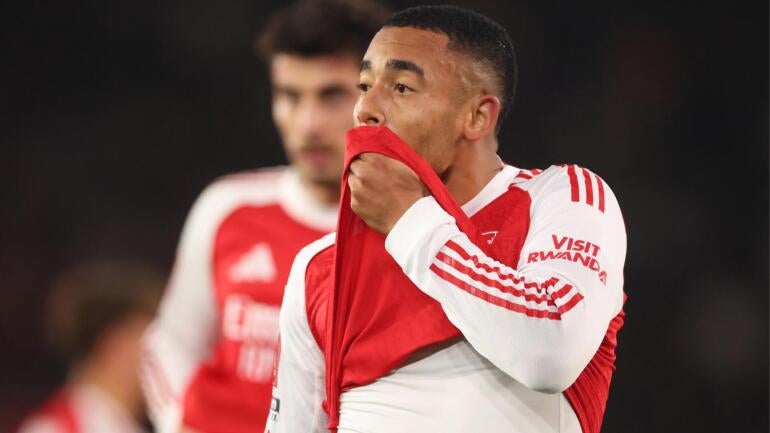
Certainly the broader march of the sport is in the same direction as Chelsea. There are ever-fewer elite coaches empowered with the authority that Rosenior’s opponent on Wednesday night have. Mikel Arteta found an Arsenal bereft of purpose and imbued it with identity. The club hierarchy went to their-then head coach and asked him to be their manager. It seemed that Maresca had similarly lofty ambitions and that Chelsea’s response was to invite him to explore those reported links with Manchester City and Juventus at his own leisure.
Now if all of the above makes it seem like Rosenior will have nothing to do, that he is an inessential part of a broader operation, that would not be true. For starters, Rosenior must function as the public face of the Chelsea organisation. That will certainly be a challenge at a time when supporters are protesting against ownership vehicle BlueCo. So far he seems to have settled into that aspect of the role, publicly celebrating the “limitless” potential of the young squad he has inherited. Equally, he seems intent on carving out space for himself to operate within the sizeable org chart.
“I will make the decisions at this football club, that is why I have been brought in,” he said in his introductory press conference. “I understand, I am not an alien. I know what is being said. But there is no way you can be successful as a manager if you don’t make the decisions for yourself.”
Rosenior himself has set the expectation that he will not be reinventing the tactical wheel, but there was a notable upswing in the number of sequences with nine or more passes and a clear commitment to stretch the opposition with high, wide wingers. How much of this was a function of playing a struggling second tier opponent won’t be clear for some time yet.
There should however be time for Rosenior to show what he really envisions Chelsea being. He had a chance to prove his worth to BlueCo at the Strasbourg helm, following last season’s seventh placed finish by guiding them to the same spot in the Ligue 1 standings again. Long term contracts might be the norm at Stamford Bridge but a deal through to 2032 is still a serious commitment. No manager has made it to year six at Chelsea since Dave Sexton, whose reign between 1967 and 1974 encompassed an FA Cup and a Cup Winners’ Cup. Like so many of his counterparts under previous owner Roman Abramovich, Maresca might have proven that silverware is no guarantor of job security. It is still, however, the best route to fulfilling that lengthy contract.
“I’d love to be here for six years or longer,” Rosenior said on Monday. “I’d be here as long as possible but I’m aware in order for that to happen, I need to win. It’s as simple as that.
“I understand every club has a different project. This word ‘project’ comes out a lot now in football. But the idea in any project is that every game you play, you’re trying to win it. It’s as simple as that. So for me, my focus is, yes, I’ve got ideas about what I want the team to look like in a year’s time, two years, three years’ time, but I think I’ve got enough resources and enough tools with me now to win. I’ve made that clear to the players.”
In that sense, while there might be new layers and different stakeholders to consider, Rosenior’s job is not really all that different from any Chelsea head coach’s over the last two decades. Where once it was Abramovich bequeathing the latest superstar, now it is the many cooks of the recruitment department trying to establish the ideal recipe. What will be asked of Rosenior is the same as was asked of Maresca, Thomas Tuchel or Jose Mourinho. Win an awful lot of football matches.