LONDON — Halftime in a game, Manchester City are leading 2-0, and if you’re in attendance, or perhaps just watching on from afar, muscle memory takes over. You know this game is done. They’ll ping it about for half an hour, the other team will wear themselves down and then City will add a bit of gloss to the scoreline at the death.
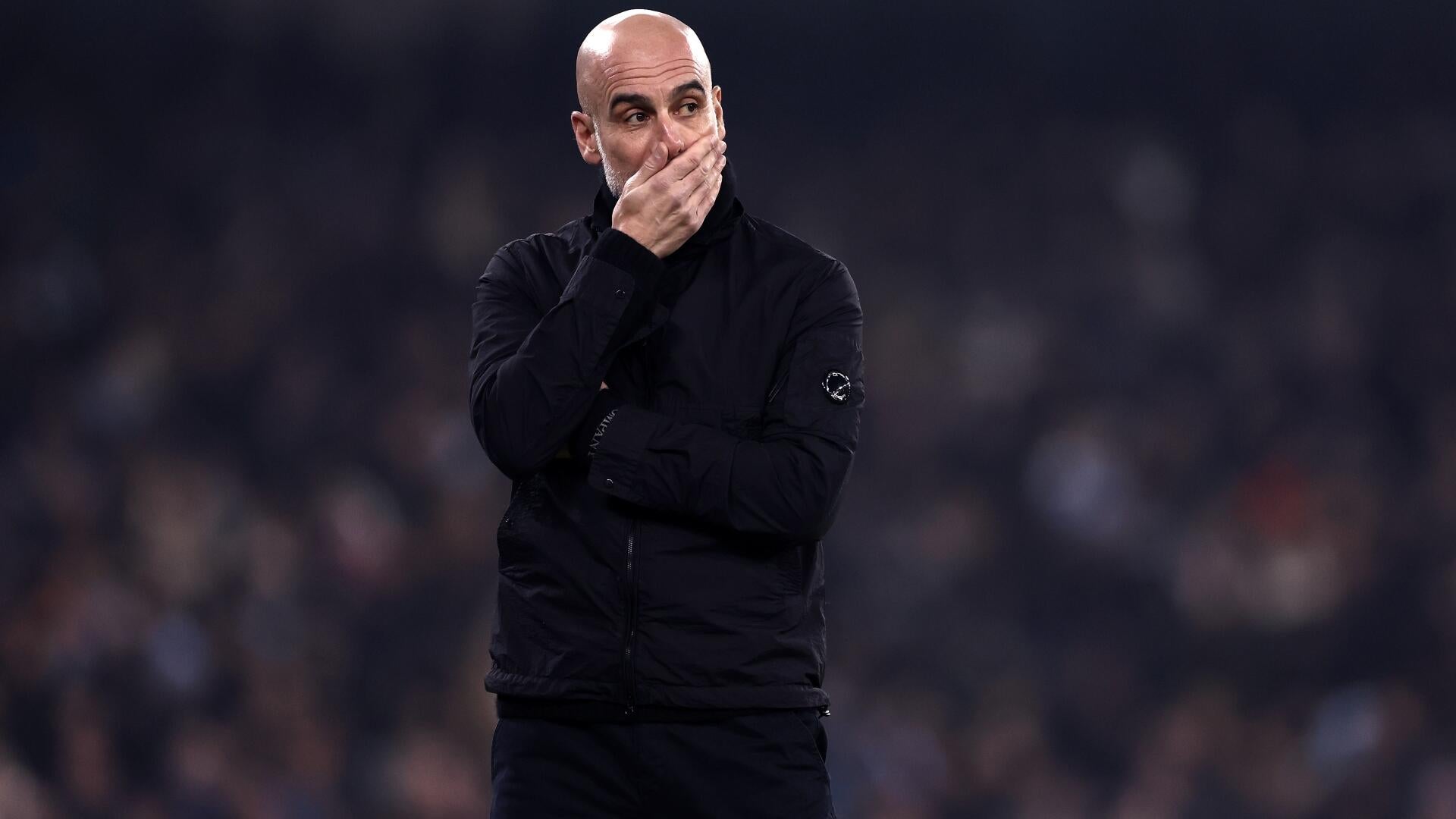
If only, Pep Guardiola might ask himself, such a scenario were as deeply ingrained in his players as it is those who have seen his side dominate English football for the last decade. Right now, his team look like title challengers for 45 minutes, midtable scrappers for the rest. Maybe Tottenham’s fightback today says more about the spirit and quality of Thomas Frank’s side than it does the limitations of Guardiola’s, but I wouldn’t be so sure. If these were two points stolen by Spurs, then how to explain those taken by Manchester United, Brighton and Chelsea since the turn of the year.
Something changes when City hear that halftime whistle. Whatever it is, it will probably cost them the Premier League title.
“We talk about it,” said Guardiola of his side’s issues after the break. “The managers change tactics in the second half. When you played really, really poor in the first, you can make some substitutions and say guys this didn’t work, we’ll put the wingers narrower or wider or I don’t know.
“We started really well, except one transition action in the second half. It was the goal; it changed things a little bit.”
City’s second-half slumps
|
Goals scored |
27 |
22 |
|
Goals conceded |
6 |
16 |
|
Expected goals for |
23.68 |
19.43 |
|
Expected goals against |
7.72 |
18.36 |
|
Expected goal difference |
15.96 |
1.07 |
|
Penalty box touches |
383 |
440 |
|
Penalty box touches allowed |
171 |
301 |
|
Possession |
61.9% |
56.5% |
| Pass completion | 89.2% | 87.2% |
| Passes per attacking sequence | 5 | 4.1 |
Of all the points frittered away after the interval, these might be the most egregious. After all, this is the first time since April 2018 that a two-goal halftime lead for City did not result in a win, a run of 115 games across all competitions. Few of those that came before would have seemed as well situated. With 45 minutes played, the Tottenham Hotspur Stadium was on the brink of mutiny again. They had seen their side bullied by a City side that needed only to wait for a Spurs defender to chuck the ball to them in the attacking third.
Rayan Cherki finished brilliantly for the opener but only after Radu Dragusin had backed halfway down the High Road, the perfect follow-up to Yves Bissouma’s dawdling in central areas. Look back over City’s attacking sequences in the first half and it is stark how their openings come in those short sharp sequences but what else is a team to do when Radu Dragusin is lobbing the ball to Rodri?
TruMedia
At least they showed themselves capable of getting the ball down and cycling through their possession game. In the first half the average Manchester City possession lasted 8.9 passes and over 25 seconds (in the second those would collapse to 6.2 and 18.4). Spurs were losing their cool chasing after Rodri et al, typified in a Randal Kolo Muani shove on the Spaniard that somehow did not result in a yellow card. The fans were booing when Antoine Semenyo drilled in the second, plenty were in the bars long before the whistle and a few did not come back.
They had abandoned faith but Thomas Frank had not. He has done little of late to earn himself credit from Spurs supporters but removing the ill Cristian Romero and switching to a back four gave Conor Gallagher and the newly introduced Pape Matar Sarr the chance to apply some muscle to midfield. “I’m extremely happy that we finally got a point out of a big second half,” said Frank. “This team’s ability to respond to setbacks and show itself, we’re showing it bit by bit. We are showing more consistency, we are more competitive, it’s going in the right direction.”
Xavi Simons was getting quick ball in space with licence to roam. Momentum came through a contentious early goal, Dominic Solanke seeming to connect with Marc Guehi rather than the ball as he battled with the defense to turn in Simons’ through ball.
Better City teams than this one would have taken that as the wake-up call they needed. Instead the game continued to happen to a side who are supposed to have title aspirations. “The momentum is difficult to control, whatever happens in England,” admitted Guardiola. The pace with which City played went up and the threat went markedly down.
TruMedia
Champions in waiting tend not to fritter away two-goal advantages, even if there was nothing they could do about Solanke’s spectacular scorpion kick of an equalizer. If they do, they will at least mount a fight to get back into the lead. There were a handful of half openings for City: a set-piece scramble that resulted in Guehi scooping the ball over the bar, Erling Haaland nodding down for Tijani Reijnders to flick wide.
The late shove never really came, though. Spurs seemed just as likely a winner at the death when Wilson Odobert was denied by the outstretched boot of Gianluigi Donnarumma. There was never any suggestion of City wrestling back that momentum that was so hard to control, even when Nico Gonzalez joined Rodri in the engine room. It was the same story from the United defeat, the draws with Brighton and Chelsea, even moments in wins over Wolves and Galatasaray. There was a team growing in purpose and belief early on and it wasn’t City.
Some of that can be explained by the specific experiences of playing on the road, “the crowd and energy” that Guardiola referenced against Tottenham was almost as impressive as Old Trafford roaring its side on in the Manchester derby. Plenty more is explained by the broader tactical trends of the Premier League, teams intent on playing long and quick, games defined more by second balls and set pieces than who can complete a few dozen passes in the pivotal moments.
Guardiola’s explanation deserves consideration too. The Premier League has never been more blessed with coaching talent and the on-field quality isn’t too shabby either. When Frank shuffled his pack at halftime, he was able to turn to an AFCON winner in Sarr, even while Spurs were addled with injuries, there were still quicksilver attacking talent like Mathys Tel and Odobert.
This cannot just be explained by what has happened to City though. Guardiola and those tasked with signing him talent have had well over a year to adjust to first Rodri’s injury and then his diminishing powers, the great conductor of the Etihad orchestra only his old self in flashes. Their attack looks to have sacrificed its own ability to control the game in its sublimation to Haaland and, while Antoine Semenyo looks to be an effective running mate early in his career, this is not a team that can easily weather the cold streak that has hit their No .9. As to why so many of these issues burst forth in the second half, perhaps it takes a bit of a can’t lose vibe from the opposition in the second half. Perhaps City’s legs aren’t what they were.
It doesn’t really matter because in the second half that really counts, City are being found wanting, a win, a defeat and three draws so far on the back 19, allowing Arsenal to open up a six-point lead. Just as they could not maintain their ascendancy in the second half here, so they are slipping away in the title race.