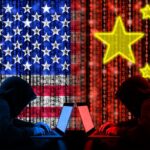
U.S. President Donald Trump’s declaration of a national energy emergency on his first day back in office framed fossil fuel production as a geopolitical weapon. According to Trump, “energy dominance” – flooding global markets with American oil and liquefied natural gas (LNG) – would reassert American power, undercut China’s clean technology leverage and discipline allies into dependence. Eighteen months on, the doctrine is revealing some of its contradictions, and nowhere more acutely than in Taiwan.
The numbers behind assertions of U.S. dominance are real. Boosted by the shale revolution initiated in 2005, oil and gas production has reached record highs, with over 13.6 million barrels of oil per day in 2025. U.S. LNG exports already commanded roughly one-third of the global market before the Hormuz crisis and the EU could depend on the United States for 80 percent of its LNG imports by 2028.
Yet, producing large amounts of oil and gas is not the same as having strategic control. Prices are also determined by OPEC+ decisions, shipping chokepoints, and the accelerating uptake of renewables. These are factors Washington has found difficult to control despite U.S. efforts at obstructing global climate action, pressuring European countries to eschew Russian gas and sanctioning, toppling, or killing the leadership of petrostates deemed too close to China.
Coercive measures have won battles: Venezuela’s government has gravitated closer to the U.S. since the U.S. kidnapped Venezuelan President Nicolás Maduro. The European Union has pledged $250 billion in annual U.S. energy purchases, and similar commitments have been extracted from Japan, South Korea, and Taiwan.
These are in part compliance purchases, not simply market ones. East Asian and European countries are largely buying U.S. fossil fuels for lack of better alternatives and to protect their fraying U.S. security umbrella. They are also seeking to avoid higher tariffs and address shortfalls resulting from Russian and U.S. military aggression, not because the economics have been compelling.
Meanwhile, China has been developing a different energy strategy. It has become the largest clean-technology exporter, now manufacturing roughly 80 percent of the world’s solar panels and 77 percent of wind turbines, dominating electric vehicle (EV) battery supply chains and ultra-high voltage transmission technologies, and controlling most critical minerals.
Although the metaphor of energy wars is simplistic, China embodies a fast-rising electro-state positioned to win the energy war in the long term. In contrast, the U.S. increasingly passes for an insecure incumbent petrostate reliant on its military might, fossil fuel endowment, and a disregard for international law and climate change, to reassert an outdated form of energy dominance.
When Israel-U.S. attacks on Iran triggered the Strait of Hormuz crisis, that divergence became visible. American consumers absorbed fuel-price shocks, while China’s domestic renewable infrastructure, early shift to electric vehicles and massive strategic oil reserves partially cushioned its economy.
While the U.S. government boasted about more than 100 “empty vessels heading to American ports to load U.S. crude,” China was seeing record growth in EV exports. There is no doubt U.S. oil and gas companies are enjoying a windfall, but these EVs will long be on the road.
China has spent the past three decades constructing the infrastructure of the next energy order. In contrast, the U.S. remains a fossil-fuel superpower that must deploy sanctions and military coercion to convince allies and rivals, while having ceded ground in the clean-technology industries it once led.
If China symbolizes the electro-state and the U.S. the petrostate, most other states occupy an uncomfortable middle: dependent on imported fossil fuels, scrambling to build renewable capacity and watching the two giants’ rivalry with mounting anxiety.
That anxiety is particularly acute in Taiwan. The island imports roughly 94 percent of its energy, with LNG and coal arriving through the same maritime corridors that could become contested in any conflict scenario. The Hormuz disruption has exposed an energy Achilles’ heel: roughly one-third of Taiwan’s LNG supplies were affected.
Taiwan’s predicament has three interlocking dimensions. The first is security: if China ever blockaded the island, it would trigger an energy crisis and a semiconductor crisis.
The second is demand: chip fabs and data centers are electricity-intensive facilities. Semiconductor company TSMC alone consumes around 8 percent of Taiwan’s national electricity, and artificial intelligence-driven demand is projected to grow above the national average.
The third is climate: Taipei’s 2050 net-zero target requires tripling renewable capacity while managing a likely short-lived post-nuclear transition as the island shuttered its last reactor in 2025 under conditions of relentless industrial power-demand growth.
What makes Taiwan’s position distinctive is not just this triple bind, but the fact that it sits at the intersection of structural forces reshaping global energy. Its semiconductors are the physical backbone of the clean transition, essential to AI infrastructure, smart grids, EV controllers, and solar inverters.
Almost all of its key supply chains, including for renewable energy equipment, run through China or Chinese-controlled firms in Southeast Asia, which have already shown willingness to weaponize export controls.
Taipei’s response has been to diversify toward the United States, aiming to raise American LNG’s share of imports from 10 to 25 percent by 2029. This is partly strategic logic, partly political hedging as Washington tries to persuade Taiwan to invest in increasingly costly LNG projects. Such buy-in is also a way of currying favor with a U.S. government whose backing, in the event of confrontation with China, Taiwan regards as essential.
There is, however, a harder lesson in all of this than Taiwan’s particular dilemmas. Energy dominance, as a doctrine, mistakes the instrument for the goal. Control over fossil fuel flows is not the same as strategic resilience, as the Hormuz disruption demonstrated. Countries responding to that shock are not concluding they need more oil; they are concluding they need less exposure to it, and that U.S. behavior is having painful economic costs.
The strategic goal for most countries is energy systems that are affordable and cannot be blocked or held hostage. For countries like Taiwan, it means diversifying oil and LNG supplies, grid hardening, increasing use of renewable energy, as well as selective nuclear re-engagement.
For the United States, it means recognizing that fossil fuel supremacy is not a durable form of power; and that for middle-income states caught between the two superpowers, it increasingly resembles a costly and clumsy protection racket, rather than a respectful strategic partnership advancing long-term energy security and climate liveability.
This article was originally published on The Conversation. Read the original article.