Summary created by Smart Answers AI
In summary:
- Tech Advisor observed Honor’s innovative Robot Phone concept at MWC 2026, featuring a hidden 200MP camera on a three-axis gimbal that can track users and dance to music.
- The device’s AI assistant responds to gestures and voice commands, offering personalized interactions like outfit ratings while providing superior videography stability compared to standard smartphones.
- Honor plans to launch this “new species of smartphone” in late 2026, though specific pricing and availability details remain unannounced.
In case you missed its debut at CES earlier this year, the Honor Robot Phone also appeared at Mobile World Congress 2026 in Barcelona.
The phone was showcased along with Honor’s new star foldable, the Honor Magic V6, some tablets and laptops. As well as having a bipedal robot pull off a backflip on stage, Honor used its main keynote to give everyone a deeper look at its upcoming Robot Phone, before running demos with the device on the show floor.
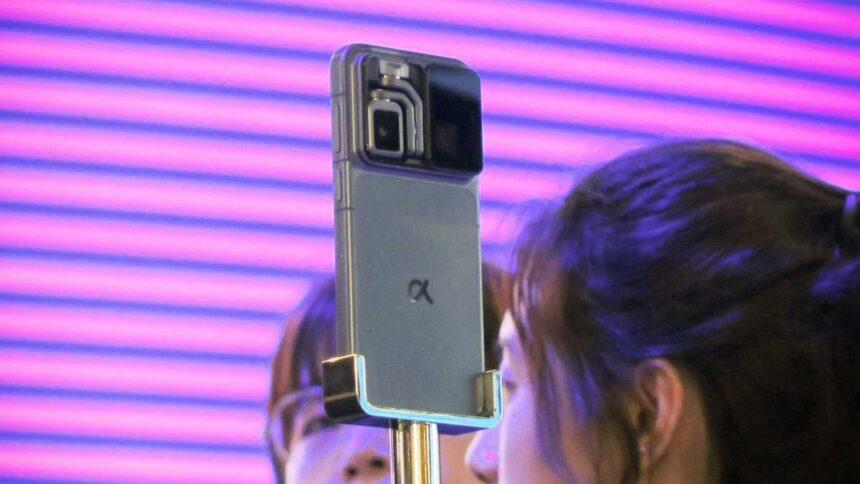
At first glance, the Robot Phone – which Honor frames as a “new species of smartphone” – looks like a conventional candy bar phone, but slide over a panel on the back and you’ll find a camera on a three-axis gimbal neatly tucked away.
To fully embrace its moniker, Honor has gone a step further and infused this motorised camera with personality, thanks to the device’s inbuilt AI assistant.
Although the units on the show floor aren’t retail-ready, Honor CEO Jian Li confirmed the company’s plans to bring the Robot Phone to market in the second half of 2026. As for when, which regions, and how much it might cost, that remains to be seen.
While Honor wasn’t exactly passing Robot Phone samples around for people to try out, it ran demo sessions with its chipper new AI-driven robo-pal, and I took it for a spin.
Fit check
Alex Walker-Todd / Foundry
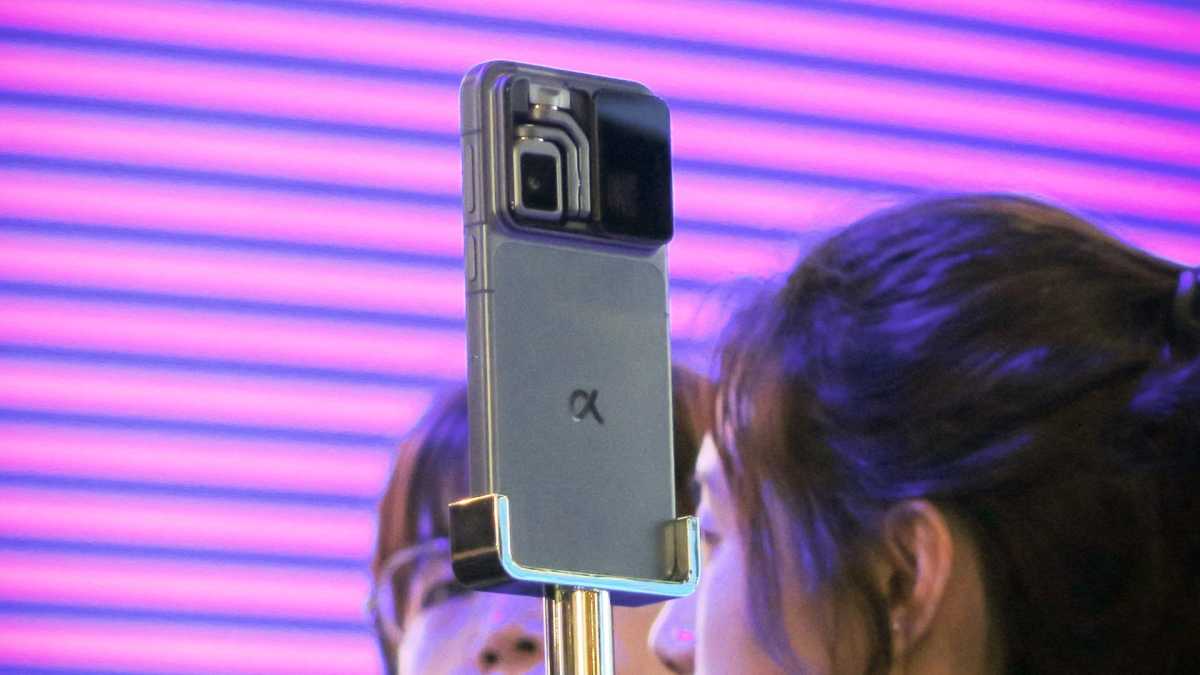
The most interactive aspect of the Robot Phone comes when you fire up its inbuilt AI assistant. All I had to do was hold my hand up in front of the phone’s screen, as if I were waving “hello”, and a chat session with the assistant started, while at the same time unfolding its gimbal-mounted camera, so that it could ‘see’ me.
The gimbal head allowed the deployable camera to follow me around pretty much anywhere, using its full range of motion
Once the camera was deployed, a viewfinder appeared on screen so I could see what the gimbal camera was looking at. Once it recognised me (seemingly the first person it spots in-frame when it powers on), a little yellow ring appeared around my face in the viewfinder, after which the camera started tracking my movements.
Even though the phone’s body was static, the gimbal head allowed the deployable camera to follow me around pretty much anywhere, using its full range of motion.
Paired to a Bluetooth microphone (to overcome the noisy surroundings of the convention centre) I could ask it simple ‘yes’ or ‘no’ questions, and any on-screen response was paired with an enthusiastic nod or shake of the camera’s ‘head’.
While the Robot Phone was looking at me, the demonstrator asked for its thoughts on my outfit. Thankfully, after looking me up and down, the gimbal camera nodded positively, while the on-screen assistant not only said it liked my outfit, but specifically which parts of it stood out, from my black-on-black base layer, to my olive shacket.
Do the Robot
Alex Walker-Todd / Foundry
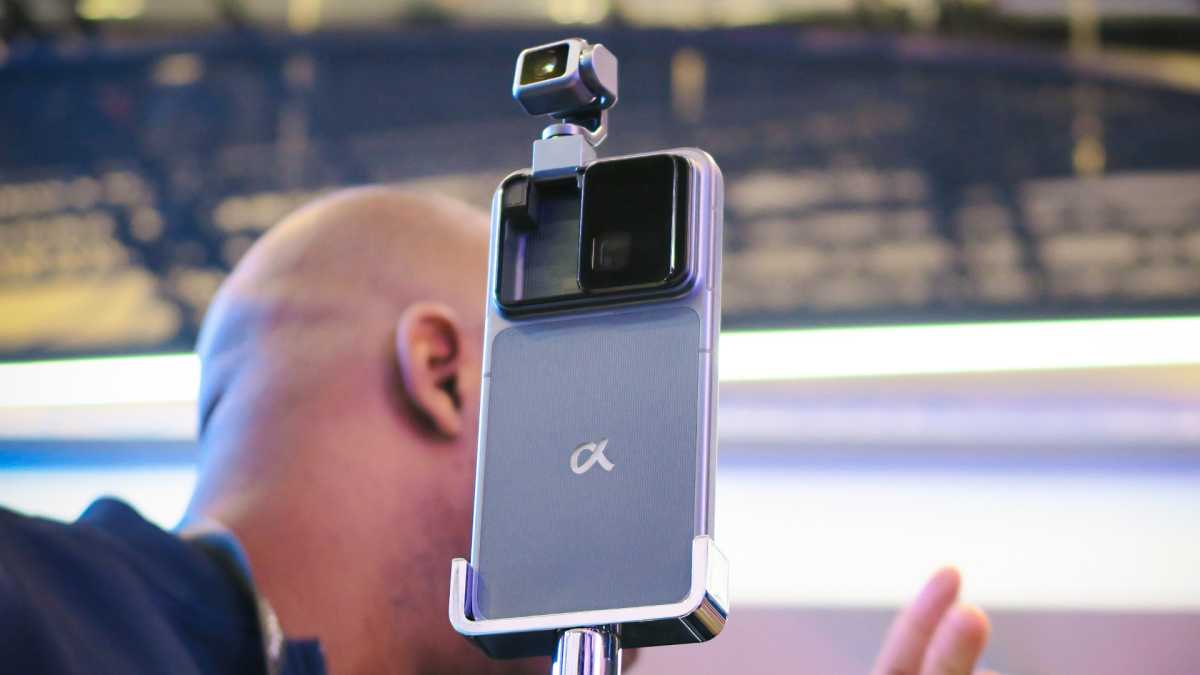
While just watching it unfold gives you a sense of the freedom of movement of the Robot Phone’s camera ‘head’, I was given a further demonstration.
All you have to do is say “Bye” and the gimbal will straighten up, before flipping back down into the recess
I asked it to play some music. Imagine Dragons’ Believer (effectively the soundtrack to Honor’s MWC booth, considering how many demos were running concurrently) started up, and the little gimbal head began to excitedly tilt up and down, twist and even spin 360 degrees through one axis, while panning on another, all while keeping time with the music.
When you’re finished conversing (or dancing) with Honor’s Robot Phone, all you have to do is say “Bye” and the gimbal will straighten up, before flipping back down into the recess in the back of the body. You still have to manually slide the integrated cover back over it.
The assumption is that the final retail model will be able to dance to any song you throw at it, but the library of songs the current concept could get down with is apparently limited to five, for which it’s ‘rehearsed’ the choreography.
New cinematic video tricks
While chatting with the Robot Phone and watching it dance are fun, novel ways to experience physical interactions with the on-device AI, strip away the anthropomorphism and you’ve still got a phone with an inbuilt three-axis gimbal, supporting a 200Mp camera. There’s nothing else like it.
You only have to look at the success of the DJI Osmo Mobile line within the creator community to know that a camera like this allows for impressively versatile creative videography options, ones that just aren’t possible with conventional smartphone cameras.
One of the most obvious advantages is stability, and Honor had both the Robot Phone and a conventional candy bar smartphone bolted to a gyrating hexapod. As you might expect, although the bodies of both phones rolled around in sync, the footage captured by the Robot Phone was solidly locked on the subject, while the viewfinder of the other phone resembled that docking scene from Interstellar.
That face-tracking trick mentioned earlier works within the camera’s ‘Gimbal Mode’ too, which is also where the Spinshot feature is. With a tap, you can have the gimbal slowly rotate on its axis through 90 or 180 degrees, allowing for single-handed cinematic camera moves that would usually require two hands or additional accessories to pull off.
So much more to come
At its MWC keynote, the company also announced a “strategic technical collaboration” with famed cinematic camera maker ARRI, and while details on the nature of the partnership remained limited, the Robot Phone is the device that the companies plan to use to showcase what they’ve been working on. We’ll just have to wait to find out what that is.