The Dominican Republic’s Ministry of the Atmosphere has introduced the launch of a nationwide operation to mitigate the influence of sargassum seaweed, following the detection of an enormous bloom alongside the japanese area of the nation.
This initiative follows Decision 0046-2025, which regulates the gathering, containment, and sustainable administration of the seaweed, based on an official assertion from the ministry.
The operation consists of technical inspections of resort properties between Uvero Alto and Cabeza de Toro, environmental influence assessments, and the administration of momentary assortment websites, authorities stated.
Minister of the Atmosphere Paíno Henríquez acknowledged that the federal government is engaged on worldwide partnerships to put in containment limitations and implement a satellite tv for pc monitoring system to raised observe the sargassum blooms.
The Ministry additionally known as on the personal sector, multilateral organizations, and native communities to collaborate in confronting this pure phenomenon.
A number of weeks earlier, President Luis Abinader advocated for a coordinated, regional response to the rising sargassum menace within the Caribbean through the United Nations Ocean Convention.
Present Scenario: Sargassum within the Dominican Republic (July 2025)
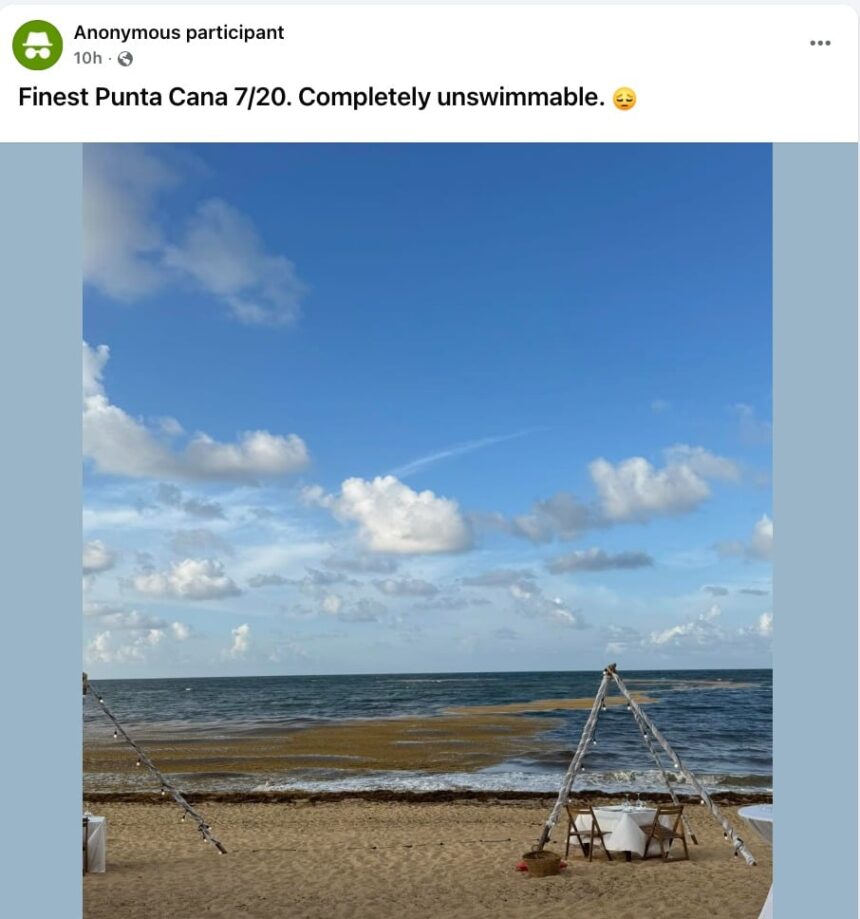
Newest pictures and stories from Fb group: Dominican Republic Sargassum Seaweed Reports (Punta Cana, Cabarete, etc.)


An estimated 31 million tons of sargassum are presently approaching the Caribbean, affecting many coastal areas within the area, together with the Dominican Republic.
Most Affected Areas:
- Japanese coast, notably:
- Uvero Alto
- Cabeza de Toro
- Punta Cana
- Bávaro
- Macao
- Elements of the Southeast Coast (Bayahibe, La Romana) have additionally began to report elevated seaweed accumulation.
Seashores in these zones are experiencing vital buildup of sargassum, impacting tourism, marine life, and coastal ecosystems. Many inns and resorts are implementing cleanup operations, whereas some have reported short-term closures or restricted seashore entry.
The federal government’s efforts to fight the inflow embrace each day removing operations, investments in limitations and monitoring programs, and requires regional cooperation throughout the Caribbean.