Denver will begin issuing its first round of Vibrant Denver general obligation bonds — valued at up to $410 million in debt — after the City Council gave its stamp of approval Monday.
The borrowed dollars will be used to pay for 60 pre-selected capital projects across the city, including improvements to roads, bridges and parks. All of the projects are intended to be completed in six years.
Three major credit agencies gave the city their highest scores for the bonds earlier this month. The AAA ratings indicate to bond shoppers that the agencies have high confidence in Denver’s ability to pay back the dollars.
“Denver’s credit profile is characterized by a very large taxing base with ongoing — although slowing — economic momentum, a sophisticated financial management framework and a historically sound budgetary environment,” according to a credit report from S&P.
The ratings — also from Moody’s and Fitch — came with a gentle warning: They could consider downgrading the city’s grade if its rainy day fund doesn’t recover soon.
“Reserves are comparatively low for the rating level,” according to the S&P analysis.
Their analysis said the city is prioritizing restoring that reserve fund, but over “an undetermined amount of time.” That could mean trouble for future ratings.
“In our view, rating stability is contingent upon the formalization of a reasonable plan to ensure longer-term structural balance, which we believe will prove challenging given the slowed revenue environment, persistent fixed-cost growth, and greater exposure to federal funding cuts,” according to S&P.
Fitch also said it would downgrade the city if its reserves fall below 10% of expenditures.
The city’s bank account approached that 10% threshold last year during a budget crisis. Moody notes that the city took “corrective actions,” like a hiring freeze and furlough days to address its financial constraints. The city also laid off 169 people.
The ratings agencies also cautioned that the city’s budget could have more problems down the line depending on whether the federal government follows through on threats to cut its funding to Colorado and Denver. President Donald Trump has taken aim at Denver over policies that restrict its police department’s cooperation with U.S. Immigration and Customs Enforcement agents.
Still, the ratings gave an overall positive review of the city’s financial performance.
Under “credit strengths” the Moody analysis lists “strong financial management practices and solid reserves government wide.”
“The city’s financial management policies and practices are above average, in our view, as indicated by robust oversight and reporting and conservative budget assumptions, along with a demonstrated track record of planning for nonrecurring costs and budgeting for contingencies,” according to S&P.
Voter-approved bond
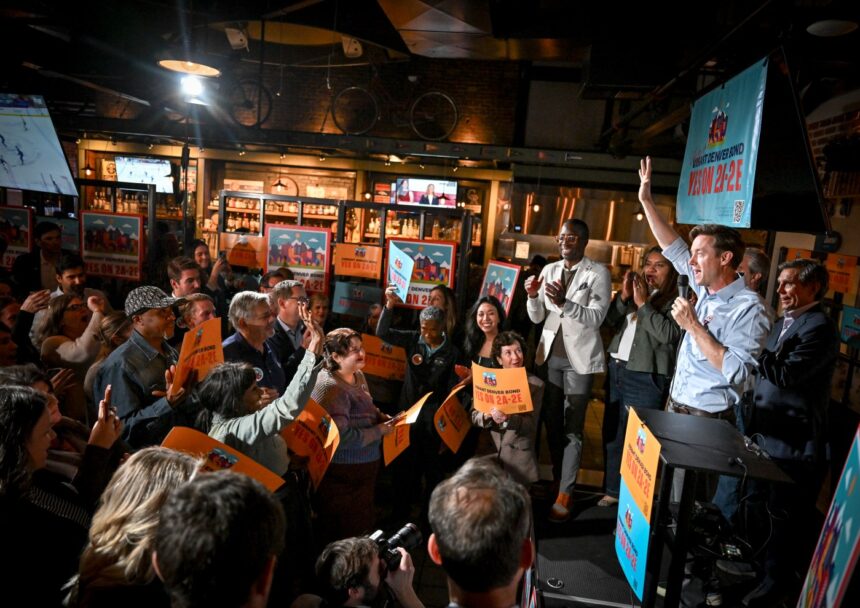
Voters overwhelmingly approved five ballot questions related to the bonds in November. The full bond package totals $950 million in debt.
The topics were divided up by spending category into: transportation and mobility, parks and recreation, health and human services, city facilities and housing. About half of the allocated dollars will go to transportation projects.
Mayor Mike Johnston’s team, working with the City Council and other city leaders, chose the final projects included in the package after a monthslong process to solicit input from residents.
The most costly proposals in the package include $89 million for improvements to the West Eighth Avenue viaduct, $75 million for construction of a new combined facility for first-responder training and $70 million for the buildout of Park Hill Park.
The city will pay bondholders back over time using revenue from property taxes. The package doesn’t require an increase in taxes.
The first round of funding will be up to about $218 million and will have a term of up to 25 year term and a rate of up to 5.5%, according to city documents. The second round will be about $193 million and will have a term of up to 20 years and a rate of up to 6.25%