Cancún International Airport has long been a stress test for peak-season arrivals: multiple international banks landing within minutes, limited processing space, and lines that can erase the first hour of a holiday.
In the run-up to the 2025–2026 high season, Quintana Roo officials have pushed a new message: entry processing is being redesigned for speed.
Recent local reporting cites Governor Mara Lezama saying immigration waits have been reduced to a maximum of about 24 minutes, with a commitment that in high season they “will not exceed 30 minutes.”
Other state communications, tied to coordination with Mexico’s National Migration Institute (INM), say staffing and infrastructure upgrades have already reduced waits to as low as 20 minutes in some periods.
What has changed: staffing, automation, and a clearer service standard
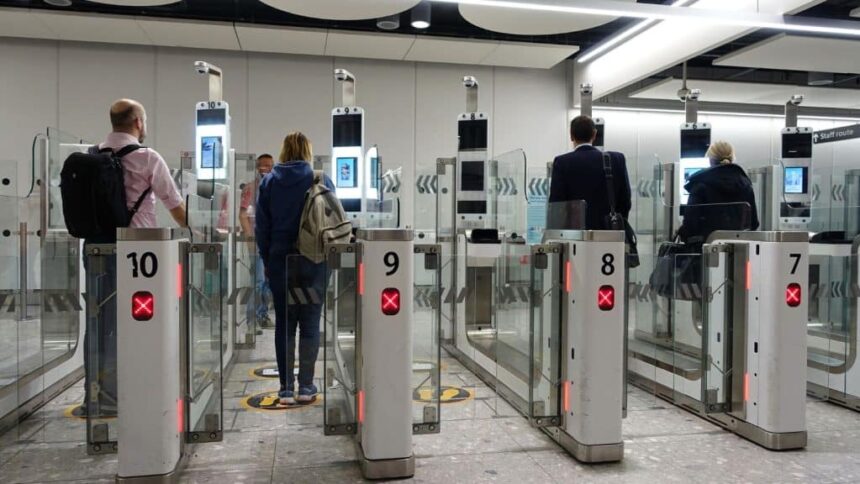
The core operational shift is a broader reliance on Mexico’s Automated Migration Filters—self-service border control gates often referred to as e-gates.
Mexico’s diplomatic guidance describes these filters as automated immigration control that allows eligible passengers to enter “in a personal, fast, secure, and free manner,” without direct interaction with an officer, and confirms they operate in Cancún Terminals 3 and 4.
Eligibility is specific and also explains why some travelers still see traditional lines. Requirements include being 18 or older, traveling for tourism purposes, not traveling with minors, and holding an ordinary electronic passport from an eligible country (including the United States, Canada, the United Kingdom, and much of Europe).
On the supply side, Quintana Roo’s communications office has linked improved performance to more agents and infrastructure, reporting that waiting times at Cancún airport were reduced to as low as 20 minutes.
It also described discussions with the INM commissioner about expanding e-gate capacity and streamlining inadmissibility procedures—an operational detail that matters because secondary processing can slow a hall even when most travelers move quickly.
Local coverage adds that officials are preparing for larger visitor volumes in 2026 and have discussed installing another 20 e-gates next year—an expansion intended to push more passengers through automated lanes.
What still causes delays: the bottleneck has not disappeared; it has moved

Even if passport control speeds up, a “fast immigration” experience does not guarantee a fast curbside exit. The main friction points are familiar—and, in some cases, intensified by faster immigration.
Baggage delivery is now the swing factor. When immigration throughput improves, passengers can reach baggage claim faster than ground crews can unload and deliver bags. Travel reporting has explicitly flagged that mismatch: if you clear immigration in minutes, you may still stand at a carousel waiting for checked luggage.
Not everyone can use the e-gates. Families with children, travelers under 18, and other categories must use staffed counters. At peak times, those lines can swell even if e-gates are moving briskly, because the eligible and non-eligible flows are processed differently.
Technology uptime matters. Automated lanes are exceptionally fast when functioning. When kiosks are down or operating below capacity, passengers are diverted to manual inspection and the wait-time “ceiling” becomes harder to maintain during clustered arrivals.
The post-customs “Shark Tank” can add minutes and confusion. One recent report described the corridor pitch that catches first-time visitors: uniformed salespeople asking, “Taxi?” and “Information?”—a presentation that can delay travelers and redirect them to overpriced transport or timeshare desks. Cancun Sun
How to use the improvements: a realistic arrival playbook
The best way to benefit from Cancún’s faster processing is to pair it with practical risk controls:
Confirm your terminal and eligibility. Automated Migration Filters are confirmed at Terminals 3 and 4, with strict eligibility rules (18+, tourism, no minors in your party, eligible e-passport).
Treat the 30-minute claim as a target, not a guarantee. Officials and local reporting point to a 24-minute maximum and a 30-minute high-season standard, while state communications cite periods as low as 20 minutes. Your experience will still depend on arrival banks, staffing levels, and system uptime.
Reduce baggage exposure. If speed matters, carry-on-only travel is the most reliable way to translate faster immigration into a faster exit. If you must check bags, plan buffer time.
Pre-book transportation and avoid in-terminal solicitations. The most consistent traveler pain point remains the confusion between official services and aggressive sales. Meet your driver outside; do not stop for “help” offered inside the corridor.
Cancún’s arrival hall is not frictionless. But the combination of expanded staffing, wider automated-gate availability, and public performance standards indicates a sustained operational effort to make the two-hour immigration story the exception, not the norm.