France may well be the most-visited country in the world, with over 100 million guests recorded on average each year, but in 2025, Spain got real close to finally snatching the crown.
In total, the Iberian country hosted a whopping 97 million travelers, a 3.5 percent increase over the preceding year, and a record-breaking figure that looks set to riseeven further in 2026.
Blame it on the world-famous Gaudí monuments, the mouth-watering jamón ibérico, and the paradisiacal beaches lining the Mediterranean.
With tourism at this level, it’s not like you haven’t been warned, though: if you’re heading to the touristy side of Spain this year, you can’t exactly be mad about the crowds, much less the spike in hotel and restaurant prices—unless you’re smart about where you go.
Places like Barcelona, Madrid, Mallorca and Seville are busier than ever before, but these 5 lesser-known Spanish spots continue to fly under the radar, and $15, watered-down sangrias are nowhere to be found.
Oh, and guess what, if you’re visiting this spring, you can retire your winter jacket:
Murcia

A much-overlooked gem in the south of Spain, only some 30 miles inland from the shores of Costa Cálida, Murcia boasts one of the hottest microclimates anywhere in the Mediterranean basin, with scorching-hot summers and very mild winters.
It’s still only January, and daily highs are already hitting 65°F. From late March onward, you can expect Murcia to reach a comfortably warm 72°F.
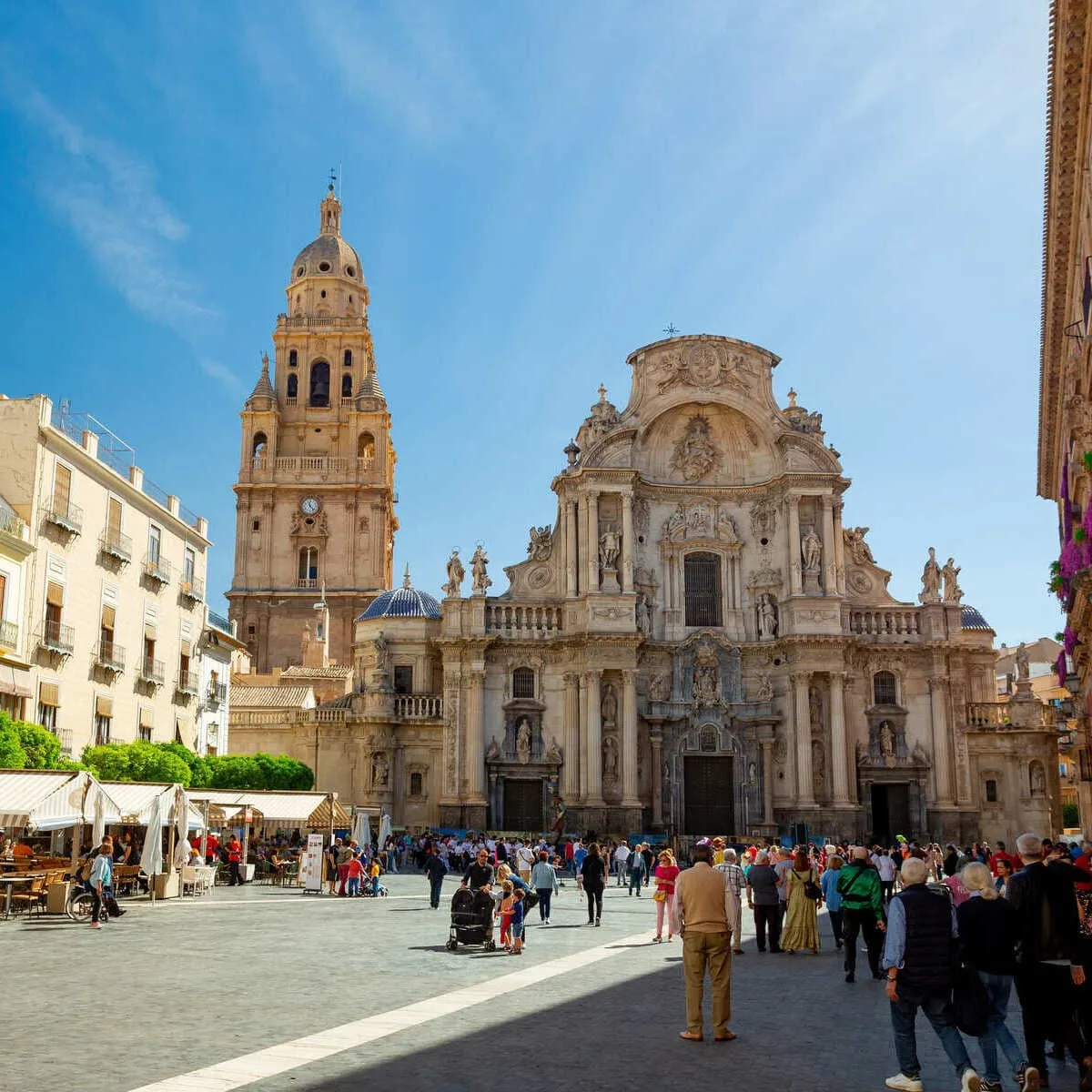
As for the city itself, it is a multi-layered, open-air museum with Roman, Moorish, and Christian influences. Murcia Cathedral is the centerpiece of the landmark-packed historic center, with a lavish Baroque façade and main structure dating back to the 12th century.


On the gastronomy front, make sure you add a no-frills, local-frequented Bocana de Palos to your restaurant wishlist. They’re particularly known for their caldero, a rich and fish dish that’s Murcia’s signature creation.
Water temps aren’t summer-high in April, sure, but if you find 64°F tolerable, the iconic La Manga beaches, a narrow spit between Mar Menor, a saltwater lagoon, and the Mediterranean is roughly an hour’s drive southeast of Murcia.
Elche
In the Valencian heartland of Spain, Elche is a vibrant university city blessed with a rich history, subtropical climate, and a plethora of tapas bars dishing out all your favorite Iberian delicacies and silky tinto de verano.
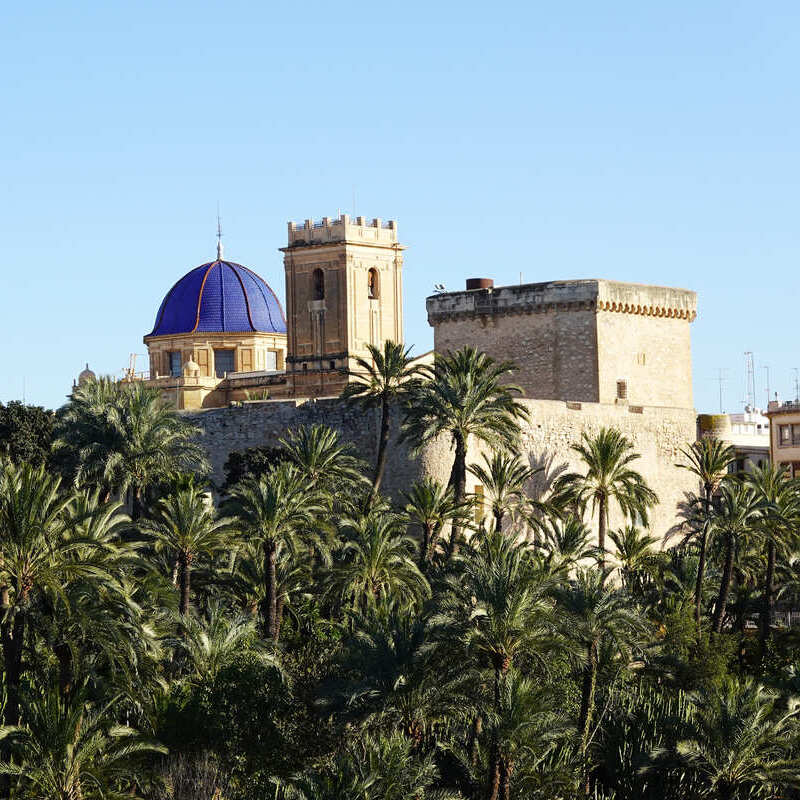
Given temperatures here can hit an impressive 70°F as soon as mid-March, it’s no wonder Elche is flooded by Brits and Germans escaping the winter blues. It’s particularly famous for its palmeral, a sprawling city park covered with over 200,000 palm trees, and indelible Moorish heritage.
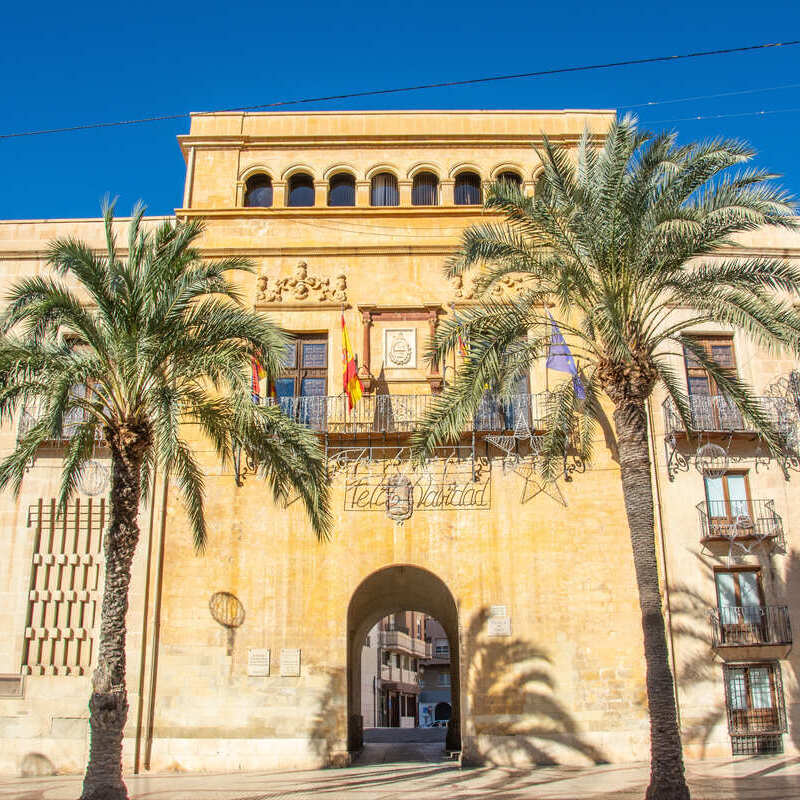
If you’re unsure what that even means, the Moors were Spain’s Muslim rulers from the early Middle Ages up to the Age of Discoveries. Yep, the Spain of pious, devout Christians was once divided and conquered by a number of Muslim caliphates… for over eight centuries.
The park itself is built over UNESCO-listed, Muslim-era irrigation channels, and up the hill that towers above the city, the imposing Altamira Castle, commanding a breathtaking panorama of the Mediterranean, is yet another textbook example of Moorish architecture.
Ceuta


Speaking of the Moors, you probably didn’t know either that, as the Christians regained control of Spain, they pushed their Muslim rivals back into North Africa, and even claimed for themselves pieces of land along its coast.
Ceuta is a Spanish city on the coast of Morocco. Located in Africa, and fenced off from Morocco by imposing barbed-wire fences, and though it’s firmly planted in another continent altogether, it feels like your average Iberian port city:


Picture grand plazas flanked by newspaper kiosks and little mercados, ornate churches that defy the Islamic hegemony of the wider region, and an impressive coastal fortress, complete with ramparts and drawbridges that have kept Ceuta protected from invaders for centuries.
Needless to say, with all the sporadic Sahara-originated heatwaves, Ceuta is far from experiencing seasonal changes like the rest of the country. In spring, it can be as hot as 73°F: perfect if you plan on exploring the exclave’s Mediterranean coves and lush hiking trails.
It is, without question, one of the most unique places you can visit in Spain, and only a short 1-hour ferry crossing across the Strait of Gibraltar.
Cádiz


Listen, everyone’s always banging on about Seville and Malaga, the top two hotspots in the southerly region of Andalusia, and gorgeous as they may be, if you’re asking us, that unspoiled andaluz charm you seek is in neither.
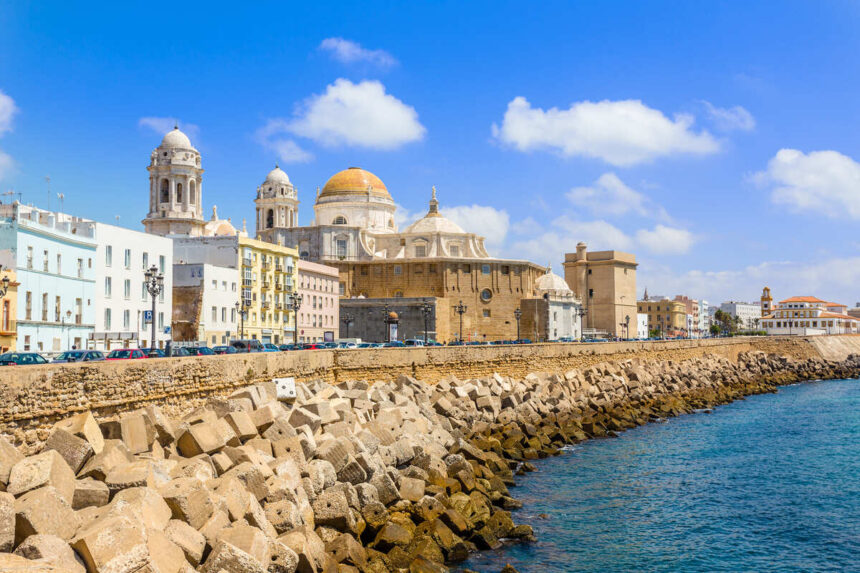
Head instead to a far more offbeat Cádiz, on the southeastern edge of Andalusia: one of the oldest cities in Western Europe, founded by the Phoenicians around 1100 BC, and since then ruled by Romans, Visigoths, Moors, and every major empire in between.

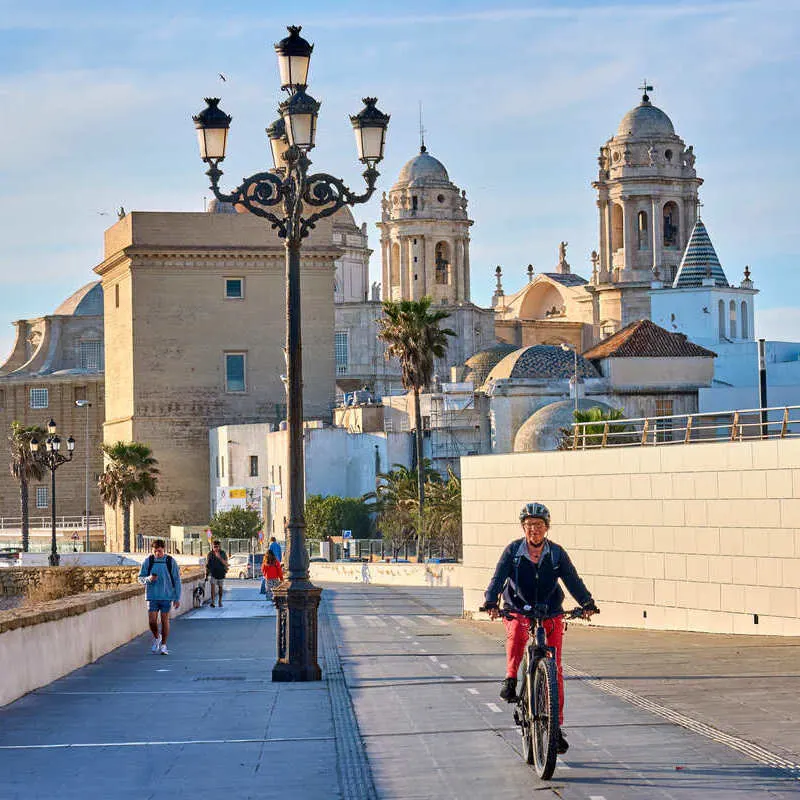
It’s no surprise that the cityscape is particularly diverse, with a partially-unearthed Roman theater, characterized by its preserved tiered seating, right in the Old Town core, a now-levelled 8th century mosque that was later turned into the current cathedral, and many more ancient gems.
You’re probably aware at this point that Andalusia is the warmest region in Europe, and we kid you not, there’s no better time to visit Cádiz and its sandy La Caleta Beach than late April, when it’s 76°F and shorts-weather, but you’re not panting and desperate for the nearest aircon unit.
A Note on Safety
Spain is widely considered one of the safest countries in Europe, with violent crime being exceptionally rare. The most significant risk for tourists is simply petty theft in major cities. However, government advisories don’t always capture the current atmosphere.
To give you the most accurate, up-to-the-minute picture, we rely on the Traveler Safety Index. This tool uses real-time reports from fellow travelers to gauge how safe the country feels right now.
Been recently? Cast your vote below.
ANALYZING LIVE SIGNALS…
CONNECTING TO DATABASE…
✅ VOTE RECORDED
⚠️ YOU ALREADY VOTED
NO INCIDENT REPORTS (SHOWING BASELINE)

Subscribe To Our Latest Posts
Enter your email address to subscribe to Travel Off Path’s latest breaking travel news, straight to your inbox.