Unless you’ve been living under a rock for the past month or so, chances are you’ve come across the horror stories coming out of Europe lately.
As in, the long, snaking wait lines starting at security and extending all the way to the exterior of the terminal building.
They all have one main culprit: the Old Continent’s new Entry/Exit System, or EES, which has travelers registering their fingerprints and undergoing mandatory biometric scans on top of passport control.

A single EES registration is expected to take between 60 and 90 seconds to the usual procedures, but once you add the thousands of travelers arriving every hour, you easily create these huge, untractable bottlenecks at the border.
EES applies to most countries in Europe, specifically all Schengen Area members.
That’s 27 countries, to be exact, but if you’re flying direct to these 34 odd-ones-out, you can escape the whole bureaucratic hurdle this summer:
Ireland
You’re probably wondering why Ireland’s the first to feature on this list if it’s a member of the European Union, thus, subject to EES rules… right?
That’s when it gets a bit too eurogeeky for some, but we’ll try and keep it brief.

When Ireland signed its Accession Treaty with the European Union, back when it was still known as the European Community, it opted out of a number of clauses, primarily due to its unique relations with the larger island nearby. Great Britain, if you’re not geo-savvy.
Ireland maintains an open border with the United Kingdom through Northern Ireland, which is on the island of Ireland, but a British territory, nonetheless. And that’s when the cool, unexpected anomaly comes into play.
As the U.K. was never a member of the Schengen Area, Ireland, by default, abstained from joining in order to avoid friction at the land border.

We all know how explosive some nationalist Irish get at the first sight of a wall being raised (lol).
So today, Ireland remains a part of the EU, yet outside Schengen, even after the UK has left, precisely due to the Northern Irish question. In other words, no EES mess if you’re flying to Ireland!
Of course, this only works if you’re flying nonstop from the U.S. to Ireland, without stopovers in mainland Europe, but that’s not going to be a problem when there’s something like 20+ Stateside hubs offering direct flights to Dublin to pick from.
United Kingdom
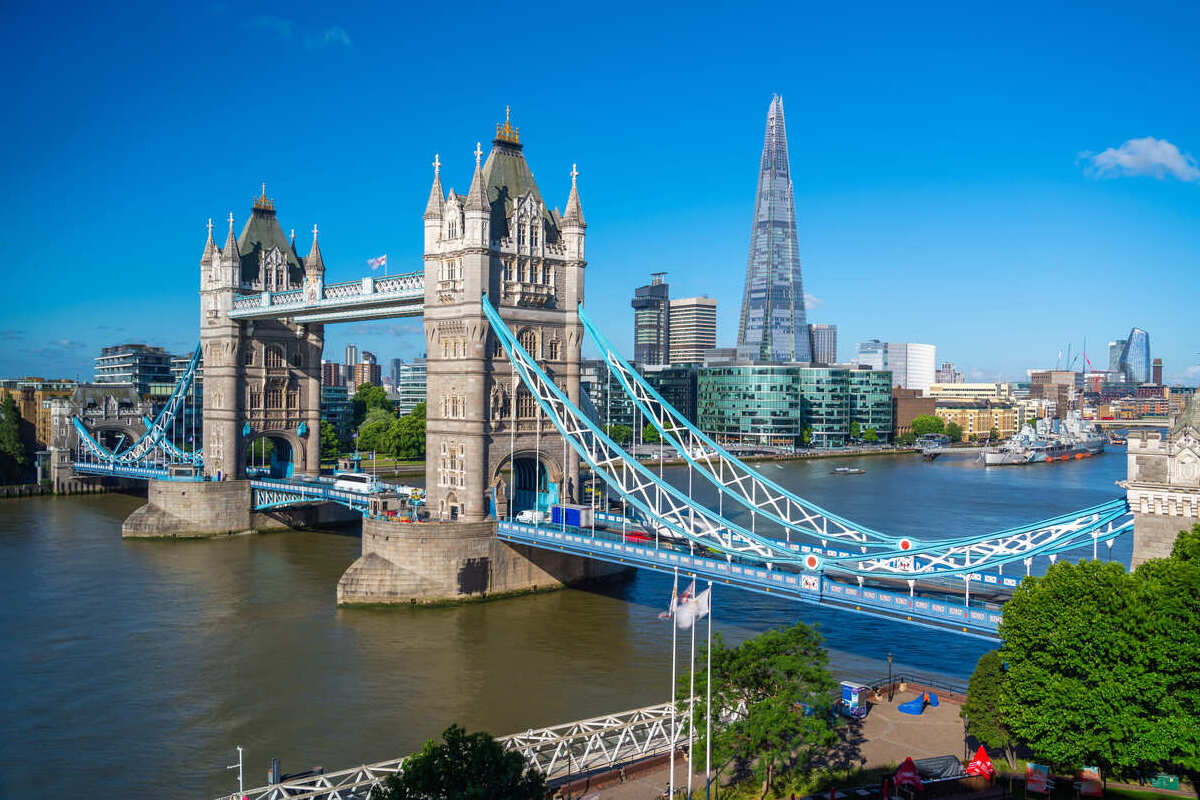
Speak of the devil, the United Kingdom was never a part of Schengen, even during its EU years, and it’s always operated its own border policy somewhat different than that of mainland Europe.
For starters, Americans landing in Britain do not get 90 days (out of any 180-day period) upon arrival, but a whole 180 days upon every single entry, regardless of the time spent in other European countries, which, to be fair, is quite generous.
This means you get a full six months to explore U.K. nations like England, Wales, Scotland, and Northern Ireland, as well as special territories like the up-and-coming Channel Islands (which we’ve covered in depth here), and the Isle of Man, without ever worrying about your clock running out.
EES or not, this hasn’t changed. You can still land in London with your U.S. passport and head straight for the eGates for expedited entry as an American citizen. However comma, something else changed this year, some remain unaware of, much to their dismay upon arriving at the airport:

The United Kingdom now requires Americans to apply for a mandatory entry permit ahead of flying. This is called the UK ETA, and at the time of writing, it costs a salty £16 (around $21.62).
You must submit your biometric information online in advance, wait for your ETA to be processed, and present your confirmation at the check-in desk. Otherwise, you won’t be allowed to board your LDN-bound flight.
On the bright side, there are no long waits or fingerprinting once you do land. Needless to say, if you’re flying there straight from America, or connecting via a non-Schengen territory.
We know, ETAs are a whole new uncharted territory for Americans, and sadly they’re slowly becoming the norm, with countries like Thailand, Japan, and even the European Union touting the launch of their own online permits in the near future.
If you’re flying abroad this summer, please refer to the Entry Requirements page to verify the exact documentation needed at your destination.
Serbia

Serbia used to be one of those mysterious, backwater European countries you only vaguely knew by name from a rusty old map hanging in your dad’s home office, but since the pandemic years, it has surged in popularity with adventurous travelers looking for an edgier, more unfiltered side to Europe.
This is Europe, where the Brussels tentacles have yet to fully reach, where the roads may be potholed, but the people are warm, straight-talking, and the perceived insecurity gives way to safer, well-policed streets and surprisingly relaxed city life.
With its grungy bars housed in repurposed, communist-era industrial warehouses, and elegant shopping streets like Knez Mihailova bringing back memories of a pristine, pre-2015 Europe, Belgrade is, quite honestly, up there in the “Vibrant City Break” department with the likes of Berlin and Budapest.

On that note, you can actually travel by train from Belgrade to Budapest, or vice versa, this summer, combining two of the Old Continent’s safest and most underrated capitals.
By the way, here’s how travelers have been feeling about the safety situation in Serbia lately on the Traveler Safety Index, where it scores an impressive 83/100.
We’ve been parroting it for years, but for the umpteenth time, there’s nowhere safer to be across the pond these days than the Eastern realm.
Unlike Hungary, though, Serbia is neither in the EU, nor Schengen, and it doesn’t require Americans to apply for an online permit in order to fly, either. Bringing your navy-blue U.S. passport suffices, as long as it’s valid for an additional 6 months counting from your planned date of return.
Once again, the no-fingerprinting rule only applies if you’re landing in Serbia directly from America without stopovers in other mainland European countries.
Nonstop Transatlantic flights are available with AirSerbia leaving New York (JFK) and Chicago (ORD). Roundtrip fares on this route range from $700 to $1,100.
Now take this quiz to find your perfect easy entry match!
Question 1 of 4
Pick your ideal trip vibe:
Question 2 of 4
What’s your travel pace?
Question 3 of 4
What’s your perfect evening?
Final Question
Choose your European aesthetic:
Ireland
The Emerald Isle
EES Status: Because it shares a land border with Northern Ireland, it opted out of Schengen! Fly nonstop from the U.S. and you’ll skip the new EES biometric delays entirely.
The United Kingdom
The Slow Travel Haven
EES Status: As a non-Schengen nation, you get a generous 180 days per entry! Just make sure to apply for your mandatory £16 UK ETA online before flying to use the fast eGates.
Serbia
The Edgy Eastern Escape
EES Status: Safe (83/100 index score), welcoming, and completely free of the EU’s bureaucratic hurdles. No mandatory ETAs or fingerprinting required when flying direct!