
At a glance
Expert’s Rating
Pros
- Great value for money
- Excellent display
- Big battery and fast charging
Cons
- Outdated software
- Loaded with bloatware
- Average camera experience
Our Verdict
The Poco M8 Pro offers a lot of hardware for the money, notably with a great display, big battery and fast charging. The mid-range Snapdragon chip ensures good performance too, but the experience is blighted by the bloated software. It’s a good choice for the affordable end of the spectrum, if you can live with the software.
Price When Reviewed
This value will show the geolocated pricing text for product undefined
Best Pricing Today
Price When Reviewed
Unavailable in the US
Best Prices Today: Xiaomi Poco M8 Pro

Xiaomi runs a couple of sub-brands, namely Redmi and Poco which sit below flagships in their positioning. Poco is generally pitched as a youthful brand offering good value while supporting gamers and tech fans, while Redmi is more about mid-range mass market value.
The Poco M8 Pro is essentially the same phone as the Redmi Note 15+ Pro, but with a much simpler name and a budget-friendly £299 price.
However, you get quality mid-range hardware, a large and potent display, and the sort of battery life that embarrasses flagship phones.
But when you’re getting this much goodness for so little money, there has to be a compromise – and with the Poco M8 Pro, there is. I’ve been testing it for the last few weeks to find out if it’s worth buying.
Design & Build: Eye-catching but solid
Poco has a habit of producing phones that look more like gaming phones than its rivals. While the design is the same as its Redmi sibling, the colours are much more interesting.
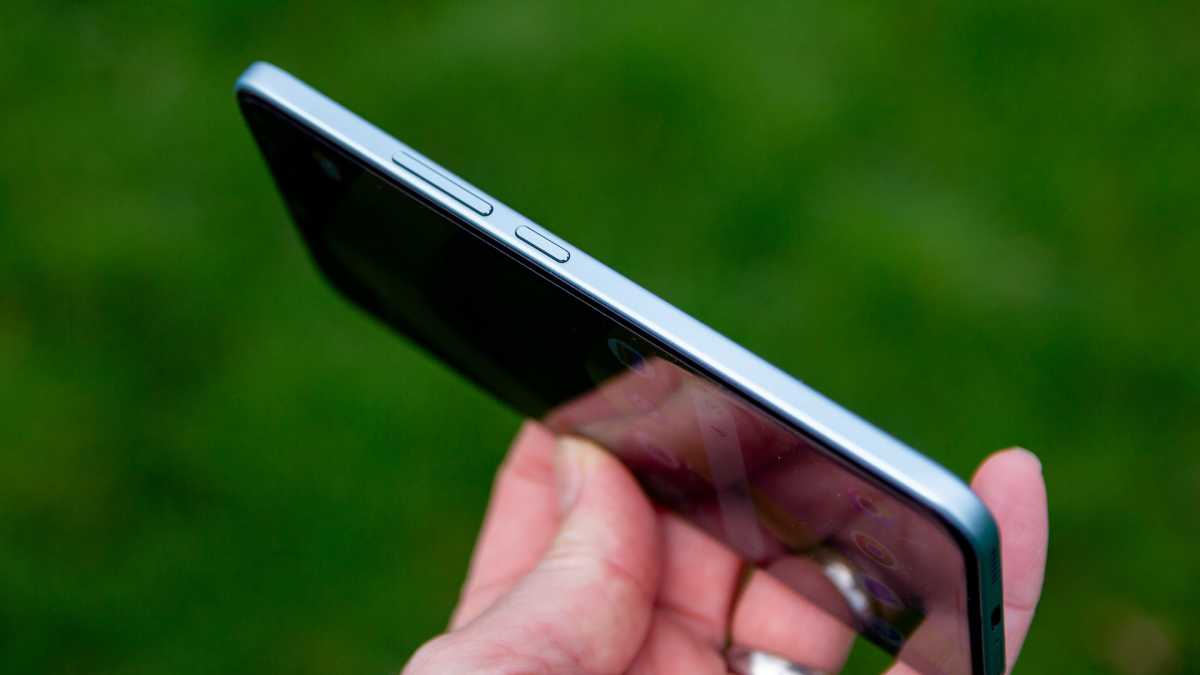
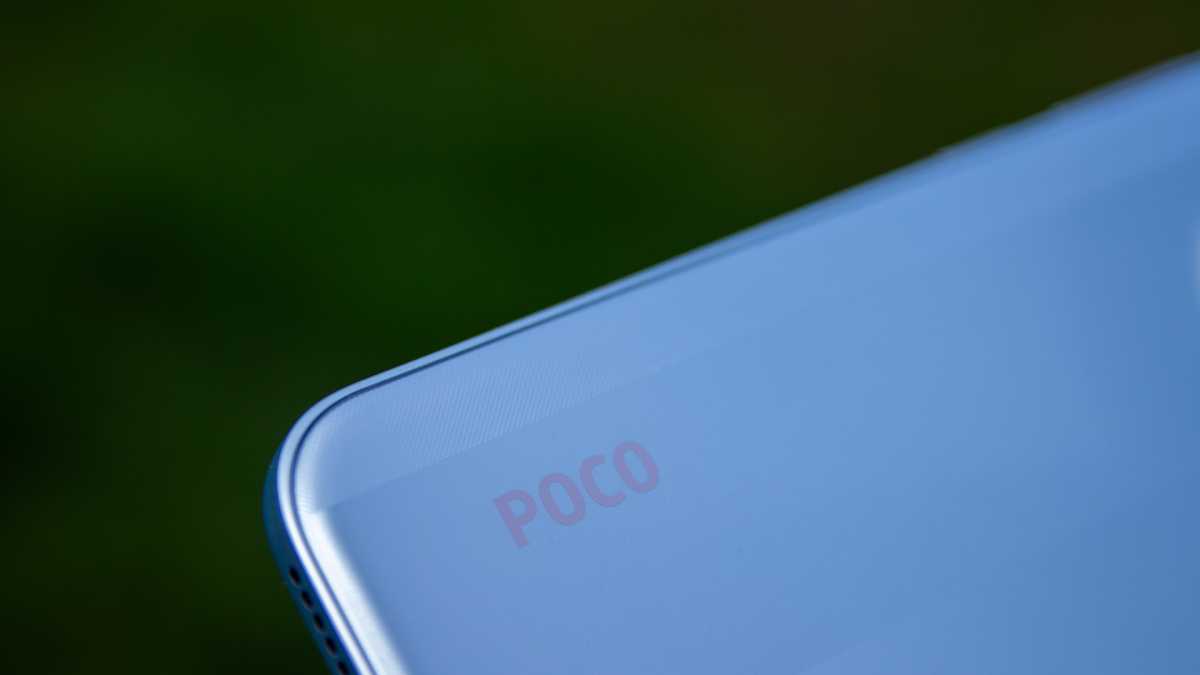
Pictured here is the “Green”, which has a broad striped finish integrating detailing that most phones won’t offer.
Chris Hall / Foundry
It’s a plastic build with a large camera housing on the back. That’s mostly about design, as while it looks like there are four lenses, there’s actually only two, so it’s a design statement to make you think it’s a better camera offering than it actually is.
The 205.9g of this phone means it’s fairly hefty, with the large screen and battery accounting for much of the weight. The screen and the frame curve into the rear to make this large phone easier to grip and I found it comfortable to use.
Further thoughts
- The phone has an IP66 and IP68 protection from dust and water
- The Poco M8 Pro comes with a protective case in the box
Screen & Speakers: Brilliant display
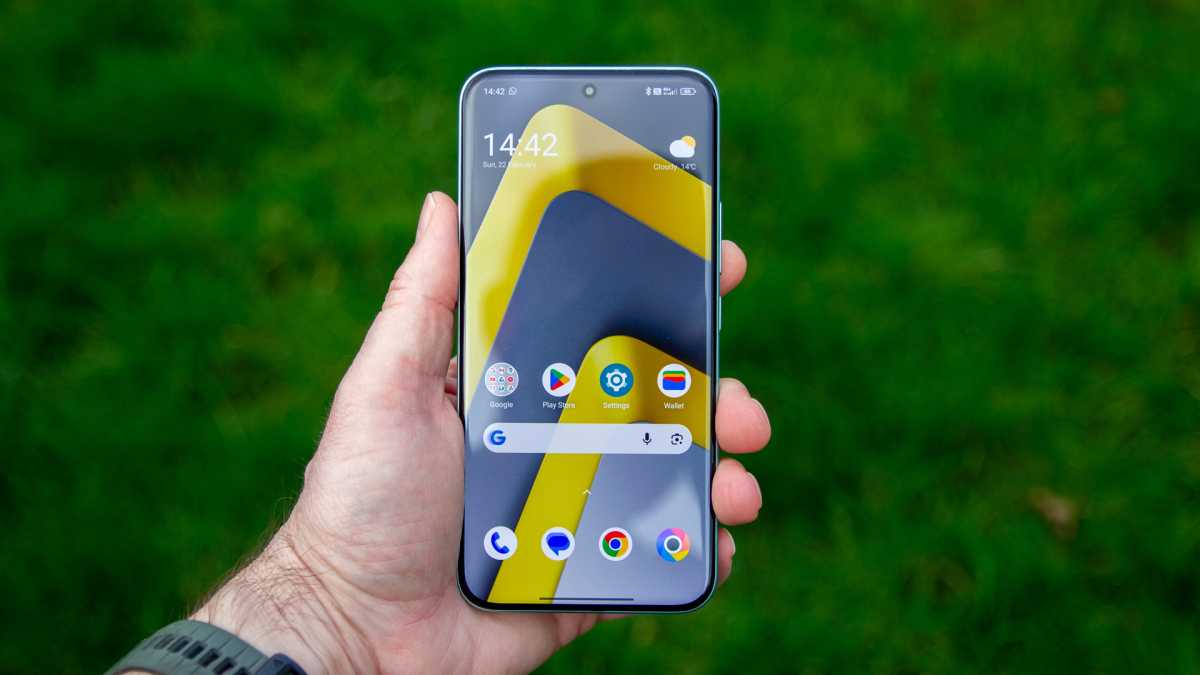
It’s clear to see where the effort has gone into the Poco M8 Pro, with a 6.83-inch AMOLED display that’s bright, vibrant and very capable. This speaks to Poco’s core proposition and there’s little to complain about when it comes to the display.
Chris Hall / Foundry
There’s plenty of detail, it supports up to 120Hz refresh rates and there’s plenty of brightness too – up to 3,200 nits peak brightness, which is great for bringing HDR content to life. In normal use it will reach 1,800 nits, so content remains visible in bright sunlight.
I watched Glass Onion: A Knives Out Mystery on Netflix – labelled as Dolby Vision – and found the HDR presentation to be great.
The stereo speakers on the Poco M8 Pro are good, reaching a surprisingly high volume, but can be a little shrill at top volumes. They’re perfectly good for watching video on the move and for gaming, although I found it easy to cover the bottom speaker with my hand, blocking the sound.
Further thoughts
- The Poco M8 Pro supports Dolby Vision and HDR 10+
- The screen is protected with Corning Gorilla Glass Victus 2
Specs & Performance: Solid mid-range hardware
At this price, it’s the Snapdragon 7s Gen 4 that will be of most interest to buyers.
This is mid-range hardware, a step down from Snapdragon 8 Series chips found in flagship phones. But it offers great efficiency and while not delivering the same power, it’s ample for daily tasks and gaming for all but the most demanding users.

Chris Hall / Foundry
I found it played Call of Duty Mobile satisfactorily, but it doesn’t have the graphical prowess to let you get the most out of the game at higher settings. Even under load, this phone doesn’t heat up hugely, but the graphical performance won’t compete with flagship models.
I found the Poco M8 Pro to offer a solid connection and found that calls were made and received without any problems, with callers coming through nice and clear. But there’s no microSD card slot and no support for eSIM, only dual physical SIM.
Further thoughts
- There are two versions of the Poco M8 Pro, 8/256GB or 12/512GB
- Supports WiFi 6 and Bluetooth 5.4 standards
Cameras: A fairly basic experience
There are two cameras on the Poco M8 Pro, a 50Mp main camera and an 8Mp ultrawide camera. On the front, there’s a 32Mp selfie camera.
The main camera is generally good in bright conditions, but it isn’t particularly strong in lower light, where even day shots indoors show signs of noise.
The main camera also offers 2x zoom via cropping with looks good enough, but then out to 20x via digital zoom, which is best avoided, as the quality quickly degrades. The ultrawide camera isn’t great, with a slightly different colour tone to the main camera – noticeable in all but perfect conditions.
The front camera is best used in good light, because the slightest dip in brightness brings noise, while images can be very contrasty and not too flattering. The portrait mode works well, with adjustable bokeh effect and I think it’s worth turning down a notch to get the best results, as the edge detection is a little harsh and not too realistic.



Further thoughts
- The Ultra HD mode will let you shoot at the full 50Mp resolution if you wish.
- Video capture up to 4K 30fps is offered.
Battery & Charging: Flagship shaming
Some brands are aggressively increasing the battery capacity and charging rates of their devices and Poco is just one of those brands.
That sees a huge 6500mAh battery in this phone – compared 5000mAh in the Samsung Galaxy S25 Ultra.
The huge battery not only accounts for some of the phone’s size and weight, but it also means it can breeze through a day. Thanks to that mid-range hardware, endurance is one thing that this phone is really good at. I didn’t need to charge the phone at the end of most days, happy to charge it every other day instead.
Chris Hall / Foundry
To enable that charging there’s support for a massive 100W wired charging. There’s no charger in the box as standard for most European countries, but some regions will get a charger.
I tested it with a 100W charger and found it got 71% in 30 minutes, charging from 23% to 94%.
Further thoughts
- Supports 25W reverse charging for accessories.
- There’s no wireless charging on the Poco M8 Pro.
Software & Apps: A bloated mess
Where Poco falls down – and it’s something that Redmi and Xiaomi phones suffer too – is in the software experience.
For the Poco M8 Pro, it comes in a number of forms. Firstly, the phone launches on HyperOS 2 based on Android 15, so it’s already out of date.
There are 4 years of OS updates and 6 years of security updates, which is typical of this level of phone, but not competitive with phones from Google, Samsung or even Honor.
Chris Hall / Foundry
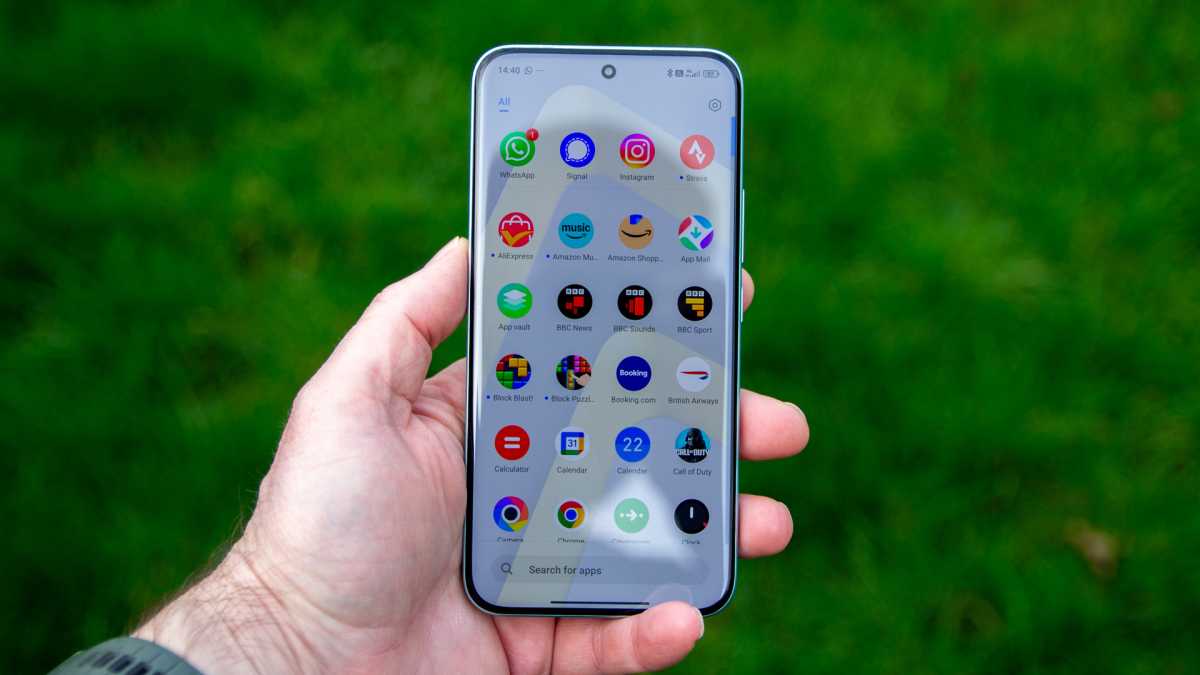
Then there are extensive changes that come with HyperOS, so this phone feels substantially different to a typical Android phone. Part of that equation is the bloatware – pre-installed apps on the phone (I counted about 14 apps I couldn’t opt not to install) – and then there’s duplication that comes from Xiaomi’s apps too.
Stick to Google’s apps, they’re much better.
The user interface is filled with options and some may like the additional choices for customisation and control, some might find that it’s just a bit of an overload. Certainly, the experience is slower, less consistent and less refined than something like the Pixel 10a, but then it’s half the price.
Further thoughts
- Most of the pre-install apps can be removed once the phone has been set up.
- Gemini is present on this device for all your AI conversations.
Price & Availability
The Poco M8 Pro is available for £249 at the time of writing, direct from Mi.com, with an RRP of £299. It’s also available from Amazon and unavailable in the US as always.
The Redmi Note 15 Pro+ is a natural alternative but with a 200Mp main camera, but at £100 more, I don’t think it’s worth it.
Elsewhere, Google’s cheapest phone is £499 – the Pixel 10a – offering longer software support, a cleaner experience and better cameras, but a smaller display and less impressive battery.
Samsung’s rival device would be the Galaxy A36 (£399), although Poco beats it on the spec sheet in almost all areas. Samsung’s advantage is cleaner software with longer support.
Check out our list of the best budget phones and best mid-range phones for more options.
Should you buy the Poco M8 Pro?
The Poco M8 Pro delivers a lot of hardware and great performance for a great price. It’s hard to beat Poco for value, making this a great choice for those who can’t afford a flagship phone but want some of that power. The battery life and charging are better than most flagship rivals, too.
But the software doesn’t make for a great experience and there’s a lot to be done to remove bloat and move to Google apps to make everything smoother and cleaner. It’s a phone that you’ll need to tinker with to get the best experience – and it might just be worth it for the price.
Ultimately, this is a great budget phone, with an impressive display and battery life, for not a lot of money.
Specs
- HyperOS 2, based on Android 15
- 6.83-inch, 1280 x 2772 AMOLED, 120Hz
- Optical fingerprint scanner
- Qualcomm Snapdragon 7s Gen 4 chipset
- 8/12GB RAM
- 256/512GB storage
- 50Mp, f/1.6 main camera
- 8Mp, f/2.2 ultrawide
- 32Mp, f/2.2 selfie
- Up to 4K @ 30fps rear video
- Stereo speakers
- Wi-Fi 6
- Bluetooth 5.4
- 6500mAh battery
- 100W wired charging
- 163.34 x 78.31 x 8.31 mm
- IP66/68 certified
- 205.9g
- Colours: Black, Silver, Green