We are long since past the days when the World Cup might be the occasion when outstanding yet unknown footballers emerged fully formed onto the global stage. There are no uncharted lands in football. Check the squad lists of the most unheralded of teams bound for North America this summer, and you might find a smattering of Eredivisie regulars in one, the best and brightest of the Super Lig in another.
For those of us tasked with previewing the tournament, that at least has its advantages. The stars of 2026 are probably going to be known commodities. We’ve had several months of top-level football to know who’s heading around the bend into the biggest weeks of their career in just the right form. So who might they be? Let’s dive into a few of the archetypes from past World Cups in pursuit of the players who could define this one.
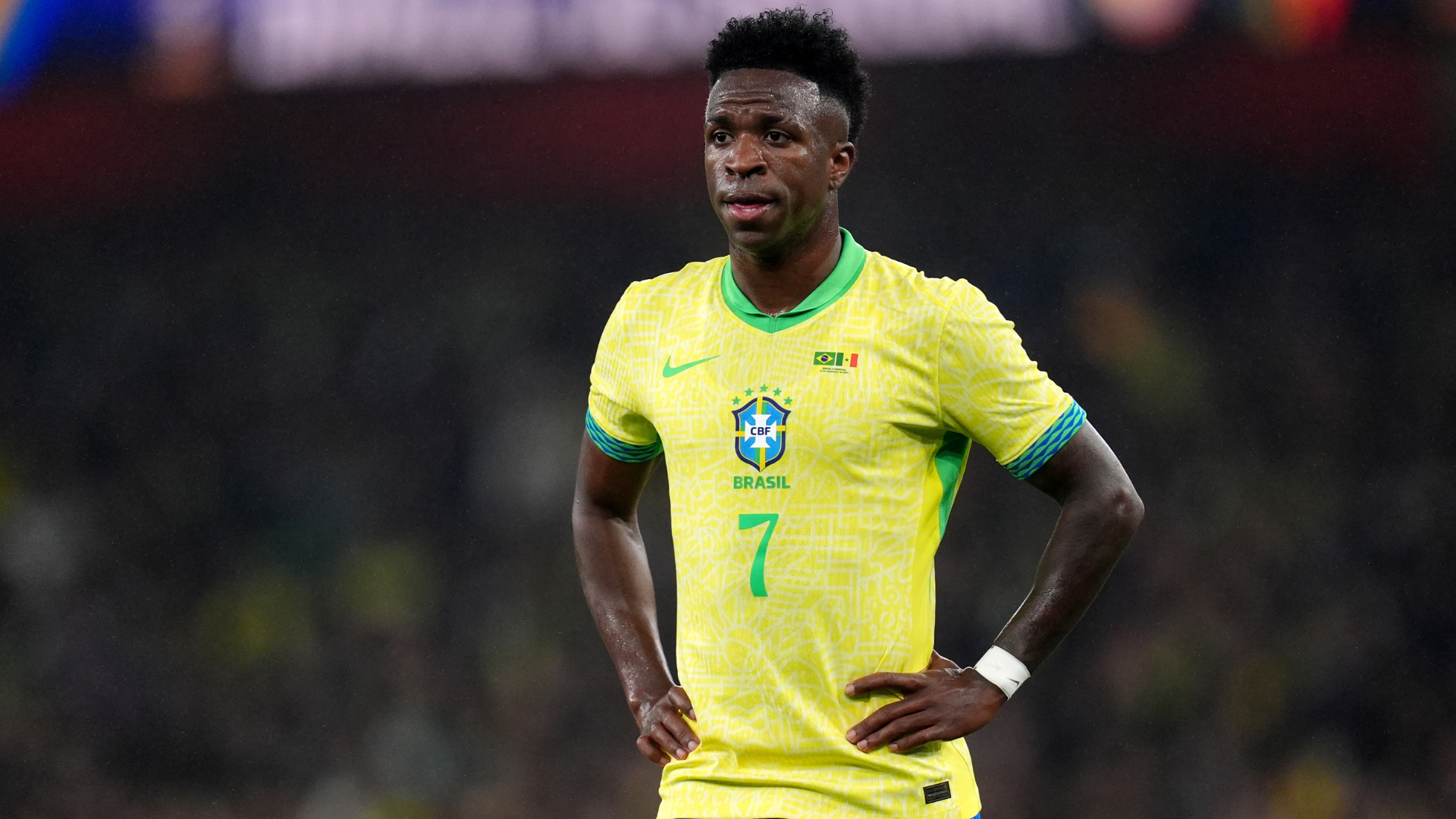
The superstar chasing immortality: Vinicius Junior (Brazil)
Whatever happens over the remainder of his career, the 25-year-old Vinicius Junior will go down as one of the game’s greats. He has been the best player on a Champions League-winning Real Madrid team (and maybe the second best on another). Whether the presence of Kylian Mbappe on his current side inhibits his ability to win the Ballon d’Or he so craved in 2024 is a matter for another occasion; even if he never gets that primo-individual honor, he will go down as one of the greats of his generation.
When a World Cup comes around, players like Vinicius need to be thinking in different terms. This is the time for legacy-making a la Lionel Messi in 2022, Mbappe four years before him, or Zinedine Zidane in 1998 and 2006. This is when the best bend the narrative arc of football around them, and boy, are the circumstances well-suited for Vinicius.
It has been 24 years since Brazil last won a World Cup; the only time they have had a longer wait for glory was for the first title they won 28 years after the competition began. Despite the excellence of the player pool over the last quarter of a century, this is not a team that has come all that close all that often since then, the 7-1 defeat to Germany in 2014 being the one exception. For all the unceasing talk about Neymar’s return, this can be Vinicius’ team in a way Madrid isn’t. He will have a quite outstanding supporting cast, including Raphinha in attack, a defense that profiles as miserly, and in both Gabriel Magalhaes and Casemiro, potentially prime exponents of the inswinging corner meta. Ultimately, it is Vinicius who can be the best player on this team and rise to the occasion in a way that eight goals from 45 caps would suggest he hasn’t so far.
CBS Sports
Crucially, Vinicius has looked back to his best in the second half of 2025-26. Xabi Alonso’s sacking and injuries to Mbappe, Jude Bellingham and Rodrygo have seen the attacking mantle resolutely thrust on a forward who has proven himself more than capable of carrying it. The goals and expected goals that had stalled out a little beforehand have shot up in the early months of this year.
It has been a reaffirmation of Vinicius’ greatness. And yet when you are Brazilian, it generally takes a particular something to move from the top tier to the pantheon. That is the World Cup. If Brazil win their sixth, you suspect it’ll be because their No.7 has taken over the tournament.
The next $100 million man: Yan Diomande (Ivory Coast)
Gossip column frequenters will not need much telling about Yan Diomande, the latest burgeoning talent flying through the Red Bull pipeline, with a move to the Premier League or a European superclub seemingly inevitable. For the rest of you, well, yeah, what I just said. Diomande is flying, almost literally. Only two players have gone faster than the 19-year-old’s 36.3 km/h top speed in the Bundesliga this season, and in an age where teams are increasingly minded to break the press by going long, there are few more coveted assets than searing pace.
You can’t coach that, but there is more to Diomande than flat track speed. Most tempting of all for his potential suitors is that he is two-footed, something which has allowed RB Leipzig boss Ole Werner to try the Ivory Coast international off the left even if he favors the right flank. Close control, speed, and an ability to go inside out: it shouldn’t surprise you that Diomande has the second most successful one vs. one’s of any player under the age of 21 in Europe’s top five leagues. It should probably surprise you even less that Spain’s Lamine Yamal leads the way in that particular regard.
It is a similar tale of Diomande being near the top of his age cohort when we look at his expected output over the 12 months up to March 24. There are six names ahead of Diomande, the top four of whom have already been snared by superclubs. Among those further back, you will find the likes of Alejandro Garnacho and Mathys Tel, both of whom moved for sizeable fees in the summer. Given the technical qualities that Diomande has, it’s easy to see why RB Leipzig’s price for his services is said to be nine figures.
CBS Sports
Nine caps into his international career, Diomande already looks like someone who can take over tournament games. He scored the second and excelled as Ivory Coast beat Burkina Faso in the Africa Cup of Nations round of 16, that he was off color in the subsequent game against Egypt goes some way to explaining why the Ivorians were eliminated when they were. With Germany and Ecuador to come in the World Cup, Diomande will have his chances to show what he can do against some of the best defenses in the tournament. Excel in those games and the clamour for his services will grow ever louder.
Leading man at last: Luis Diaz (Colombia)
You thought we were going to be chatting about the other Bayern Munich winger, didn’t you? Well, the thing is Michael Olise has long since established himself as one of the outstanding attacking forces in the game, something of a Robin to Harry Kane’s Batman, just, you know, better. If the Champions League goes to the best team in Europe right now, then Olise and Kane might be duking it out for the Ballon d’Or at the World Cup.
And it seems somewhat appropriate that a section that is supposed to be about Luis Diaz has become about the other Bayern Munich forwards. For most of the four years since the Colombian left Porto for Liverpool, he has been profiled as a support act. First, it was the third guy behind Mohamed Salah and Sadio Mane and then the likes of Darwin Nunez and Cody Gakpo arrived to theoretically diminish his place on the depth chart. Even when Diaz was the number two, as he was in minutes among Liverpool attackers last season, there was a pretty sizeable gulf in importance between him and Salah.
At Bayern there is a little more parity between Diaz and his running mates. He gets more touches in the box than Kane, for instance, and more minutes than Olise. You would struggle, however, to argue that he is not the third guy in this offense. At 29, that is probably the role he is destined for in the remainder of his prime club career.
TruMedia
That ought to be different when Colombia begin their first World Cup campaign since 2018, though if James Rodriguez is anything like he was either at that tournament or the Copa America six years later, perhaps that changes. Still, Diaz did heavy lifting in getting El Tri through qualifying, his seven goals bettered only by Lionel Messi, and brilliant performances in Argentina and Peru were a surefire sign of just how much he can deliver as the main man in an attack. Given that Nestor Lorenzo’s side has a pretty favorable group of Portugal, Uzbekistan and an intercontinental qualifier, you’d fancy this to be a team that makes a fairly deep run, affording Diaz a spotlight role he has so rarely gotten in his career so far.
Memo Ochoa prize for iconic goalkeeperdom: Dayne St. Clair (Canada)
It is a truth universally acknowledged that a World Cup must be in want of a cult hero goalkeeper. I give you Jose Luis Chilavert, Rene Higuita, and, of course, the great man himself, Mexico’s Guillermo Ochoa. These are the players, often from a less-heralded nation, who take over a game with their panache and their shot-stopping excellence. You root for their team in no small part because of their goalkeeper. In 2026, maybe that’s going to be Dayne St. Clair.
Of course, he will be a familiar face to MLS viewers, but the rest of the world is not that familiar with Inter Miami’s goalkeeper. I’ll confess I’m not either. That’s part of the appeal for this sort of player at the World Cup, the nearest you might get to disproving the assertion of no hidden stars that I made at the outset. St. Clair profiles as the sort of player who might just have a tournament for the ages, assuming he can hold onto his No.1 spot ahead of Orlando City’s Maxime Crepeau.
TruMedia
An All-Star in his first season as a full-time starter with Minnesota United, he has improved as a shot stopper in each of the last three campaigns. In 2025, when he was voted the league’s best goalkeeper, he prevented 8.43 goals, kept 11 clean sheets in 34 games and saved over 75% of shots on his goal. His personal highlight reel from last season does not lack for the spectacular, St. Clair using every inch of his body to get in the way of shots. Watch his brilliant performance against San Diego in September and tell me that doesn’t feel like a player who could go Tim Howard vs. Belgium in this tournament.
The thinking man’s player of the tournament: Elliot Anderson (England)
If you want a sense of the depth of quality of the Premier League, consider that Elliot Anderson, one of the outstanding young midfielders in the sport, is still at Nottingham Forest nearly two years after Newcastle felt compelled to let him go. It would have cost an almighty amount to get him last summer; you suspect that this year someone will just pay it. After all, his repertoire is expanding at a remarkable rate.
In 2024-25 he was one of the Premier League’s outstanding ball-winners, trailing only Moises Caicedo and Bruno Fernandes in possession recoveries. The first thing that changed this season is that he entered a category of his own out of possession, which means he now has 58% more ball recoveries than any other player in the division, a fact that makes you wonder what’s wrong with that metric. Anderson surely can’t be that good.
The real explosion for Anderson this season, anyway, has been his work on the ball. He was the outstanding performer in Forest’s crucial 3-0 win at Tottenham, taking a true relegation six-pointer by the scruff of its neck. Compared to 12 months ago, he is a player who you can run a team’s build-up through, someone who will give you 10 progressive passes per 90 minutes, a chance or two created, and 60-plus passes. A year ago today, Anderson ranked in the 27th percentile for progressive passing across Europe’s top five leagues, the 74th for progressive carries. Now, well this is not a million miles away from a dream profile for a DM.
CBS Sports
For England, well, this might just be the player that unlocks so many others. Since Kalvin Phillips’s departure, this team has never quite worked out who should dovetail with Declan Rice, particularly now that the Arsenal man has proven he deserves to drive upfield a little more. In World Cup qualifiers Anderson already looked like someone who could enable that not only by mopping up any threat from the opposition but by finding Rice, Morgan Rogers, or anyone else who needed the ball in dangerous spots.
The team that always wanted a Rodri of their own might be getting a guy who could, if required, run a game from the base of midfield. Or snuff every attack that came his way. He’s not too bad at creating shooting chances for others either. If England are to beat the heat and end 60 years of hurt, you suspect it’ll be Harry Kane, Jude Bellingham or Bukayo Saka who is the star of the show. The real ones, though? They’ll know it won’t have been possible without Anderson.