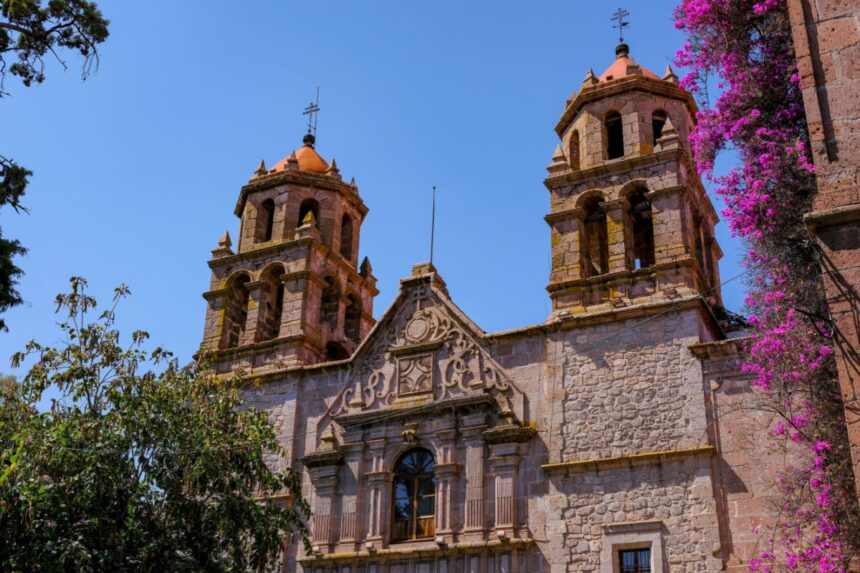
Morelia probably isn’t the first destination that comes to mind when you think of Mexico, especially with Cancun’s world-famous turquoise waters and luxury resorts, or Mexico City’s ornate architecture and ancient pyramids.
The capital of the central Mexican state of Michoacán, it is one of the country’s oldest and arguably prettiest cities, though it’s historically struggled to position itself as a tourism powerhouse… until now.
Tourism levels in Morelia grew by over 107% in just over 5 years, with 7.04 million visitors recorded last year, compared with 3.4 million in the pre-pandemic year of 2021.
2026 is expected to be an even greater year, with Martínez Alcázar, the Mayor of Morelia, predicting the city’s picture-perfect Historic Center, and vast cultural offer will attract even more tourists who’ve been craving something deeper, more meaningful than just poolside mimosas.
In other words, Morelia finally seems to be on the international tourist’s radar, and in case you’re wondering why…
Mexico’s Very Own Ville Rose
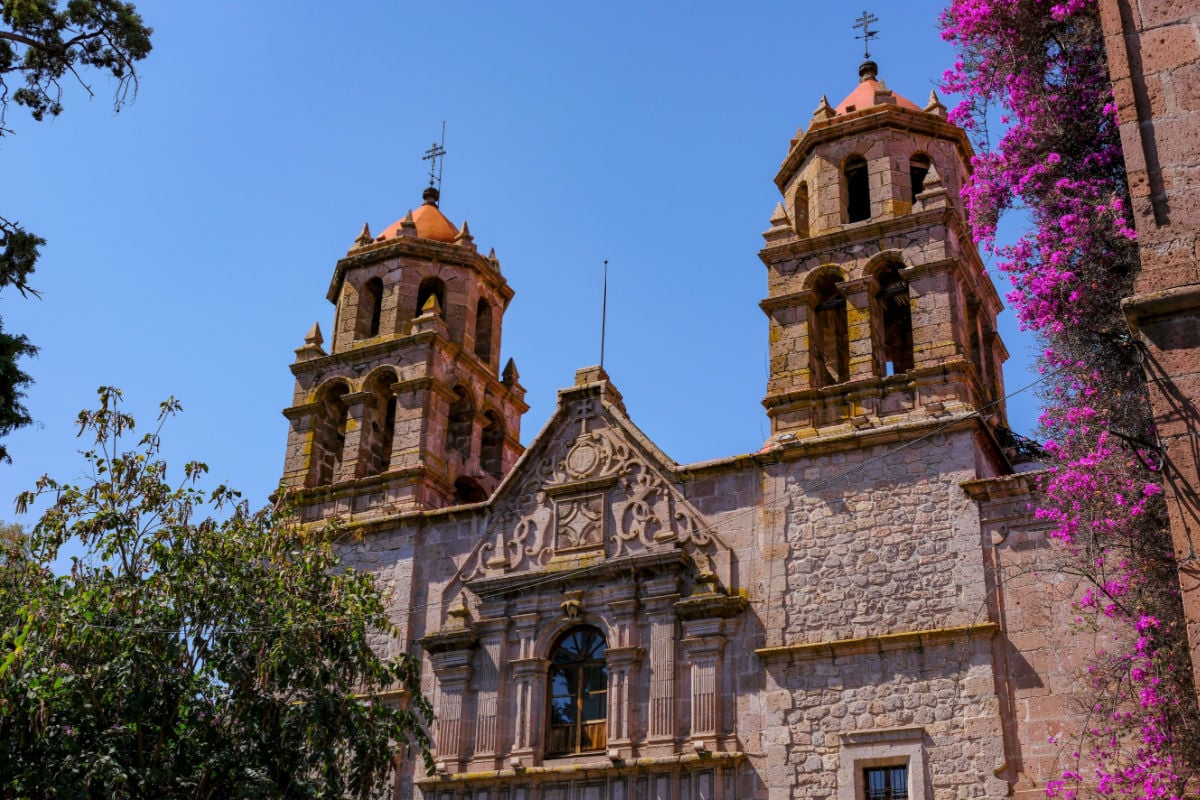
Dubbed the ‘Pink City of Mexico’, Morelia stands out amid the country’s myriad of picturesque colonial-era gems due to the distinctively-pinkish hue of its Historic Center.


Most of the surprisingly well-maintained 17th- and 18th-century buildings, erected by the Spanish during the colonial period, were built with Michoacán’s characteristic cantera rosa.
This is a pink stone formed from compacted volcanic ash that turns a noticeable salmon pink due to minerals and oxidation, but we digress. The most important thing is that the entire cityscape looks like a cotton candy-colored dream.
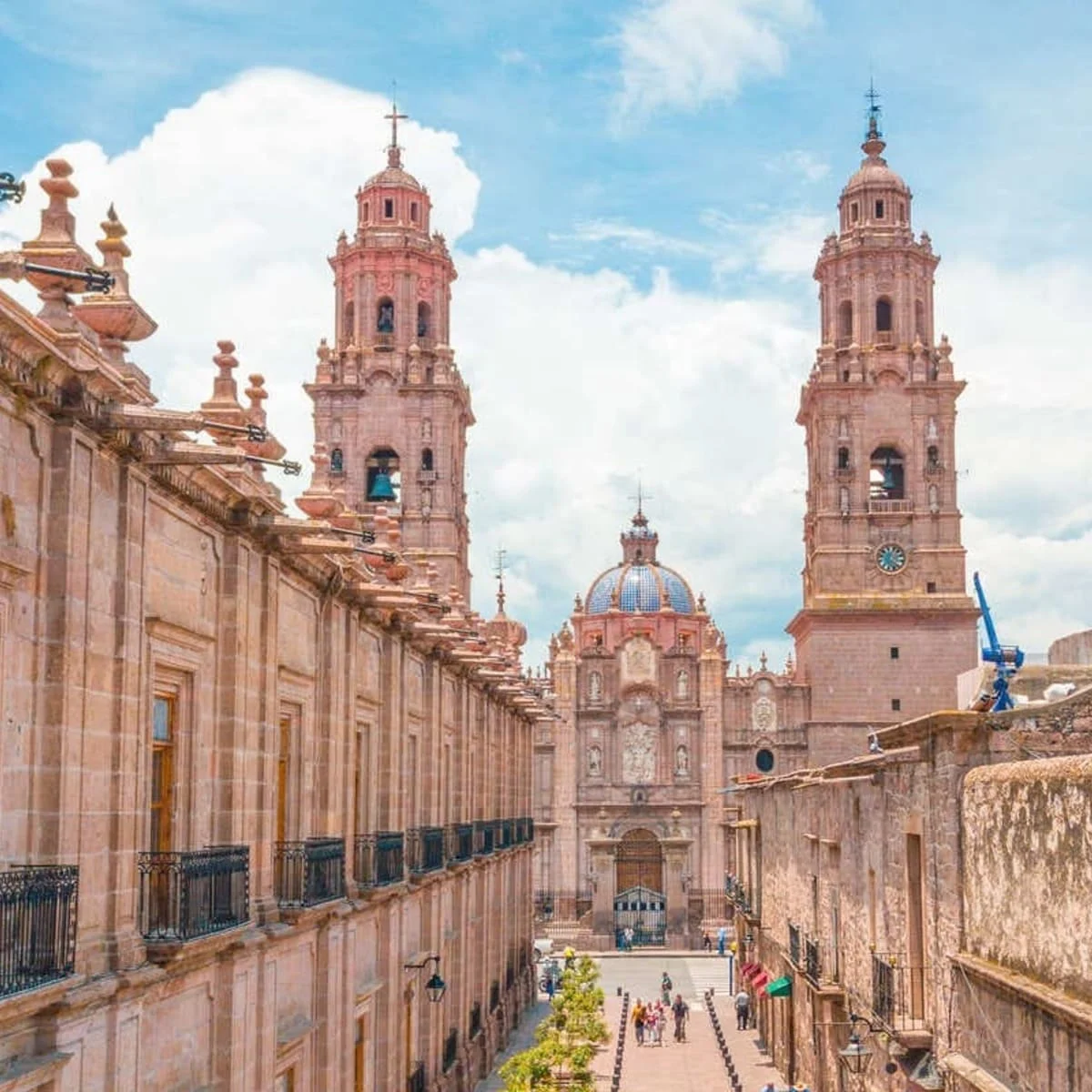
There’s no better spot to soak up Morelia’s pink-stone charm than Plaza de Armas, the city’s main and largest square, flanked by a lineup of historic edifices. The tallest, Morelia Cathedral, boasts soaring Baroque towers that’d make your average European church blush.
Sorry, French Notre-Dames.

Why The Cathedral Is So Darn Impressive
Morelia Cathedral is one of those delicately sculpted architectural gems you’d more commonly find across the pond instead of the New World—but hey, at the time it was built, engineers and artists barely made a distinction.
Built almost entirely from cantera rosa, the same volcanic stone present in most of the Spanish civic buildings around the Old Town, it’s a beautiful earthy-tone giant rising 230 feet above the dome-dotted skyline.
It was also built over a loooong period, with the first stone laid as early as 1660, and the final touches added in 1744. Needless to say, it displays a wide range of styles, from a decorated Baroque façade to the Neoclassical-influenced interior.


Must-sees include the silver altar, featuring elaborate colonial metalwork, a now-iconic 16th-century statue of Christ made from cornstalk paste, a traditional indigenous technique, and a monumental German pipe organ delivered from Europe in the early 1900s.
200+ Heritage Buildings To Be Found
The cathedral’s an absolute marvel to admire, but it’s one of only 200+ preserved colonial structures scattered around a UNESCO-protected Historic Center.
We’re not sure we’ve mentioned it yet, but Morelia is one of the best-preserved Spanish-era cities in the Americas: it’s full of elegant plazas bordered by arcades, fountain squares that look like they belong in a different century, and cobbled streets made for wandering.


After the cathedral, the second-most impressive monument is, without question, the Aqueduct: picture 250 pink stone arches ringing the historic municipality, Rome-style. It used to carry water into a fast-growing, bustling colonial Morelia from nearby springs in previous centuries.
It’s no longer operational, but it’s still quite the sight.
Often overshadowed by the cathedral, Santuario de Guadalupe is an unassuming church set in a lush garden that hides an extremely colorful interior, with pink, blue, and gold floral stucco work.
To catch a glimpse of elite life in 17th-century Morelia, a visit to Palacio Clavijero is not to be skipped: despite its new role as a contemporary art museum, this historic colonial palace continues to boast a large arcaded courtyard, opulent chambers, and verdant gardens.


A narrow alley adorned with pink arches and wrought-iron gates with fountains, the aptly-named Callejón del Romance is where you go for that intimate, early-evening romantic stroll. Don’t miss the poetry plaques displayed on the walls on both sides!
Hotels Are Filling Up Quick
Last December, Sectur (Mexico’s Secretary of Tourism) announced Morelia is the 2nd best-performing ‘heritage city’ in hotel occupancy.
As the data revealed, the Michoacán destination registered an occupancy of 67.6%, placing second among Mexican World Heritage Cities, behind only Mexico City, and sixth out of 70 cities across the country overall.
This only further indicates that its popularity is rising among visitors, both domestic and international, and fast.


Despite the clear uptick in demand, hotel rates remain on the affordable side, with Historic Center overnights ranging from $54 (Howard Johnson by Wyndham) to $72 (Hotel Casino Morelia).
Culture aside, affordability is a key factor for tourists picking Morelia as their next destination. The local economy has not been effectively dollarized, unline Cancun’s, and you can still eat lavishly in mid-range restaurants while spending as little as $21 per person (as per Numbeo estimates).
How Safe Is Morelia?
Last but certainly not least, there’s the safety factor.
If you’ve been using our newly-launched Traveler Dashboard to navigate safety guidelines across different destinations worldwide, you might have found out that travel warnings can vary drastically between Mexican states.


While parts of the country are very safe, others are absolute no-go zones, especially for American tourists.
Sadly, the state of Michoacán falls under the latter, having been designated a Level 4 destination. This means Americans should refrain from visiting due to high crime rates and gang activity, but there’s an exception in place for Morelia specifically:
Although the advice covers much of the state, the U.S. State Department still allows U.S. government employees to travel to Morelia. Usually, this means an exemption is also in place for citizens, provided they follow precautionary measures.
Is Morelia An Exception To The Rule?
They must arrive preferably by air, or using specific highways from Federal Highway 15D, and they must remain in the well-policed, safer Historic Center.


A Level 3 or 4 warning sounds scary, but it’s not the end of the world. Wanna know what some other hugely-popular Mexico destinations are on the no-go list? The incredibly-safe, yet unjustly-lambasted Mazatlán, and the equally tourist-friendly Riviera Nayarit and Puerto Vallarta.
Most of the time, statewide warnings do not reflect the situation on the ground in touristy spots, even when they are subject to blanket restrictions.
Don’t know how to make sense of all this complicated, conflicting information? The Travel Off Path Traveler Dashboard has come to the rescue.