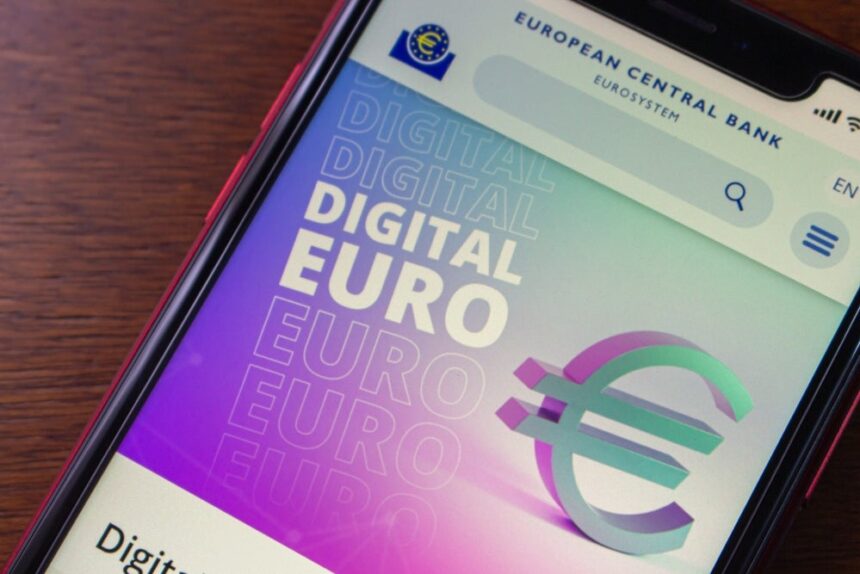
Monetary sovereignty has once again become a hot topic in Europe. Initiatives to establish a digital euro, a diversity of euro-backed stablecoins, and domestic alternatives to US-owned payments systems have all accelerated.
The obvious goal is greater European control over its core payments infrastructure. There is, however, a broader opportunity to play for: laying the right foundations for an emerging ecosystem of tokenised finance.
As settlement models evolve and digital assets become more embedded in capital markets, the innovation of Europe’s payments infrastructure will shape how effectively the region can support the adoption of tokenised money and assets. Ensuring participation from a wide range of regulated payment firms will be essential for long-term success.
At the core of these initiatives is the digital euro. The EU Parliament’s 10 February vote supporting the European Central Bank’s proposal for an online and offline central bank digital currency marked an important step towards the legislative framework required.
The ECB is currently in its preparation phase, with a decision on whether to issue a digital euro expected after the legislative process is complete. If political agreement can be reached between Parliament and the Council this summer, and if technical work proceeds smoothly, we could see a pilot as early as 2027.
When the time comes, the ECB’s design and implementation must not lose sight of a core principle: the European single market functions best as a dynamic, competitive environment. In payments, that means ensuring the digital euro leverages the bloc’s diverse ecosystem of EMIs and fintechs.
The question now is whether the digital euro creates an open platform for innovation or a closed shop that quietly re-centralises power to a handful of incumbents.
EMIs and fintechs are not add-ons to the market; they are the primary engines for reaching the businesses and consumers that traditional banking institutions have historically underserved. If euro-based tokenised finance is to succeed, EMIs and fintechs must be involved in the design of the digital euro from the start.
We have been here before. SEPA and TARGET2 rails were built first and foremost for banks, with non-bank EMIs and payment institutions waiting more than a decade to get full rights to direct participation.
The risk is that history repeats itself, and a “banks first, everyone else later” stance is adopted: in other words, a digital SEPA 2.0 scenario. At best, this would be a missed opportunity; at worst, it represents a structural bias against the groundbreaking firms driving most of Europe’s frictionless payments innovations.
We need a seat at the table during the 2027 real-world pilot phase to ensure these rails are built for the current and future economy, not just legacy systems. The design brief should be simple: any bank, EMI or PSP that is fully authorised, supervised, and already serving customers in euros should be involved in building and using the new rails from day one.
The retail digital euro is only one side of the coin. One of the strongest cases for a digital euro is its potential at the wholesale level. Tokenised central bank money – the ECB’s “Appia” track – promises “atomic settlement,” with cash and assets moving simultaneously, effectively eliminating the delays and liquidity drag that remain in cross-border payments.
This could be game-changing. I say “could” because any efficiency gains from tokenised central bank money depend entirely on the availability of the infrastructure to all players. If only a limited number of large banks can plug directly into tokenised settlement, everyone else will be forced to route through them, reintroducing cost, friction and dependency into a system that tokenisation has the potential to streamline.
While a sovereign alternative to the USD CBDC or stablecoin is strategically vital, it only matters if businesses and consumers use it. In a fast-moving market where private wallets, stablecoins and fintech apps offer speed, transparency, and control, a clunky CBDC cannot compete effectively. The user experience must match or exceed the nimble seamlessness of the fintech solutions they currently use.
Fintechs have moved into the gaps left by traditional banking. Today, EMIs and PSPs help exporters manage FX risk, support marketplaces with thousands of micro-transactions, and unlock cash flow for SMEs through real-time settlement rails.
Failing to invite fintechs to the table at the pilot phase risks the digital euro becoming an unwieldy sovereign tool neglected in favour of shiny, superior foreign alternatives.
Just this week, Bundesbank President Joachim Nagel – considered one of the ECB’s more conservative voices – argued that euro-denominated stablecoins could be valuable for low-cost international transfers, complementing – not competing with – a digital euro. This is a critical admission. If the future assumes that public and private euro money coexist to sever the dependence on dollar-based rails, then designing a bank-only, closed CBDC platform would be a contradiction in terms.
The Bank of England’s work on a potential digital pound faces the same choice. The UK already has a strong track record with fintech providers, and it cannot afford to build a central bank-only product that sidelines the trailblazers who made it a global fintech leader.
The lessons from Europe are clear. Digital labs and pilots must be more than regulated experiments with legacy institutions. There must be a focus on usability, interoperability and reliability. And this means prioritising non-banks from the outset.
The digital euro must be a truly collaborative effort that treats payment providers as essential players in the new economy. That is what fair play looks like in the digital age.
James Simcox, COO and CPO at Equals Money x Railsr
“Why the digital euro must be an open platform, not a closed shop” was originally created and published by Electronic Payments International, a GlobalData owned brand.
The information on this site has been included in good faith for general informational purposes only. It is not intended to amount to advice on which you should rely, and we give no representation, warranty or guarantee, whether express or implied as to its accuracy or completeness. You must obtain professional or specialist advice before taking, or refraining from, any action on the basis of the content on our site.