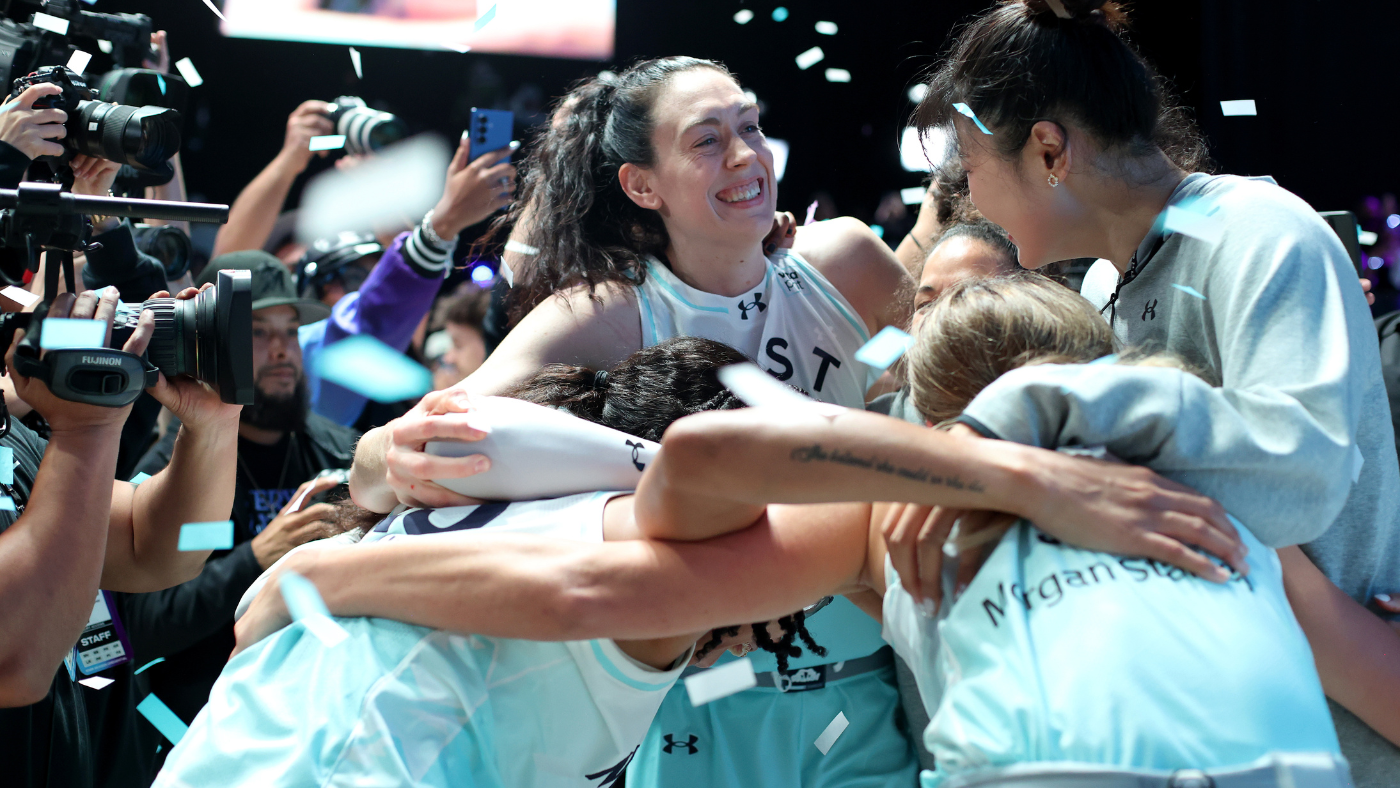
On Wednesday night in Miami, Breanna Stewart scored 32 points and added four rebounds, four assists, two blocks and two steals to lead the Mist over the Phantom 80-74 to claim the 2026 Unrivaled championship. Stewart is one of the most prolific winners in team sports history, but this was the first time she was crowned victorious in a league she co-founded.
“I pride myself on being a winner and continuing to kind of uplift and build a space for all players, and that’s what I’m really excited about,” Stewart, whose long list of accolades includes three WNBA titles, two EuroLeague crowns and four national championships at UConn, said after the game. “Unrivaled has been a tremendous success from Year 1 to Year 2, but to be on top, crowned as the champions, it doesn’t feel any better.”
This was the second season of Unrivaled, the 3-on-3 women’s professional league that Stewart co-founded with fellow UConn alum and WNBA star Napheesa Collier. This season, the league expanded from six teams to eight teams and added a developmental pool for young players. Sophomore campaigns of any kind can be notoriously difficult, especially in start-up leagues that attract a lot of novelty viewership out of the gate. Unrivaled’s second season certainly proved that success isn’t a straight line.
The league once again failed to sign one of the most popular and transformative sports personalities in the United States, Caitlin Clark, or the best player in women’s basketball, reigning and four-time WNBA MVP A’ja Wilson. (It initially failed to bring back Angel Reese as well, though she was able to sign a surprise deal for the final few games of the season.)
Most concerningly, television ratings were down significantly midseason, which generated a lot of negative headlines, especially from those eager to uplift stories about women’s sports failures. Now, context matters — the league started earlier this year to accommodate a FIBA window, so it had to go directly against more football games. Still, nobody wants to see a ratings decline.
But if you’re looking for positive signs about Unrivaled’s business model, you don’t have to look far. League commissioner Micky Lawler provided some other impressive stats before the semifinal games, noting that the league’s revenue grew from $27 million in its first season to $45 million this season and that merch sales more than doubled.
The most important thing that Unrivaled did in 2026 — besides continue its spectacular midseason 1-on-1 tournament — was hit the road and prove the power of being a streamlined, agile business. Unrivaled is based in Miami, where it plays in the Sephora Arena, an intimate soundstage with about 1,000 seats that was built for the television audience. But in January, the league hit the road for a tour stop at Xfinity Mobile Arena in Philadelphia that was a rousing success. The event sold out and, with 21,490 fans, broke the record for the most-attended women’s professional basketball regular-season game in history.
The Philly stop went so well that when the league found out in the following days that Barclays Center in Brooklyn was open on the day of its semifinals, it decided to add that tour stop with just three weeks notice. Again, the tickets sold out. Monday night’s semifinals were a star-packed spectacle that featured two thrilling games to boot.
“We didn’t play it safe to build this league, so we don’t need to start playing it safe now,” Unrivaled CEO Alex Bazzell told reporters in Brooklyn. “That’s not in our DNA.”
The television ratings are concerning, but the ability to mobilize the women’s basketball community on that short of a notice shows that Unrivaled has real influence in the space already, and that the connection it is fostering with that community is both genuine and lucrative. That is nothing to sneeze at in a crowded sports and entertainment marketplace.
Imagn Images
There are a lot of unknowns in Unrivaled’s future. Whenever a WNBA CBA deal is reached, it will mean a significant bump in salaries for all players, even if that bump isn’t as high as the WNBPA is fighting for. Will players still want to play in leagues during the offseason — particularly one that is a different format — and risk injury or fatigue? Can a league that is built around teams that aren’t tied to a specific city or place still find a way to engender the passionate, ongoing fandom that fuels most of team sports? Will the league be able to keep sponsors interested if television ratings continue to go down and Clark and Wilson continue to sit out? How will other women’s basketball ventures, such as Project B, impact Unrivaled’s ability to attract top talent?
But questions alone don’t equate to failure. In its second season, Unrivaled proved that strength comes in all different forms. Score yet another win for Breanna Stewart.