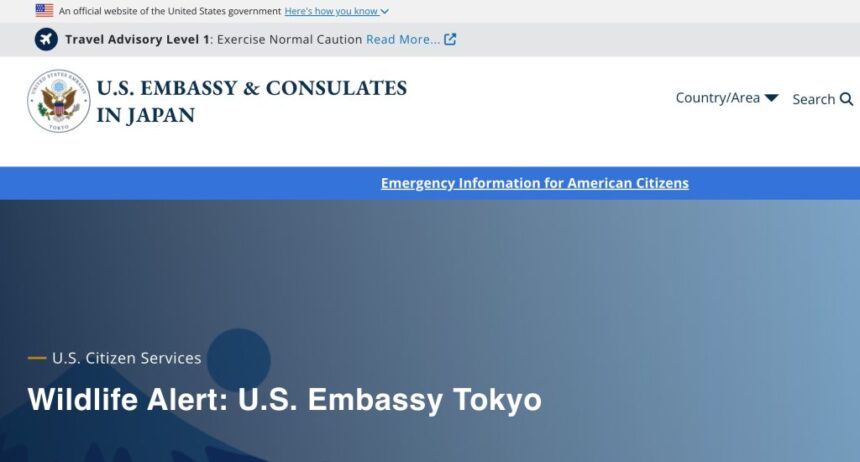
The U.S. Embassy in Tokyo has issued a wildlife alert following a sharp rise in bear sightings and related incidents — including a series of deadly attacks — across Sapporo City, Hokkaido Prefecture, Akita Prefecture, and other northern regions. The advisory, released on November 12, warns U.S. citizens to exercise increased caution as local authorities respond to escalating human–wildlife encounters near populated zones.
In Sapporo, authorities recently closed Maruyama Park for two weeks after a bear was spotted within park grounds. The park, adjacent to the U.S. Consulate General, is a well-known recreational area frequented by families, hikers, and commuters. While the Consulate itself remains outside the affected closure zone, embassy officials are urging all visitors to the facility to remain vigilant when moving through nearby areas.
Beyond Sapporo, both Hokkaido and Akita Prefecture have reported multiple incidents of bears entering residential districts. Several encounters across northern Japan in recent months have resulted in serious injuries and fatalities, prompting increased concern among local governments. Wildlife experts attribute the uptick to seasonal food shortages, habitat shifts, and rising numbers of bears venturing into towns in search of sustenance.
Authorities in affected municipalities have stepped up patrols, issued local alerts, and temporarily closed parks and nature trails following confirmed sightings. In Akita, where bear encounters have been particularly intense, officials have warned residents to avoid forest-edge communities during early morning and evening hours—times when bears are most active.
The U.S. Embassy advisory outlines several precautions:
- Avoid areas where bears have been sighted, especially when traveling alone.
- Remain alert and aware of surroundings, particularly near wooded spaces or sparsely populated districts.
- Report any bear sightings to local authorities immediately to support ongoing monitoring and safety efforts.
Residents and travelers can access updated information through local government wildlife portals, including Sapporo City’s animal-control site, Hokkaido Prefecture’s English-language resources, and Akita Prefecture’s official advisories.
As northern Japan enters peak migration and feeding season for bears, authorities emphasize that caution is essential. Travelers are encouraged to stay informed, comply with area closures, and follow official guidance to minimize risk during this period of heightened wildlife activity.