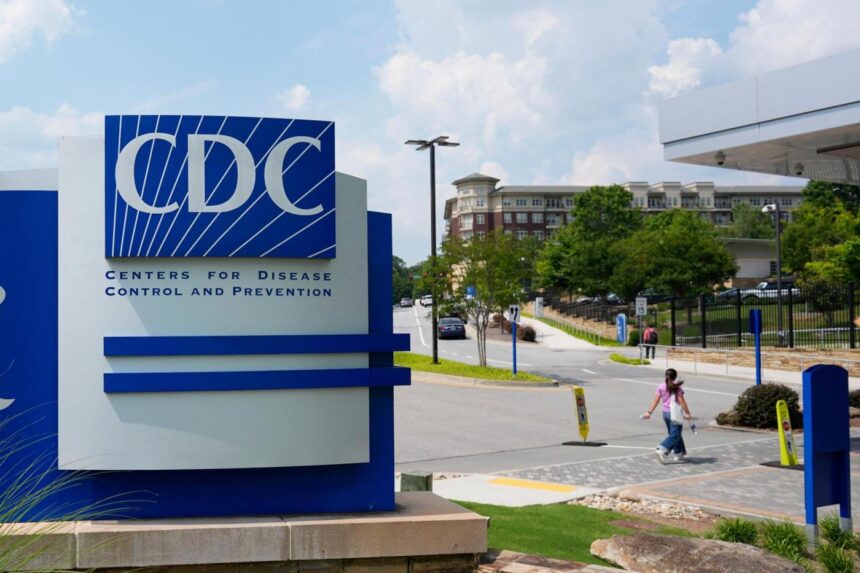
An organization working to prevent HIV infections is among the Colorado recipients that will lose federal funding after the Centers for Disease Control and Prevention abruptly canceled grants to four states led by Democratic governors.
The Trump administration plans to cut $600 million in public health grants to Colorado, California, Illinois and Minnesota, according to The New York Times. Nearly $400 million of that is earmarked for state and local public health agencies in California, the Times reported.
A spokesperson for the U.S. Department of Health and Human Services on Tuesday declined to say how much money Colorado organizations would lose or what work those grants funded, but said the grants “do not reflect agency priorities.”
Colorado hasn’t received notice of the canceled grants and can’t comment on the amount of lost funding or what projects it will affect, said Jessica Forsyth, director of the Colorado Department of Public Health and Environment’s Office of Sexually Transmitted Infections, HIV and Viral Hepatitis.
Gov. Jared Polis’ office did not respond to a request for comment from JS about the cuts Tuesday. The offices of the governors of all four states told the Associated Press that they had not received any communication from the Trump administration about the plans.
Colorado’s HIV work relies on a network of local health departments and nonprofits that know communities, Forsyth said.
One of the canceled grants, worth about $371,000, went to Colorado Health Network to expand HIV testing, with a particular focus on Latino and Black men who have sex with men in the Denver and Colorado Springs areas.
The money went to fund testing they provide as well as resources to help callers looking for tests in parts of the state where they don’t have offices, CEO Darrell Vigil said. The group also has offices in Greeley, Fort Collins, Pueblo and Grand Juction.
Black and Latino people have low rates of pre-exposure prophylaxis use compared to their share of new HIV infections nationwide, according to Emory University’s AIDSVu project. PrEP is a daily pill or every-other-month injection to prevent HIV infection in people at elevated risk.
The five-year grant was supposed to end in June, Vigil said. The group’s contact person at the CDC didn’t know the grant would be canceled until she read about it in the news Tuesday morning and couldn’t tell them when the funds would stop flowing, he said.
Groups working on HIV prevention are used to not knowing if new administrations will continue grants after their contracts ends, but losing the funding mid-year isn’t normal, Vigil said. Colorado Health Network met with its CDC contact each year to ensure it fulfilled the terms to continue the grant and to discuss any ideas for improving outreach, he said.
“This is unprecedented,” Vigil said.
About two dozen of the grants were aimed at curbing HIV and other sexually transmitted infections.
Dr. Deb Houry, who served as the CDC’s chief medical officer before she resigned in August, noted that Congress had already appropriated the funds.
“It is concerning that HHS is cutting public health funding to local communities that cover core functions in the middle of a measles outbreak and other health threats,” she said. “This coupled with large staffing cuts to federal public health leaves communities less prepared.”
The HIV Medicine Association released a statement calling the cuts “deeply troubling” because many of the grants aimed to expand access to PrEP. If taken consistently, PrEP pills can reduce the odds of HIV infection from sex by about 99% and from injection drug use by about 74%, according to the CDC.
“We urge the administration to immediately withdraw the rescissions of these grants, and we call on Congress to use its authority and oversight to prevent further damage to our nation’s public health infrastructure and to protect programs vital to disease prevention. The health of our communities depends on it,” HIV Medicine Association chair Dr. Anna Person said.
Colorado had about 10 new cases of HIV for every 100,000 people in 2023, putting it near the middle of the 50 states. Only about two-thirds of people in the state who had HIV as of 2023 were receiving care, however, and 61% had the virus suppressed, meaning they couldn’t pass it to others.
HIV testing creates an opportunity, not only to connect people who have the virus to treatment, but to prescribe PrEP for those who don’t have it but are at risk, Vigil said. If Colorado Health Network has to cut back on testing, that means more people will risk infection because they don’t know their status or their partner’s, he said.
“Without these things happening quietly behind the scenes, we will see HIV rates go back up,” he said.
The Trump administration has taken aim at work on health disparities, including those affecting people of color and LGBTQ people.
It also repeatedly cut funding to Colorado: Health and Human Services attempted to withhold child care funds, though courts required the money to keep flowing for now; the Department of Energy has laid off more than 200 employees at National Laboratory of the Rockies in Golden; the Federal Emergency Management Agency declined to help fund recovery efforts in parts of the state hit by fires and floods; Space Command’s headquarters is moving from Colorado Springs to Alabama; and President Donald Trump vetoed a bill to build a pipeline bringing clean water to the southeast corner of the state.
Trump has also threatened to halt federal money to sanctuary cities and their states, and followed that up with an order for government agencies to compile data on 14 mostly Democratic-controlled states and the District of Columbia. Colorado and the other three states in the latest effort were on that list, too.
The Associated Press and The New York Times contributed to this report.
Sign up for our weekly newsletter to get health news sent straight to your inbox.