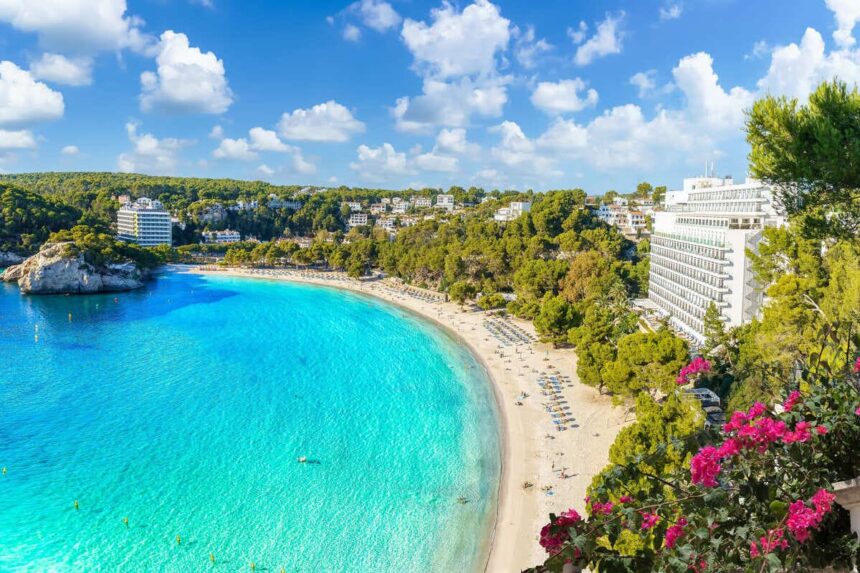
You’ve probably heard of Mallorca in Spain, with its epic coastal capital, dominated by a fortress-like Gothic cathedral, and beaches with a coastline fringed by turquoise calas.
Hundreds of thousands of people flock to Mallorca every year for their sunny break, especially Americans for the last 4 or 5 years, thanks to the launch of a new direct seasonal route from New York to the Balearic island.
To the casual sun-seeking, beach-bum traveler, Mallorca’s enough summer fun. If you’re anything like us, though, and you have a taste for going off the beaten path a little, you might have noticed there’s a tinier dot lying some 40 miles east of it that the Transatlantic flights don’t reach.
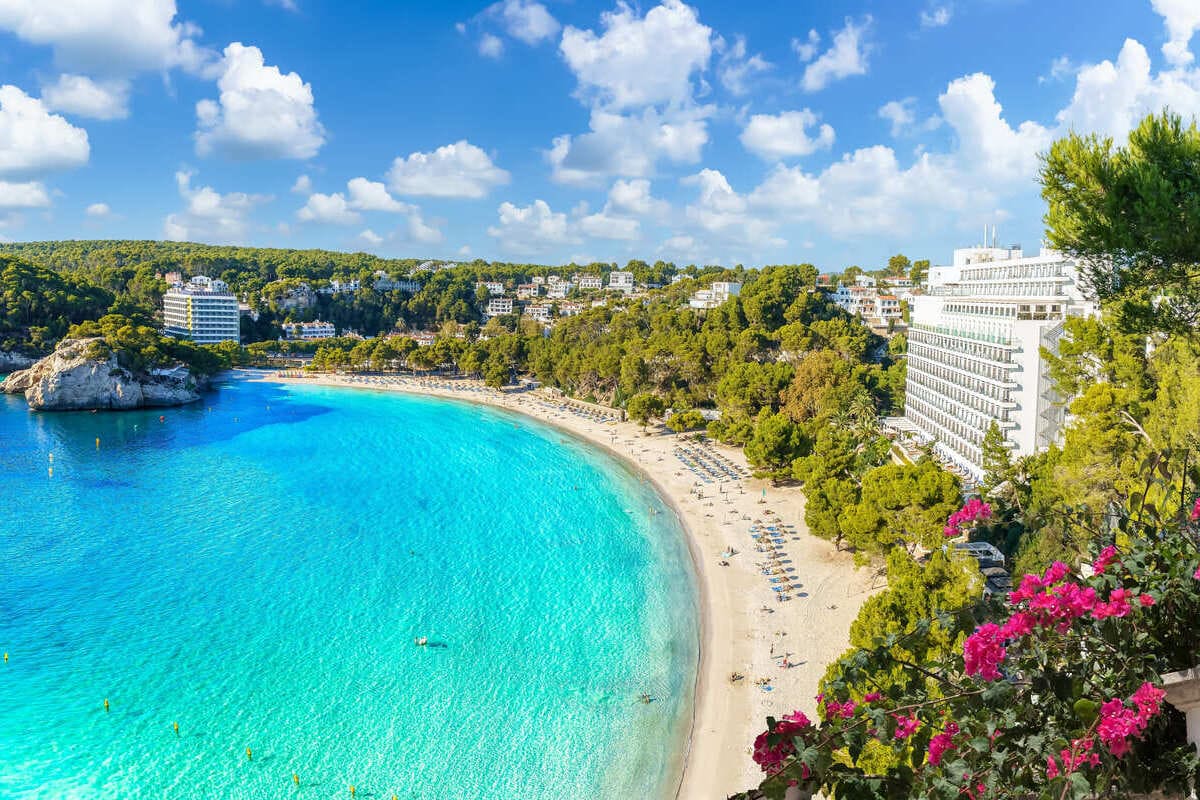
That would be Menorca, the quieter, laid-back alternative that’s seeing a record uptick in flight numbers this year.
When it comes to the German market alone, 74,000 airline seats are confirmed this season, 15% more than last year. Perhaps more surprisingly, 80% of the growth comes from off-season bookings, showing Menorca is far from being a summer-only destination.
Menorca may still be relatively unknown to American audiences, but it’s directly challenging its far more famous sister for the summer spotlight, and it’s time we dive deeper into some of the reasons why.
It’s More Laid-Back & Less Developed
Mallorca is second only to Ibiza in terms of being a Spanish island party hub. It has the beautiful nature and amazing culture, sure, but let’s not sit here and pretend a majority of tourists are going there to admire Catalan Gothic architecture and explore cobble-paved medieval towns.
Menorca’s crowds are just wildly different. Emphasis on the wild.
First of all, the whole island is a UNESCO Biosphere Reserve, so those ungodly development strips with large-scale resorts and beach bars playing euro-EDM trash all night, are simply nowhere to be seen. The island feels much quieter and better-preserved.
Secondly, far fewer tourists come here compared to Mallorca (roughly one-tenth of the numbers), and instead of nightlife, shopping, and beach parties, they’re after that small, relaxed port town vibe, and lowkey bars with a local feel.
Don’t get us wrong, it’s not like Menorca is some hidden gem waiting to be found. We’ve seen how travel publications made a joke out of themselves by trying to pin the overused status ‘secret spot’ tag on Marseille. We’re not making the same mistake.
However, it does feel more relaxed, less developed, and just more… authentic?
Beautiful Uncrowded Calas


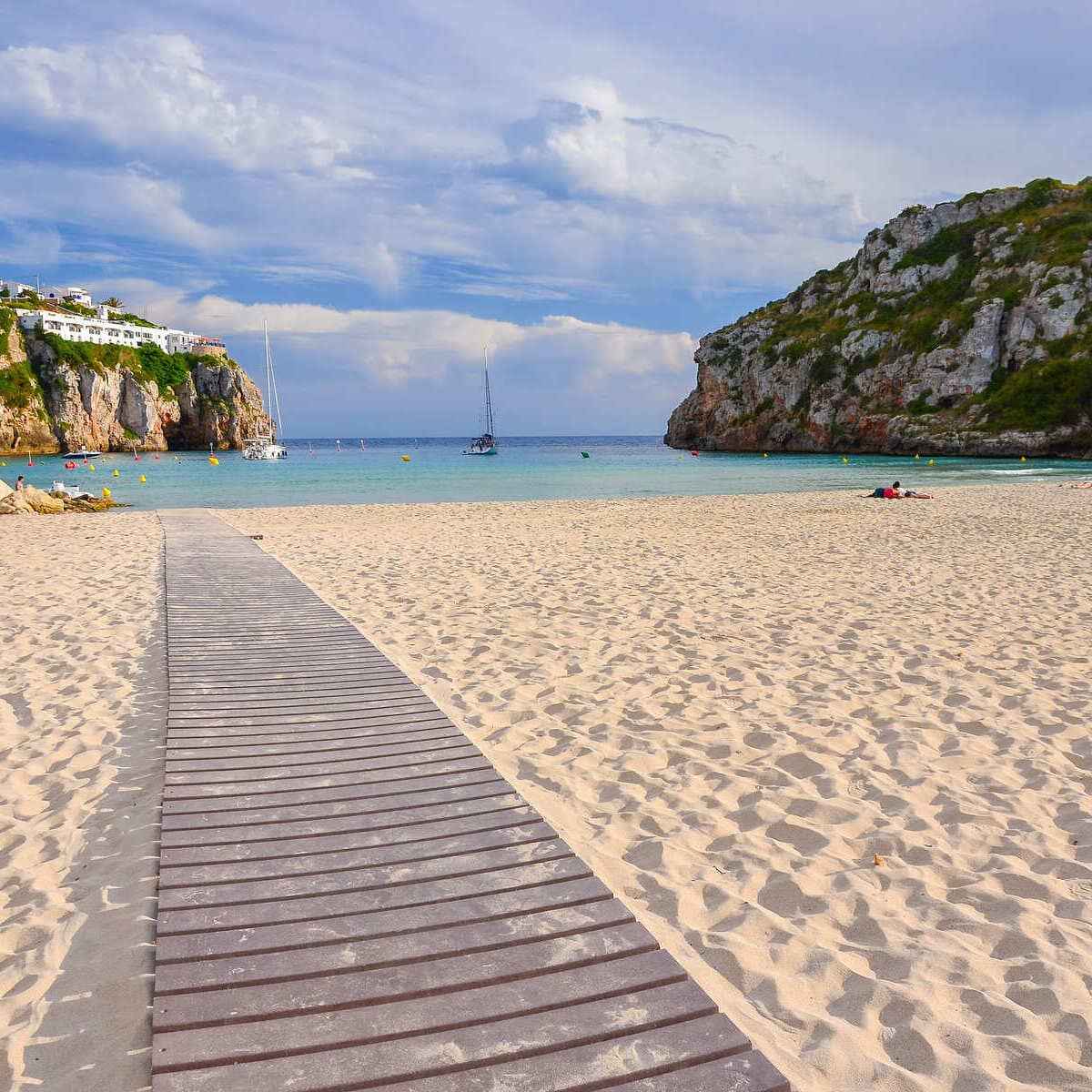
This ties into our next point. Menorca has stunning uncrowded beaches, and the best part? You can leave your beach shoes at home: instead of the usual Mediterranean pebbles, it’s Caribbean-like white sands that await you.
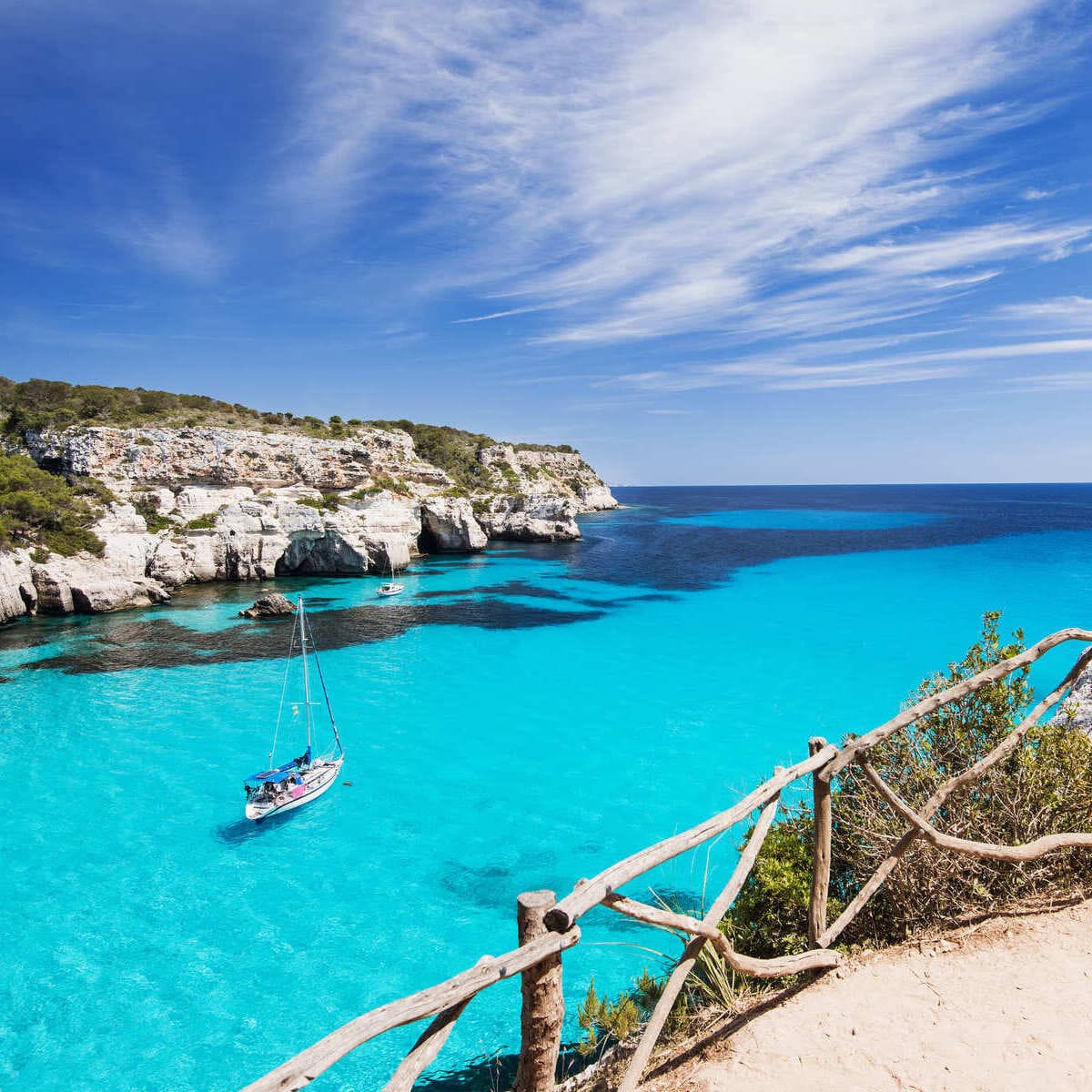
The entire coastline is indented with picturesque calas, those tiny stretches of sand hugged by teal-colored seas, between small coastal cliffs.
Places like Cala Mitjana and Macarelletta are famously mobbed in summer, though, so you might want to avoid those, but if it’s that quiet but gorgeous cove you’re looking for, Cala de Trebalúger is our top pick.


It’s much-calmer precisely because you have to walk around half an hour from Mitjana to reach it, and there are no services or beach clubs, but that turquoise shoreline, and the pine cliffs for backdrop make the morning legwork worthwhile.
As they say, effort filters people out.
On the northeast coast, Cala Presili is one of the gems in the S’Albufera des Grau maritime park: more rugged, less ‘resorty’, and notoriously less-packed than many of the southern Menorca calas. Walk farther towards the end of the strip, and you’ll hit an even quieter nudist area.


Now, for that slice of the Caribbean, a wide, soft-sanded beach straddling crystal-clear seas, Platja de Son Bou is the major Menorcan highlight.
Granted, it’s a counterintuitive pick, as it’s the island’s longest beach, so it does get busy, but if you walk far from the main entrance, you get loads more space and privacy, even more so than at the overhyped tiny coves.
Picturesque Ancient Towns Galore
This is still Europe, after all, and chances are you’ll want to season your Mediterranean beach getaway with a dash of Old World culture.


Port Mahón (Maó in the local Catalan dialect), is the Menorcan capital, and an elegant port town boasting one of the largest natural harbors in the world. Think a sun-drenched waterfront lined with pastel facades, old stone steps leading to secretive plazas, and lively seafood terraces.
For the full-fledged medieval vibes, you’ll want to drive all the way northwest from Mahon to Ciutadella, the cultural heart of the island.
The former capital, it has that traditional golden-hue Old Town, complete with a honey-colored, stern Gothic cathedral, said to rival Palma de Mallorca’s own in beauty, narrow medieval lanes, and romantic plazas bordered by aristocratic palaces.
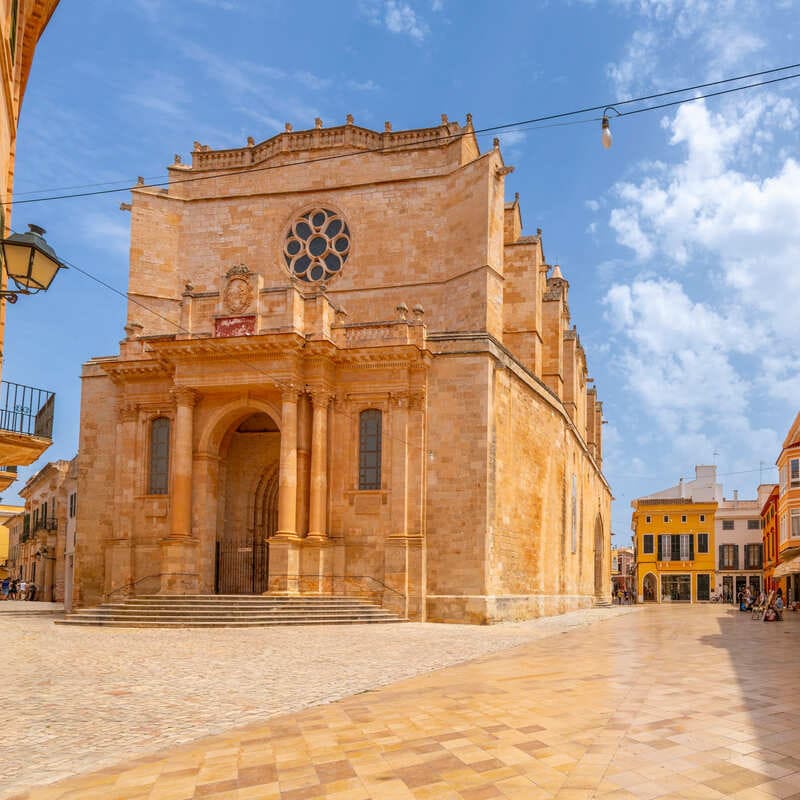
Peak Southern Europe charm.
Also, who said you need to battle Santorini’s insane cruise crowds and lines for some of that whitewashed-town magic? Binibeca Vell, on the southeast coast, is that classic, Greek-coded Menorcan postcard, with its maze of white-painted townhouses overlooking a scenic harbor, and timeless coastal beauty.
For similar vibes, but something a little more offbeat, head to Fornells on the north coast. It has white houses clustered around a beautiful bay, and that fishing-village feel.
Time permitting, grab a table at Es Cranc, one of Menorca’s most famous spots for caldereta de langosta, their flavorful lobster stew.
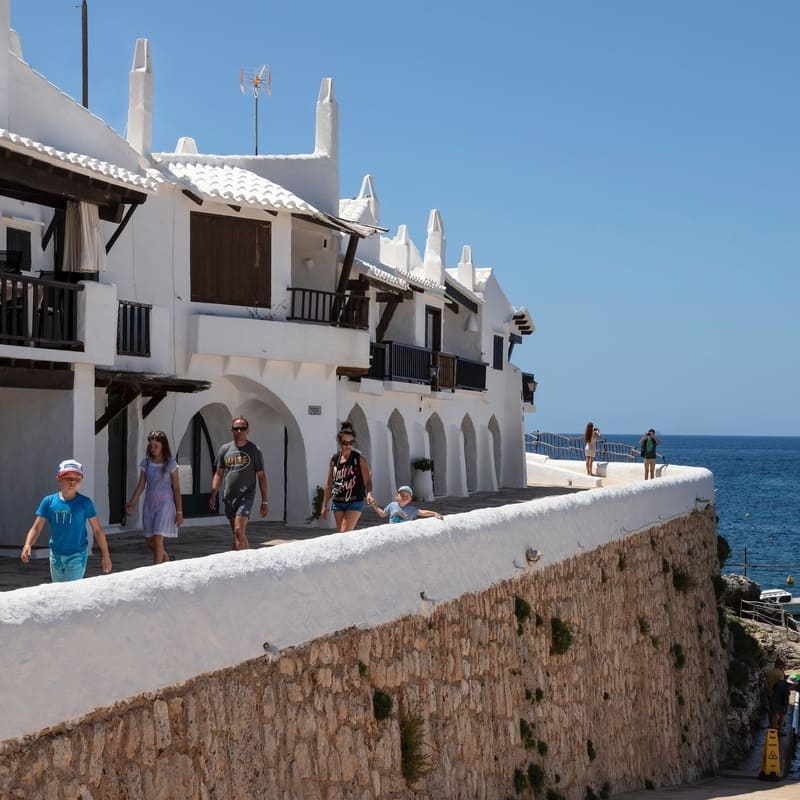
Menorca Is Less Crowded But Very Accessible
You can’t get to Menorca from America without at least a stopover, whether in Spain or the wider mainland Europe.
The island does have a small international airport, but it mainly hosts flights from the European Union and the United Kingdom, so it’s no wonder the clientele is primarily Eurocentric. That doesn’t mean it’s off-limits to Americans.
If you’re already in Europe this spring, Menorca is a breezy 2-hour flight away, and with Ryanair, one-way tickets sell for as low as $28 one-way:


Popular departure airports to Mahon, Menorca (MAH)
- Barcelona–El Prat Airport (BCN)
Very frequent direct flights (multiple per day)
Typical one-way price: $15–$50
- London Stansted Airport (STN)
Several low-cost carriers fly seasonal routes to MAH
Typical one-way price: $15–$60 on budget airlines
Direct seasonal connections during spring/summer/early fall
Typical one-way price: $20–$50
- Brussels South Charleroi Airport (CRL)
Ryanair and other budget airlines fly from CRL to MAH
Typical one-way price: $20–$50
Seasonal flights for good mid-range pricing
Typical one-way price: $25–$60


In case you’re landing in Mallorca straight from America, there are direct flights to MAH from Palma de Mallorca (PMI) multiple times per day. They’re just as cheap, and the flight time is only 45 minutes.
Alternatively, ferries run from Palma de Mallorca to Mahón, or from Alcúdia (North Mallorca) to Ciutadella. The crossing between capitals takes around 5 hours, while the journey from North Mallorca to Ciutadella is a shorter 2 hours on average. Tickets cost around $30–$50 one-way.