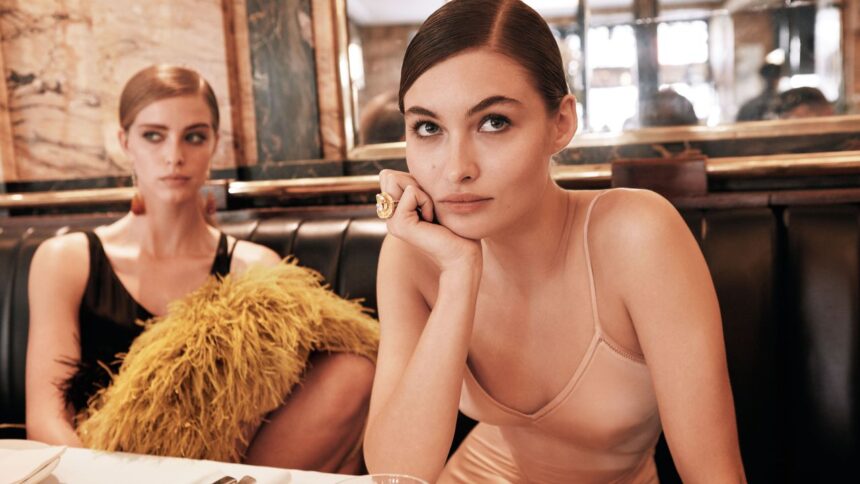
The look has an almost ’70s energy: bold, sculptural, warm-toned gold that feels intentional and slightly retro, without slipping into costume.
Sculptural bands and modernist forms
The band itself is becoming a design statement. Instead of a simple shank-plus-stone formula, designers are exploring softened signets, undulating curves, melted textures and forms that reference early modernist jewelry.
“The trend right now is softer, smoother form, rather than sharp or geometric,” says Simpkins, whose bespoke work increasingly features signet-inspired silhouettes with “melty, imperfect texture”. Dyne, whose practice is rooted in hand-engraved symbols, sees growing interest in tactile surfaces: brushed gold signaling a move away from high-polish gold.
These sculptural and often sinuous shapes trace back to the modernist curves of early 20th century jewelers and artists such as Suzanne Belperron and Calder, and the soft sculptural metalwork of the Art Moderne era. The lineage runs straight through to designers like Jessica McCormack, whom Everett calls “one of jewelry’s biggest success stories of all time.” Her Georgian-meets-modern silhouettes, silver-topped gold mountings and signature wave bands are contemporary extensions of that 1930s vocabulary: rounded, hand-worked, tactile and character-driven.
The parallels with fashion and interiors are obvious. The rise of vintage textiles, coastal-elite interiors filled with batik prints and irregular pottery, and Lisa Eisner for The Row’s organic forms all reflect the same instinct. Sculptural metal feels like the jewelry equivalent of the perfect hand-thrown vase.
Shape shifts: ovals, marquise, and elongated everything
Rounds remain ubiquitous, but elongated shapes will define 2026: ovals, elongated antique cushions, marquise cuts, and east-west settings.