Across the region, temperatures continue to hover between 75°F and 84°F year-round, making offseason travel more enticing than ever. The rainy period between June and November still brings tropical storms, but also thinner crowds and lower environmental strain on local ecosystems.
The Caribbean is proving that sustainable tourism isn’t just a trend—it’s now the region’s most powerful tourism strategy, one that balances development with long-term preservation while delivering memorable, high-value experiences.
Dominica: The Caribbean’s Climate Leader
- World’s first sperm whale reserve
- 185-km Waitukubuli National Trail
- New nonstop flights from the U.S.
- Eco-luxury pioneers leading sustainable tourism
Caribbean tourism is going green in 2025, and four islands are setting the pace. Dominica, Grenada, St. John, and Turks and Caicos are emerging as the region’s most exciting eco-friendly travel destinations, blending conservation with high-end hospitality.
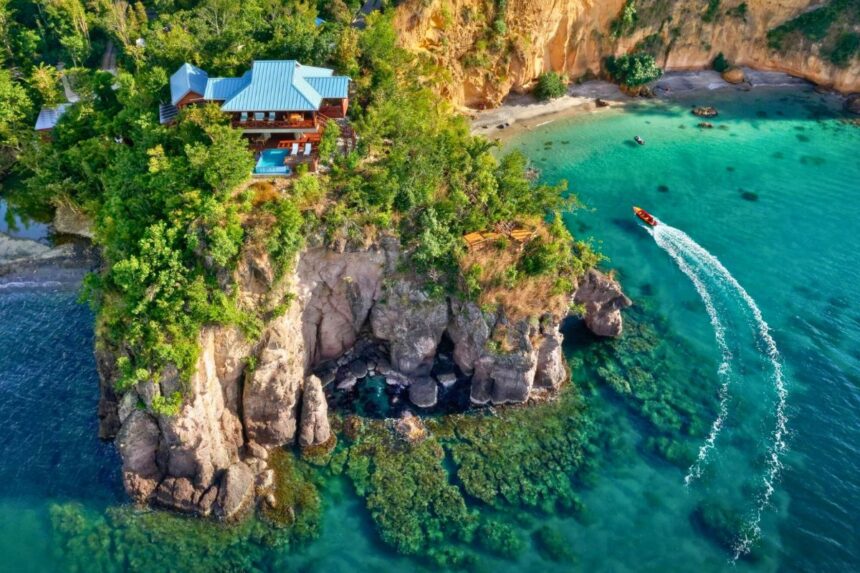
Dominica continues its push to become the world’s first climate-resilient nation, backed by easier access through new non-stop flights from Miami and Newark. Adventure tourism is thriving—especially along the 185-kilometer Waitukubuli National Trail, a long-distance hiking route crossing rainforests, volcanic springs, and coastal cliffs. The island is also home to the first sperm whale reserve on the planet, where sightings peak from November to March. Ultra-luxury meets sustainability at Secret Bay and Jungle Bay Resort, two properties built around low-impact design and local community support.
St. John: A Protected Paradise Without the Crowds
- 2/3 of the island protected by a national park
- 45-minute ferry access—no direct flights needed
- Reopened Caneel Beach now public
- Coral reef rehabilitation and volunteer tourism booming
Nearly two-thirds of St. John is federally protected under Virgin Islands National Park, preserving mangroves, subtropical forests, sea turtles, and fragile coral systems. The island has zero airports, but remains an easy trip—reachable via a 45-minute ferry from St. Thomas.
Visitors are increasingly encouraged to join reef restoration projects and organized beach cleanups. In 2024, Caneel Bay’s Caneel Beach officially reopened to the public, widening access to one of the Caribbean’s most scenic shorelines. St. John is fast becoming the Caribbean’s poster child for off-grid eco-tourism that still feels effortless.
Grenada: Rebounding Stronger With Spice, Culture & Underwater Art
- World’s first underwater sculpture park is also a reef ecosystem
- Southern resorts weathered the 2024 hurricane with minimal impact
- Nutmeg plantations, spice markets & cultural tourism surging
- Eco travel combined with Caribbean heritage and marine innovation
Grenada is rebounding boldly after Hurricane Beryl (2024), with tourism momentum stronger than ever. Although parts of the island were impacted, the southern coast and major resort corridor remained largely untouched, keeping luxury travel flowing.
The island continues to champion environmental travel, anchored by the Molinere Underwater Sculpture Park—the world’s first underwater art installation created by Jason deCaires Taylor, now doubling as an artificial reef ecosystem. Between plantation tours, spice markets, and marine exploration, Grenada has curated one of the Caribbean’s most compelling mixes of culture-first tourism and ocean conservation.
Turks & Caicos: Luxury, Lagoons, and Beginner-Friendly Diving
- First ocean-water swimming lagoon in the Caribbean
- New nonstop flights from Miami to South Caicos
- Shallow-plateau diving in Grand Turk ideal for new divers
- Luxury development shifting toward sustainable ocean tourism
Northeast of the Dominican Republic, Turks and Caicos (a British Overseas Territory) has rapidly expanded its tourism footprint while promoting marine stewardship. Providenciales remains the central hub for travelers, but new routes are driving interest toward lesser-visited islands.
South Caicos now has direct flights from Miami, boosting access to an untouched wildlife haven. Another major milestone arrived late 2024 when South Bank Resort opened the Caribbean’s first ocean-water swimming lagoon, offering a rare waterfront experience free from boat congestion. Nearby Grand Turk has also cemented its reputation for shallow-plateau diving, a safer, beginner-friendly gateway to Caribbean marine life.