With its year-round warmer temps, laid-back culture, amazing food, and of course, easily-obtained expat visas that make it that much simpler for Americans to relocate, it’s hardly a shocker that Portugal is Europe’s top digital nomad country right now.
Croatia may have been the first EU nation to launch a Digital Nomad Visa (DNV), all the way back in the pandemic, and Albania may be the darling of bureaucracy-wary young entrepreneurs, but they were never a match for the Iberian gem.
At least that’s what a new research report concluded, with Portugal placed at the helm of Europe’s digital nomad scene—ahead even of community darling Spain.

Portugal’s Top 3 Digital Nomad Hubs
This is largely due to the near-perfect balance of accessibility and infrastructure it offers: its one-year, renewable DNV has an arguably fair application fee, and the monthly income requirement of €3,280 (roughly $3,879) can be met by a majority of nomads.
That’s not exactly news, as Portugal has been on the expat radar for some years now, but the one thing that sparked our interest in this study is the fact that they’ve namedropped not just Lisbon, but two other emerging Portuguese hubs that recent arrivals have been flocking to.
Of course, the City of Seven Hills is a guaranteed feature, but if you’re curious about the full podium, here’s the wider top three:
Funchal
Madeira Island


The capital of Madeira, a digital nomad paradise we were lucky enough to experience ourselves through the Nomad Island Fest a couple of years ago, Funchal is your go-to spot if you thrive in subtropical climates, and you don’t actually mind missing out on the passing of the seasons.
Madeira, its parent island, sits on the African tectonic plate, hundreds of miles away from the European mainland, and when it comes to temperatures, let’s just say it isn’t nicknamed ‘Land of Eternal Spring’ for nothing.
Funchal in particular boasts a yearly average high of 72°F, with temperatures seldom dipping below 68°F. On top of that, the sun shines gloriously for around 250 days a year.


Think sun-drenched calçadas, colorful street markets with a surprising variety of homegrown fresh fruit, and a long oceanside promenade licked by the azure waves of the Atlantic.
Those are all good-enough reasons for most nomads to pick Funchal, but then, the city’s also home to a thriving expat community, which makes integration and socializing as a newcomer easier, and its plethora of laptop-friendly cafés and affordable living are equally big draws.
Cost Of Living In Funchal, Madeira (Portugal)
Porto


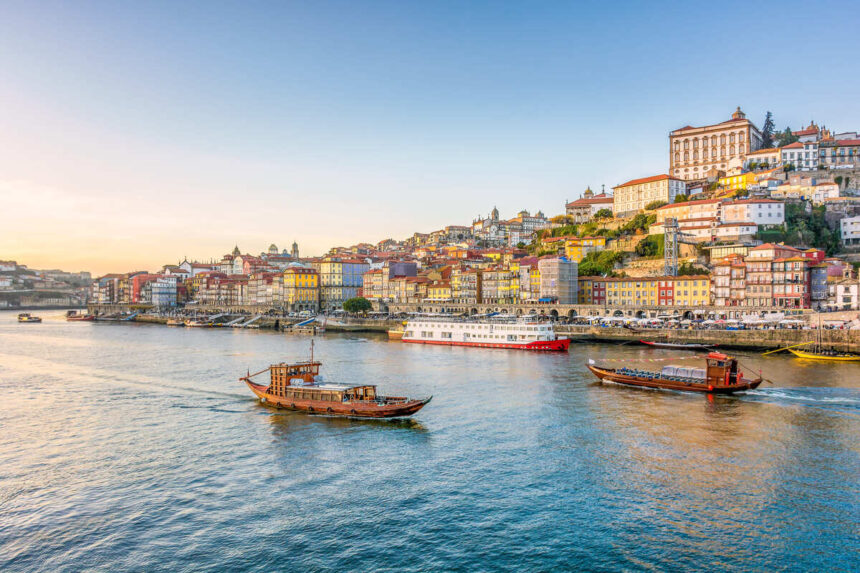
The cultural heart of Northern Portugal, Porto is a vibrant hub distinguished by its landmark, double-deck iron bridge, used by both pedestrians and regular traffic, and historic bairros.
In Ribeira, the most traditional of Porto’s districts, you’ll find a maze of narrow, cobbled streets lined with colorful merchants’ houses dating back to the Middle Ages, and a number of Baroque, azulejo-clad churches with lavish interiors and gilded carvings.
Most of Porto’s tourism buzz takes place along the northern shore of the Douro River, including the stunning Romanesque Cathedral and the free-standing Clérigos Tower.


If you’re moving here, and you’re looking for some peace and quiet, within arm’s distance of the lively Old Town, but distant enough you can enjoy some wine and bifana at night without running into the usual British or German weekenders, try Vila Nova de Gaia:
Across the river from Ribeira, it’s where most locals themselves live, and it has a more lived-in feel, with quieter backstreets and authentic wine lodges.
Cost Of Living In Porto, Portugal
Lisbon


Portugal’s undisputed Digital Nomad Capital, as well as its actual capital, Lisbon, has been the sweetheart of American expats for at least half a decade at this point.
Granted, the opening of the Lisbon housing market to expats and digital nomads has led to a sudden gentrification decried by natives themselves, and it’s no longer the super-welcoming, ‘come one, come all’ sanctuary it once was, but it still packs quite the punch.
You just can’t beat waking up early in the morning for a run along the Tagus riverfront, with views of the imposing Belém Tower in the distance.


As a follow-up, a quick stop at one of the many riverside bakeries for a sneaky pastel de nata, or then, working from a patio on one of Lisbon’s many miradouros, with views over its red-tiled roofs, pastel-colored buildings, and the imposing Moorish castle up the hill.
Prices are rising, sure, and you’d better ditch the awkward Spanish brush-ups and learn some proper Portuguese if you don’t want to feel completely ostracized by Lisboenses, but there’s no denying that pretty, sunny Lisbon is still a top choice for remote working.
Cost Of Living In Lisbon, Portugal
Other Portuguese Cities For Your Consideration:


- Faro: the capital of the southern Algarve region, and a laid-back coastal city within short driving distance of beautiful golden-sand beaches
- Portimão: the ‘Miami of Portugal’, also in the Algarve, with high-rises lining a pristine beachfront and boasting a thriving social scene
- Coimbra: a historic university city in the north best known for its student life and youthful vibe—it’s also significantly cheaper than many of the mainline cities, with rent averaging $480–$750
- Braga: a ‘mini Porto’ of the sorts, dotted with regal Baroque palaces and home to a vibrant student population of its own
- Viseu, a calm inland city offering cobblestone streets, great cafés, and one of the lowest cost of living rates in the country

Subscribe To Our Latest Posts
Enter your email address to subscribe to Travel Off Path’s latest breaking travel news, straight to your inbox.