It’s that time of year when tech journalists from across the globe congregate in Barcelona for Mobile World Congress, locals once again confused by visitors clad only in t-shirts and shorts basking in any hint of sunshine.
However, the main reason we make the trip is to gawp at all the latest mobile tech the biggest brands have to offer. From the latest smartphones, tablets, concept devices, to wearables and lots more.
As usual, we’ve made sure to cover every square inch of MWC 2026 in order to bring you our ‘Best in Show’ awards. These might be phones you can pre-order right now, or concept innovations we recognise as ambitious and significant in the industry.
Without further ado, the winners are…
Honor Magic V6
Chris Hall / Foundry
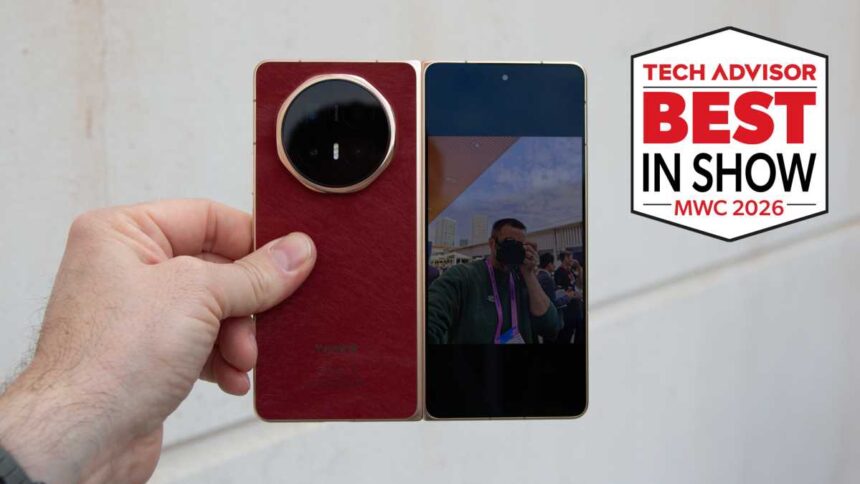
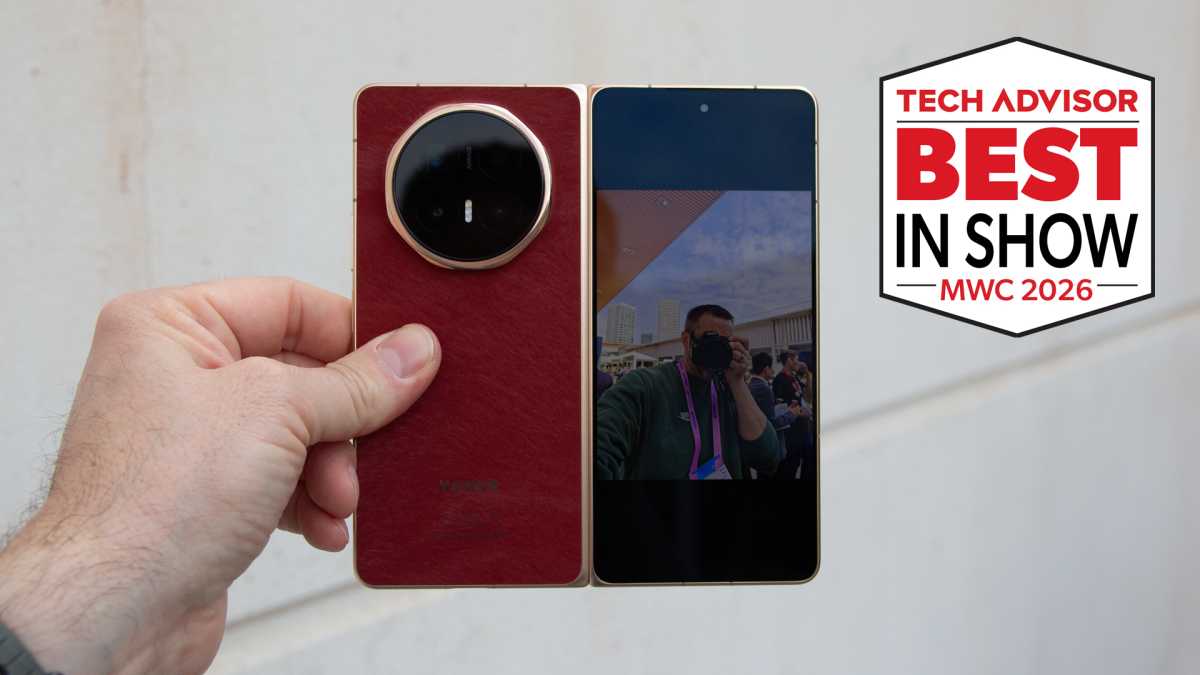
We’re looking at a folding phone war in 2026, with more brands entering the fray. Honor is something of an old hand here, launching the Honor Magic V6 at MWC 2026. It might look like the Honor Magic V5 in pretty much every way, but there are a host of changes to this phone that make it worthy of your attention.
Honor is keen to stress how strong it is, showing off the phone supporting vast weights to reassure buyers that it’s not going to break. But the real headline features are the massive battery, with 6660mAh packed into the frame, thanks to a new Blade Battery that boosts the silicon content, providing huge capacity for a small physical size.
The 6.52-inch external display has a peak brightness of 6000 nits, while the internal display measures 7.95-inches and offers 5000 nits – and both displays look great from what I’ve seen, although the crease is definitely still visible.
This phone is also powered by the Snapdragon 8 Elite Gen 5, making it the most powerful folding phone on the market – and trumping the Razr Fold, below, by a tiny margin. It also offers IP69 protection, so it’s well protected against dust and water.
So what’s the catch? It’s not actually going to be available in Europe until later in 2026, so those interested in the phone will be faced with getting the old device – the Magic V5 – now, or waiting for the new model to arrive.
Honor MagicPad 4
Jon Mundy / Foundry
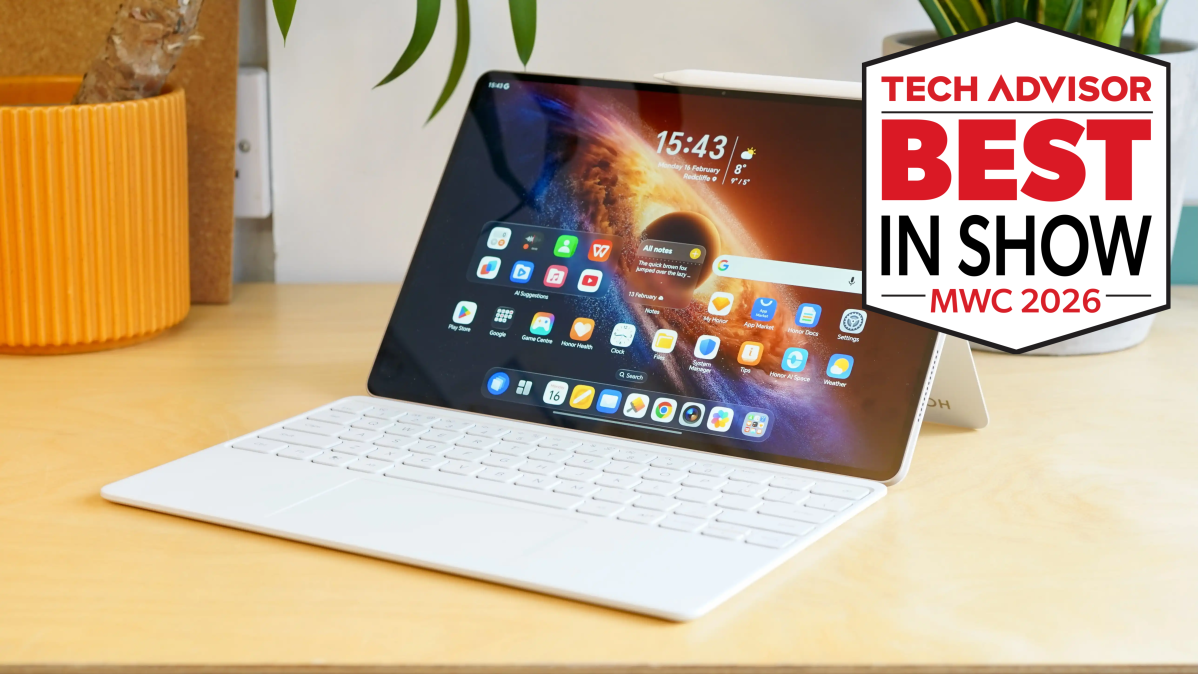
Not only was the MagicPad 4 the best tablet at MWC – though there weren’t exactly hordes of options – it might well be one of the best we see this year.
It comes in at an impressively slim 4.8mm, making it thinner than the Galaxy Tab S11 Ultra and iPad Pro M5 (both 5.1mm). Arguably, it’s the thinnest tablet ever, if we ignore the niche and flawed Toall Paper.
It’s also only 450g, but Honor doesn’t scrimp on the features to achieve its low weight. It has a Snapdragon 8 Gen 5 chip, a 12.3-inch OLED screen with 165Hz refresh rate, 10,100mAh battery, 66W fast charging and plenty more.
There’s also a range of accessories if you fancy turning it into a laptop-like experience. Oh, and somehow, the MagicPad 4 is only £599!
We’ve already scored it a 9/10 in our full Honor MagicPad 4 review.
Motorola Razr Fold
Chris Hall / Foundry
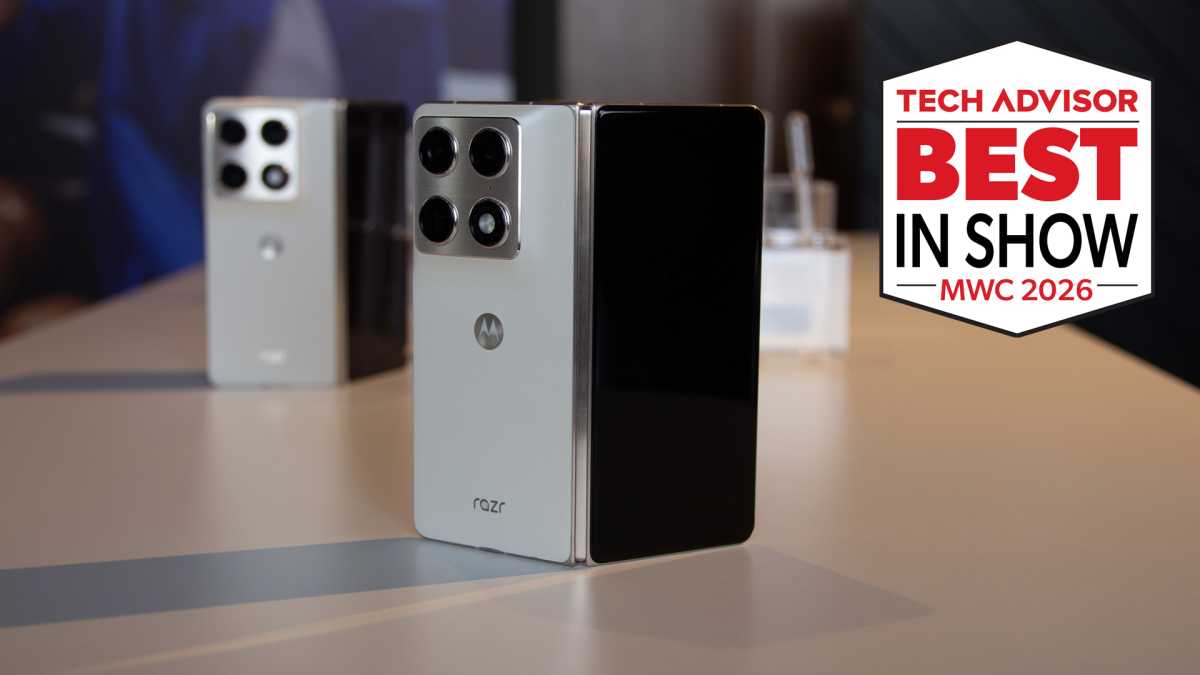
Motorola has expanded its line-up of folding phones beyond the Razr clamshell models that have been available since 2020. The Razr Fold is the first book-style device from the firm, and if that sounds familiar, that’s because it was first announced at CES 2026, but none of the specs of the phone were actually shared.
From 11 April you’ll be able to order the Razr Fold and it’s an impressive-looking device. Priced at £1,799.99 in the UK, it squares up against the Samsung Galaxy Z Fold 7. They’re the same price, but Motorola has double the storage at 512GB, which is not to be sniffed at, especially in 2026.
Beyond that, the Razr Fold sticks to typical Motorola design so, when closed, it looks like the rest of Moto’s devices. It’s the first foldable (or any phone, in fact) to come with Gorilla Glass Ceramic 3 for added durability, particularly when dropped.
The specs are also remarkably similar to the Motorola Signature, with a Snapdragon 8 Gen 5 at its core and the same camera systems, comprising three 50Mp sensors.
The Razr Fold has a 6000mAh battery with 80W charging, against besting Samsung’s device and providing real competition. There’s 7 years of software support too, and while the recent addition of Moto AI has dragged Moto’s phone away from the clean software experience it once offered, it’s still cleaner than Magic OS on Honor’s rival phone above.
Read our Motorola Razr Fold hands-on from the show.
Honor Robot Phone
Chris Hall / Foundry
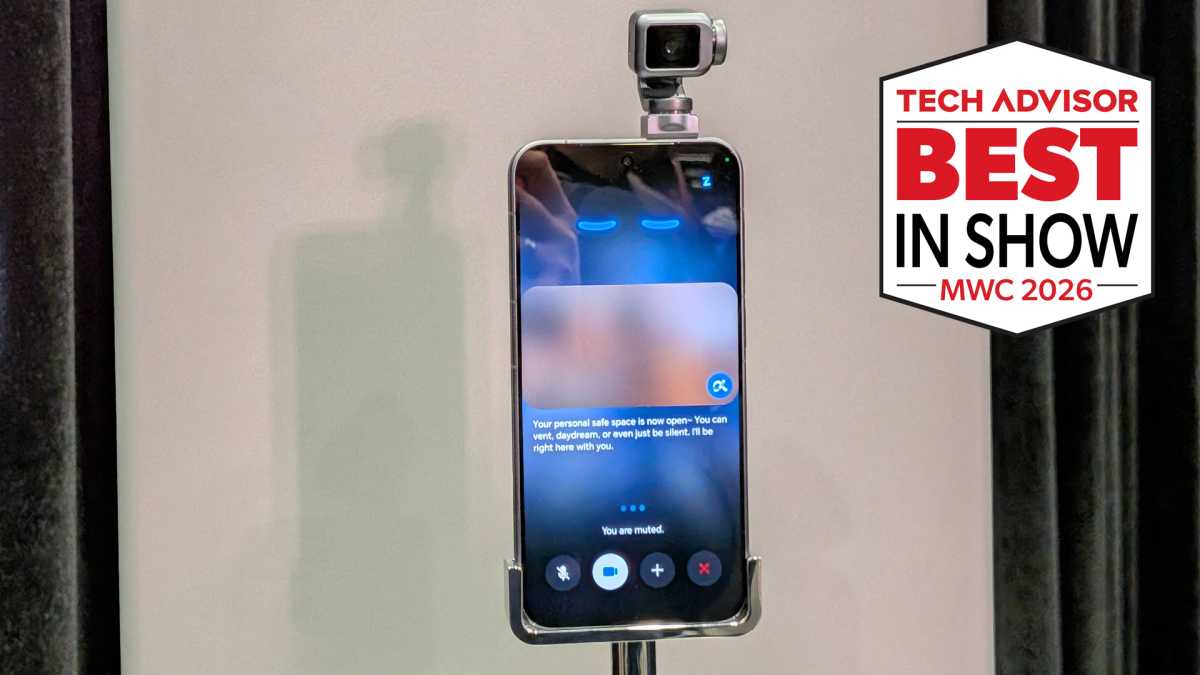
I’d be tempted to say that the Robot Phone is a concept, but Honor says that it will be available later in 2026. Again, this phone has been seen before – announced in October 2025 and shown off in a basic dummy state at CES 2026 – but this is the first time we’ve seen actual working demos.
The Robot Phone houses a camera mounted on a gimbal that can deploy from the back of the device, taking on a cutesy AI companion role. It’s a bit like something that might pop-up in a sci-fi movie. The camera will follow you around the room, it will respond to what you do and say, while interacting with the world around it.
I’ve seen it doing fairly basic things – like offering fantastic stabilisation and flexibility as a capture device – as well as following you around the room to keep you in frame during video calls. But it’s the AI side of the Robot Phone that’s really interesting.
It can provide feedback about what you’re wearing, it can dance along to music and more.
It’s clear that Robot Phone is still some way from being finished: Honor has said that it has a 200Mp camera, but nothing else so far. Could this change the format of smartphones in the future? We’ll have to wait and see.
Read about our experience with the Honor Robot Phone from the show.
Xiaomi 17 Ultra
Chris Martin / Foundry
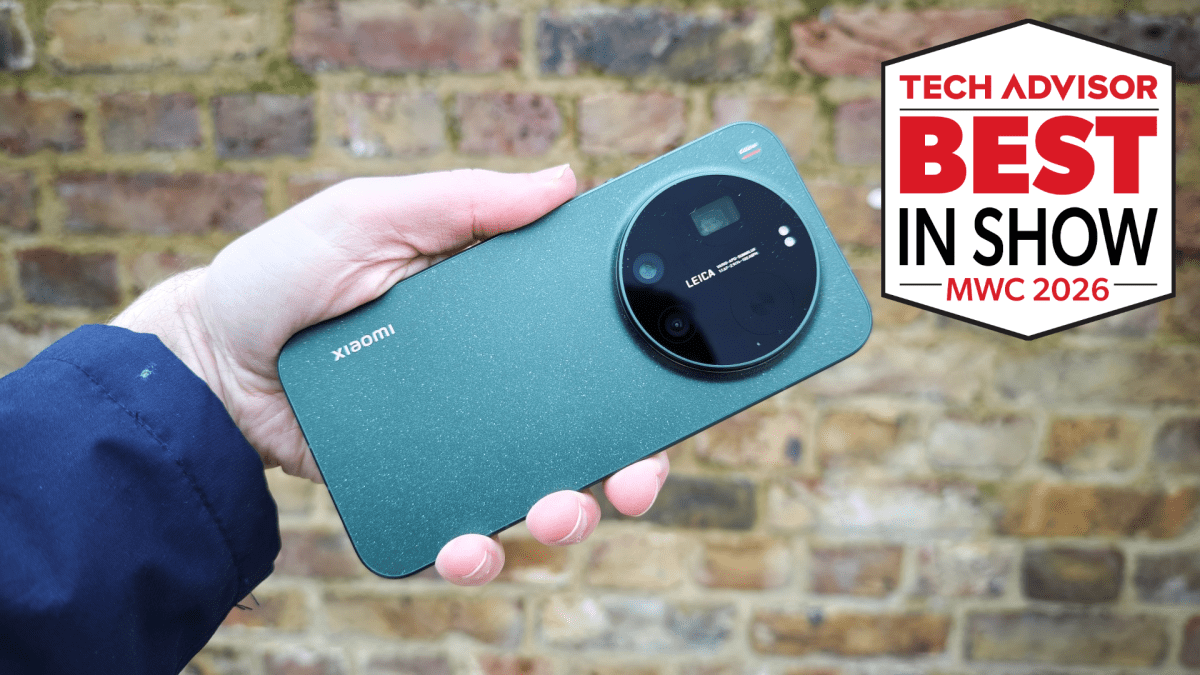
For photography fans, the Xiaomi 17 Ultra is set, once again, to be among the top options. Not only did it get its global launch at MWC, but we’ve been testing it for a full review (coming soon), so we can give a more informed take on it than if we’d only had hands-on time at the show.
There’s also a Leica Edition (or Leica Leitzphone in the West), but it’s hard to fault this ‘regular’ Ultra for its combination of features, performance, excellent screen, battery life and just about anything you could want in a phone.
Like the Samsung Galaxy S26 models, it doesn’t have Qi2 magnets but still offers a winning blend of phone smarts and photography prowess. And unlike previous models, which were designed around the camera, this one has a more traditional phone build. It’s shown in the stunning new Starlit Green colour, now with two different Photography Kits to choose from.
The best all-rounder flagship of 2026? Quite possibly.
Nothing Phone (4a)
Chris Hall / Foundry
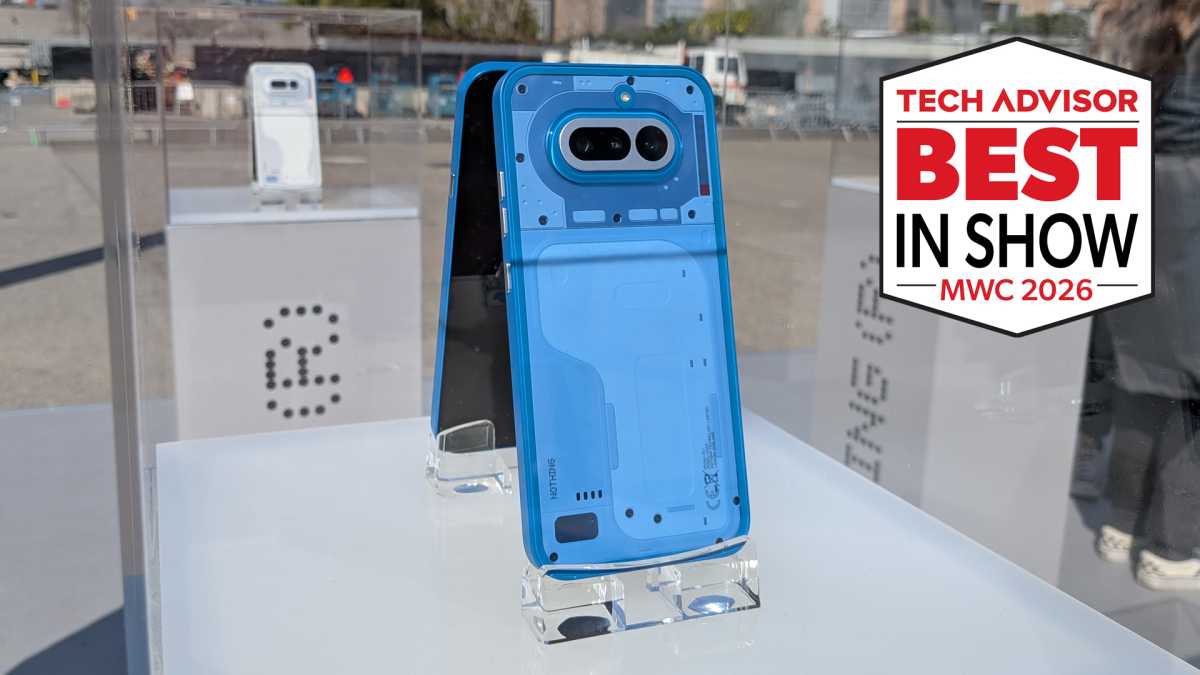
Nothing hasn’t fully announced the Nothing Phone (4a) yet, but that didn’t stop it from making an impact on Mobile World Congress. Nothing is known for its viral approach to marketing and rolling up the side of a shipping container outside the halls of MWC certainly drew a crowd (I took photos after it had calmed down).
The details on Nothing Phone (4a) are thin on the ground – we know even less about the Nothing Phone (4a) Pro that will launch alongside it – but we know that it will come in black, white, blue and pink. I have to say, I’m quite taken by the pink and blue options, which gives punters some more vibrant options than previously.
The Nothing Phone (4a) will be revealed on 5 March in London – which is when we’ll be able to bring you all the details – but we’re definitely impressed with Nothing’s design. Most phones in this mid-range segment are a bit boring to look at, but Nothing has real geek appeal with its translucent aesthetic making it award-worthy in this respect at the show.
We don’t know the exact prices or specifications yet, but based on previous A-series devices from Nothing, we’d expect it to rank well among the best mid-range phones.
Xiaomi Pad 8 Pro
Chris Hall / Foundry
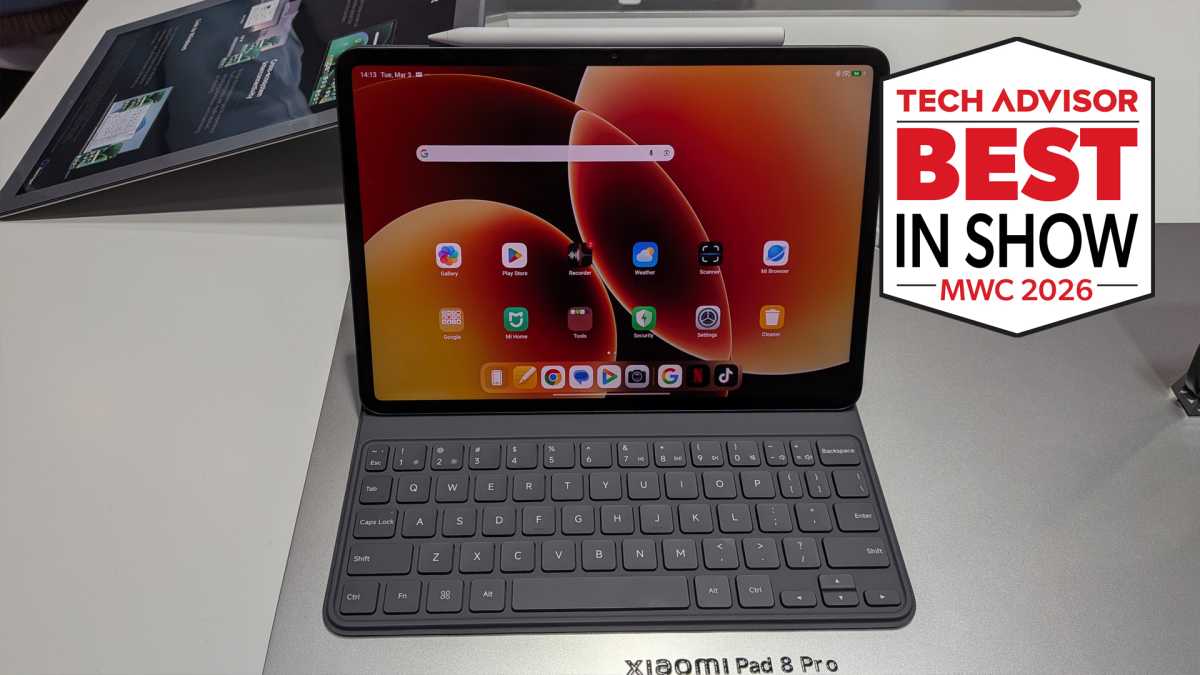
Xiaomi’s Pad 8 Pro shoots for the moon with a premium device that can only really be seen as a challenger for the Apple iPad Pro. It has an 11.2-inch display in a 5.75mm thick aluminium body, designed for productivity on the move.
It’s not entirely new, as it was announced for China last September, but now makes its global debut, so it’s new to us. It runs Snapdragon 8 Elite hardware, so it’s definitely a powerful tablet. That’s backed by a big 9200mAh battery with speedy 67W fast charging.
The display is impressive and this is a classic example of Xiaomi throwing everything into the hardware side of the device, while it’s supported by a full range of accessories, including a keyboard case that’s similar to Apple’s Magic Keyboard.
While some might be perturbed by the software experience that comes from HyperOS, it’s hard to sniff at the £529 asking price for this device – especially as it’s already discounted to £449. That’s significantly cheaper than Samsung’s Galaxy Tab S11, which is probably where the interest will lie.
Samsung Galaxy S26 Ultra
Chris Martin / Foundry
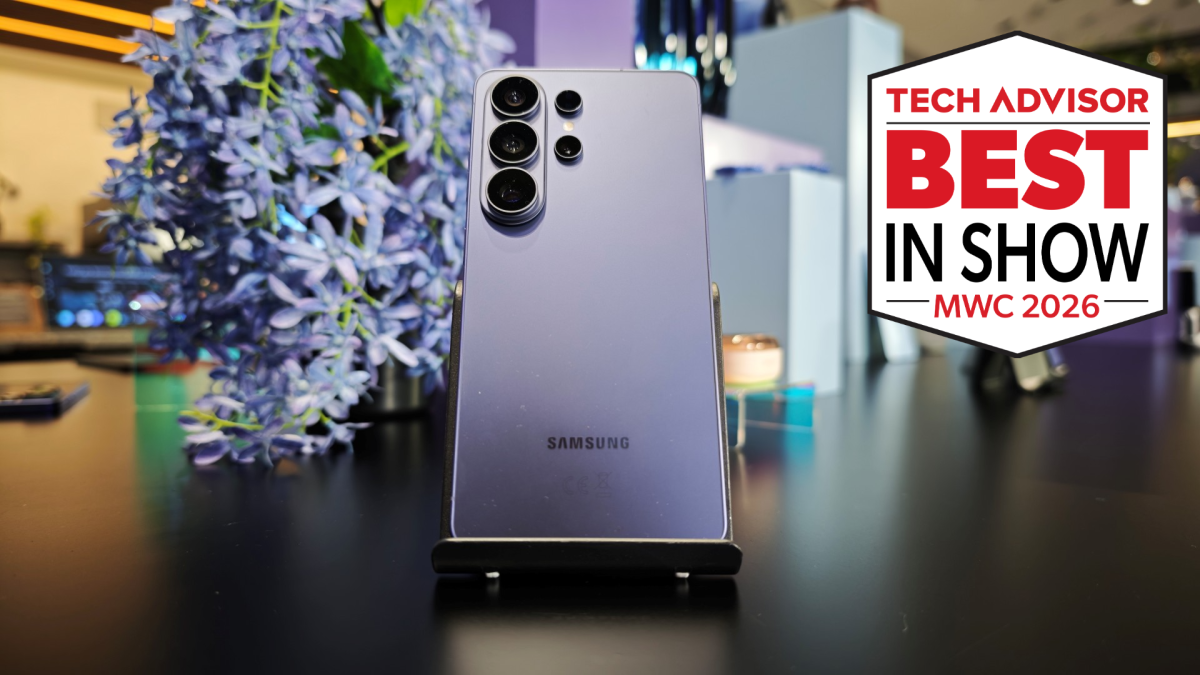
The Samsung Galaxy S26 Ultra was another device that drew a crowd at MWC 2026. It was unveiled at Galaxy Unpacked last week, along with the rest of the range, but MWC was the first time it was shown off in public.
The Galaxy S26 Ultra takes one of Android’s top devices and moves it a step forward. There’s a new design so that all the phones in Samsung’s top flight match, while there’s new hardware in the form of the Snapdragon 8 Elite Gen 5 for Galaxy. Elsewhere, the cameras have a minor tweak, but not substantially.
So what’s really set tongues wagging? The Privacy Display. That’s the new world-first, headline feature that will keep the content of your phone private from “shoulder surfers” when out in public. It uses a clever system that turns off wide area pixels so that only the person directly in front of the screen can make out the details. I’ve tried it and it really works.
Otherwise, Samsung fans will be pleased to hear that the 7 years of update policy continues, with this phone launching on One UI 8.5 – a smooth reworking of Android that many would vote as the best version of Android out there. We’ll see when we complete our full review very soon.
Tecno Modular Smartphone Concept
Chris Hall / Foundry
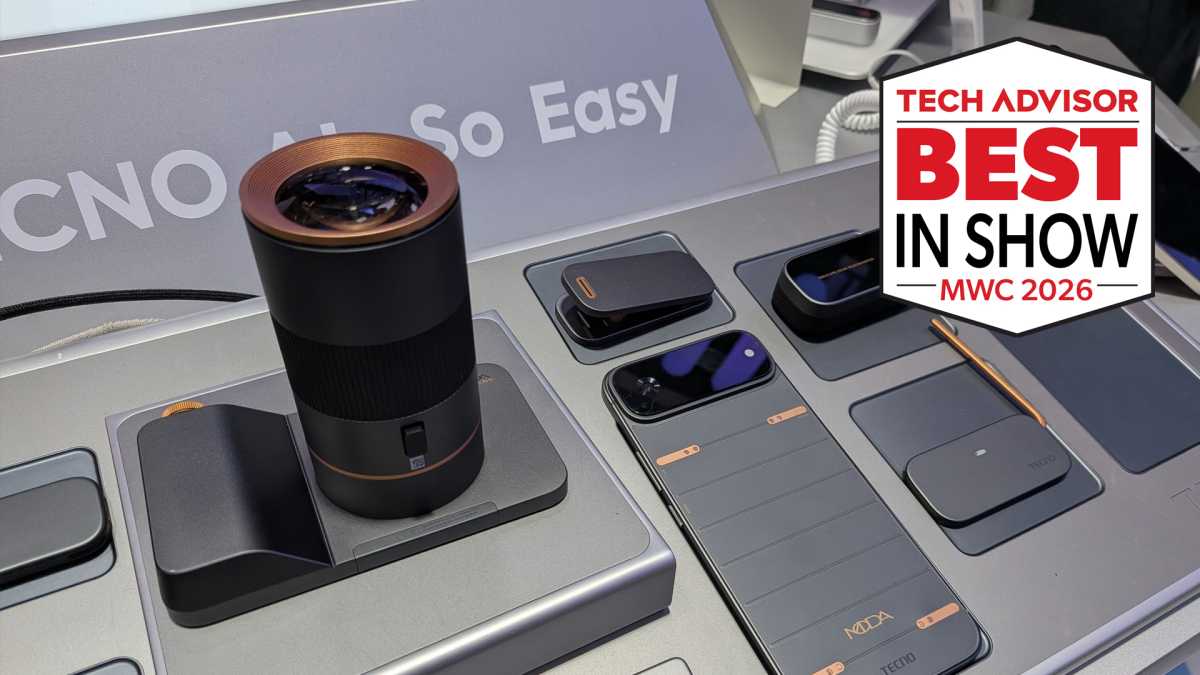
Tecno is a brand that’s known for its disruptive devices. They often look vaguely familiar, taking cues from other popular phones, but going a little thinner or a little more extreme. But in the Modular Smartphone Concept, Tecno has something truly interesting.
First of all, it’s a concept, but there was a real feel of quality to the devices on Tecno’s stand. We’ve seen plenty of attempts at modular phones before via the likes of Project Ara, with none cracking the code, but Techno might finally have done it.
Rather than this being about switching out the processor when it gets old, what Tecno is proposing is a core phone that can then be heavily accessorised. And we’re talking way more than just a magnetic power bank, which many phones can do already.
Here you can add various camera modules to get the exact device that you want, while some of the options are less exciting, like a big clip to attach it to your bag. You can even stack them on top of each other rather than just choosing one at a time.
What we don’t have at the moment is any real detail about the core phone itself. While it’s wonderfully slim, if you immediately have to use the battery pack to get the most out of it, you might as well buy a Samsung instead.
Whether this eventually goes on sale or not remains to be seen, but we’d like to see Techo give it a go.
Anker Prime Wireless Charging Station
Chris Hall / Foundry
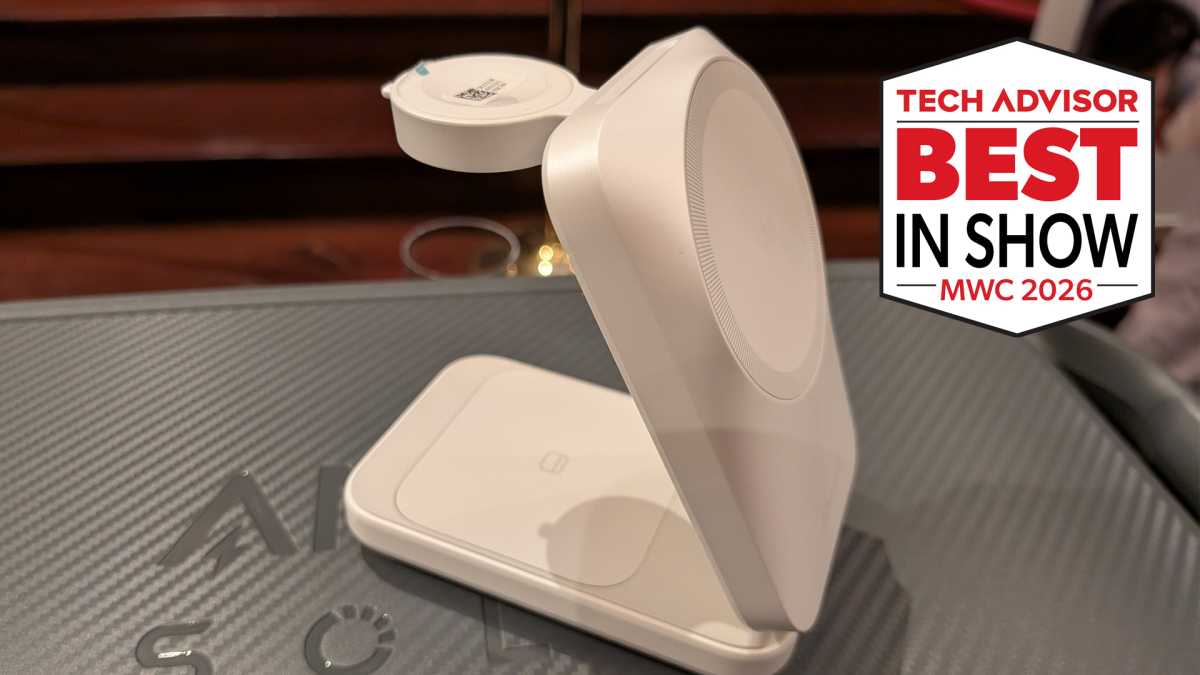
Sometimes convenience is what you need, whether you’re at home or travelling, and the Anker Prime Wireless Charging Station is a perfect example of this sort of device. This charger combines 25W MagSafe charging, a dock for your Apple Watch and space for your AirPods.
It means one connection to a powerpack and charging for all your Apple devices. While that’s nothing new, this Anker accessory folds up, so it’s really convenient to throw in a backpack when you’re travelling. That means you won’t have to compromise on charging.
There’s an integrated fan to ensure that the Qi2.2 25W can be delivered consistently, which is really quiet, so it won’t disturb you when using it on a bedside. It also looks great.
It’s not cheap, however, currently listed as $149.99 in the US and €159.99 in Europe. It’s available in many regions to buy now.
Xiaomi Watch 5
Chris Hall / Foundry
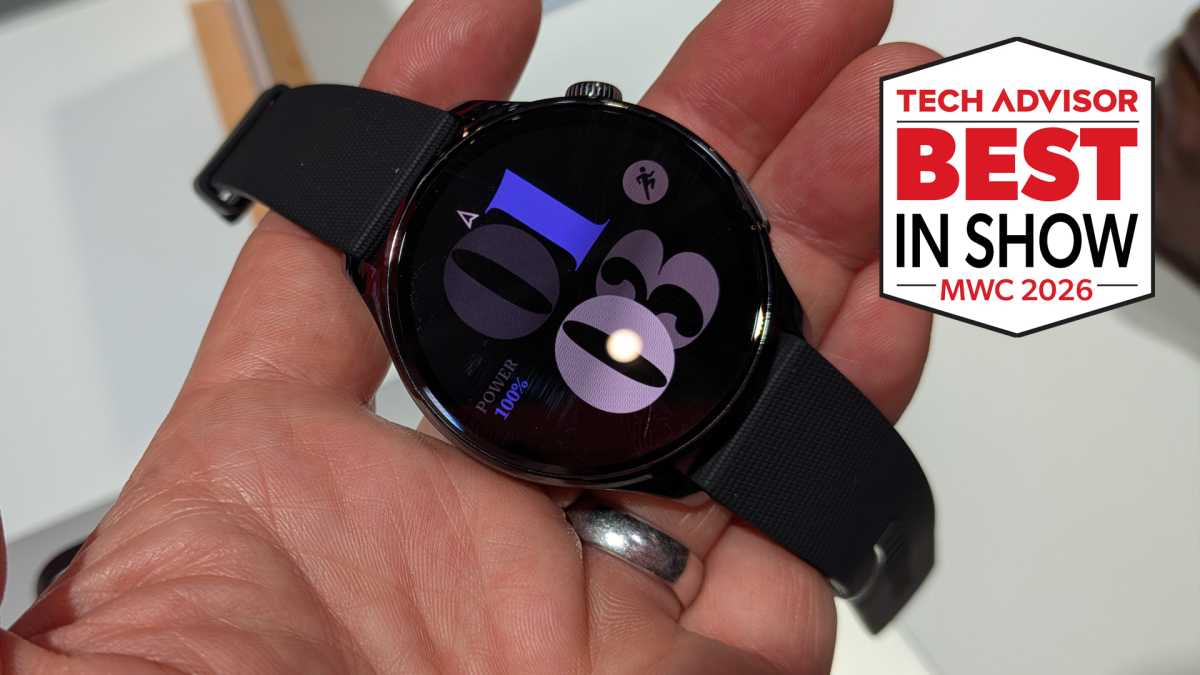
Smartwatches were thin on the ground at MWC. In fact, we didn’t see a single new wrist/hand-worn wearable other than the Xiaomi Watch 5. It launched in China in December 2025, but is now making the move to global availability, much like the firm’s other devices at the show.
What’s notable about this model is that it’s Wear OS 6, rather than Xiaomi’s HyperOS software. That’s going to immediately widen the appeal for those looking for a Pixel Watch 4 alternative.
There’s a vibrant 1.54-inch AMOLED display on the front, a stainless steel body and power coming from Qualcomm’s Snapdragon W5, a chip designed specifically for wearable devices.
There’s a stack of health features to track your heart activity and exercise, with all the normal sports covered. But it’s the tight integration with Google that’s more exciting, because everything should be a little more seamless without having to use additional apps from Xiaomi.
It features a digital crown and control button, while the strap is 3D printed. I found it to be nice and light. The Xiaomi Watch 5 is £269.99, so it’s not quite the bargain that some of Xiaomi’s watches have been in the past, probably because of the switch in software.
Legion Go Fold Concept
Chris Hall / Foundry
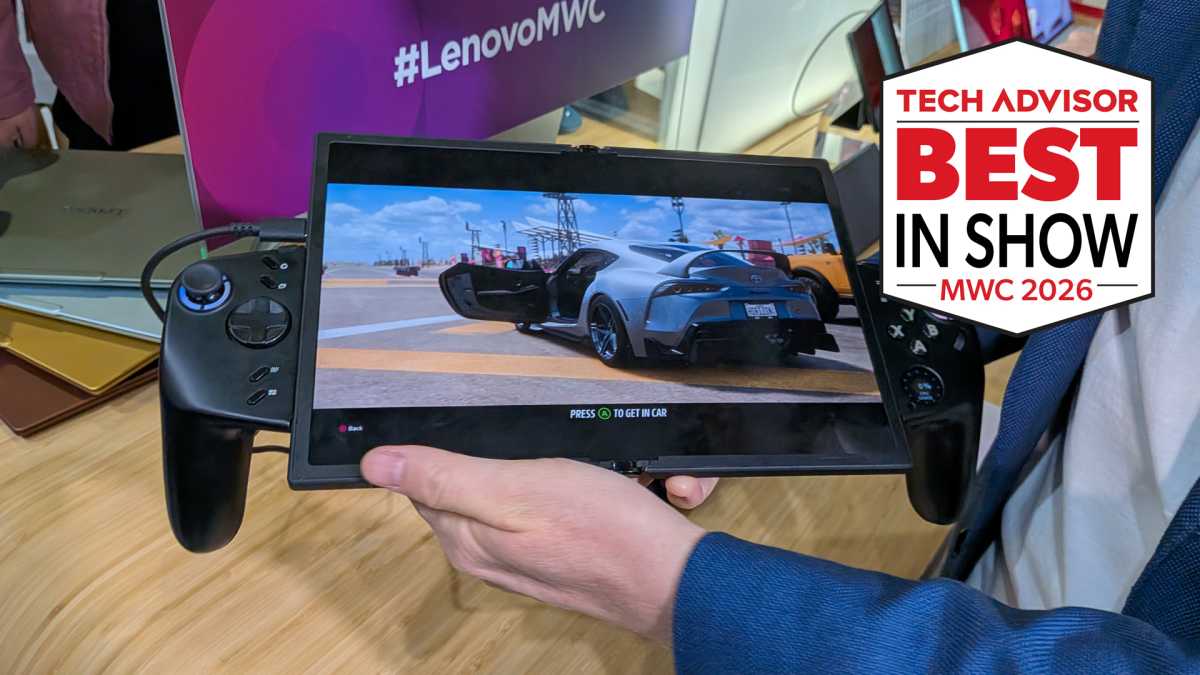
Lenovo is no stranger to experimental devices – we’ve seen laptops with screens that fold out, we’ve seen rotating screens and we’ve seen laptops with displays where we’d expect to see a keyboard. But Lenovo is also a player in the mobile gaming space with the Legion Go.
The Legion Go Fold Concept sees these worlds collide, with a folding tablet that’s a dedicated gaming device, with clip-on controllers like the Nintendo Switch 2. It starts off looking like a regular gaming handheld, but then unfolding the 7.7-inch display reveals an 11.6-inch screen instead.
The controllers can be attached to either side of the screen, so you can have portrait or landscape orientation for the Windows-based device. You can even have something else on the other half of the screen, if you prefer.
There’s an Intel Core Ultra 7, with 32GB RAM, while the screen can be deployed in a number of different ways for maximum flexibility. Whether gamers will forgo the solidity of something like the Legion Go 2 for this flexible display remains to be seen, but it’s a cool idea regardless.
TCL Nxtpaper AMOLED Concept
Chris Hall / Foundry
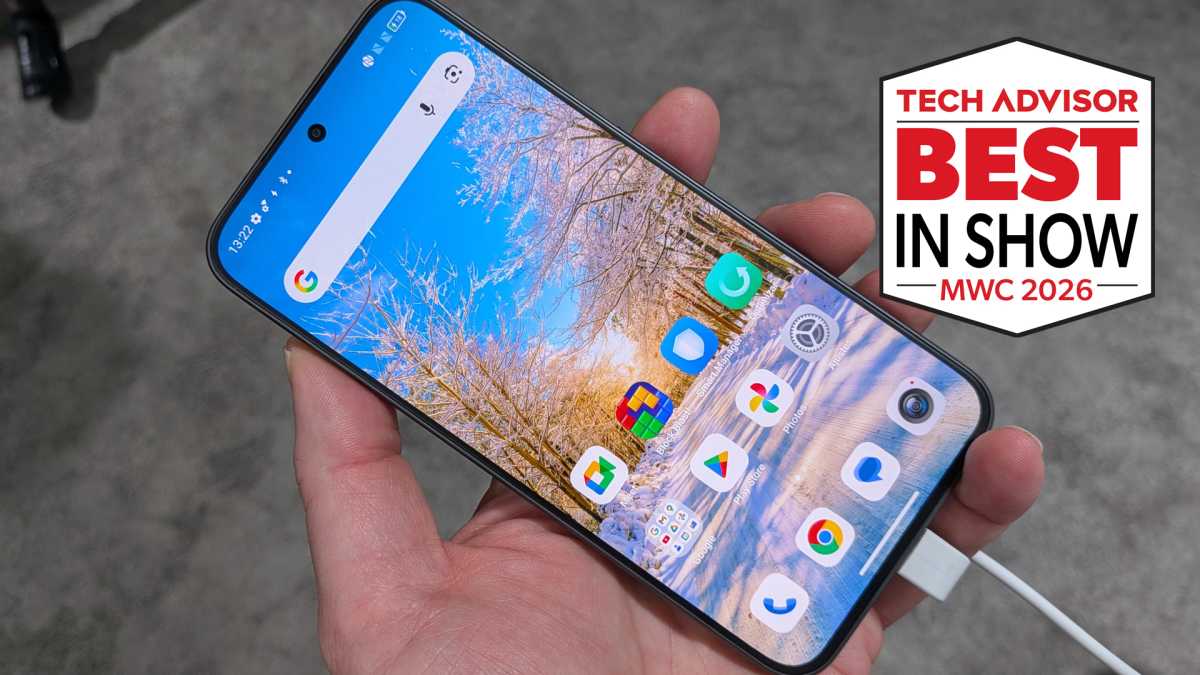
TCL’s Nxtpaper phones are known for their ability to cut out reflections, meaning a glare-free experience. That’s not only better for your eyes, reducing strain, but it means the phone stays visible under the harshest sunshine. There’s even a switch on some devices like the 50 Pro Nxtpaper to move to a mode more like an eReader.
But so far, Nxtpaper phones and tablets have been based on LCD technology and, while the glare-free is experience is great, it doesn’t quite have the punch that competitors with AMOLED screens offer. At MWC 2026, TCL was showing off the NXTpaper AMOLED concept, which moves this tech in a new direction.
The results are great too: I investigated the demo devices on the stand and found the screens to have a nice vibrancy to them and better colours than I’ve seen on previous NXTpaper phones.
This technology isn’t in a product yet – perhaps IFA 2026 will see a launch – but while the stated 3200 nits brightness will be welcomed, it’s likely to come with quite a price increase.