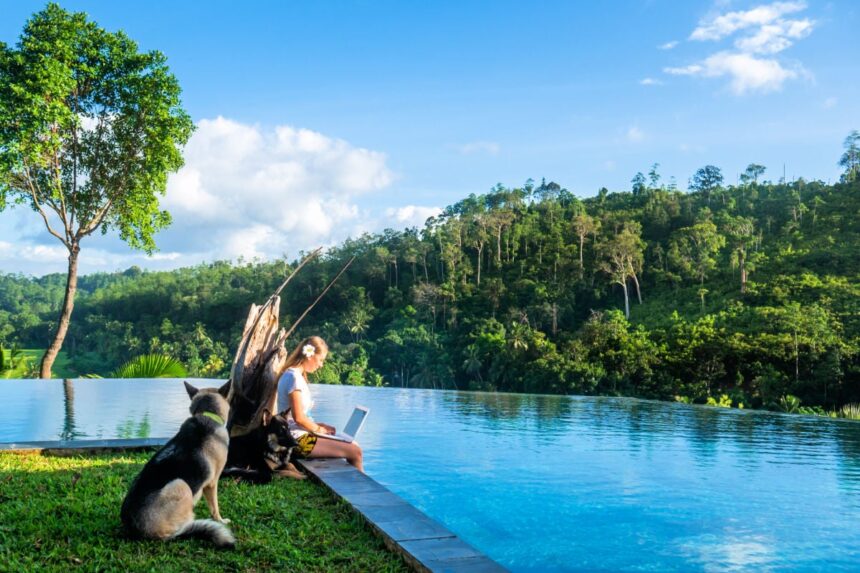
For all the digital nomads out there who’ve grown disillusioned with Europe’s overly bureaucratic pathways to residency, or are tired of waiting for Mexico to finally drop that remote work visa, one of the fastest-rising expat hubs in Asia just dropped its own DNV.
A tropical island south of India, surrounded by the beautiful Indian Ocean, Sri Lanka is rolling out a Digital Nomad Visa with some of the easiest requirements we’ve seen yet.
No impossible-to-achieve financial thresholds, none of the usual truckload of documents, and definitely not intrusive vetting checks and biometric hoops: Sri Lanka is making it (almost) hassle-free for Western nomads to relocate.
You Earn Over $2,000 A Month? You’re In!
With a few caveats…
According to Sri Lanka’s own Department of Immigration and Emigration (Residence Visa Division), a Digital Nomad Visa category has been created to attract foreign nationals who wish to ‘live and work remotely from Sri Lanka while serving clients or companies based outside of the country’.
Before we discuss specificities, let’s get to the meat of it already.
In order to live in the sun-drenched country, you must satisfy the following list of requirements:
- Be a freelancer, own a business not registered in Sri Lanka, or be employed by a company based abroad
- Have a minimum monthly income of $2,000 USD*
- Take out health insurance covering the length of your stay
- Have a suitable accommodation for the duration of your stay (e.g. an Airbnb rental)
- Refrain from engaging in politics or disruptive activities while in the country**
- Provide proof of a clean criminal record from your home country
*If bringing family, or more than two dependents along, the amount increases by $500 per added person.
**Not sure about you, but you won’t catch me in the nearest Greta Thunberg rally anytime soon, so it sounds good enough to me.
The main thing here, other than proving to Sri Lankan authorities you’re of good character and not a public agitator, of course, is meeting the financial requirement of $2,000. Most nomads earn in USD cash in way more than that monthly, so that’s effectively a non-issue.
For comparison purposes, European DNVs, or even some Latin American ones expect nomads to provide proof of income of over $4,000–$5,000, or even much-higher.
Other than the gruelling application process, that’s usually the main barrier for aspiring regular expats who aren’t tech moguls or social media giants.
Everything Else You Need To Know About The Visa
Based on what we know so far, anyway…
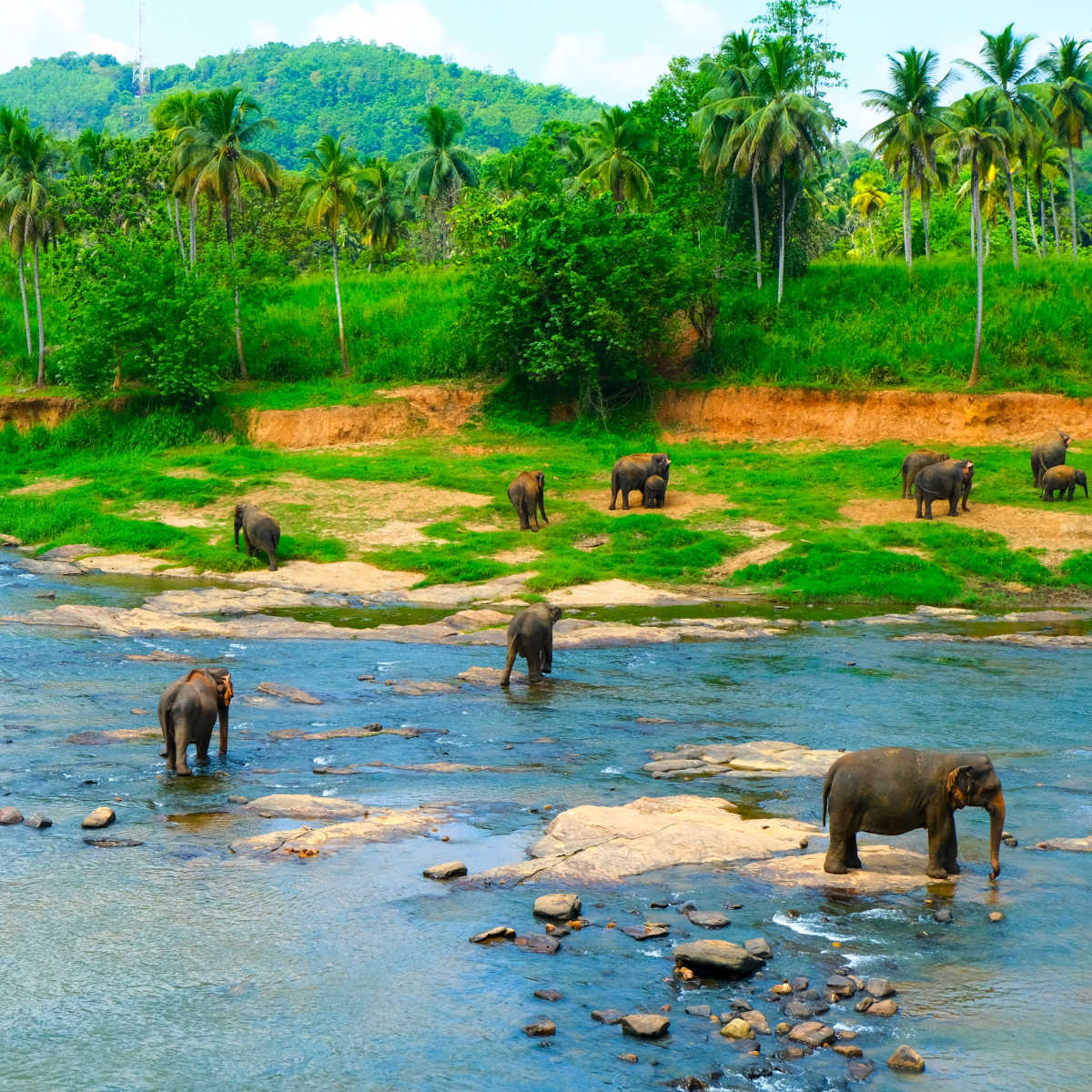
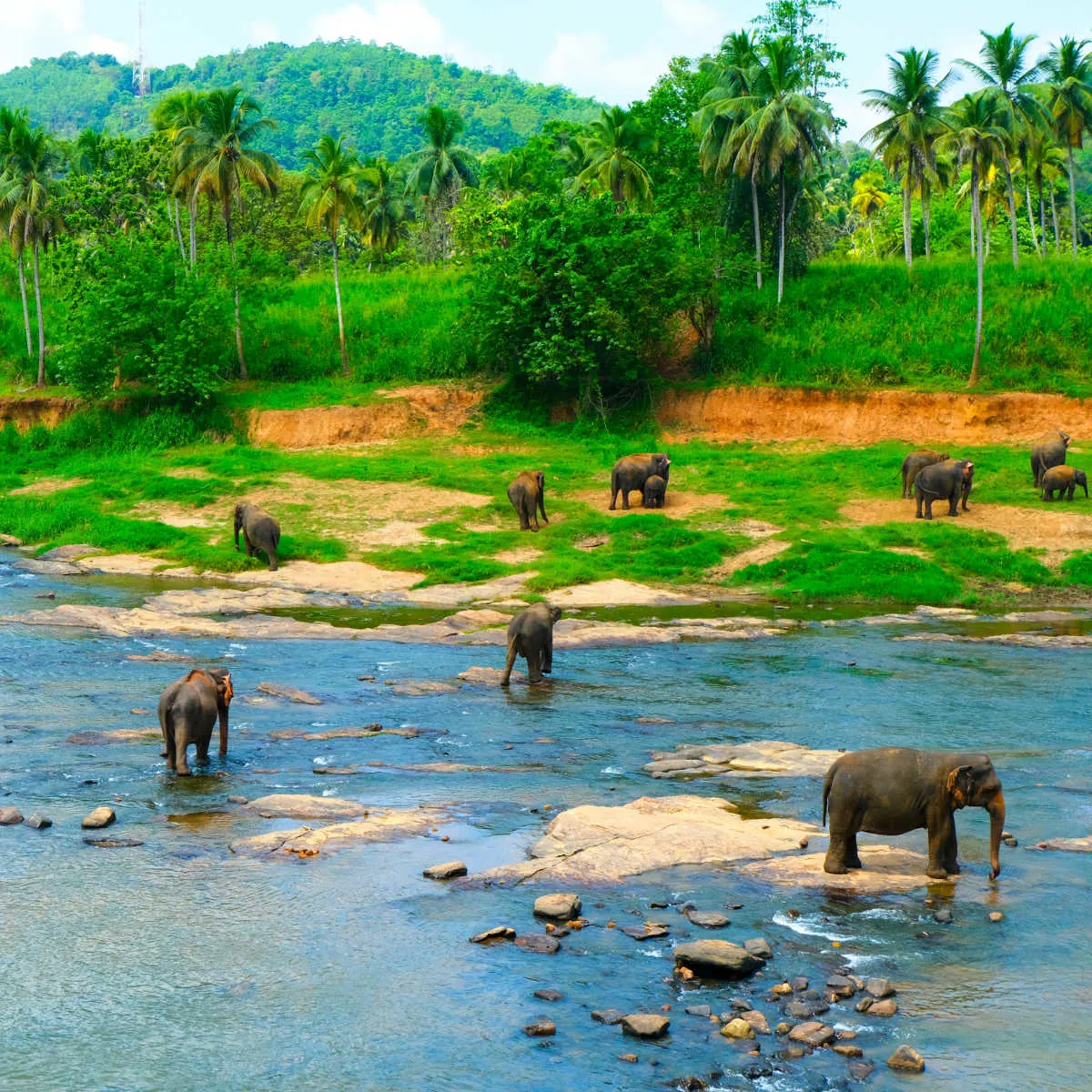
The visa is valid for 1 year initially, though it can be renewed annually for an unlimited number of years, provided the initial conditions for obtaining the visa are still met.
The procedure is quite straightforward, too:
- Fill out the visa application form
- Write a Request Letter
- Provide a photocopy of your passport (it must be valid for at least 6 months)*
- Two recent passport-sized pictures
- A Medical Clearance Report
- A Police Clearance Certificate (not older than 3 months)
- International Health Insurance that covers medical care in Sri Lanka
- Recommendation from the Ministry of Digital Economy*
*When bringing dependents, a marriage certificate for the spouse and birth certificates of the children are required
**This part is unclear, but we will know more details once the first applications are in. The system has been live for less than 2 days by now.
How To Apply For The Sri Lanka Digital Nomad Visa


Here’s how the process itself unravels:
- Submit the required documentation to the Department of Immigration and Emigration (Residence Visa Division)
- Wait for the documents to be evaluated for eligibility and compliance*
- Once approved, the visa endorsement will be issued on the applicant’s passport**
*Wait times have not been divulged.
**Sri Lankan authorities are yet to make clear whether this is a fully-online procedure, or whether contacting Sri Lankan missions abroad, and shipping your passport is required for issuing the visa.
As far as renewals go, they have revealed that, in order to be entertained for visa extensions, applicants must submit proof of Tax registration via the Inland Revenue Department. Yep, from my understanding of the official statement, you won’t be fully exempt from paying taxes while in the country.
Given that you must take out health insurance and fully support yourself and dependents, we’ll be assuming it’s not significant. More clarification is needed, and we’ll be sure to report back on it in due time once we know more.
What You Can And Can’t Do With This Visa


On the other hand, as a Sri Lankan DNV holder, you’re entitled to:
- You can stay in Sri Lanka while your visa is valid
- Open and maintain bank accounts in the country
- Enter into property rental or lease agreements
- Enroll your children in international / private schools
- Participate in co-working spaces, ICT programs, and tourism-related events organized by the government or private sector entities
At the same time, you are expressly prohibited from:
- Engaging in local employment within Sri Lanka
- Participating in political activities as a non-citizen
The statement also reads that changes in employment, income, or the status of dependents must be notified to the Department of Immigration and Emigration within 30 days.
Any violation of these conditions will result in the ‘immediate’ cancellation of the visa, and depending on the severity of the case, further legal action.
Why Choose Sri Lanka


Sri Lanka is one of the most affordable countries to be based as a Digital Nomad:
As seen on Nomads.com, a crowd-sourced platform tracking digital nomad trends worldwide, monthly living costs average from a mere $663 to $1,304. That’s rent alone in your average mid-size U.S. or European city!
The Sri Lankan capital Colombo is likely where a majority of expats will be headed: it has the best infrastructure, country-wide connectivity, and English is more widely spoken thanks to its thriving global community.
Other promising hubs include Weligama, a beach town known for its laid-back atmosphere and golden-sand beaches, and Kandy, an equally gorgeous city that combines Buddhist heritage and coastal relaxation.
Read more about Sri Lanka—and start planning your move—here.

Subscribe To Our Latest Posts
Enter your email address to subscribe to Travel Off Path’s latest breaking travel news, straight to your inbox.