

At a glance
Expert’s Rating
Pros
- Excellent performance
- Great user experience with nice AI additions
- Monster battery life
- Super-fast charging
Cons
- Inflexible camera experience
- Still USB 2.0
- Software support could be longer
- No wireless charging
Our Verdict
You could pick at misgivings – like the loss of a telephoto sensor, its LTPS display and USB 2.0 port – but these are minor issues against what remains. In classic OnePlus style, the OnePlus 15R is a high-performance phone tailored to gaming, backed by excellent longevity and a clean user experience with genuinely handy AI additions.
Price When Reviewed
This value will show the geolocated pricing text for product undefined
Best Pricing Today
Price When Reviewed
From $699.99
Best Prices Today: OnePlus 15R

$699

While the OnePlus 13 and 13R arrived at the start of the year, OnePlus has made us wait longer for its next-gen R-branded almost-flagship.
A month on from the chart-topping OnePlus 15, the spotlight now turns to the OnePlus 15R, and its job is to distil the company’s latest top-tier experience into a more affordable package, with as little compromise as possible.
Having reviewed the OnePlus 12R and 13R before it, I had high hopes going into this review. The 15R deviates from its predecessors by repackaging less existing hardware and debuting some truly new tech, namely its new Snapdragon 8 Gen 5 chip co-developed with Qualcomm. It’s the first phone on the international stage with this particular silicon.
Beyond that, this still looks like a performance-first offering from OnePlus, with a faster-than-average display, faster RAM, fast charging and one of the biggest smartphone batteries around. This thing should be fast, if you couldn’t tell.
The question is, has OnePlus made the right weight-saving cuts to render this ‘R’ entry worthy of your hard-earned cash?
Design & Build
- New design language
- IP66, IP68, IP69 and IP69K rated
- Supports magnetic accessory ecosystem with compatible case
As per my OnePlus 15 review, I really like the new design direction OnePlus has taken for its latest high-end phones. The OnePlus 13s debuted this minimalist new aesthetic earlier in 2025, and pairing that with the clean matt finishes available to the 15 made for a stellar combo.
The OnePlus 15R is not a bad-looking phone but the confident, clean lines and proportions of its predecessor have been worn away
I didn’t love the look (or feel) of the OnePlus 13, so the visual changes made between generations felt like a serious upgrade. In contrast, with the move from the 13R to the 15R, the opposite feels true.
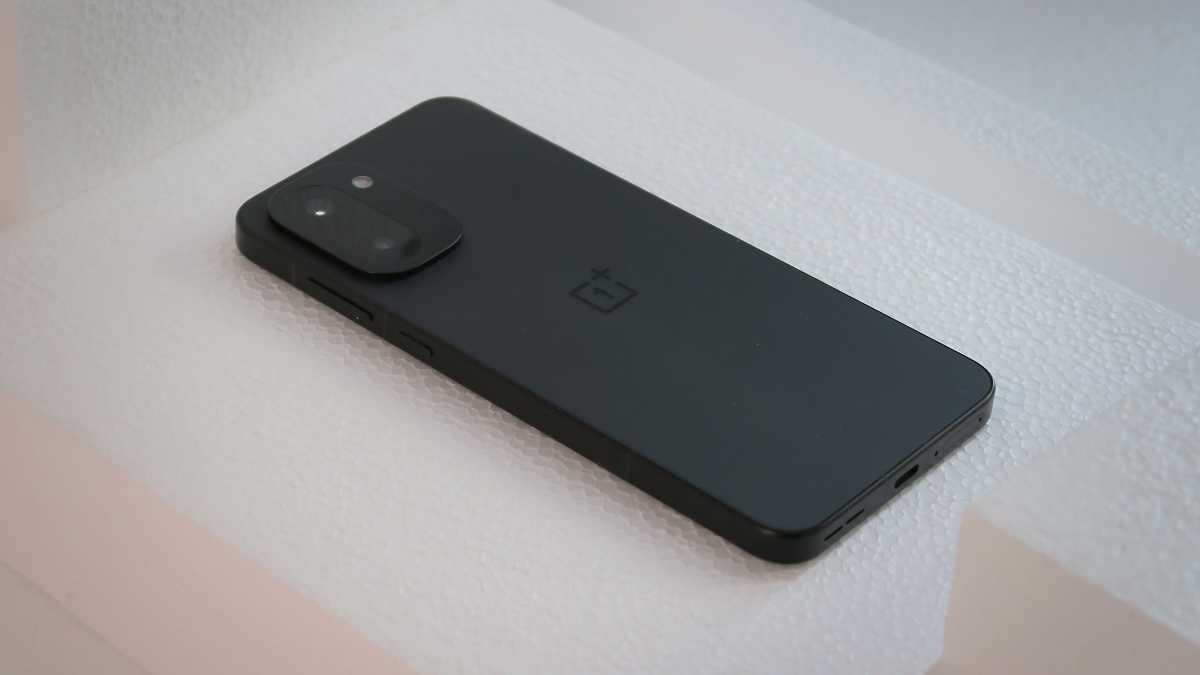
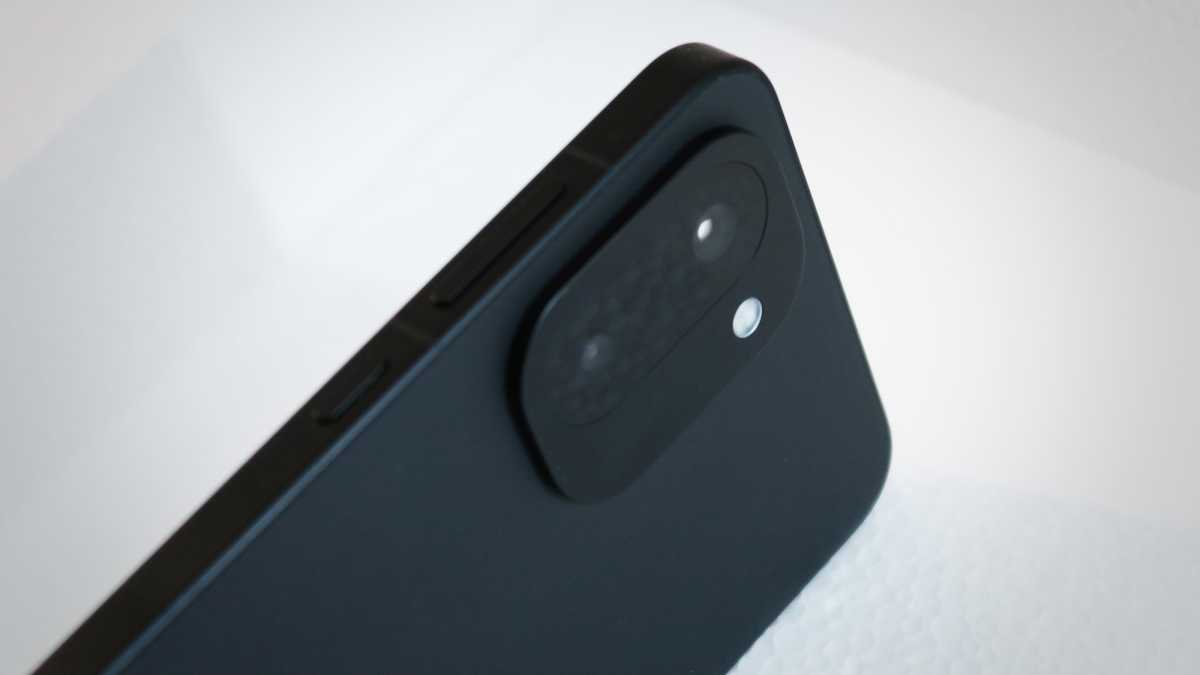
The OnePlus 15R is not a bad-looking phone but the confident, clean lines and proportions of its predecessor have been worn away, leaving a much softer and less impactful-looking device. The effect wouldn’t be so pronounced if the 15R didn’t also come with a significantly shrunken rear camera bump, which this year hosts only two sensors, instead of the three before.
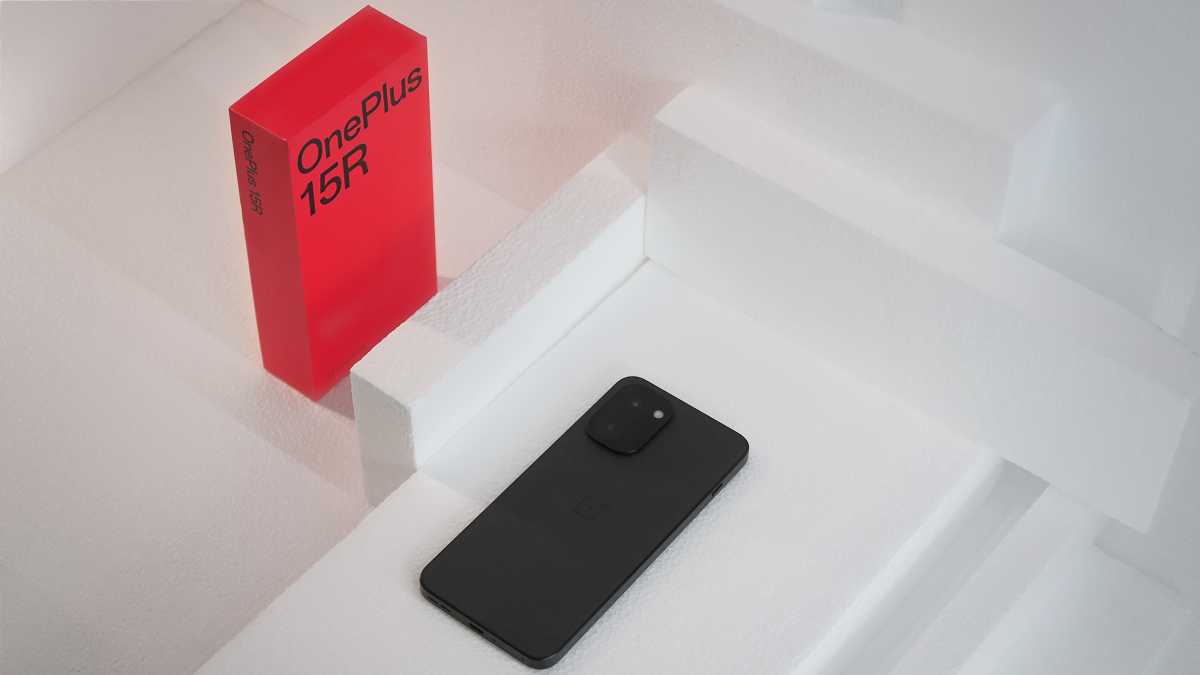
While its Chinese counterpart – the OnePlus Ace 6T – comes in four finishes (including a special edition light blue), almost everywhere else the 15R comes in just two: Charcoal Black and the pastel green Mint Breeze.
The black model goes some way to clawing back some of its launch sibling’s ‘cool’ factor, while the Mint Breeze finish only highlights the weaker elements of the phone’s form. There’s also the fibreglass-backed Electric Violet (purple) finish, exclusively available in India.
The 15R’s arrival also marks the end for the brand’s once-iconic three-stage alert slider, as the Nord 5 and OnePlus 15 already nixed this feature.
In its place – driven by the brand’s increasing focus on AI functionality – is the Plus Key: a programmable action button of sorts that, by default, lets you capture screenshots and voice notes to be saved directly to Mind Space (more on that later).
Despite my resistance to the look of the 15R, you can’t fault its durability credentials. Competent Gorilla Glass 7i on the front and a pleasingly fingerprint-repellant glass back sandwich a (not-so-fingerprint-repellant) aluminium frame, with complementary metal hardware controls down either side.
Its edges and those more rounded corners mean it’s perfectly comfortable in the hand too, albeit a little slippy and heavy (around 215g).
A total of four different IP-certifications mean that it’s better protected than most phones against dust and water ingress (ironic for a company that once shied away from IP certification entirely), with OnePlus testing the 15R in up to two metres of water, which is deeper than required for certification.
As with the OnePlus 15, there’s a selection of magnetic cases available separately for the 15R, which will let you snap the phone onto desk mounts or MagSafe-style accessories. Unlike the 15, you can’t power the 15R back up through such accessories, as it lacks wireless charging altogether.
Screen & Speakers
- 6.83-inch 1.5K LTPS AMOLED display
- 165Hz peak refresh rate & dedicated touch response chip
- New, more balanced stereo speaker layout
If you were put off by the drop in display size from the OnePlus 13 to the 15, you’ll appreciate the generational increase in screen size the 15R enjoys, with OnePlus’ latest premium entry sporting an expansive 6.83-inch 1.5K AMOLED display.
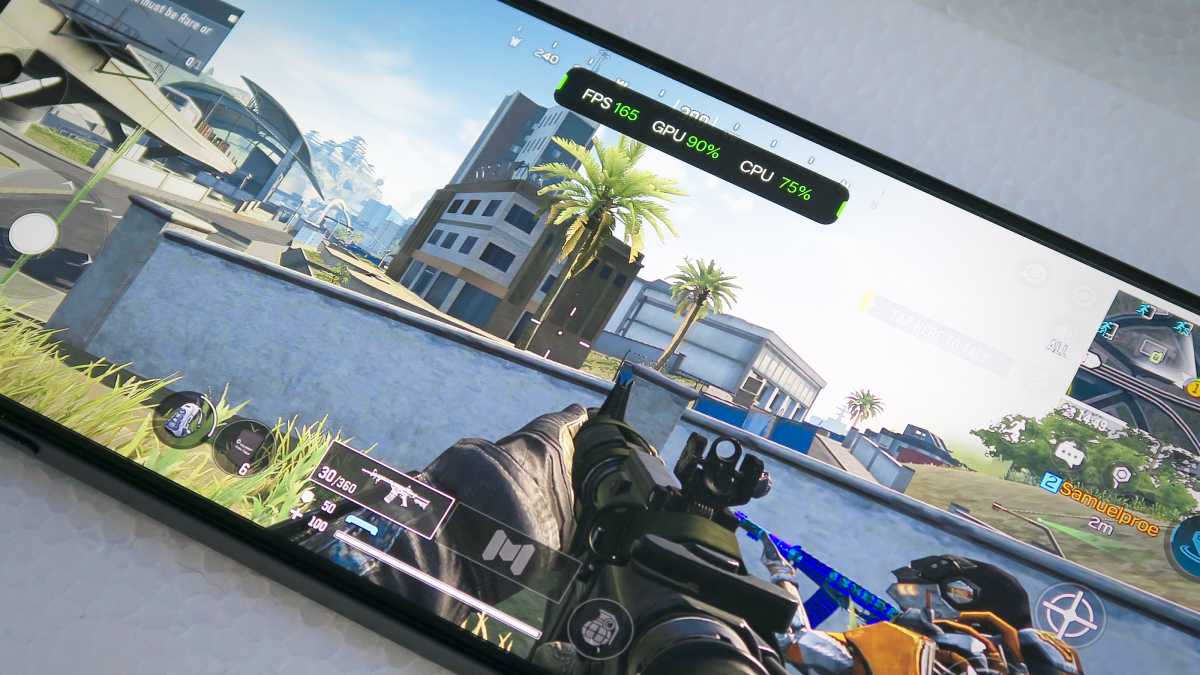
While it lacks the vanilla 15’s truly dynamic 1 to 120Hz LTPO tech (meaning it’s less power efficient), it does boast the same party piece, with support for boosted refresh rates of 144Hz and 165Hz in supported games.
The 15R thankfully enjoys an upgrade to a more premium, fast and reliable ultrasonic fingerprint sensor
As to which games use the panel’s peak refresh rate to its fullest, beyond the usual suspects like Call of Duty: Mobile and Clash of Clans, other compatible titles include Delta Force, League of Legends: Wild Rift, KartRider Rush+, Real Racing 3, Standoff 2, Blood Strike, and – via frame interpolation – PUBG Mobile.
OnePlus also says more titles are expected to capitalise on the 15 and 15R’s peak refresh rate abilities in the future, but those are unconfirmed for the time being.
That also comes paired to a dedicated touch response chip, which allows for a phenomenal 3200Hz touch response rate. By comparison, the Galaxy S25 Ultra‘s TRR clocks in at just 240Hz.
Foundry | Alex Walker-Todd
Having trialled the 15R’s use of the company’s Aqua Touch tech, it handles typing with wet fingers or droplets on the screen well, but struggles to register taps if water consistently runs down the screen. OnePlus’ approach isn’t alone in this, and I’d rather have it than not, but it’s clear what the next upgrade for this feature should be.
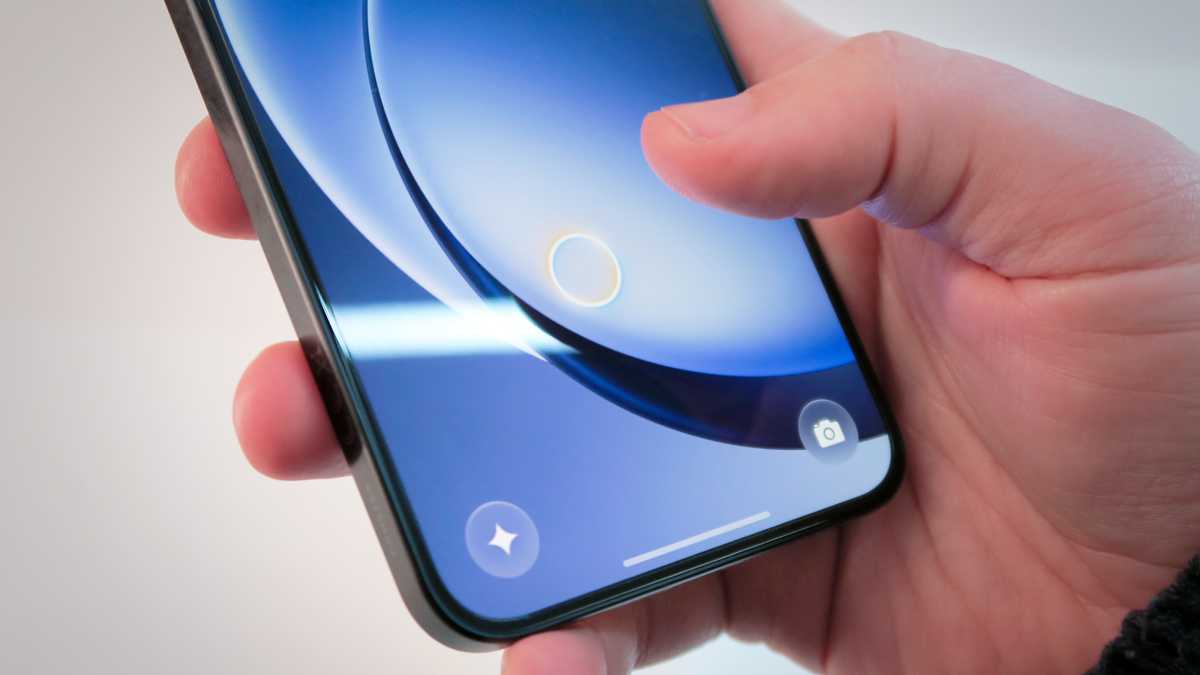
One of the more practical issues with the 13R was its fingerprint sensor placement. It was too low down towards the phone’s bottom bezel to really be comfortable. The 15R thankfully enjoys an upgrade to a more premium, fast and reliable ultrasonic sensor (just like the OnePlus 13 and 15) which, by being thinner, can be placed higher on the display for better ease of use.

As for the audio experience, you get a similar stereo speaker setup to the 15, delivering nice clarity at all but the top of its range. There’s a slight bass bias to the down-firing speaker, but it’s not so pronounced that when watching content in landscape, one side of the phone sounds unbalanced. Bass is still lacking, particularly at higher volumes where the mix gets muddy.
The 15R almost approaches the 15’s level of haptic feedback, but everything feels softer. Speaking of which, diving into both phones’ haptics menus, the 15R also loses out on the ability to sculpt the feel of its haptic output, with the OnePlus 15 boasting additional ‘Crisp’ and ‘Gentle’ profiles, absent on the 15R.
Specs & Performance
- Qualcomm Snapdragon 8 Gen 5 chipset
- 12GB RAM Ultra & up to 512GB storage
- Dedicated G2 WiFi chip
One of the biggest unknown quantities with the OnePlus 15R is its chipset. Having worked directly with Qualcomm to develop it, OnePlus is the first to launch a phone internationally that runs on the new Snapdragon 8 Gen 5.
If you’re wondering about the technical differences, while it’s built on the same 3nm architecture as the Snapdragon 8 Elite Gen 5 powering the OnePlus 15, the 15R’s SoC runs at lower clock speeds across its eight cores (two at 3.8GHz and six at 3.32GHz, compared to 4.61GHz and 3.63GHz on the Elite).

Foundry | Alex Walker-Todd
Its Adreno 840 GPU also misses out on the Elite version’s ability to boost from 384MHz to 768MHz, as well as 18MB of dedicated high-performance memory for greater bandwidth with lower latency. In the real world, however, that doesn’t make for a tangible gap in performance, at least not at launch.
From my experience, the 15R seems more than equipped to deliver on the promise of sustained 165fps gameplay. I enjoyed over an hour of Call of Duty: Mobile – at an impressively stable 165fps – before the frame counter started to fall. Even then, it was only by an average of about 10fps.
Notice I said “frame counter”, with any difference being hard to discern during gameplay. Not to mention that a frame rate of 155fps is still ludicrously fluid, more so than almost any other phone.
Along with the 8 Gen 5, optimised games and that 165Hz refresh rate boost, the 15R’s enduring performance is thanks to a few other key additions. Namely, OnePlus’ HyperRendering engine – which promises an 80% improvement in frame generation efficiency, alongside optimisations as part of the company’s OP Gaming Core, helping to sustain consistent performance.
OnePlus 15R benchmarks
For a little more context, artificial CPU benchmarking places the 8 Gen 5’s performance in line with previous Snapdragon 8 Elite phones, but by using Qualcomm’s latest chip architecture, the 15R supports more advanced components (such as new 20-bit triple ISPs) and faster memory.
Across the 15 and 15R, OnePlus has also replaced Android’s native CFS (Completely Fair Scheduler) with its own alternative, which prioritises processes based on the task at hand. OnePlus says this reordered approach leads to almost 23% fewer instructions needing to be sent to the CPU when performing a task, resulting in faster and more efficient processing.
Foundry | Alex Walker-Todd
Although the Chinese Ace 6T can be had in two RAM and three storage configurations, internationally OnePlus is serving the 15R up with 12GB of RAM and either 256GB or 512GB of storage.
Like the base OnePlus 15, the 15R does benefit from the new ‘RAM Ultra’ standard, which means faster data transfer speeds of around 9600Mbps, almost double what’s supported by previous Snapdragon chips, even the OnePlus 13’s 8 Elite.
This comes paired with top-tier UFS 4.1 storage, but as with the last few ‘R’ entries in the series, one of the only areas in which speed hasn’t been prioritised is the USB port. The 15R’s still only supports USB 2.0 speeds, whereas the company’s flagships have sported USB 3.2 Gen 1 for several generations at this point, offering around ten times the data throughput – key for when you want to transfer large (or a lot of) files over USB.
Cameras
- 50Mp main + 8Mp ultra-wide + 32Mp selfie camera
- Up to 4K at 120fps video capture
- Uses same new DetailMax Engine as OnePlus 15
Part of my resistance to the 15R’s new look is that it highlights one of the most obvious generational losses: the absence of a telephoto camera. Yes, the 13R’s tele only offered 2x magnification, but it delivered well-rendered 4x shots and provided competent portrait photography skills for its price.
Foundry | Alex Walker-Todd
I’d never want OnePlus to slap an additional sensor in there just for the sake of it (there have been so many phones with a pointless third rear camera over the years), but I feel like they were onto a good thing with the 13R’s rear camera trio, and I was curious to see where they’d take the feature with the 15R. ‘Off’, is the answer; they took it completely off.
While this change stifles the 15R’s photographic versatility somewhat (especially compared to similarly-priced alternatives, such as the Galaxy S25 FE), the phone still brings a strong main camera. It’s the same main 50Mp IMX906/LYT-700 sensor as both its predecessor and the OnePlus 15.
In fact, it’s not only the main sensor that the 15R shares with its more premium counterpart, but their chipsets’ triple ISPs (the first of their kind to support a 20-bit colour depth), and the same image processing by way of OnePlus’ own new DetailMax Engine.


As such, shots from the main sensor between the 15 and the 15R look near-enough identical. They have the same processed-but-pleasing finish in most conditions, also suffering from soft detail capture in low light.


The 8Mp ultra-wide, meanwhile, looks like the same secondary sensor as on the 13R (the ageing Sony IMX355) and, while useful, does introduce colour, contrast and dynamic range inconsistency with the phone’s main snapper. Its low light performance is significantly weaker too, and it tends to underexpose in comparison to the main lens. It holds value for more creative shooting in well-lit environments, however.
One silver lining is that the 15R gains a much larger 32Mp (up from 12Mp) front camera this time around, and it looks to serve up better detail and low light performance than previous R-series’ selfie offerings. The results look more processed than those you’ll get from the main camera, and its natural bokeh (without portrait mode), isn’t the prettiest, but otherwise it’s a welcome photographic upgrade.
Video quality – including stabilisation – is also comparable with the OnePlus 15. The 15R even gets its sibling’s 4K 120fps video capture ability, a rarity in the smartphone space right now that claws back some creative control and versatility.
Battery Life & Charging
- 7400mAh ‘Silicon NanoStack’ battery
- 80W wired charging
- No power adapter in the box
On the international stage, the OnePlus 15 boasted the biggest smartphone battery we’d ever seen from the brand, at a whopping 7300mAh. As you might have guessed by the past tense there, the OnePlus 15R’s larger body has allowed for an ever more sizeable 7400mAh power pack.
Once, 6000mAh+ batteries were exclusive to gaming phones but we’ve seen a number of larger-celled smartphones cropping up throughout 2025.

Foundry | Alex Walker-Todd
Even though the recent Oppo Find X9 Pro pips the 15R to the post – with its 7500mAh silicon carbon (Si-C) battery – OnePlus fans will likely take greater offence to the fact that the 15R again falls short of its China-exclusive doppelgänger (the Ace 6T), which touts a frankly ludicrous 8300mAh battery (more than double the battery capacity of a Samsung Galaxy S25), paired to even faster charging.
Even so, 7400mAh is unquestionably capacious, and it translates to impressive real-world performance.
In testing, the 15R scored close to the vanilla 15, with an exceptional PCMark Battery 3.0 score of 26 hours, 17 minutes (just behind the 15’s).
Using screen-on time to measure real-world use, I was able to clock an outstanding 14 hours per charge, which equates to just shy of three full days of modest use. Hammering 165fps gaming for 90 minutes took a full charge down to around 12 hours 45 minutes of screen-on time, but either way the 15R is equipped to deliver heavy daily use, without battery anxiety.
It hit 50% charge in under 25 minutes and reached a full charge within an hour (59 minutes in my tests)
While the phone lacks an in-box charger in most markets, if you do decide to grab a compatible SuperVOOC adapter, you’ll be able to capitalise on the phone’s support for 80W fast wired charging. The phone also supports bypass charging.
Using such an adapter I found that OnePlus’s promised recharge times were right on the money. It hit 50% charge in under 25 minutes and reached a full charge within an hour (59 minutes in my tests), with Smart Rapid Charging enabled within the phone’s settings.
As with the OnePlus 15, the company promises no more than a 20% degradation of the battery’s maximum charge capacity after four years of use too.
Check out our rundown of the best battery life phones for alternatives.
Software & AI
- OxygenOS 16 atop Android 16 at launch
- Google Gemini integration with Mind Space
- 4 years OS + 6 years security update support
The OnePlus 15R enjoys an almost identical user experience to the company’s flagship, meaning all the functionality, performance improvements and update commitment enjoyed by the OnePlus 15 are available on this more affordable alternative.
The latest OxygenOS 16 user experience (atop Android 16) includes some notable visual tweaks, such as fancier ‘Illuminance’ animations, some Liquid Glass-inspired aesthetics and even a Predictive Back Gesture, which better visualises exactly where you’ll end up when swiping to go back on Android, something that isn’t always clear natively.

Foundry | Alex Walker-Todd
That new Plus Key lets you save screenshots or voice notes to Mind Space: OnePlus’ AI-backed, on-device memory palace. OnePlus’ Plus Mind AI can then extract key information from anything you save (including text from images, such as event posters) and suggest relevant actions, such as summarising key details or offering up calendar entries.
New Google Gemini integration means you can ask the search giant’s voice assistant about content saved to your Mind Space, which is a nice upgrade that shows OnePlus’ close collaboration with key partners.
I can see the utility of the feature and it’s a good differentiator to most other brand’s AI offers (Nothing’s Essential Space notwithstanding), but I’m waiting for OnePlus to include cloud synchronisation across my OnePlus devices before committing. Things currently stored in Mind Space are local to your device (which does, I’ll concede, make them more secure).

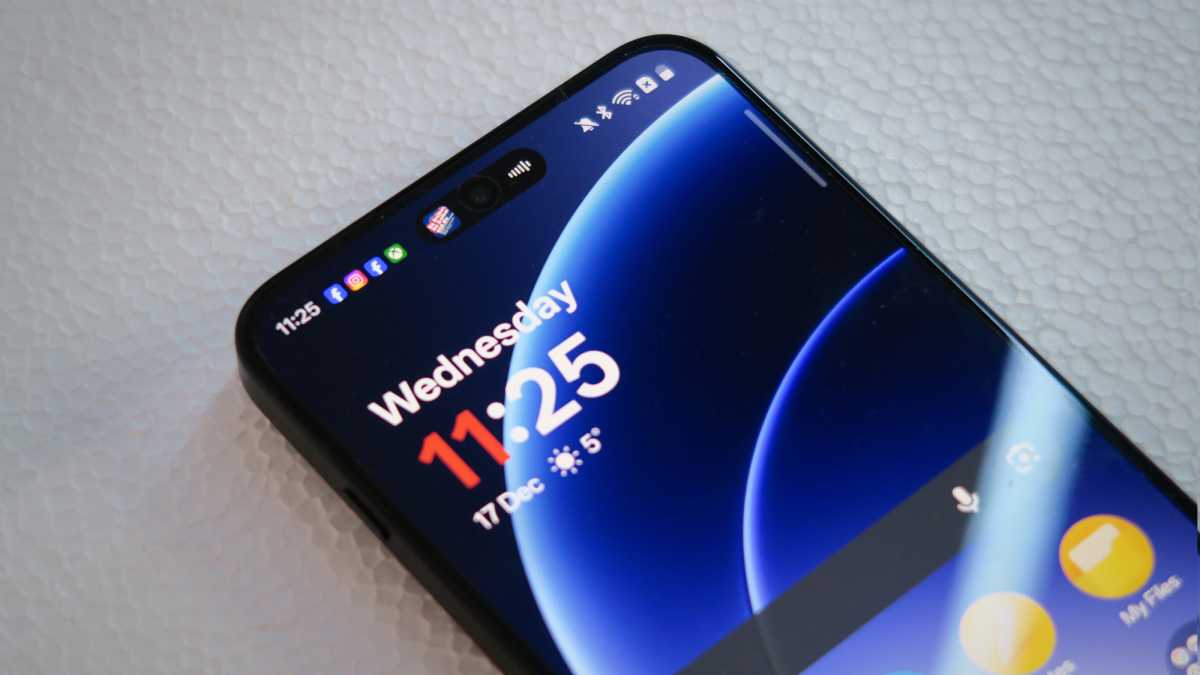
OxygenOS is generally one of the better takes on Android, thanks to its blend of utility and ease of use, even if some more recent additions – such as Flux Themes and Live Alerts – feel cribbed straight from iOS.
The 15R comes backed by a respectable four generations of OS updates and six years of security updates which, despite lagging behind market leaders Google and Samsung (both of which offer seven years of both OS and security updates), should prove ample for most users.
Price & Availability
After a long period of teasing, the OnePlus 15R hit pre-order internationally on December 17. The phone is set to go on sale from January 15, 2026.
At the time of writing, you can pre-order the OnePlus 15R direct from OnePlus in the UK or the OnePlus US site, where the company is throwing in some free bonuses, including its fastest 120W SuperVOOC charger and the option of a compatible magnetic case or a pair of OnePlus Buds 4 (going by OnePlus’ UK site). It’s also available to pre-order from Amazon in the UK, among other retailers.
Foundry | Alex Walker-Todd
Regardless of colourway, the base 12GB RAM + 256GB storage OnePlus 15R costs £649 / €699 / $699.99, while the 512GB model jumps to £729 / €799 /$799.99. That said, those that purchase before January 21 have the chance to snap up the 512GB model with £100 / €100 off, making it cheaper than the lower storage variant. Other offers include student discounts, trade-in reductions and money-off vouchers, when buying direct from OnePlus.
If you’re looking to totally change your phone setup, you could also pair it with a new SIM-only deal.
Should you buy the OnePlus 15R?
While there are clear chinks in the OnePlus 15R’s armour, collectively they’re small. So long as its lack of a telephoto camera, LTPS display tech, USB 2.0 speeds and middling haptics aren’t dealbreakers, the OnePlus 15R is otherwise a complete high-end package that gets you most of the way to the full-fat OnePlus 15 experience.
Even if I don’t agree with them all, I think OnePlus made the right compromises, as what’s left still wholly impresses, particularly the combination of sustained performance and the 165Hz display party trick for gamers. The phone’s outstanding battery longevity and clean user experience are to be commended too.
For your money, you could opt for the Galaxy S25 FE (which I’ve already compared to the 15R), or the Google Pixel 10 (which is starting to see price reductions), both of which pack superior photography skills but otherwise weaker hardware. There’s also the more affordable (but marginally more compromised) Poco F8 Pro, which I also recently reviewed.
Specs
- OxygenOS 16 atop Android 16
- 6.83-inch, 19.8:9, 1272 x 2800, LTPS AMOLED, 60-120Hz w/ 165Hz boost
- Ultrasonic in-display fingerprint sensor
- Qualcomm Snapdragon 8 Gen 5 chipset
- 12GB RAM Ultra (LPDDR5X w/ transfer speeds up to 9600Mbps)
- 256GB or 512GB storage (UFS 4.1)
- Cameras:
- 50Mp 1/1.56-inch ƒ/1.8 Sony IMX906(aka the LYT-700) main sensor w/ OIS
- 8Mp ƒ/2.2 Sony IMX355 112º ultra-wide
- 32Mp ƒ/2.0 GC32E2 25mm selfie camera
- Up to 4K @ 120fps video recording + Dolby Vision
- Stereo speakers
- Dual-SIM
- Wi-Fi 802.11 a/b/g/n/ac/6/7
- Bluetooth 6.0
- 7400mAh battery
- 80W SuperVOOC wired charging
- Magnetic accessory ecosystem
- 163.41 x 77.04 x 8.3mm
- IP66 / IP68 / IP69 / IP69K certified
- 213g (Electric Violet), 214g (Charcoal Black), 215g (Mint Breeze)
- Colours: Charcoal Black, Mint Breeze, Electric Violet