Summary created by Smart Answers AI
In summary:
- Tech Advisor reports that Nothing officially launched its 2026 mid-range Phone (4a) series, featuring the standard (4a) and Pro models with significant design overhauls and upgraded specifications.
- The Phone (4a) starts at £349 and launches March 13th, while the Pro begins at £499 with an unconfirmed release date, both representing price increases over predecessors.
- Key improvements include brighter 1.5K displays, new Snapdragon chipsets, upgraded 50Mp cameras, enhanced durability with Gorilla Glass 7i, and redesigned Glyph lighting systems.
Nothing Phone (4a): In summary
- Nothing’s 2026 mid-range phones are now official
- The range consists of the Phone (4a) and (4a) Pro
- Prices start at £349/€349, marking an uptick from last year
- A huge design overhaul on both phones
- Upgrades have been implemented for the displays, chipsets, cameras and more
Nothing has unveiled its 2026 line-up of mid-range phones, and given just how much the company has positioned itself as the flagship killer of the modern age (sorry OnePlus), there’s understandably a decent amount of hype following these handsets.
With that in mind, if you’re tempted to upgrade to either the Nothing Phone (4a) or the (4a) Pro, then here are the key things you need to know, from price to release date, to specs.
In the short time that Nothing has been around, the company has made a name for itself by offering unbelievable value across its entire range. The CMF Phone 2 Pro, which is put out by the brand’s budget-friendly CMF line, is up there as one of the best cheap phones that we’ve ever tested.
Last year’s Nothing Phone (3a) was easily one of the brand’s best efforts yet, as its eye-catching style and well-designed software made it a solid upgrade, even working as a viable alternative to more expensive mid-rangers like the Pixel 9a. It was much the same story with the Nothing Phone (3a) Pro, although it didn’t provide quite as much value as its cheaper sibling.
Flashforward to 2026 and it seems as though the Nothing Phone (4a) series is ready to shake things up yet again, but with still competition from the likes of the Pixel 10a and upcoming Galaxy A57, it won’t be an easy fight.
Nothing Phone (4a) series: What’s new?
In summary
- Last year’s Glyph Interface is long gone
- The (4a) Pro features an all-metal design
- The main camera sensors on both phones have been upgraded
- The displays are now much brighter outdoors
- Batteries are slightly bigger but charging speeds are the same
All new look, same Nothing style
Nothing phones are rarely consistent in their design from one generation to another, but the Nothing Phone (3a) range did at least hold on to a lot of elements from the (2a) series. This time around, Nothing has gone in a completely different direction, not just from the previous generation, but also in terms of how the (4a) and the (4a) Pro differ from one another.
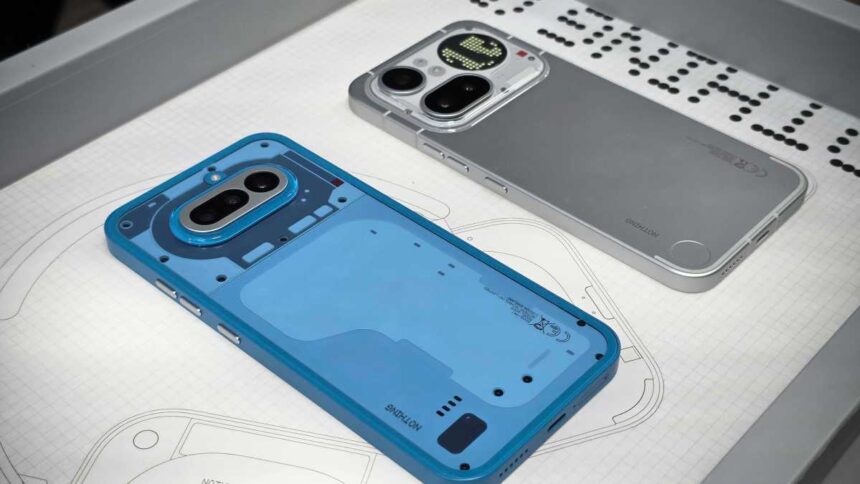
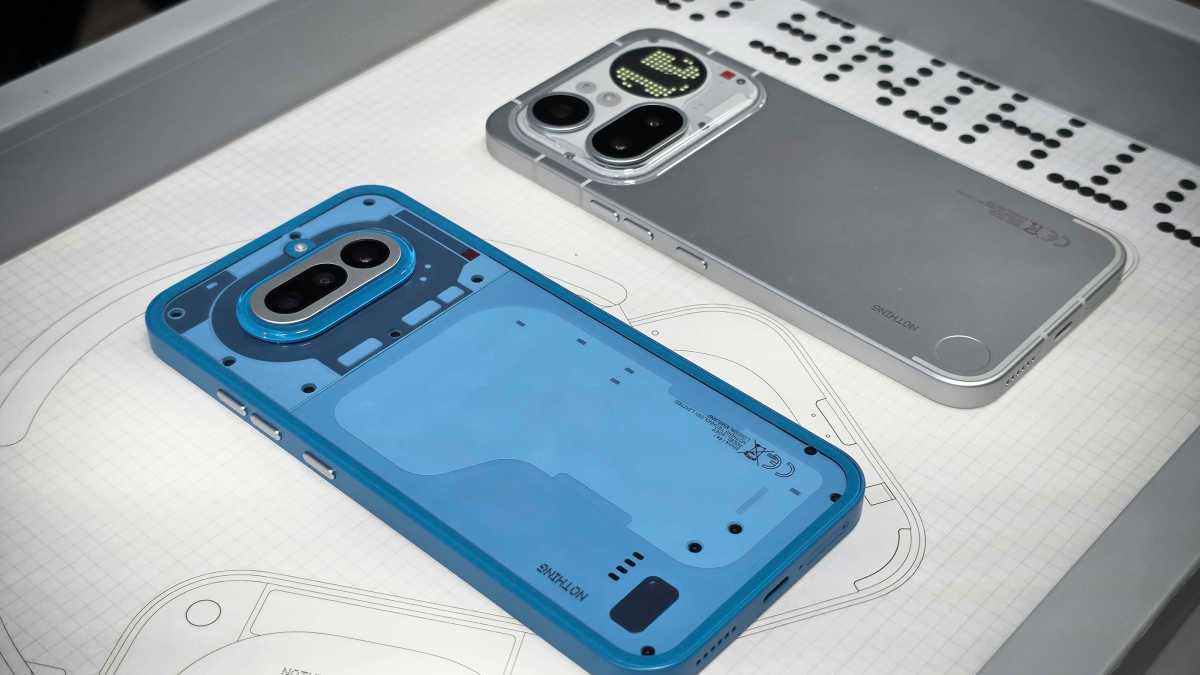
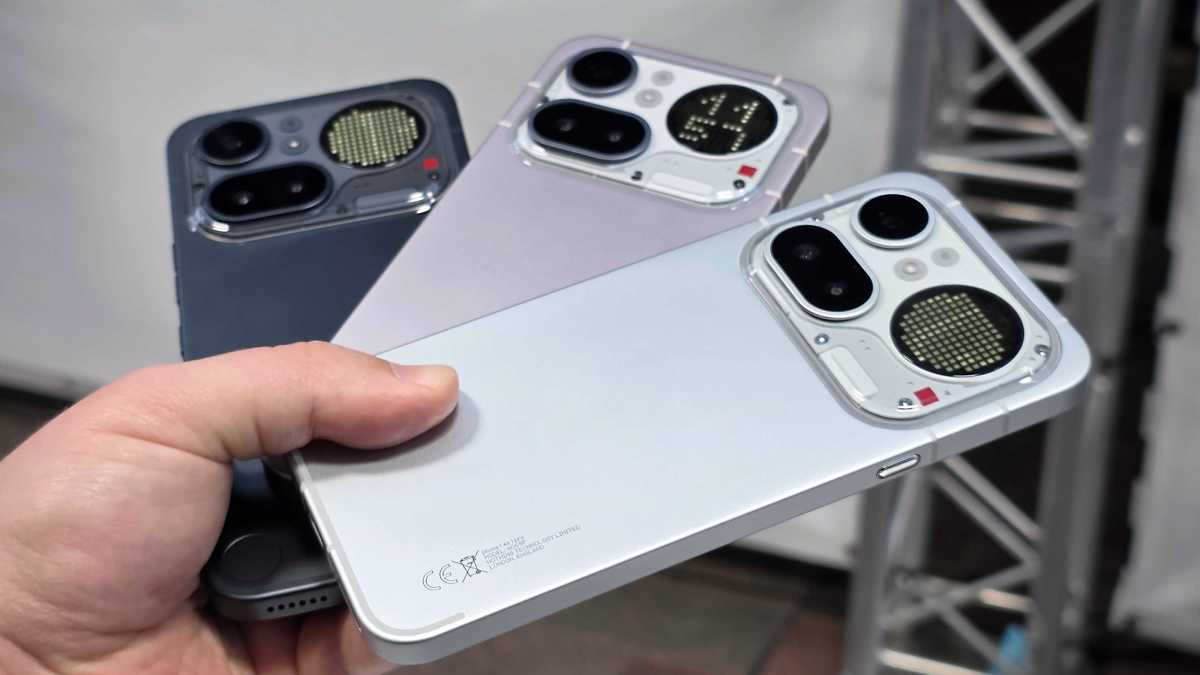
On the Phone (4a), yesteryear’s Glyph interface is gone completely, replaced instead with the all-new Glyph Bar, which represents a simplified version of what Nothing has been trying to achieve with its rear-facing light system. Now featuring just seven squares lined up in a row, comprised of 63 mini-LEDs, this Bar can be used as an indicator for various functions, such as the battery level during charging. The red square at the bottom will also flash when you’re recording video.
Foundry | Alex Walker-Todd
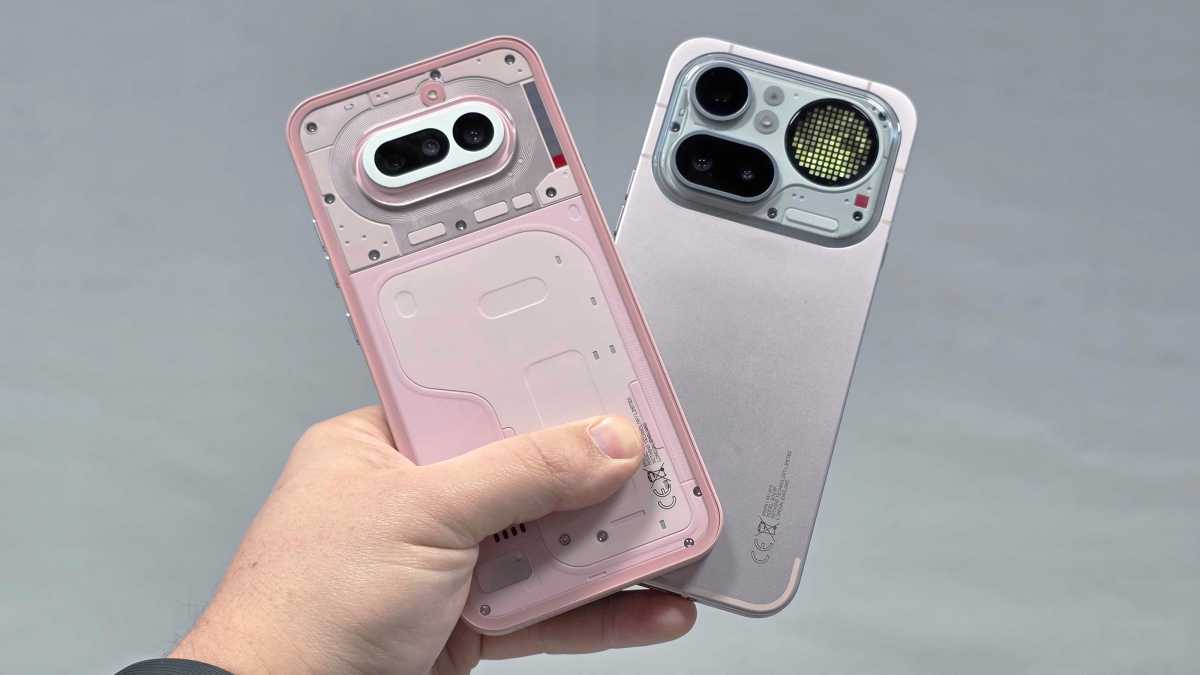
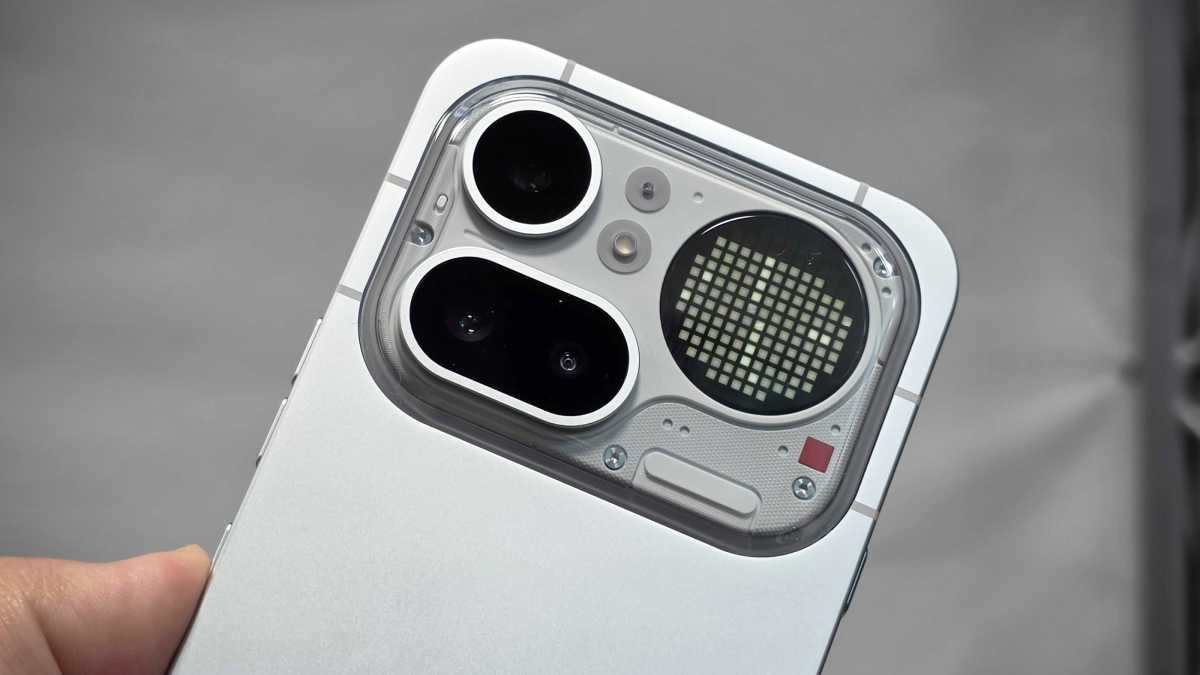
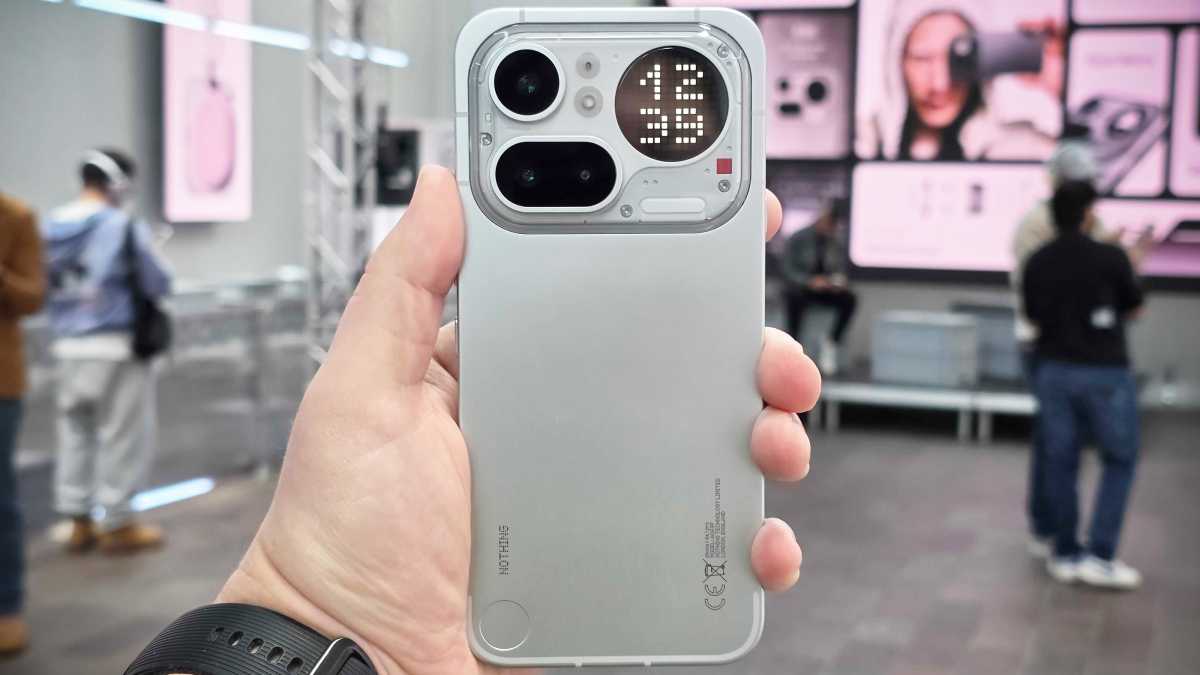
For the Phone (4a) Pro, it’s clear that Nothing has tried to adopt some elements from the flagship Nothing Phone (3), namely the Glyph Matrix. This tiny circular display on the back can be used to depict icons such as a telephone or a notification bell to let you know of any major reason why you might want to pick up the phone. It can also simply display the time.
The entire camera module is a lot cleaner than that of the Phone (3), however, with an almost iPhone 17 Pro-like camera plateau, while the rest of the body doesn’t feature any of the usual see-through aesthetic that Nothing has come to be known for.
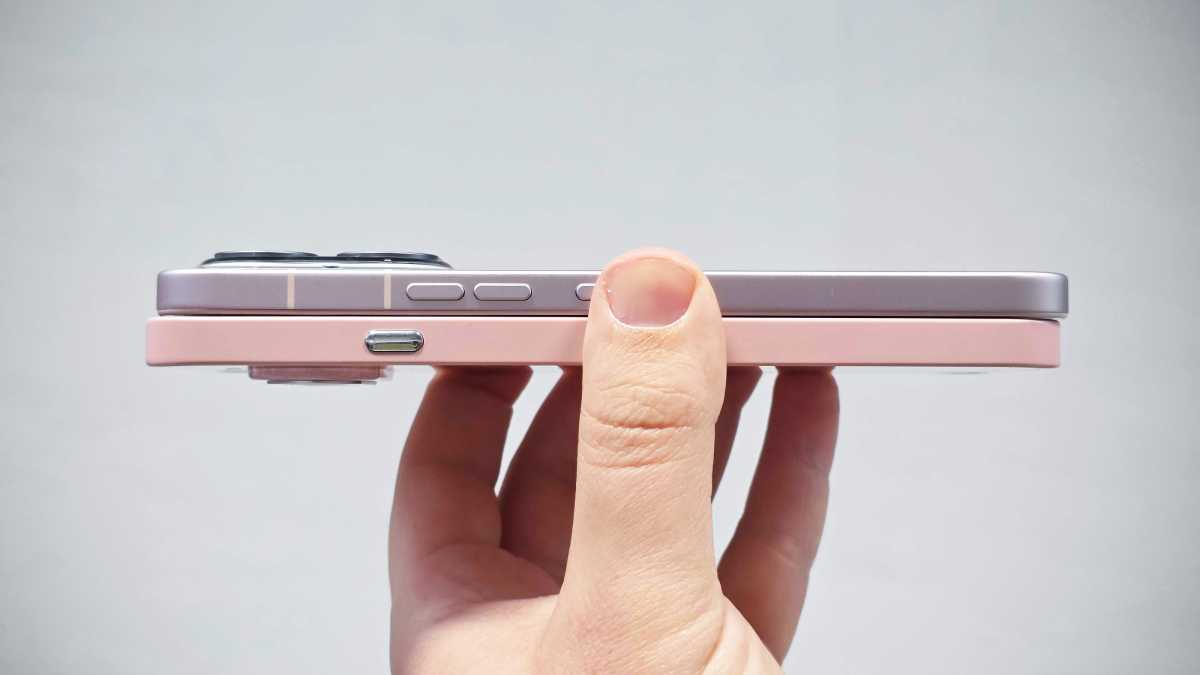
The (4a) Pro is also the first full-metal phone that Nothing has manufactured, giving the handset a more premium feel that’s sure to stand out against the plastic phones that you tend to find on the mid-range market.
Durability has taken centre stage
Even though they were more budget-friendly, the Nothing Phone (3a) range didn’t exactly feel cheap in the hand, but it’s clear that Nothing is looking to double down in terms of durability, implementing a handful of key upgrades that should allow its latest phone to go the distance.
The Nothing Phone (4a) Pro has been given more attention here, jumping up to IP65 dust and water resistance (it’s still IP64 on the cheaper sibling), but both phones have been built with the tougher Gorilla Glass 7i, making them less likely to succumb to dents and scratches.
Foundry | Alex Walker-Todd
Nothing claims that it has also increased the bend resistance of the Phone (4a) by 34%. While something like that is tricky to quanitfy in everyday use, it does at least provide some additional peace of mind that the phone should hopefully be more resistant to usual wear and tear than a lot of other lower mid-range phones.
Key camera upgrades across both phones
Nothing has always been keen to tout the camera prowess of its phones and that’s no different here as both phones in the (4a) range have had some major tweaks. Starting with the (4a) Pro, this phone now has a larger 50Mp 1/1.56” main sensor, 24% bigger than the main lens on the (3a) Pro, designed to capture more detail in every shot.
The autofocus is also supposedly 20% faster than that of the (4a), so for anyone constantly on the lookout for those blink-and-you-miss-it shots, this should be a worthy enough reason to upgrade.
Foundry | Alex Walker-Todd
The (4a) has also been fitted with a more capable main sensor, this time a Samsung-developed 50Mp 1/1.57-inch one, which should similarly be more capable in everyday use. Both phones now feature 3.5x optical zoom from their respective 50Mp periscope lenses, paving the way for more detail when taking a shot from further away.
There’s also a new 140x and 70x ultra-zoom mode on the (4a) Pro and the (4a), respectively, which will likely use AI to upscale images once they’ve been taken.
Strangely, the selfie camera on the Nothing Phone (4a) Pro has had a slight downgrade, moving from 50- to 32Mp, but as our camera tests have shown, higher megapixel counts don’t immediately translate to great photos, so we’ll keep an eye out to see if Nothing’s software can plug the gap.
Bigger and brighter displays
Something that we always love to see as it improves the overall usability of a phone, the displays for the new Nothing phones have been given a real shot in the arm, making them better suited for both outdoor use and when streaming a bit of Netflix.
On both fronts, we’re looking at slightly bigger screens than before, with the (4a) jumping to a 6.83-inch panel while the (4a) touts a 6.78-inch alternative. Both screens use AMOLED technology like before, but now they have a 1.5K resolution to deliver more detail, which is great news for anyone who likes to use their phones for a bit of entertainment on the go.
Screen brightness has been given a serious uplift, now hitting 4500 nits on the (4a) and a whopping 5000 nits on the (4a) Pro. This is likely to be one of the first upgrades that new users will notice, as it’ll make day-to-day tasks like ordering train tickets on the move feel just that bit easier, as you won’t be squinting to see what’s onscreen.
As a final flourish that’s sure to appeal to gamers, the Nothing (4a) Pro is moving on from a 120Hz refresh rate, in favour of 144Hz for a faster experience overall. When paired with the more capable chipset on board, it isn’t hard to see this being the more obvious choice for mobile gamers.
Foundry | Alex Walker-Todd
Faster performance and Android 16 from the get-go
Arguably the least surprising upgrade of the bunch, but no less important, all phones within the (4a) range will have Android 16 right out of the box, with Nothing OS 4.1 overlaid on top of it.
Unlike with the last generation which saw both phones touting the same Snapdragon chipset, Nothing has made sure to more distinctly separate the two handsets in 2026. The Snapdragon 7 Gen 4 will be powering the (4a) Pro while the Snapdragon 7s Gen 4 can be found inside the (4a).
The 7s Gen 4 is the same CPU found within the excellent Poco M8 Pro, and we found it to be very capable with everyday tasks and even a bit of gaming, so we’re eager to see how the beefier 7 Gen 4 fares.
It’s a minor change for the batteries
Given how much has changed elsewhere, it shouldn’t be too surprising that one area would be largely overshadowed and this time around, it’s the battery life. To Nothing’s credit, the battery life of the (3a) range didn’t really leave us wanting for anything, so it makes sense that the upgrades here have been minimal.
Both phones still have the same 50W wired charging as before, but now the batteries have jumped from 5000mAh to 5080mAh. It’s definitely a minor tweak, but given just how optimised Nothing’s software tends to be, that extra capacity could go a long way with the (4a) series.
Still not sure which to pick? We compare the Phone (4a) and (4a) Pro to highlight the key differences.
Foundry | Alex Walker-Todd
When is the Nothing Phone (4a) release date?
In summary
- Both phones announced on 5 March at London event
- Nothing Phone (4a) launches 13 March
- Nothing Phone (4a) Pro release date has yet to be confirmed
The Nothing Phone (4a) and the (4a) Pro were unveiled on 5 March, but unusually, the two phones are not being released for sale at the same time.
Pre-orders for the Nothing Phone (4a) are now live before the phone is officially launched on 13 March – you can pre-order now.
The (4a) Pro, on the other hand, despite being announced, currently does not have a release date attached, so be sure to check back here once we have more information to share.
How much does the Nothing Phone (4a) cost?
In summary
- Both phones are more expensive this year
- Prices start at £349/€349 for the Nothing Phone (4a)
- Expect to pay at least £499/$499/€479 for the Nothing Phone (4a) Pro
Given the current state of the global economy, there was always going to be a question as to whether or not the new Nothing phones would end up being pricier handsets than their predecessors, and unfortunately, that has turned out to be the case.
Foundry | Alex Walker-Todd
Unlike the Nothing Phone (3a) which started at £329/€329, the cheapest (4a) model will set you back £349/€349. It’s a similar £50/€50 increase for the more powerful model in the range, with the Phone (4a) Pro locked in at £499/€499, putting it at the same price as the Pixel 10a.
It’s worth noting that some colourways are locked to specific storage configurations. The Pink and Blue Nothing Phone (4a) can only be bought with 256GB for £399/€429, while the Pink Nothing Phone (4a) Pro is similarly locked to 256GB, priced at £549/$599/€549.
For full context, here are the prices for all variations of both phones:
Nothing Phone (4a) prices
- 128GB – £349/€349
- 256GB (8GB RAM) – £379/€389
- 256GB (12GB RAM) – £399/€429
Nothing Phone (4a) Pro prices
- 128GB – £499/$499/€479
- 256GB (12GB RAM) – £549/$599/€549
Nothing Phone (4a) FAQ
What is the Nothing Phone (4a)?
The Nothing Phone (4a) and the (4a) Pro are Nothing’s key mid-range phones for 2026, sitting below the Nothing Phone (3) and above the budget-level CMF Phone 2 Pro.
What is the price of the Nothing Phone (4a)?
The Nothing Phone (4a) starts at £349/€349 while the Nothing Phone (4a) Pro has an entry price of £499/€499.
When is the Nothing Phone (4a) coming out?
Both (4a) phones were unveiled on 5 March, but only the Nothing Phone (4a) will be available to buy from 13 March. The Nothing Phone (4a) Pro will be available to buy at a later date.
What does the Nothing Phone (4a) look like?
The Nothing Phone (4a) has a unique design on the back, utilising an all-new Glyph Bar instead of the Glyph Interface of its predecessor.
How are the Nothing Phone (4a) and the Nothing Phone (4a) Pro different?
The Nothing Phone (4a) and the (4a) Pro have different chipsets, cameras and designs, but they share the same battery size and charging speeds.