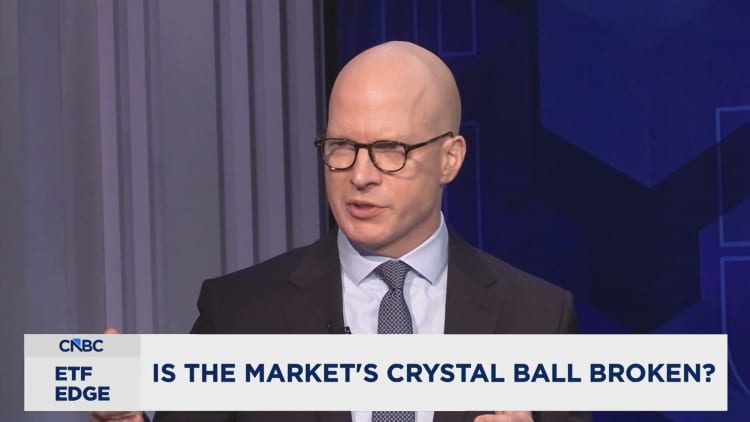

Investors may want to take a step back as stocks swing amid rising geopolitical tensions.
DBi’s Andrew Beer suggests the market’s crystal ball is broken.
“It’s not normal for big markets to move as much as they are right now,” the firm’s managing member told CNBC’s “ETF Edge” this week. “Something is deeply wrong in the market’s ability to forecast the state of the world… The only thing we can all do as investors is: This is the moment to plan and to prepare for the worst. You hope for the best.”
Beer, who has spent more than three decades in the hedge fund industry, thinks it’s remarkable the number of stresses on the financial system over the past 12 to18 months hasn’t caused things to spin out of control.
“You just you have more geopolitical risks stacked on top of each other today [and] more economic risk factors than I remember at any time in my career,” he added.
Beer urges investors to ask themselves how they would act if a 2008 or 2022 market downturn happens again.
“These financial assets are, they’re an investment, but they’re also what you need to survive, to live on, to retire, and so it’s the very real human side of it that I hope people will focus on,” he added.
According to Beer, investing like it’s 2025 could turn into regret.
“The best thing to do in 2025 was just turn off your computer beginning of the year and come back at the end of the year, and you’ve made money, your stocks and your bonds and everything else,” he said. “It won’t continue like that. We will go through a more difficult period.”
Recent moves in gold, silver, bitcoin and crude oil underscore how difficult it has become for investors to calibrate portfolios, especially as sharp reversals unfold over short periods of time, according to Beer.
“No one has a playbook for that,” said Beer, who is also watching for signs of strain in private credit, insurance company portfolios and other corners of the market where unusual stress could begin to spread.
NovaDius Wealth Management’s Nate Geraci highlighted exchange-traded funds that are designed to offer portfolio protection — particularly managed futures ETFs.
“This is absolutely something that is a longer-term allocation, and I almost view it as portfolio insurance,” the firm’s president said in the same interview. “You want that insurance when something goes bad in the market, and maybe that’s stocks and bonds going down together.”