Thailand remains one of the safest destinations in Southeast Asia, but the recent resumption of border clashes with Cambodia has made travel to that area inadvisable.
All areas within roughly 80 kilometers of the Cambodian border are currently subject to advisories due to active armed clashes, artillery fire, and evacuations on both sides of the frontier.
This includes border areas of provinces such as Sa Kaeo, Surin, Sisaket, Ubon Ratchathani, Buriram, Chanthaburi, and Trat
LATEST THAILAND-CAMBODIA CONFLICT NEWS UPDATES (December 17):
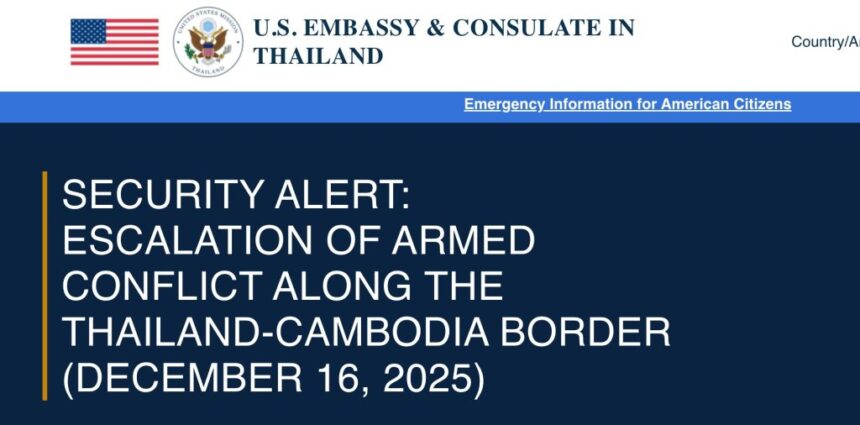
- U.S. Embassy warns of “active hostilities & unpredictable security situation” near the border: U.S. Embassy & Consulate in Thailand security alert (dated December 16, 2025) advises U.S. citizens to avoid travel within 50 kilometers (about 31 miles) of the Thailand–Cambodia border, citing ongoing cross-border fire and a volatile security environment. The alert also notes the U.S. government’s limited ability to provide emergency services in affected provinces and urges travelers to follow Thai security instructions and monitor local updates.
- Cambodia alleges “toxic gas” injuries; Thailand denies chemical weapons
Cambodian soldiers treated in hospitals in Banteay Meanchey province described acute breathing difficulties after Thai aircraft sorties, while Cambodia’s defense ministry has repeatedly alleged the use of “toxic gas.” Thailand’s air force rejected the claims as “fake news,” and Reuters reported that the allegations remain unverified, with Cambodian authorities not presenting evidence or specifying the agent; medical staff said additional testing would be needed to determine the cause of symptoms.
Source: Reuters (Dec. 17, 2025). Source: Reuters
- Thailand prepares repatriation for thousands stranded after key crossing closure. Thailand said it is working to repatriate up to 6,000 citizens stranded in Cambodia after the Poipet checkpoint closure, as clashes across multiple frontier locations extend into a second week. Thai officials also signaled additional pressure points—such as preparing plans to cut fuel shipments into Cambodia—while ASEAN diplomacy continues, including a Malaysia-hosted foreign ministers’ meeting aimed at re-establishing a ceasefire framework.
Source: Reuters
LATEST THAILAND-CAMBODIA CONFLICT NEWS UPDATES (December 13):
- Ceasefire messaging diverges as fighting continues on the border. Hostilities between Thailand and Cambodia persisted Saturday despite U.S. President Donald Trump saying a ceasefire had been secured. Thailand’s caretaker prime minister, Anutin Charnvirakul, disputed that claim, saying Thailand would “continue to perform military actions until we feel no more harm and threats to our land and people.” Cambodia has signaled openness to Malaysia’s Anwar Ibrahim’s push for ASEAN-backed verification, including satellite-based monitoring. (Source: reuters.com)
- Dueling accounts of escalation harden positions on both sides. Thai officials describe ongoing operations as retaliation and self-defense, while Cambodia alleges Thailand has continued air attacks. Cambodia’s Ministry of Defence said, “Thai forces have not stopped the bombing yet and are still continuing the bombing,” citing reported strikes and cross-border fire. Thai military leaders have also framed the campaign as aimed at degrading Cambodia’s long-term capability, deepening diplomatic strain as clashes continue. (Source: aljazeera.com)
- Displacement worsens as shelters report shortages and insecurity lingers. The latest exchanges have driven large-scale evacuations and intensified pressure on temporary shelters, with reports of limited food and clean water. A Cambodian evacuee told Reuters, “It’s really hard to stay here like this. No rice, food, money… There’s no drinking water.” Reporting also indicates some Thai residents have remained in near-empty villages to protect property and livestock, highlighting the conflict’s expanding civilian toll. (Source: apnews.com)unpredictable security situation

Official Travel Advisories
U.S. Travel Advisory for Thailand
The U.S. State Department continues to list Thailand under Level 1: Exercise Normal Precautions.

However, it advises travelers to reconsider travel to the provinces of Yala, Pattani, Narathiwat, and parts of Songkhla due to persistent insurgent activity and civil unrest.
Canada Travel Advisory for Thailand
The Canadian government warns travelers of frequent petty crimes, including:
- Purse snatching
- Pickpocketing
- Theft from bus luggage compartments
Travelers are urged to use reputable transport companies and remain vigilant in crowded tourist areas.
Areas to Avoid in Thailand
Both U.S. and Canadian authorities recommend avoiding:
- Sa Kaeo,
- Surin,
- Sisaket,
- Ubon Ratchathani,
- Buriram,
- Chanthaburi,
- Trat
These provinces continue to experience violent separatist conflict and ethnic tensions.
Additionally, due to the newly escalated situation, travelers should avoid all regions bordering Myanmar, Cambodia, and Malaysia, where armed conflict, instability, and landmines pose serious risks.
Northern border districts near Myanmar (e.g., Mae Sot) currently warrant heightened caution.
Common Scams in Thailand
Although Thailand is generally safe, tourist-focused scams are common:
Taxi Overcharging
Some taxi drivers refuse to use the meter and instead quote inflated flat rates, particularly in tourist-heavy areas. If a driver will not turn on the meter, end the ride request and take another taxi.
The “Closed Attraction” Diversion
In a common diversion tactic, tuk-tuk or taxi drivers claim a major attraction is “closed” or “not open today,” then steer visitors to partner shops, gem outlets, or tailor stores for commissions. Politely but firmly insist on going directly to your intended destination.
Nightlife Price Inflation and Extortion Schemes
In certain nightlife venues, tourists may face exaggerated drink charges or pressure tactics, including staged “police” encounters intended to extract cash payments. If confronted by anyone claiming to be law enforcement, request official identification and avoid handing over money on the spot.
Currency Exchange Short-Change or Fee Manipulation
Unscrupulous exchange counters may advertise favorable rates while applying hidden fees, unfavorable spreads, or short-changing customers. Check benchmark rates in advance, confirm the net amount you will receive, and count cash carefully before leaving the counter.
Fake or Misrepresented Gemstones
Gem-related fraud remains a recurring issue, particularly in Bangkok, where stones may be misrepresented in quality, origin, or authenticity. Purchase only from established dealers and request recognized certification documentation.
Tuk-Tuk Overpricing and Detours
Tuk-tuk drivers often quote high prices and may propose additional stops that generate kickbacks. Set a clear final fare before departure and decline unsolicited detours or shop visits.