Because the 2025 federal government shutdown stretches into its second month, the impacts on air journey have gotten more and more seen. Whereas the U.S. aviation system stays operational, mounting staffing shortages and delayed federal oversight are producing measurable disruptions for vacationers and airways alike.
Controller & Display screen-Staffing Shortfalls
With the federal authorities missing a full funds, thousands of essential aviation workers — together with roughly 13,000 Federal Aviation Administration (FAA) air-traffic controllers and round 50,000 Transportation Safety Administration (TSA) officers — are performing duties with out pay.
In keeping with the FAA, almost half of the 30 busiest U.S. airports reported controller absences extreme sufficient to set off inside staffing alerts. At one facility within the New York area, the absence price reached as excessive as 80 %.
These shortages aren’t merely nominal: the FAA has confirmed that some airports have been experiencing common outbound delays of 1 hour or extra attributable to staffing constraints.
Delays, Cancelations and Vacation-Journey Dangers
Flight-tracking knowledge present the dimensions of disruption. Over the current weekend, greater than 9000 flights have been delayed nationwide.
In October, the proportion of delays attributed to staffing points jumped sharply to round 53 %—versus roughly 5 % in regular circumstances — based on Sean Duffy, the U.S. Transportation Secretary.
Examples:
- At Newark Liberty Worldwide Airport (EWR), delays of two–3 hours have been reported, with ripple results throughout the New York-area community.
- At Hollywood Burbank Airport (BUR), the management tower was unstaffed for six hours, forcing alternate coordination and producing delays as much as 4 hours.
With main U.S. journey intervals similar to Thanksgiving looming, trade observers warn that the disruption might intensify if staffing gaps persist.
Operational and Security Oversight Considerations
Past fast delays, the shutdown is affecting key oversight and infrastructure features. With funding lapsed, coaching for brand new controllers is paused, and facility inspections and safety clearances are delayed.
Whereas the FAA and airways emphasize that security stays intact, the pressure on employees — many working time beyond regulation, unpaid, and morale-low — is elevating concern amongst air-traffic and labor-union representatives.
One senior official conceded: “We are going to sluggish visitors down… you’ll see delays, we’ll have flights canceled to verify the system is protected.”
Financial & Journey-Expertise Fallout
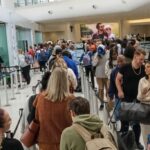
For vacationers, the results are already materials: longer safety traces, unpredictability in schedules, heightened threat of missed connections. For airways and airports, delays translate into elevated prices, schedule disruption and reputational threat.
Some evaluation warns that if the shutdown endures, the price to the broader financial system — together with tourism, freight and enterprise journey — might run into tons of of thousands and thousands of {dollars}.
In the meantime, trade teams warning that even when present disruptions appear average, the longer the shutdown persists, the extra probably cascading results will hit smaller airports, late-night flights and peak-season visitors.
Outlook: What to Watch
- Anticipate extra frequent and longer delays at hubs the place staffing stress is best — particularly New York, Los Angeles, Dallas/Fort Price and Chicago.
- Airways are advising vacationers to arrive early, test flight standing and permit additional time for connections.
- If the shutdown continues previous the foremost vacation journey window, secondary results (baggage dealing with, floor providers, upkeep oversight) may degrade.
- Policymakers face rising stress: the aviation trade is signaling that the system is nearing its tolerance threshold.