Most modern smartphones are pretty good at taking pictures in good lighting. High-end phones have gotten really good at taking pictures in almost any scenario, but for as advanced as mobile photography has gotten, physics still puts a hard limit on what your phone’s native optics are able to capture.
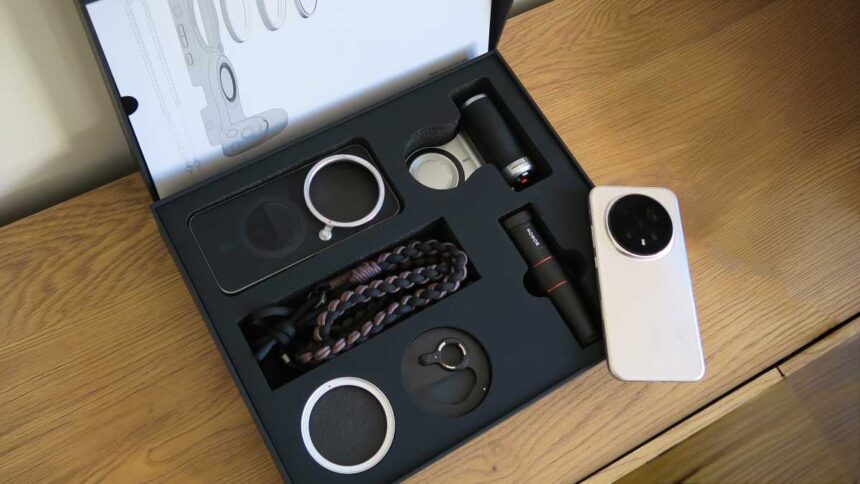
That’s why, when it comes to some of the best camera phones around right now, manufacturers have started to push beyond the confines of their star devices’ inherent imaging hardware, augmenting the experience with accessories that allow for even more photographic versatility. Not to mention, by doing so, they inject a sorely needed element of fun back into the photographic experience; take Honor’s new Professional Imaging Kit for the Magic 8 Pro, for example.
Honor’s new star player is already an accomplished camera phone in its own right, with a large 1/1.3-inch 50Mp main sensor and a sizeable 200Mp 3.7x telephoto too, granting up to an 85mm equivalent focal length of optical quality lossless zoom and AI algorithm-enhanced zoom between 10x and the phone’s maximum 100x magnification (equivalent to between 230- and 2300mm).
Add in the Professional Imaging Kit, though, and the included 2.35x teleconverter grants you 200mm equivalent optical zoom, AI-backed zoom above 400mm and the maximum focal range of 5400mm (roughly 235x).
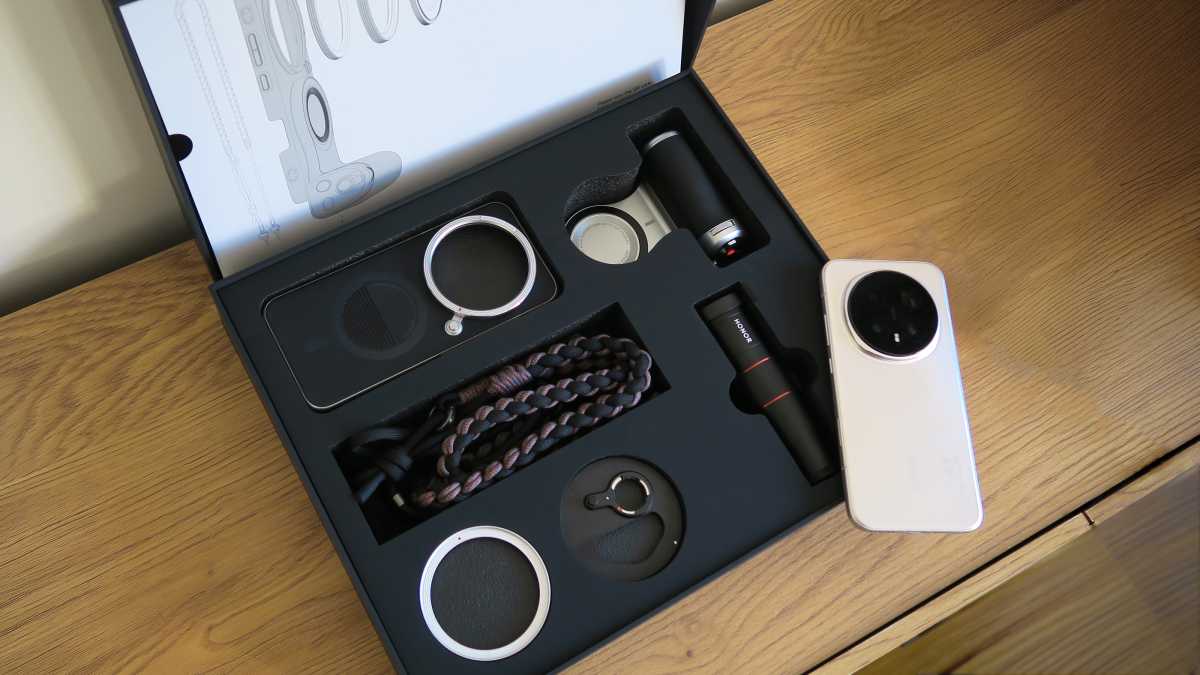
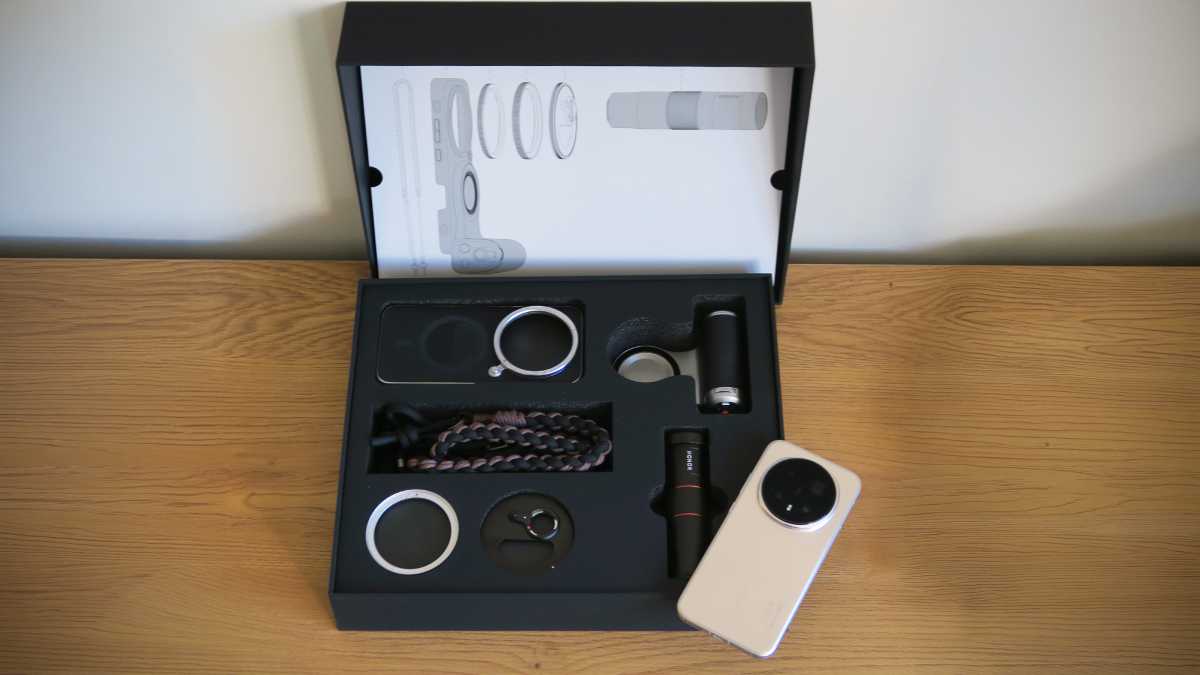
What’s in the box?
Honor partnered with Shenzhen-based camera and smartphone accessory maker Telesin to create the Magic 8 Pro’s Professional Imaging Kit and it marries much of the functionality of the separate Photography and Filter Kits that China-based buyers of last year’s Honor Magic 7 RSR had access to.
First, there’s a polycarbonate case. Its silver edge and textured faux leather black back certainly speak to classic camera aesthetics, while the silver volume and metallic red power button caps add a satisfying click to the standard feel of the 8 Pro’s native side buttons, when pressed.
For the price, the silver elements do look and feel a little cheap, though.
There are also anchor points for the included, braided neck strap, a cutout for the phone’s AI Button (which already doubled as a shutter button and capacitive zoom control), a latched mounting ring that encircles the phone’s cameras and a MagSafe style magnet arrangement, with a “cooling grille” in the centre.
As a case, it feels protective enough, and the addition of MagSafe-compatible magnets opens up compatibility with a whole world of accessories; however, when in the case, my Magic 8 Pro wasn’t able to charge wirelessly on a standard Qi2 charger I had to hand, which is a shame. I’m also unconvinced that the cooling grille makes any significant difference to performance in extended use.
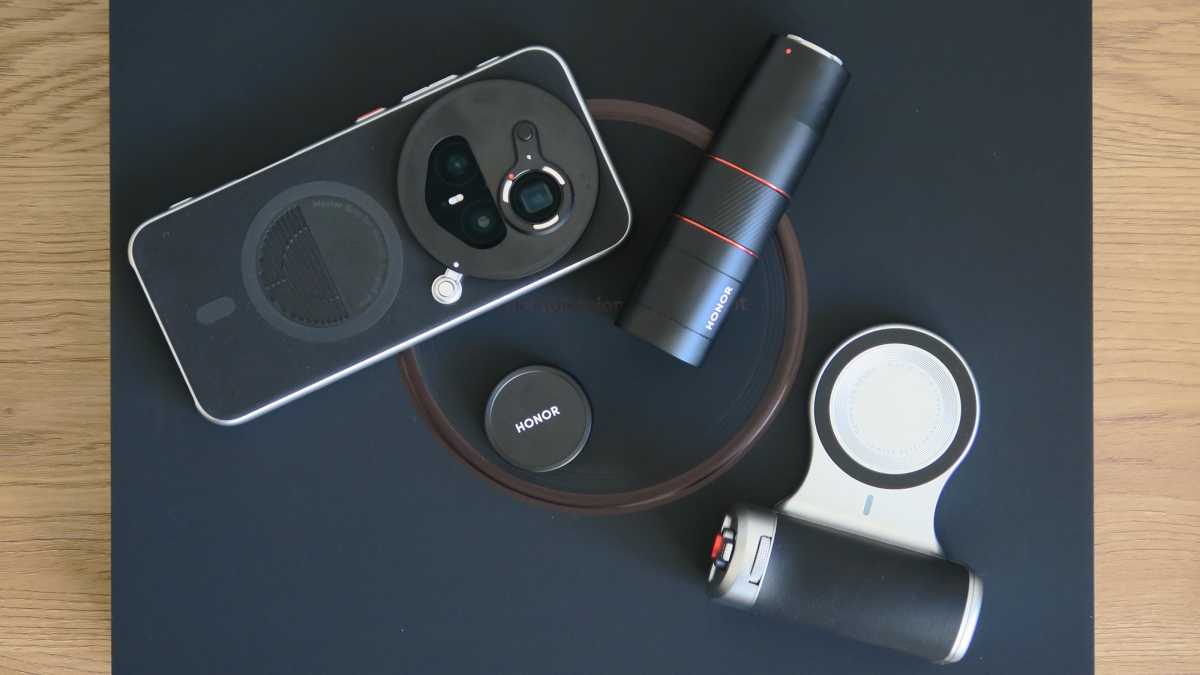
That latched camera surround comes pre-fitted with a cosmetic metal ring, that gives the phone a passing resemblance to the new Leica Leitzphone Powered by Xiaomi and acts as a nice point with which to stabilise the phone when shooting, but it can also be swapped out for a 67mm filter adapter – similarly to Xiaomi’s last few photography kits – or the lens mounting bracket for that all-important 2.35x teleconverter lens.
The adapter itself is nice because, unlike the equivalent plate that attaches to the Oppo Find X9 Pro‘s camera system, when connected, the Magic 8 Pro’s main and ultrawide sensors aren’t obscured, so you can still shoot across all of the phone’s main lenses, without having to fuss with your setup too much.
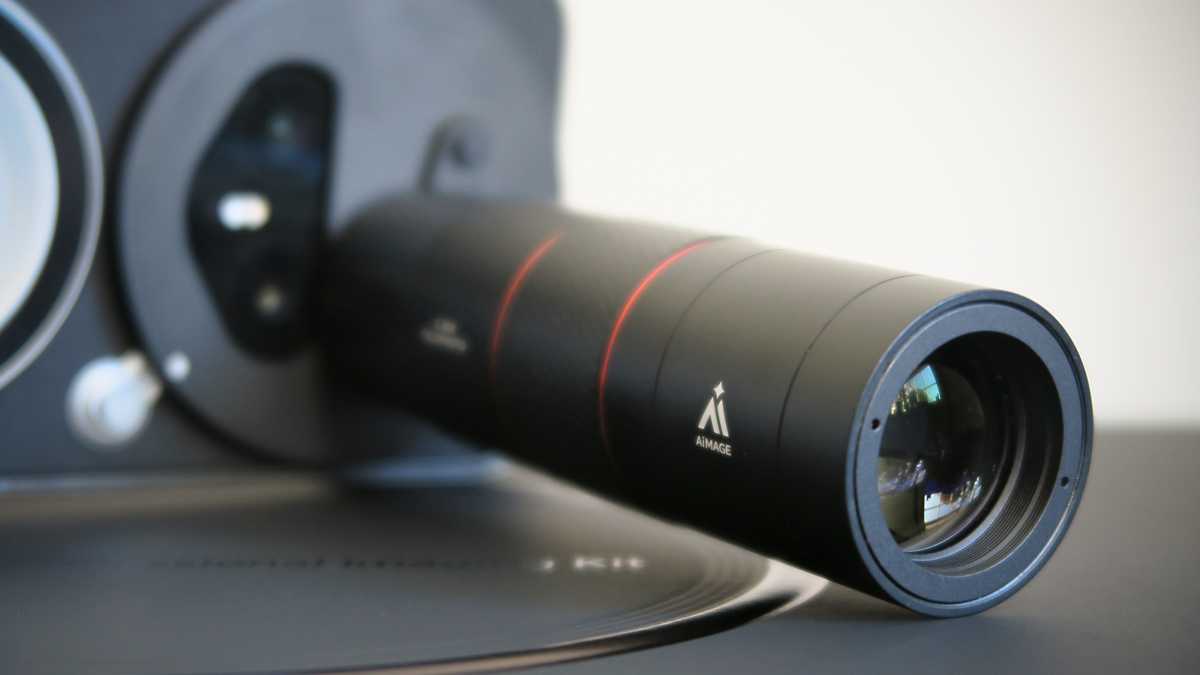
Then, it’s just a matter of lining up and twisting the teleconverter into the mount, and you’re nearly ready to go.
Foundry | Alex Walker-Todd
The teleconverter – with its metal barrel, silicone grip and 13 glass lens elements – is unquestionably where the bulk of the kit’s price tag goes, and feels great to handle.
While the silicon cover at the base protects the latch mechanism nicely, unlike the squeeze-release latch found on the Oppo Find X9 Pro’s photography kit, the plastic lens cap here simply rests on the end of the teleconverter and feels far too loose to be dependable. If I didn’t keep the lens wrapped up during transport and when not in use, I’m certain the lens cap would just fall off when I wasn’t looking.
The Professional Imaging Kit as a whole, looks almost identical to the system Vivo offers up for its X200 and X300 series smartphones, with the exception of the camera grip, which instead of latching onto the end of the case, uses that MagSafe-style ring to attach magnetically, allowing for easy use and more control than Vivo’s kit, in either landscape or portrait orientations.
Controls & features
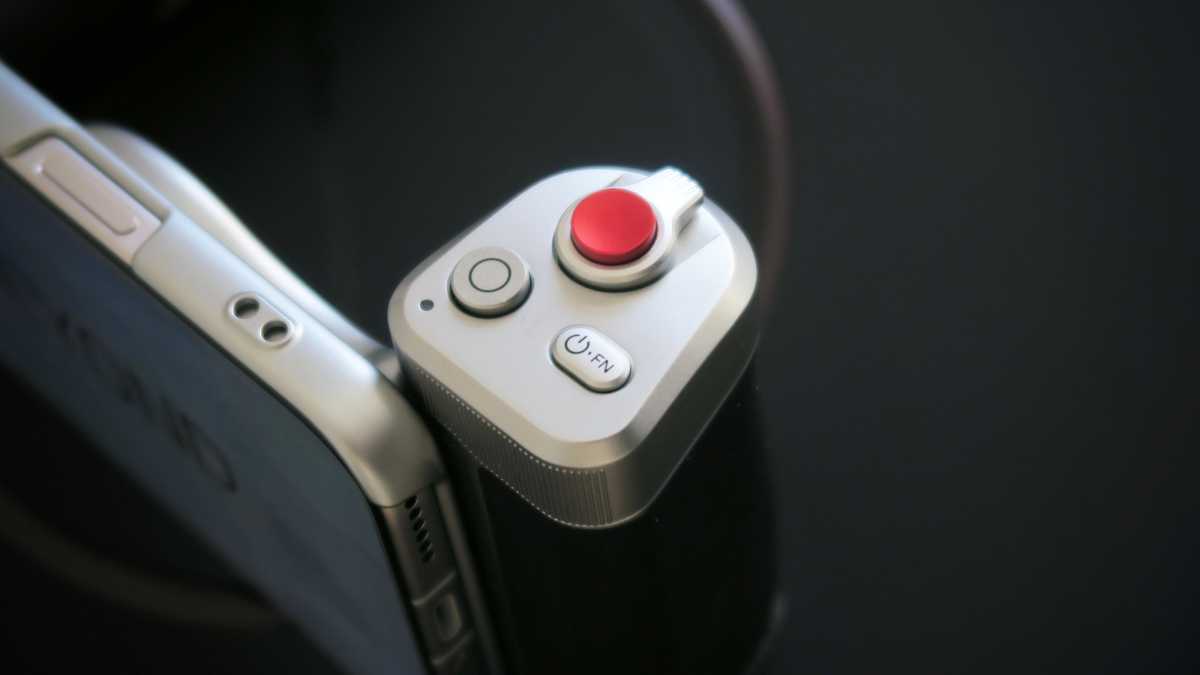
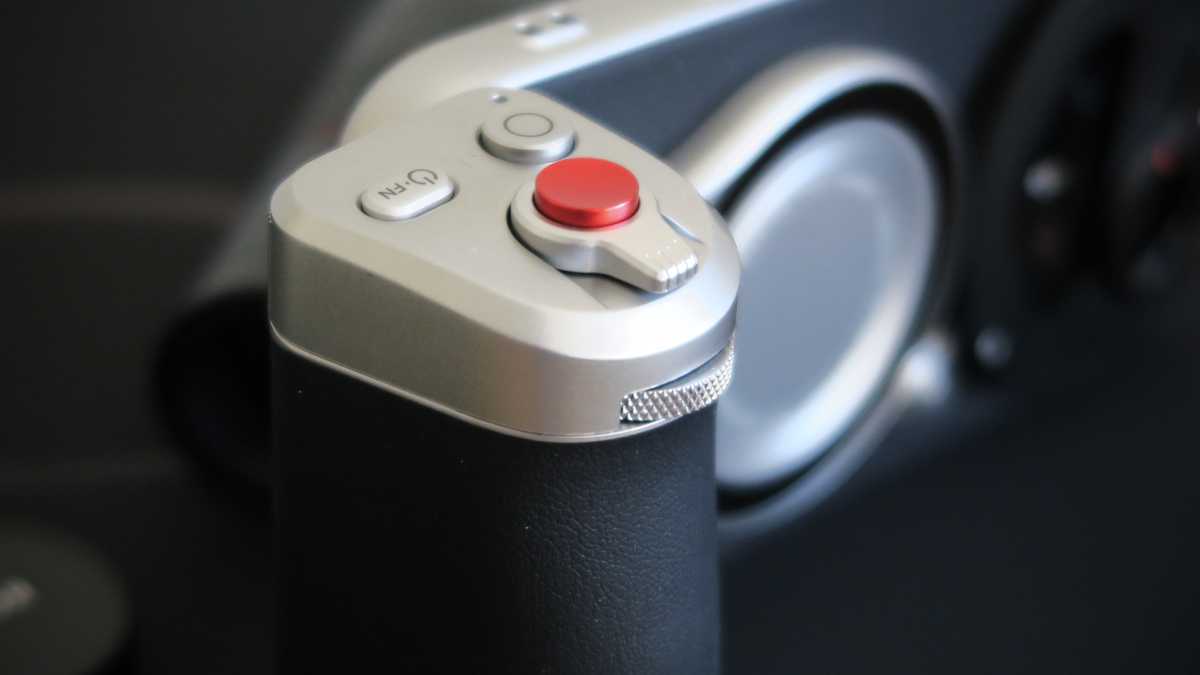
While it feels a little cheap considering the kit’s overall price, I really like the design of the magnetic camera grip. The textured thumb rest adds a surprising amount of control and added confidence when shooting one-handed, while the top face offers more physical controls than any other equivalent photography accessory kit out there.
After powering the grip on by holding the function button for a few seconds, pairing via Bluetooth is quick and painless; no additional app or plug-in required. Similar to the phone’s native AI button, the two-stage red shutter key lets you half-press to focus and full-press to snap a picture, while holding it down starts a burst capture.
Foundry | Alex Walker-Todd
The shutter key is surrounded by a two-way zoom lever. It’s handy but has a little too much neutral play before it activates in either direction, paired to a degree of lag that sometimes just had me resorting to swiping on-screen, as usual.
The ‘record’ key is something of a misnomer, letting you quick-launch the camera app, jump to your photo gallery when shooting or snap stills whilst recording video. The knurled custom dial on the front face of the grip is the main control that’s seemingly unique to Honor’s Professional Imaging Kit, and lets you quickly switch modes within the native camera app (between photo, video, portrait etc.) and when using the specialised teleconverter mode (which has only three settings: photo, video and stage).
The underside of the grip plays host to a USB port for charging its integrated 80mAh battery. I was hoping the grip could be used to charge the Magic 8 Pro wirelessly, but such functionality seems reserved for the photography kits of rival flagships.
Foundry | Alex Walker-Todd
On the flip side, the low demands of Bluetooth mean that even after hours of use, my grip didn’t drop below 75% charge, which you can check by pressing a button on the underside, causing between one and four white LEDs to light up, depending on charge level.
It’s also here that you’ll find a lanyard loop point, which is ideal if you don’t plan on using the grip exclusively with the Magic 8 Pro (it can technically connect to any MagSafe-compatible case or phone, although only the shutter seemed to work when I paired it to an iPhone 17 Pro).
Lastly, there’s a 1/4-inch tripod thread, something Xiaomi’s photography kits frustratingly continue to omit. While its inclusion is both appreciated and downright essential – depending on your shooting scenario – when the teleconverter is attached, the thread’s position makes the whole 400g assembly very unbalanced; fine if you have a heavy-duty tripod, but precarious if you’re using a smaller, more lightweight stand.
Camera samples
The most obvious benefit when shooting with the teleconverter attached is being able to capture subjects further away with greater optical zoom, but that’s really secondary to the types of shots this kit allows for.
For one, the inherent compression lends itself beautifully to architecture and other scenarios where a flatter, more telecentric look is desired, and that internal lens structure does a great job of keeping edge-frame distortion and aberration at bay.
Conversely, the natural optical bokeh that comes from portrait shooting with the teleconverter is unmatched if you compare it to the phone’s native software-based portrait effect.
Add to that surprisingly fast autofocus and this makes for a superb portrait photography setup, too. As a matter of personal taste, I think I prefer the look of Oppo’s bokeh when comparing results with Honor’s equivalent teleconverter shots.




The same software update that added the camera’s dedicated teleconverter mode also enhanced the Magic 8 Pro’s native optical image stabilisation from a CIPA-rated 5.5 stops to 6.5 stops, which Honor claims is an industry first (this applies to both the phone’s main and telephoto sensors).
Having toyed with the lens attached to my Magic 8 Pro before updating its firmware, I immediately saw the added benefit this enhanced stabilisation brings to the shooting experience, and it’s downright essential if you’re not shooting from a tripod.
Even in bright scenarios, you can see the stabilisation at work at anything over 200mm, with the highlights in my handheld shots of flowers (above) showing a soft bloom that comes from stabilisation working to keep images sharp.
Verdict
While rollout seems slow (with only Malaysia citing an actual price at the time of writing, at RM 1,499 – equivalent to around £290 / €325 / $380), the Honor Magic 8 Pro’s Professional Imaging Kit is a serious add-on for those who bought the phone for its photographic chops first and foremost.
The bulk of that price tag is evidently for the 2.35x teleconverter, which is unquestionably the most premium part of the kit, while the case and grip would have benefited from a little more refinement (tighter tolerances, more premium surface finishes etc.) before going on sale.
The Honor Magic 8 Pro isn’t quite capable enough to replace that RX100 VII in your pocket, but if you’re willing to stump up the required cash, it does make for one of the most versatile shooting experiences amongst the current camera phone crop, especially when you factor in features like 4K/120fps video recording and the like, too.