A nonprofit that has raised red flags for other cities will begin operating one of Denver’s homeless shelters after the City Council approved a $30 million contract with the group Monday.
Urban Alchemy, a San Francisco-based nonprofit, has been accused of fiscal and data mismanagement, leading one city to drop the organization as a partner this year.
Nine of the 13 City Council members ultimately voted to approve the contract after over an hour of discussion on those concerns in which council members also expressed their exasperation with Mayor Mike Johnston’s office.
“The other option appears to be putting people back out on the street in the middle of winter,” said Councilwoman Amanda Sawyer in explaining her “yes” vote.
Jeff Kositsky, the deputy director of shelter and stability in the city’s Department of Housing Stability, said during the meeting that if the council rejected the contract, there would be no way to find a new provider by the time the contract with the Aspen shelter’s current operator — The Salvation Army — expired.
“I think ultimately we would have to shut the shelter down,” he said.
Only three groups submitted bids to run the city’s homeless shelters when officials put out a request earlier this year, Kositsky said. The other two are Bayaud Works and St. Francis Center, both of which were already selected for other contracts.
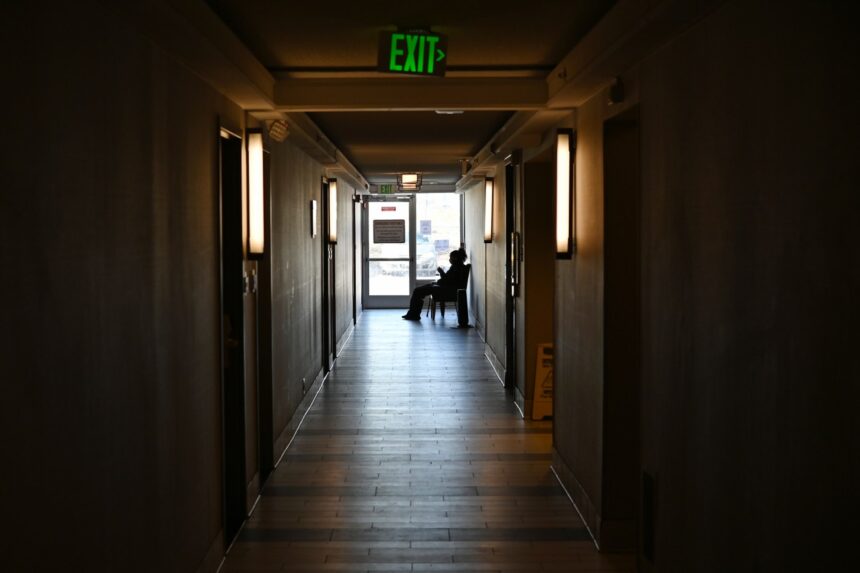
Urban Alchemy will begin operating the 289-unit Aspen shelter in Central Park in 2026 and the contract will last through 2028.
Denver officials announced in August that The Salvation Army would no longer operate three facilities in former hotels after the City Council raised concerns that the group was unable to keep its occupants safe. There was a string of violent incidents at the shelters and in March, a Salvation Army employee was charged with sexually assaulting a woman staying at the Aspen shelter.
The Salvation Army will continue to run the Crossroads Center, the Labuth Family Center, the Connection Center and the Harbour Light Center.
In San Francisco, the city controller’s office accused Urban Alchemy of not properly tracking the time its employees worked for the city causing an “increased risk to public funds and client services,” according to the San Francisco Chronicle. The controller’s office later ruled that the group was back in compliance with the city’s standards.
The nonprofit, which gives jobs to formerly incarcerated people, also ran into a conflict with Austin earlier this year. Austin officials wrote in a memo to their City Council that they wouldn’t renew their contract with the group after the nonprofit self-identified staff members who had misrepresented data about people using the shelters, according to the Austin-American Statesman.
Cole Chandler, who leads Johnston’s All In Mile High homeless initiative, said the contract with Urban Alchemy was an unusual, performance-based deal to ensure the work is completed.
“These are new accountability measures that have never existed before and those are specifically in place because council advocated for those,” he said.
The meeting reflected another instance of council members’ frustration with Johnston’s administration. Councilwoman Shontel Lewis, who represents the district where the Aspen shelter is located, said she didn’t feel his team answered her concerns about the group.
“I have been kind, I have been patient, I have been a partner and I have gotten nothing but disrespect,” Lewis said.
Representatives from Urban Alchemy attended the meeting and defended their record, saying they have addressed past issues and fired bad actors in the organization.
“We’re here to be accountable for everything that we do,” said Ian Clark-Johnson with Urban Alchemy. “We want to be accountable and transparent and be judged on the merits of the work that we’re doing.”
The council also considered another $3 million contract with Urban Alchemy to provide community ambassador services Monday. That contract was still being discussed as of 6:45 p.m.