As Costa Rica enters its peak tourism season, the nation’s long-celebrated reputation as a safe and idyllic Central American getaway is being threatened by a convergence of negative travel advisories, rising crime concerns, and crippling currency fluctuations. The combined impact is prompting alarm among tourism operators, government officials, and travelers alike.
Security Alerts Shake Traveler Confidence
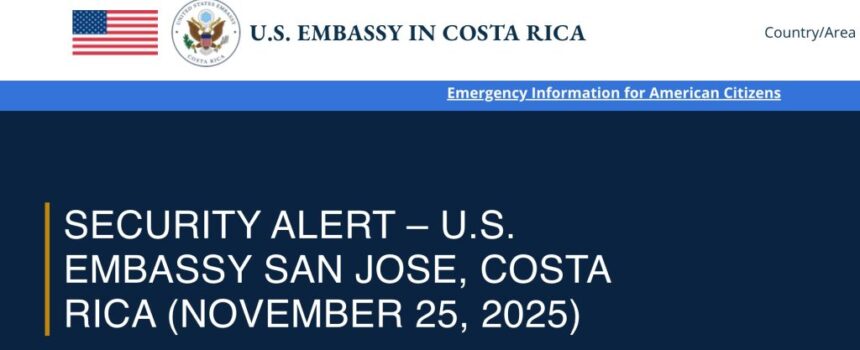
On November 25, 2025, the U.S. Embassy in San José issued a high-profile Security Alert, warning American visitors of a significant rise in crimes targeting foreigners, including break-ins, armed robberies, property crimes, financial scams, and extortion schemes.
According to embassy officials, criminal gangs in Costa Rica are “coercing victims into withdrawing large sums from ATMs or making bank transfers,” often after targeting vacation rentals or foreign-owned businesses. One embassy release bluntly underscored the seriousness of the situation:
While Costa Rica remains at a Level 2 travel advisory from the U.S. State Department — which recommends travelers “exercise increased caution” — tourism stakeholders worry that repeated warnings could tarnish the country’s image and dissuade visitors.
Startling Health Alerts Add to Concerns
On December 8, 2025, the U.S. Embassy in San José issued a health alert after Walmart Costa Rica announced a voluntary recall of Don Cristóbal brand tilapia and pangasius frozen fillets due to potential contamination with Listeria monocytogenes, a harmful bacterium that can cause serious foodborne illness and can multiply even at refrigerator temperatures. The recall, communicated to local media on December 4, affects multiple batches sold nationwide, including products available at Walmart Costa Rica stores such as Mas x Menos and MaxiPali.

Just days before the security warning, the U.S. Embassy issued another troubling message — this time a Health Alert related to aluminum phosphide poisoning. The toxic pesticide is commonly used for rodent control but can produce lethal phosphine gas when exposed to moisture. Authorities reported multiple poisoning incidents, prompting a rare health advisory aimed at both residents and travelers.
Though not directly linked to tourism infrastructure, the alert’s circulation in international media added to growing unease. As one TravelOffPath portal noted, “This advisory was actually categorized as a health alert … but it highlights how easily obscure safety issues can snowball into broader traveler anxiety.”
Economic Pressures on the Tourism Sector
Compounding the security and health concerns is an unexpected economic squeeze on Costa Rica’s tourism economy. A December 6 report from Tico Times revealed that the Costa Rican colón surged to its strongest level against the U.S. dollar since 2005, with the dollar trading around ₡488–₡490.
This currency strength, while positive for local importers and savers, has made Costa Rica significantly more expensive for foreign tourists. Tourism operators warn that higher local costs — paid in colones — combined with weaker dollar purchasing power are hurting small and medium-sized businesses that rely heavily on tourism revenue.
Shirley Calvo, executive director of the National Chamber of Tourism (CANATUR), emphasized the gravity of the situation:
CANATUR also noted that Costa Rica may lose its competitive edge to other regional destinations — such as Mexico, the Dominican Republic, and Panama — where travel budgets stretch further. Recent data show a 2.1 percent drop in air arrivals from January to August 2025 compared with the same period in 2024.
Tourism Industry on Edge

Tourism is central to Costa Rica’s economy, accounting for a significant portion of GDP and employment. In 2024, the country welcomed approximately 2.9 million foreign visitors, with 1.6 million coming from the United States, according to the Costa Rican Tourism Institute.
Despite the country’s abundant natural beauty — from rainforests and volcanoes to pristine beaches — the combination of security advisories, health warnings, and unfavorable exchange rates threatens to erode traveler confidence during what should be a booming high season.
Flora Ayub, executive director of the Costa Rican Chamber of Hotels, said the tourism sector is caught between declining bookings and rising operational costs. “The current rate reduces our margins at a critical time,” she observed.
Balancing Risk and Resilience
Costa Rica’s government and tourism authorities are seeking to counter negative headlines with proactive safety initiatives, including enhancing police presence in tourist hubs and improving property security protocols. Still, the country’s international image has undeniably taken a hit, and experts warn that a rebound will require more than surface-level measures.
For travelers who still plan to visit, experts advise thorough preparation: researching accommodations, enrolling in the Smart Traveler Enrollment Program (STEP), maintaining situational awareness, and budgeting carefully amid the exchange rate challenges.
As one travel industry analyst summarized, “Costa Rica’s allure hasn’t vanished — but the context travelers face now is far more complex.”