In the 2024 election, Colorado voters passed a conservative-backed ballot measure that directed cash-strapped lawmakers to find $350 million for police training.
Should a similar proposal come before voters again, state lawmakers want the public to know the budget impact the ballot measure would have.
The Colorado House passed a bill Friday that would require more information to be included in the ballot language of some voter initiatives. If they direct the state to spend money without providing a source, they’d have to either identify which existing programs would be cut to pay for it — or list the large pots of state money that may be affected, like Medicaid or school funding.
House Bill 1084 was passed along party lines, clearing its first chamber. The proposal is aimed at ballot measures that seek to increase state spending without an attached funding source, such as a tax increase.
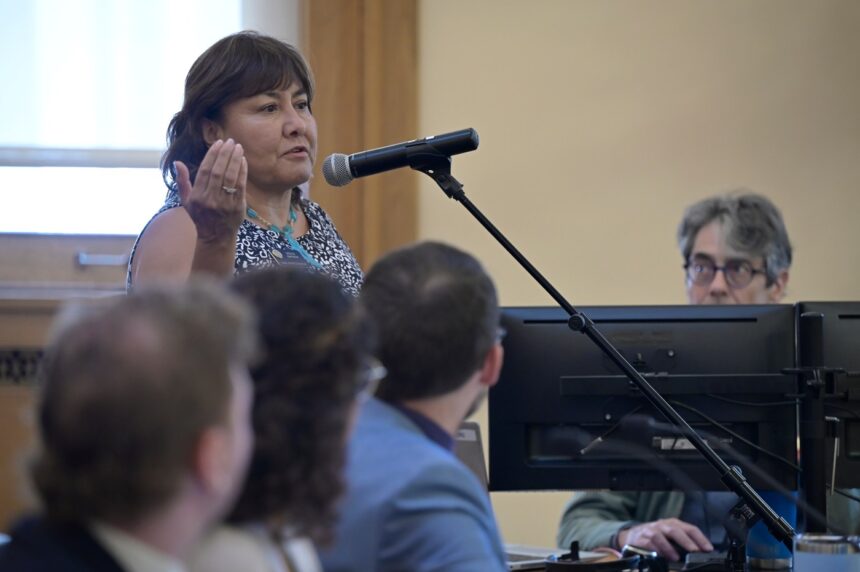
“By having more information, we’re providing that transparency, and we’re allowing the citizens to have a more informed choice as they’re voting for these initiatives,” Rep. Cecelia Espenoza, a Denver Democrat, told lawmakers during a committee debate last month. She’s sponsoring the bill with fellow Denver Democratic Rep. Sean Camacho.
Espenoza and Camacho both linked the bill to the 2024 passage of Proposition 130, the police funding ballot measure.
The proposal, backed by the conservative group Advance Colorado, did not provide a funding source or identify where the $350 million should come from. Though the ballot measure also didn’t say the state needed to provide all of that money at once, lawmakers were already bracing for a budget shortfall last year and groaned under the strain of finding any more funding.
Should HB-1084 pass and a similar ballot measure is run again, the proponents could identify state funding they want to redirect to pay for their idea. But if that money isn’t enough, or if the proponents don’t identify any programs to cut, the ballot language would have to include a warning that the proposal would likely require cuts to Medicaid and school funding. The language would include a specific dollar amount to be reduced, as well.
All of the House’s Republican members opposed the bill.
“This bill speculates numbers in a way that frames citizens’ initiatives as harmful,” said Rep. Brandi Bradley of Littleton. “This is not neutral information; this is about government shaping the narrative about policies the government does not like.”
The bill now moves to the Senate, where it needs several votes before it can go to Gov. Jared Polis for consideration.
Stay up-to-date with Colorado Politics by signing up for our weekly newsletter, The Spot.