Colorado’s first-in-the-nation laws on synthetic intelligence could have to attend longer if the legislature approves a proposal superior by the state Senate on Monday.
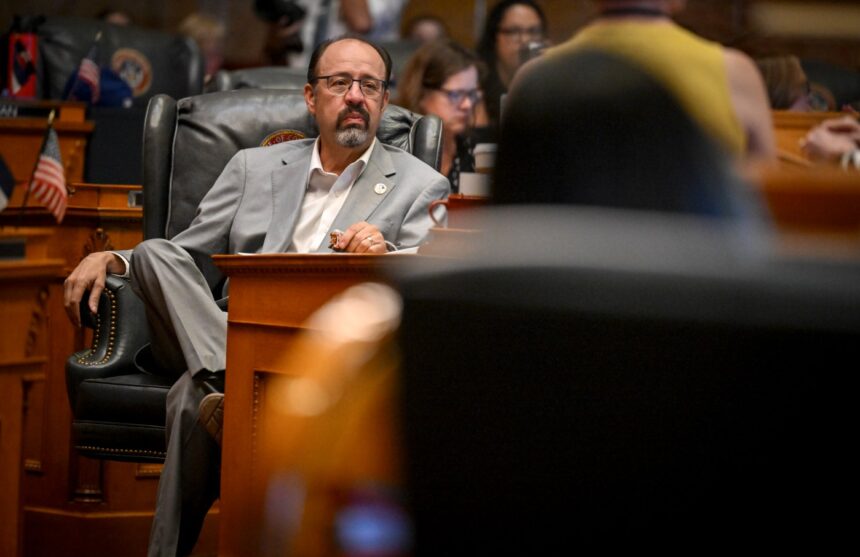
In a dramatic shift from Sunday night time, when a deal on revamped laws appeared inside attain, Senate Majority Chief Robert Rodriguez gutted the invoice. The measure, proposed throughout a principally budget-focused particular session, had been geared toward regulating AI and rising transparency round its use to make selections affecting Coloradans.
As a substitute, the invoice as amended would merely delay, by a number of months, the implemation of a legislation handed 2024 that’s supposed to enter impact subsequent February.
Underneath Rodriguez’s proposal, which nonetheless must go the state Home, these laws would take impact on the finish of June — giving the tech trade, lawmakers, and public-interest and consumer-protection teams one other likelihood throughout the subsequent common session to nail down how you can regulate the rising, prosperous trade. The common session convenes in mid-January.
“In a single day, the tech trade determined that they had been so sad with the compromise that had been achieved by consumer-protection organizations, educators, labor and enterprise that they might somewhat return to the (present guidelines),” mentioned Rodriguez, a Denver Democrat and driving determine on AI laws within the state.
Dwell updates: Synthetic intelligence regs deal collapses, teeing up delay — and new strive by lawmakers subsequent 12 months
The legislature met for its newest particular session mainly to handle a $783 million price range deficit introduced on by tax cuts and spending adjustments made by the federal authorities in July. However the AI laws, which drew the ire of an trade that argues they’re unworkable, was additionally particularly designated for brand new consideration in Gov. Jared Polis’ recall of the legislature this month.
Most budget-related payments completed
By the top of the fifth day of the session on Monday, the Democratic majority had despatched to Polis the majority of the payments they hoped would chew into the deficit. The only greatest revenue-raising measure, nevertheless, nonetheless wanted a minimum of two extra votes.
The payments which have handed the legislature are:
- House Bill 1001, which makes everlasting a restrict on sure enterprise earnings deductions for folks making greater than $500,000 per 12 months.
- House Bill 1002, which cracks down on the usage of international tax havens and provides a number of international locations to that label.
- House Bill 1003, which ends a tax incentive for insurance coverage firms that preserve places of work within the state.
- House Bill 1005, which ends a state subsidy to companies for accumulating gross sales taxes.
In complete, these measures are anticipated to boost about $150 million. The fifth measure, House Bill 1004, would permit sure entities to promote tax credit that may be reclaimed at a reduction in future tax years. Lawmakers count on that to herald one other $100 million, for a complete of simply over $250 million.
“Proper now, we have to be sure that the households and the small companies that actually want our assist are getting it,” mentioned Sen. Lisa Cutter, a Jefferson County Democrat.
The revenue-raisers quantity to just about a 3rd of the full $783 million price range hole. Polis’ employees is making ready to handle as a lot as a 3rd of the hole by way of spending cuts. His workplace is predicted to disclose its deliberate reductions later this week, after the income half has been adopted.
The remainder of the opening can be crammed from the legislature’s piggy financial institution. That’ll occur final: No matter’s not raised or minimize can be pulled from the state’s reserves. The governor’s workplace has instructed roughly $320 million, which would cut back the present reserve stage — about 15% of the final fund price range — by 2 proportion factors.
That might imply his workplace was planning to suggest about $200 million in spending reductions.
Legal responsibility at problem on AI
On the AI entrance, Rodriguez’s invoice was despatched Monday over to the Home, the place members have already debated a competing AI measure — one which had additionally been watered down to easily delaying the 2024 laws, in that case till October 2026. The Home deliberate to take up Rodriguez’s invoice in committee and doubtlessly for an preliminary ground vote Monday night time, which might make a closing vote attainable Tuesday.
Find out how to assign legal responsibility for bias obvious in the usage of AI to make selections — between entities that use AI for issues like screening job and rental purposes and the entities that developed the AI instruments — was a key a part of Rodriguez’s measure earlier than its gutting.
However that has been a key sticking level between the dueling payments.
“A delay is the prudent factor to do,” Rep. William Lindstedt, a Broomfield Democrat and sponsor of the Home invoice, mentioned. “We have to determine a method the place college districts, hospitals and different deployers aren’t left holding the bag for these laws. We have to be sure that all stakeholders concerned on this laws are held equally accountable when dangerous issues occur.”
Stay up-to-date with Colorado Politics by signing up for our weekly newsletter, The Spot.
Initially Printed: