Following the departure of designer Norbert Stumpfl last December after a stint spanning almost 10 percent of the house’s 80-year history, Brioni is entering a new phase. Instead of a creative director, this season’s statically presented collection was spoken for by Tommaso Angeli, who, shortly before the designer’s exit, was promoted to chief product officer following four years as global merchandising director. The Brunello Cucinelli veteran was joined by Flavio Cerbone, who joined the Kering-operated menswear house last April following over a decade at Prada Group. Neither made any suggestion that Brioni can expect a new design-specialist creative lead to succeed Stumpfl.
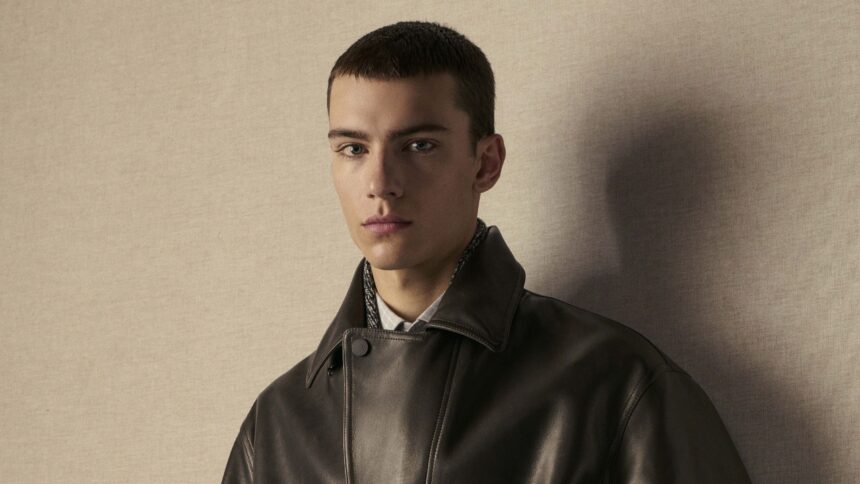
“We want to talk about real elegance, something linked to Roman style, Roman nonchalance, sprezzatura, imperfection,” said Angeli. The collection was finely styled for these photographs, and included many attractive pieces, including a long-haired shearling version of the Vagabond overshirt Brioni first advertised back in 1950 and a really fabulous horsehair tailored jacket. The brand’s representatives highlighted the amount of time put into their manufacture: an entire day to sew a lapel, several months to attach the sequins in the fabric of a jacket.
Brioni employs hundreds of tailoring specialists in its Penne ateliers, and operates a school to ensure a pipeline of new recruits is available both for itself and other tailoring businesses across Italy. That rich vein of expertise, along with the price tags that its garments bear, means that the sartorial expertise and attention to detail that this presentation worked to highlight should be seen almost as a given.
The presentation was also formatted to emphasize Brioni’s history of exporting its Roman-flavored tailoring and “sportswear” (in the last-century sense) through client facing trunk shows from the mid 1950s. Brioni’s most transformationally innovative act of all—a moment of start up-spirit brilliance—was when it staged what is widely seen as the first ever menswear fashion show, in Florence in 1952. Modeled by debonair Brioni employee Angelo Vittucci, the show left its audience of American buyers, in town predominantly in search of womenswear, aflame with a burning desire for Roman tailoring. This kickstarted the international demand that led Brioni to inaugurate the Penne ateliers. Reigniting that desire by fashioning a fresh articulation of Brioni is the fascinating challenge facing the company’s latest cohort of custodians.