LONDON — In the afterglow of this exceptional triumph, it is perhaps worth reflecting on how implausible such a result might have seemed a quarter hour through. Given that so many of Arsenal’s recent wins by one-goal margins have been batterings in disguise, perhaps it is appropriate that obliterating a paper tiger of a title contender should see the Gunners dodge a rather nasty paper cut.
It is not so much that Aston Villa were necessarily better than Arsenal in the Gunners’ 4-1 win on Tuesday. Their win wasn’t inevitable. It certainly seemed, however, that Unai Emery had Mikel Arteta’s number. Villa would absorb the strength of the first press, find a way of drawing Arsenal out of position and spring their transition threats.
Ollie Watkins continued to torment his boyhood club, his ability to spin out of duels making for a forward who can get as much joy against William Saliba as anyone else. As they had three and a half weeks ago, Villa found ways to get Watkins quick ball in behind and he found ways to get shots away. Before the weirdness of garbage time, Arsenal had only allowed one shot worth over 0.5 xG in a Premier League game this season. That had gone to Watkins at Villa Park and he followed that up with an almost as frustrating miss early on, contriving to skew wide after brilliant work to get him into a scoring position.
The muscularity with which Ezri Konsa stripped possession from Viktor Gyokeres and the precision of the pass that followed exemplified the excellence of Villa’s start. Emery knew which duels his team were going to dominate and this game had a way of funnelling itself into the positions ,that would allow them to impose themselves. There are few players even in the Premier League who Mikel Merino bounces off. In the first half he could get no purchase on Amadou Onana, the press beater in chief. He was at his dynamic best and Arsenal were without the one player who might have been able to stop him, Declan Rice sidelined with a minor knee injury. Even if Rice had been blown by, he would have had the recovery pace to win the second duel. When Merino was taken out of a move, he was not coming back.
Perhaps if Onana had been able to make it back out for the second half, this game would have been different.
“Maybe it didn’t help us that Onana is injured,” said Emery. “He is important for us in set pieces and in the middle.”
That loss of fizz through the middle, already lessened due to the suspension of Boubacar Kamara, hit hard. Before Onana’s exit there was a very real risk that the verticality of Villa’s passing would rip through the Arsenal backline.
The hosts found themselves in an almighty bind. They are a very good pressing team and it is the right thing for very good pressing teams to push for those high regains. That much would be apparent in the second half, but in the first, the margins were razor-thin. Gabriel chased Morgan Rogers right into the heart of the Villa area. He was inches away from a steal that would surely have led to Martin Odegaard’s opener. Instead, he couldn’t quite nick the ball, and in a flash, Onana was driving up the field. Had he not sold himself short with a blatant dive, he might have been able to create an even better chance for Villa than the ones they spurned.
Arteta knew the danger his team were in.
“The moment you allow them to attack your back is a big problem because they have runners from inside, they have people that can pick up passes from deep positions, they have players in the last line that are excellent at making the runs, pulling shoulders and attacking your backs. And you have to control that because every time you give the ball away, they have the capacity to do that,” he said.
With 45 minutes played, it rather felt like Arsenal were playing with fire. In the second, they strode purposefully onto the coals. There were adjustments to the press, what Arteta termed some “behaviors” changing. There was no consideration given, however, to what might have seemed the most natural response of any coach in that position. No dialling down. No stepping back. Arsenal would chase the ball with even more intensity, commit even more in pursuit of the regains.
“I really like that,” said Arteta, “because you’re going to go through different patches and periods against top opposition like Villa and then you still have the ability to come out on the game and deserve to win it.”
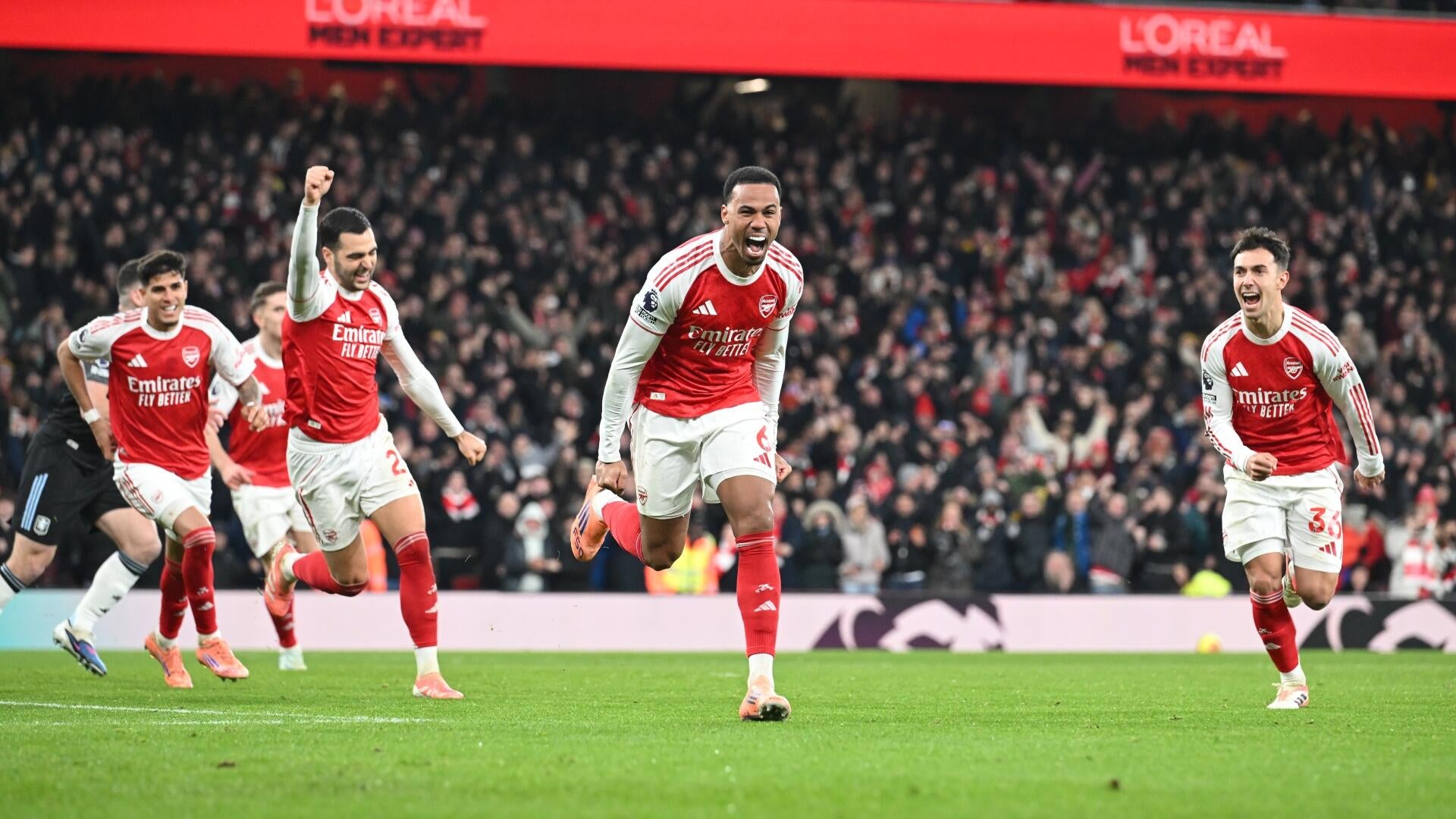
The opener might not have come from Arsenal’s chasing — set piece again, set piece again as they say ’round these parts — but the killer second was a vindication of their aggression. Youri Tielemans might have thought he had broken through the lines but slamming into Jadon Sancho like a toddler in a bumper car came Odegaard, who recovered possession more frequently than anyone on the pitch tonight. Dancing feet took him away from John McGinn and suddenly those gaps up the gut that Villa had been exploiting were opening up for them. Martin Zubimendi cruised through.
TruMedia
All that was needed from then on was to restore some xG balance to the world. For most of December, Arsenal couldn’t hit a barn door from six yards out. Of course, the month ended with Leandro Trossard and Gabriel Jesus bending them in from the edge of the area. Scoring returns from range that even Steph Curry couldn’t keep up propelled Villa on a title tilt, they ended this game scoring one of the three <0.8 xG shots they took.
Even with those unmissable chances Villa found a way to spurn, they still somehow ended up outperformed on the xG front. Rarely does a statistic so compellingly speak to the difference between two teams. Even when Arsenal indulged their madness, they couldn’t make themselves the inferior team. Even when their plan seemed so ill-suited to their opponents, they were simply able to do it better and prove themselves to be greatly superior.