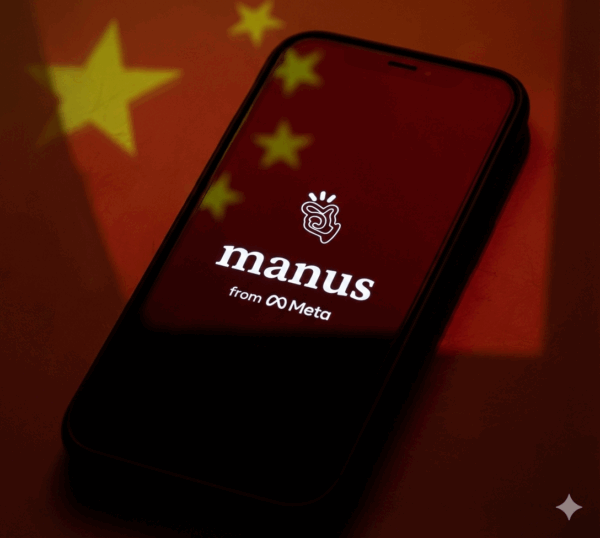
Last year, the U.S. tech giant Meta, formerly Facebook, which has been increasingly investing in artificial intelligence, purchased the AI company Manus, which was founded in China before moving its headquarters to Singapore. This month, the deal was suddenly called off as the Chinese government forced Meta to unwind its acquisition of Manus.
The move may surprise some foreign investors, but it is simply another reminder to Chinese entrepreneurs that China sees its AI sector as its own national asset, rather than private property. While some may see the move as Beijing increasingly leveraging its economic policy to foil U.S. companies and interests, that is not China’s primary concern. Beijing is more keen to remind its burgeoning private AI sector who’s the boss, just as it did when it cracked down on Didi Chuxing and Ant Financial.
This is bad news and good news, for different people. It’s bad news for Chinese startups. China is clearly willing to take radical action to protect its perceived sovereign interests – even if it means creating a less favorable domestic economic climate in the short term.
The good news is that it shows the U.S.-based tech finance system is still preferred by startups, even some of those in China, despite massive state funds being injected into its AI industry. This is one U.S. advantage in the AI race with China that appears to be working, though it receives little notice.
China has not only long blurred the line between its state and private sector, it also makes sure even the business decisions of its private firms are ultimately under full state control. In contrast, the United States prefers to keep those two spheres relatively separate, allowing businesses to operate with much less interference from the government under a more predictable regime with the rule of law.
But in recent years, the United States has also acknowledged that, if Beijing is going to direct China’s industrial policy, then Washington must align its strategy and economy to a degree. This can be seen on everything from export controls to tariffs to buy/hire American rules.
In particular for AI, the U.S. administration has embraced the need to lead in adoption so AI can fulfill its transformative roles in both the private and public sectors. The Office of Management and Budget in 2024 issued a memorandum declaring that “the president has been clear that we must seize the opportunities AI presents while managing its risks.”
The point of all this government utilization isn’t just efficiency but innovation. By integrating and investing in AI, Washington is helping to spur its development with an eye on winning the AI race against Beijing.
In addition, the administration has pushed to remove bureaucratic obstacles and is against regulating the AI sector.
But these seemingly hands-off measures should not fall into a broader context of a state-directed strategy. If the United States wants to catalyze the private sector to develop AI faster and better, and keep its lead over China, it must learn the lesson from China’s reaction to the Manus deal – that tech entrepreneurs everywhere, including in China, may still very well prefer the U.S. ecosystem that respects private property rights and the true spirit of free enterprise over a heavily subsidized, state-manipulated regime.
This is the supremacy of the American dream, in the AI context. The United States’ leadership here is not measured by months or years. The difference is fundamental and China simply can never match the U.S.
No discussion about tech competition with China is complete without mentioning Huawei, the Chinese AI conglomerate that acts as an arm of Beijing. Concerned about Huawei’s influence – the company has a long record of suspected espionage and IP theft against the United States – the Trump administration last year greenlit a merger between Hewlett Packard Enterprise and Juniper Networks. This came after the intelligence community reportedly pushed for the merger, viewing it as vital for national security because it would create a competitor to Huawei.
Again, U.S. strategic and commercial interests ran together. The United States should double down on enabling commercial interests that strengthen its industrial sectors rather than weakening them, such as with China’s desperate Manus seizure.
If China is worried about its talents and startups embracing global opportunities that the U.S. system offers, American policies should make it easier for companies all over the world to come, compete, and contribute to the U.S. tech stack. In other words, identify innovators such as Manus at an earlier stage, help them better prepare to break out of the shackles of state control, and reap the reward from the ownership of their intellectual property.