Let’s be real for a sec: as much as Mediterranean beach getaways and Swiss Alps escapes are magical, the main reason why we all flock to Europe year in, year out is that unmatched Old World allure.
Yeah, the nature’s stunning, and sign me up for a pistachio gelato date on an Italian lungomare any day, but nothing makes my heart flutter quite like the sight of a medieval castle on some distant hill, or wandering the medieval maze of an Old Town.
If you’re anything like me, you’re not exactly lining up to board the first flight out to jam-packed Dubrovnik.
Nope, can’t deal with the insane crowds this year, especially with the sticker shock of those hefty price tags.
Lucky for you, I’ve done a proper scouting mission around the Old Continent recently, and I’ve unearthed 5 true ancient gems most tourists haven’t heard of… yet:
Pula, Croatia
The Croatian Colosseum
I wasn’t gonna diss Dubrovnik and then completely discard everything else Croatia has to offer.
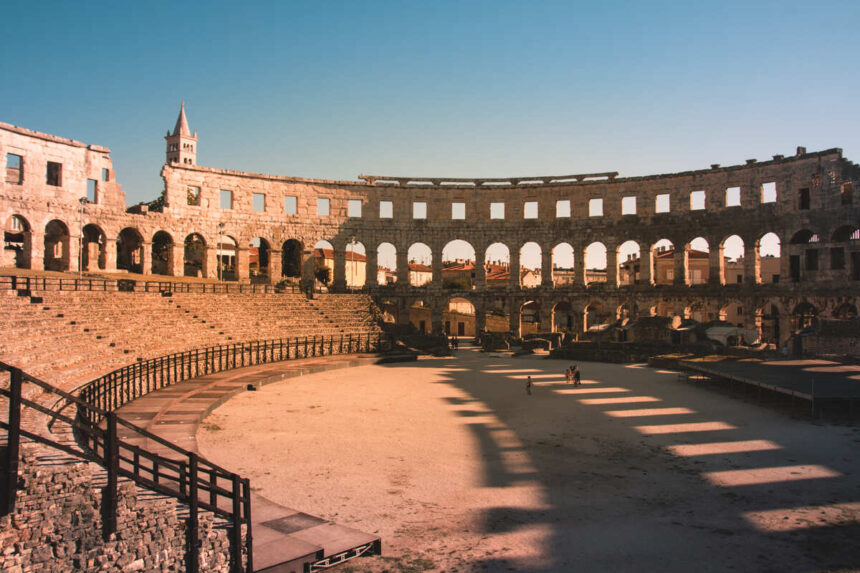
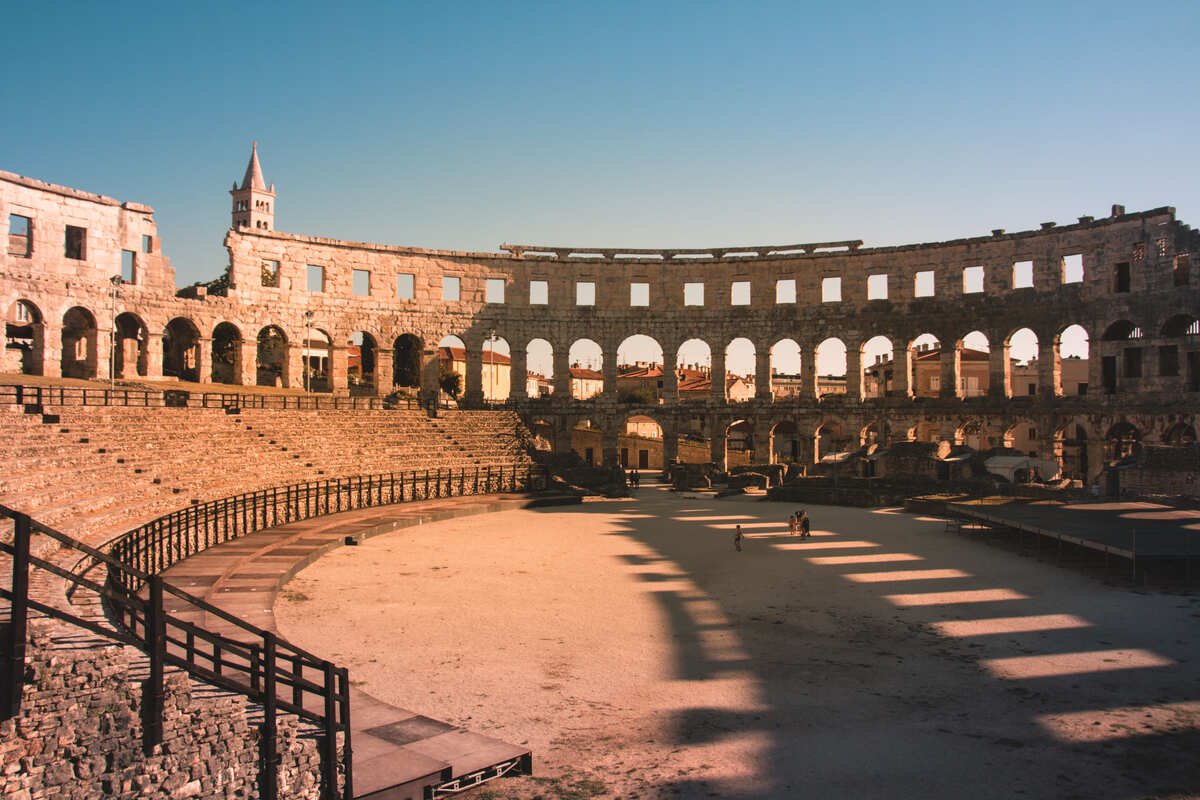
Straddling the same Adriatic shoreline, except it’s hundreds of miles away from the tourist cesspit a majority of travelers will be crash-landing this season, Pula is that gorgeous Old World alternative I just can’t fathom why, or how it hasn’t exploded in popularity yet.
It has picture-perfect white-pebble beaches hugging teal waters, a laid-back Mediterranean vibe, Venetian-style pastel houses with green shutters and seafood terraces, and Roman heritage to back it up.
Matter of fact, it’s home to one of the best-preserved Roman amphitheaters still standing in Europe!
If you’ve been wowed by the Colosseum in Rome, wait until you see Pula’s almost perfectly-preserved, all-four-sides-intact, elliptical beauty of an arena, built all the way back in the 1st-century AD.

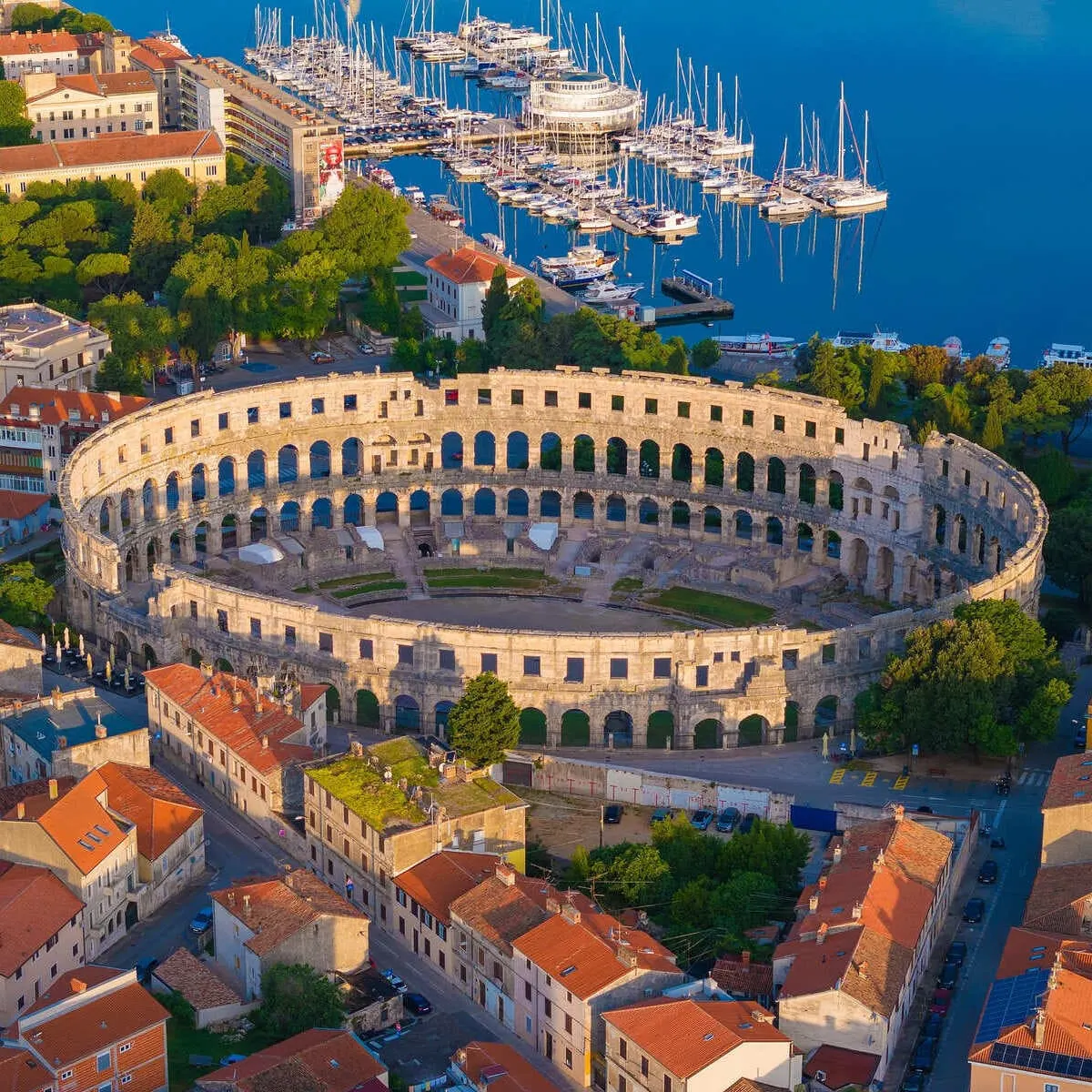
More precisely, in the year 27 BC. A whopping 2,053 years ago.
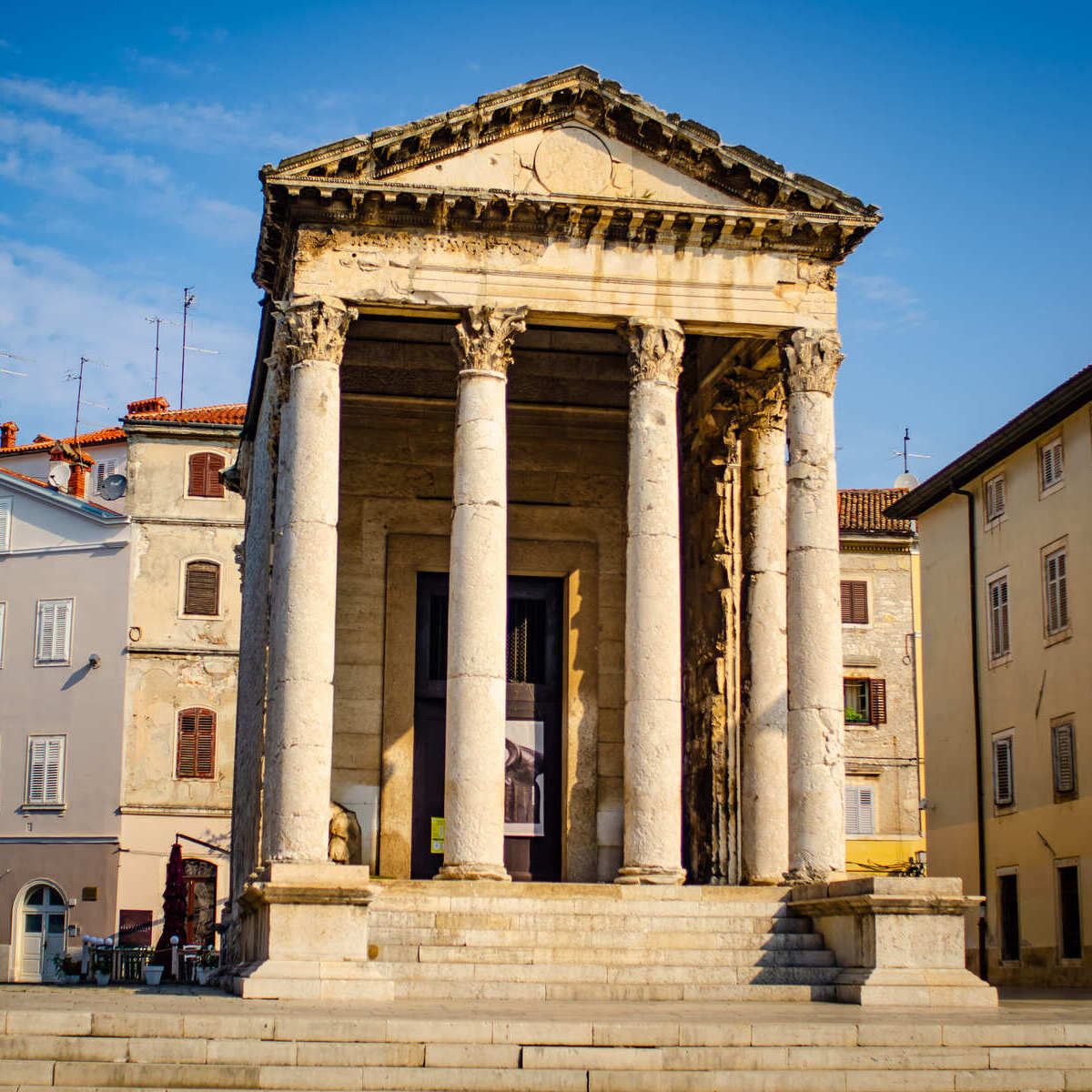
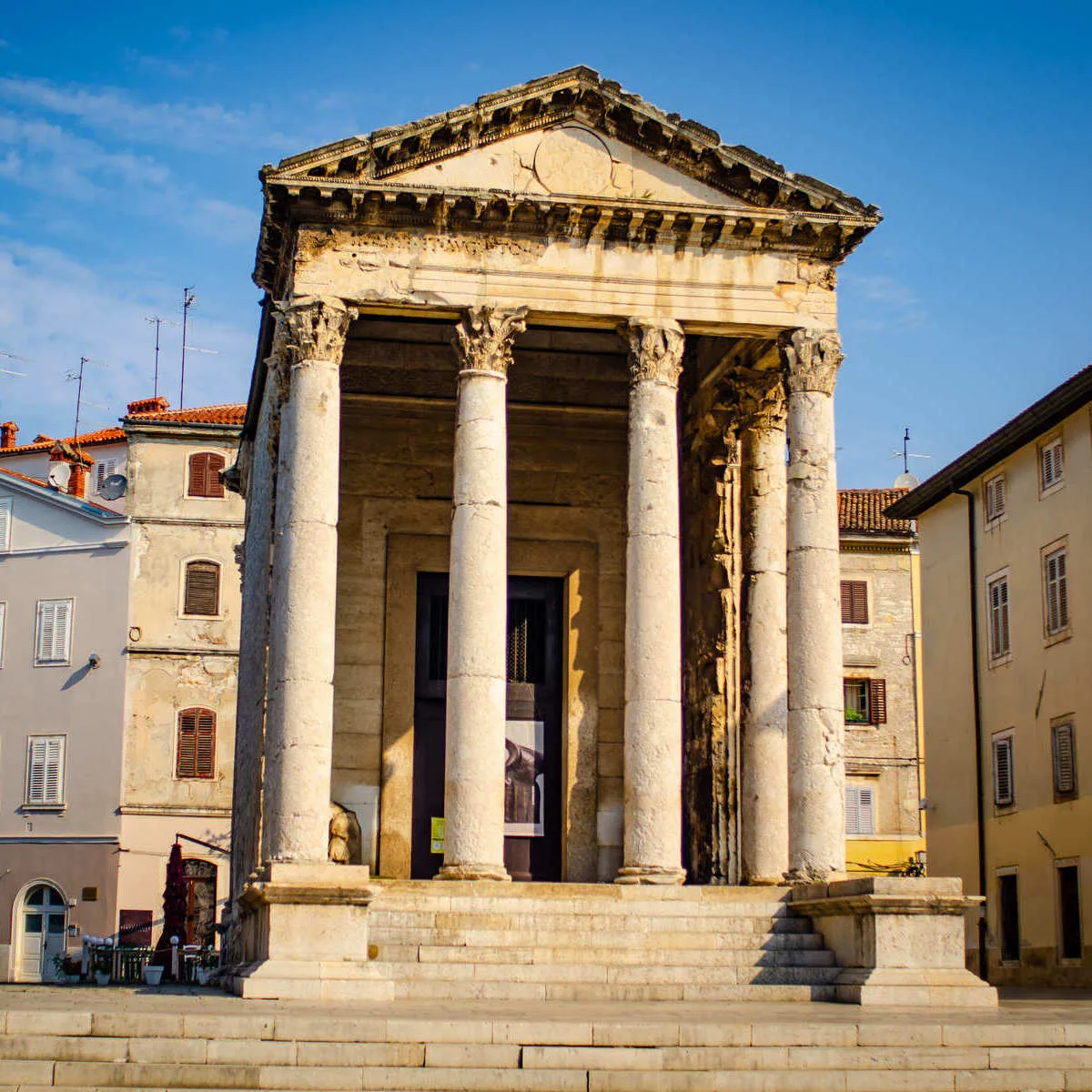
Pula’s Roman flex doesn’t end there: only a few steps from the arena grounds, the Temple of Augustus is a surviving 2,010-year-old temple dedicated to the legendary emperor, located in the ruins of a Roman forum.
On the edge of the Old Town, the Gate of Hercules features a relief of the mystical hero, and a mere 4-minute walk from it, the Arch of the Sergii, yet another 1st-century marvel, is another manmade wonder that has stood the test of time.
Lugo, Spain
The Last City Surrounded By Roman Walls
Tucked away in the criminally underrated northwestern Spanish region of Galicia, Lugo is a forgotten Ancient Roman outpost most Roman Empire aficionados are completely oblivious to.
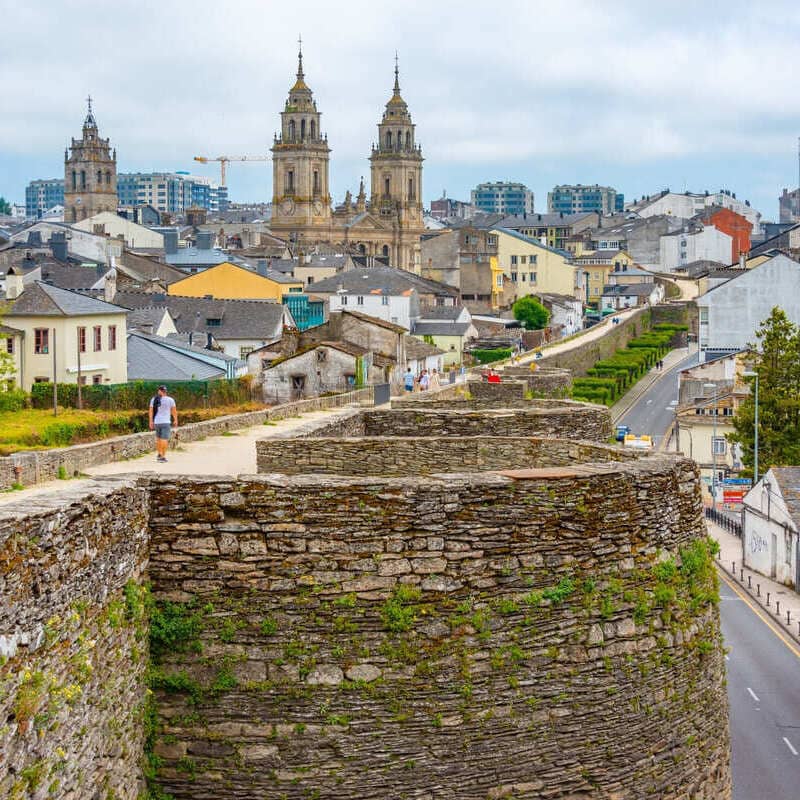
Spain (or Hispania) was once under Rome, remember?
Europe probably has thousands of fortified towns encircled by medieval walls, but what if we told you this is the only city in Europe that’s still completely surrounded by Roman-era city walls over 1,800 years old?
No pile of ruins, or traces of temples or city walls indicating what would have once been there. This time, you don’t need an information board with illustrations to bring the place to life:
You have a full, continuous circuit you can walk on.
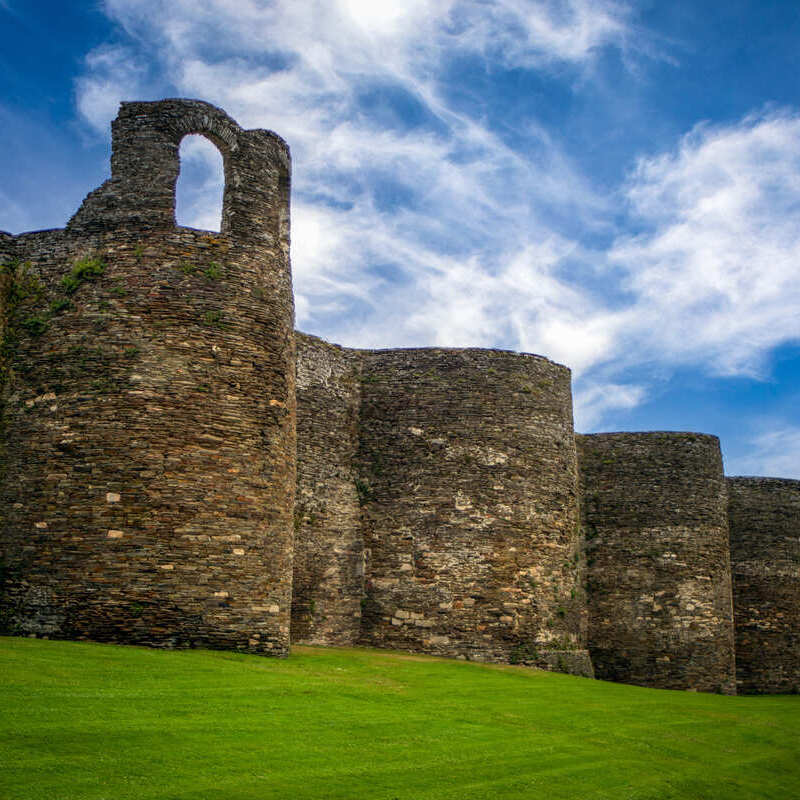
The full UNESCO-protected walk is around 1.3 miles, taking some 40 minutes to complete at a relaxed pace, and from the top of the walls, you’ll get amazing views of Lugo’s grid-like old streets, peppered with plazas and old churches.
At the center of the maze, a monumental Catedral de Santa María soars above the aged red-tile roofs: yet another UNESCO-recognized landmark, it is an outstanding example of Romanesque architecture with later Gothic and Baroque additions.
The gilded high altar is probably the most ornate you’ll ever see.
Plovdiv, Bulgaria
The Oldest Continuously-Inhabited City
Bulgaria may not be the first country that comes to mind when you think of Roman heritage—and we wouldn’t blame you, given Sofia’s 20th-century socialist blight—but it’s home to one of the bygone empire’s most important cities:


Originally known as Philippopolis, from which the Bulgarian ‘Plovdiv’ comes etymologically, it was part of the province of Thracia, positioned right on the main Roman road connecting the Adriatic to Constantinople (modern-day Istanbul).
A major settlement, it featured a forum, baths, an amphitheater, and a whole racing stadium, all of which are still partially visible today around the Old Town, peeking out around modern storefronts and sidewalks like the half-buried past it is.
Plovdiv is an absolute dream to wander, with its cobbled streets and colorful buildings with covered balconies, though its most breathtaking sight is, without question, the Greco-Roman Theater, bestriding a hill with panoramic views of the city. Marble seats, an intact stage, and a surviving backdrop:


The 1st century has never been this alive.
The Roman allure is the most striking part of Plovdiv, for sure, but something else you may not know is that this is Europe’s oldest continuously inhabited settlement. Older than Athens or Rome: humans have been here for over 6,000 years, as early as the Neolithic age.
Up Nebet Tepe, a prominent hill locals climb to for sunset views over Plovdiv’s mazey Old town, you can even find leftovers of prehistoric fortifications.
Orange, France
The Best-Preserved Ancient Theater
You’ve checked off Nîmes and its 2,000-year arena, the impressive Pont du Gard, a Roman aqueduct spanning a crystal-clear river, and Avignon, a former papal capital.


Now it’s time to go off-path a little and discover Orange, a small town in inland Provence home to a remarkably well-preserved Roman theater. France’s most beautiful one, at that.
An unassuming UNESCO World Heritage Site, it has not lost its stage walls, as most Roman theaters have over the last two millennia. It still has its entire 37-meter-high backdrop, decorated with niches and Corinthian columns.
Oh, and if you think our modern arenas are the apex of entertainment, wait until you’ve attended an opera performance in Orange Theater.
There’s a reason why 7,000+ spectators flocked here in Ancient Times for their Friday-night entertainment: thanks to the elliptical shape of the venue, and its acoustics, what we like to call Roman wizardry.


You can hear performers clearly from all seats, no mic required.
Come in summer, and you could attend the Chorégies d’Orange, one of the oldest and most traditional opera festivals in Europe.
Other must-sees in Orange Town? How about a 1st-century Triumphal Arch with all reliefs intact? Or maybe a 12th-century Collegiate Church? Yep, we wouldn’t mind spending a full day here gazing jaw-droppingly at these monumental stone giants ourselves.
Ravenna, Italy
The Forgotten Byzantine Gem
A former capital of the Western Roman Empire, Ravenna is the gateway to Paleo-Christian Europe you never even knew existed.
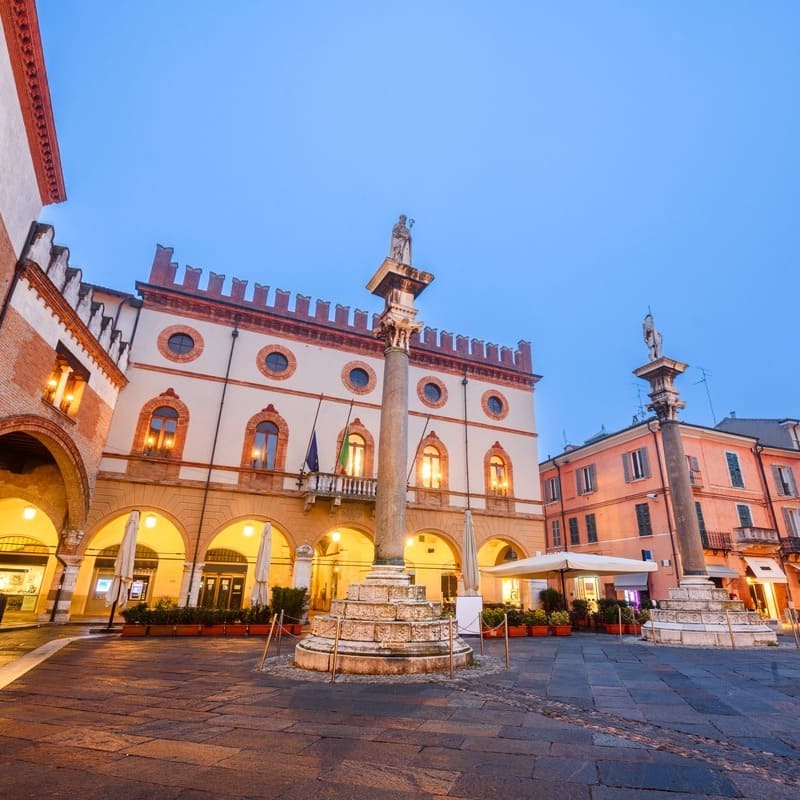
If you’re wondering what that even means, think of it as a treasure chest of early Christian art. Its streets are lined with some of the oldest, most breathtaking monuments of the late Roman world, where 6th-century basilicas shimmer with vibrant mosaics that have outlived whole empires.
At Basilica di Sant’Apollinare Nuovo, an astonishing cycle of 26 mosaic panels tells the New Testament story in vivid color. It’s also one of the earliest artistic attempts to “illustrate” Scripture.
Across town, the magnificent Basilica di San Vitale steals the spotlight with its world-famous portraits of Emperor Justinian and Empress Theodora, rendered in glass tiles that still catch the light in an etheral way 1,500 years on.
And yet, these are merely Ravenna’s opening acts:
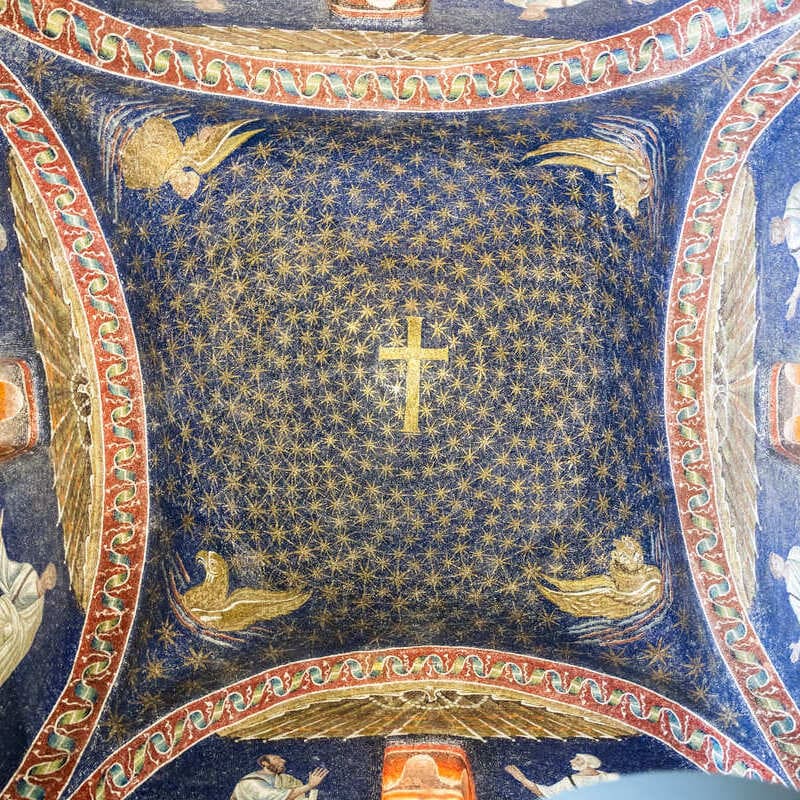
The Baptistery of Neon has a deep-indigo vaulted ceiling studded with golden crosses and stars that seem to flock overhead, original Byzantine mosaics, and a tiny 5th-century brick crypt that defies nearly two millennia of decay.
Scattered across its UNESCO-protected center are Ostrogothic tombs (like the landmark Mausoleo di Teodorico), the early-Christian jewel that is Mausoleo di Galla Placidia, boasting an otherwordly display of Byzantine mosaic art, and even the ghostly outlines of a once-mahoosve Roman amphitheater.
Ravenna isn’t just a city: it’s an open-air museum of fading grandeur, one most tourists are still sleeping on.
Now take this quiz to find your perfect match!