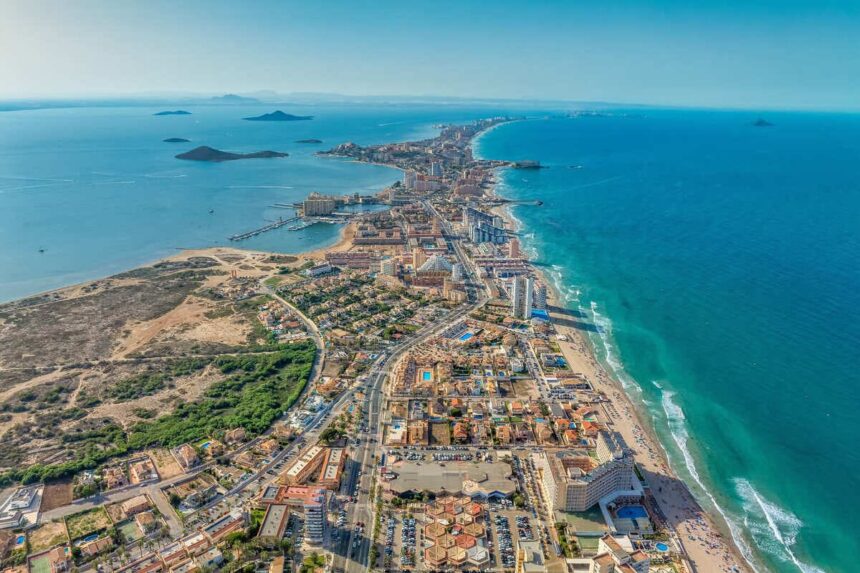
According to a new research published by TravelSupermarket, an up-and-coming UK-based travel search engine, Spain’s cheapest coastal region to visit this year is the offbeat Costa Cálida.
Before you immediately dismiss this as another wannabe travel agency loosely cobbling together data and making bold claims that are easily debunked, hear us out:
We’ve never heard of TravelSupermarket ourselves until now, but we have traveled extensively around Spain, from its resort-packed Balearic Islands, to Catalonia’s tourist-heavy Costa Brava, to the permanently summery Costa del Sol.
There are many factors to be taken into account here, and it is not up to us to confirm or challenge this claim, but we have noticed firsthand that Costa Cálida is, indeed, pretty darn affordable, and safe as well! Spain overall currently scores 87/100 on our traveler safety index. Been recently? Vote below to let other travelers know your experience.
315 Sunny Days Per Year & Dirt-Cheap Prices
Spanish for ‘Warm Coast’, Costa Cálida is one of the warmest coastal stretches in Spain, running for an uninterrupted 155 miles along the Mediterranean Sea, with temperatures around 9°F warmer than the wider region.
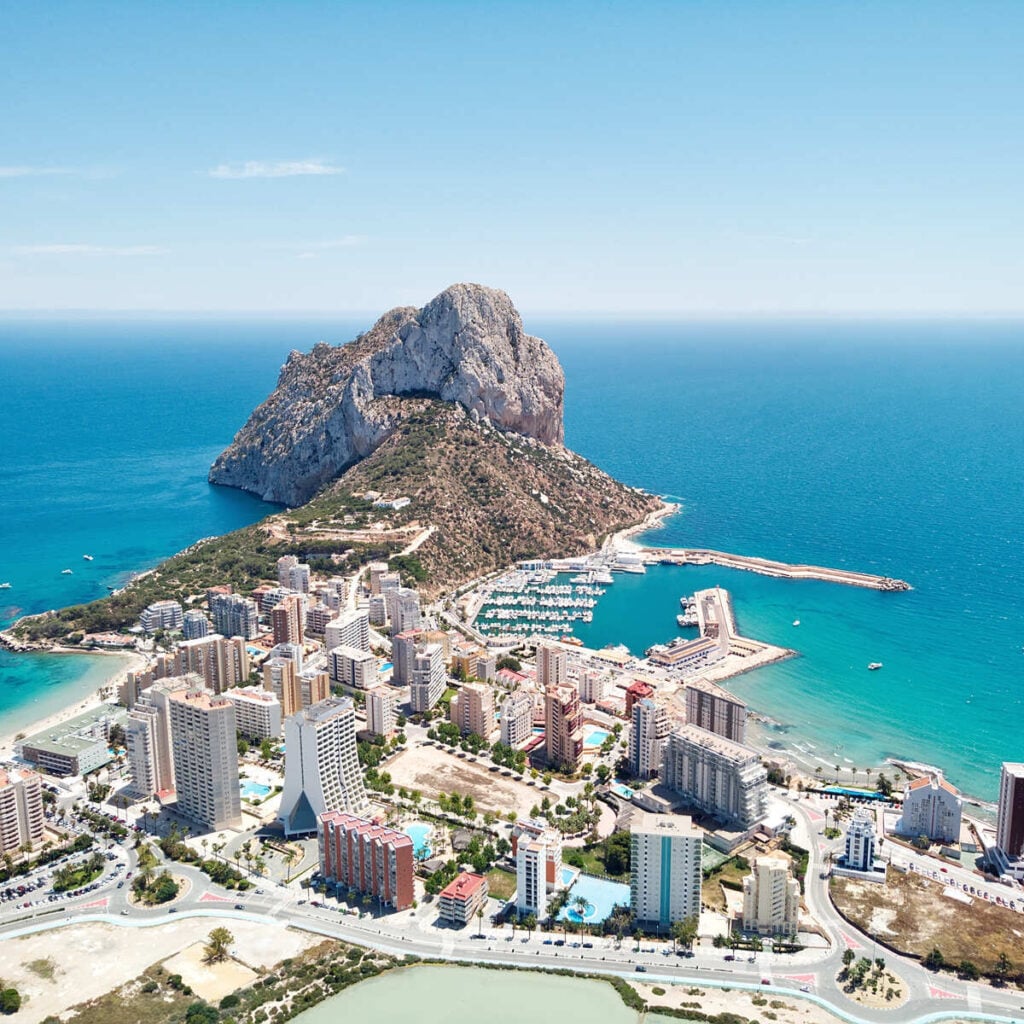
Let’s just say the ‘Warm Coast’ (without a readily available AC unit) is the last place you want to be in summer, where temps range from 86°F to 95°F.
315 sunny days every year, sandy beaches running for miles on end, and laid-back coastal towns that are significantly less crowded than your average German-frequented Spanish tourist dump. What’s not to like?
Oh, have we mentioned the average price of a vacation per person is a shockingly-cheap $604 per person?
You can spend an entire week beach-hopping and jumping from one tapas bar to the next around Costa Cálida, and it won’t make a noticeable dent in your savings account. TravelSupermarket reports it, Reddit reports it, and we here at Travel Off Path can vouch for both.
Still, the question remains: where to go in Costa Cálida for the absolute best sun-soaked, off-the-beaten-path Spanish getaway?
Cartagena


The cultural centerpiece of the ‘Warm Coast’, Cartagena—as in the original one, not the Colombian offshoot—is a hidden treasure of the Mediterran boasting serene beaches, gorgeous architecture, and a fascinating history going back thousands of years.
f you’ve lost your sense of wonder in Rome, get ready to fall head over heels again in Cartagena, where ancient charm is everywhere you look.
From the Roman Theater, a 1st‑century marvel that’s still largely intact, to the remains of Augustus’ Temple, dedicated to the namesake emperor, and even remnants of an old forum district scattered along the Old Town’s main artery, Cartagena is a full‑on open‑air museum.


The city is also dotted with early 20th‑century Art Nouveau gems, perfect for wandering and snapping pics, and though not as famous as other Spanish beach hotspots, it has a string of lovely beaches.
Playa de Cala Cortina is the clear highlight here:
A tiny protected cove, it has the golden sand, rugged cliffs, and clear waters to go with it. Worried about the potential budget setbacks? No need to, babes: a casual restaurant meal here will run you from about $14 to $16 USD per person, while an above‑decent downtown room averages around $70.
Check out Hotel Los Habaneros.
La Manga
Perhaps the prime beach destination on this coast, La Manga (del Mar Menor) is basically the Spanish Miami.


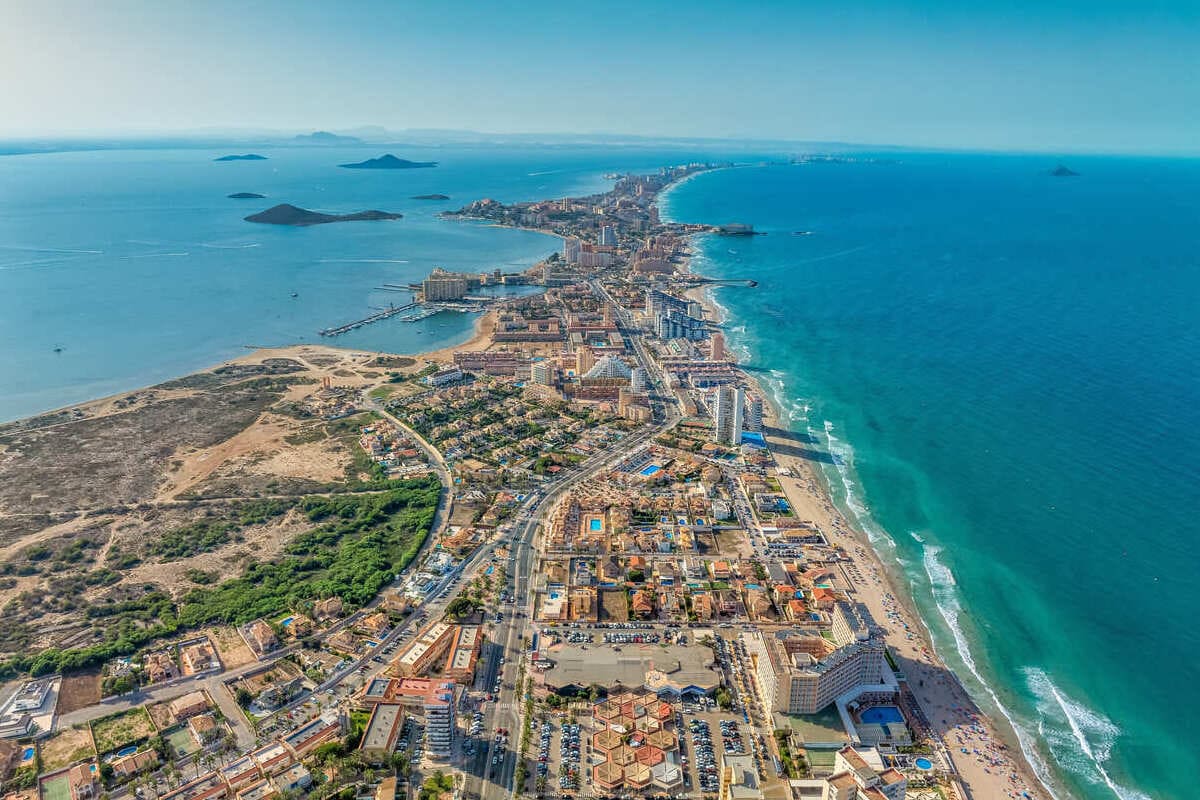
We’re talking a long skinny trip of land, about 13 miles long, fringed by golden-sand beaches and wedged between the open Mediterranean Sea, and the ‘Minor Sea’, or Mar Menor, an (actually-huge) salty lagoon filled with warm, shallow waters.
Bear in mind, this is no deeply-historic, Old World Spain:
Think high-rise apartment towers, long beach promenades interspersed with trendy beach clubs, and that overall Brit-coded ‘holibobs’ vibe… only a little more exclusive.
If a Benidorm moment is all you seek, minus the big-for-no-reason, beer-buff, gammon-faced Toms and Gemmas from Surrey, La Manga is right up your alley.


Plus, the fact you can cruise from one sea to another in only 10 minutes is a major draw.
That alone makes it pretty unique in Europe.
Speaking of Benidorm-priced getaways, La Manga is packed-full of eateries dishing out casual Spanish tapas bar fare from as cheap as $12. Looking for that 4-star seafront room with a view? That will run you up only $79-a-night over at Hotel Los Delfines.
Águilas
Sort of underrated as hell, Águilas is Costa Cálida’s picture-perfect beach town that still feels authentically Spanish.

Let’s face it, as much as places like La Manga will appeal to families, that’s just a faceless resort strip catering to Northern Europeans.
In other words, it has a more year-round local life, and none of the condo strips. The Old Town is anchored by a monumental castle, perched on a high hill overlooking the Mediterranean, and the quaint marina has that fishing village feel.
Yes, it’s coastal, and yes, there are stunning beaches nearby—a shocking amount of them for a town so small and unassuming—but those gorgeous cream, offwhite low-rise townhouses, palm-lined streets and plazas, and little cafés straddling the harbor have not been (fully) overtaken by foreign guests.
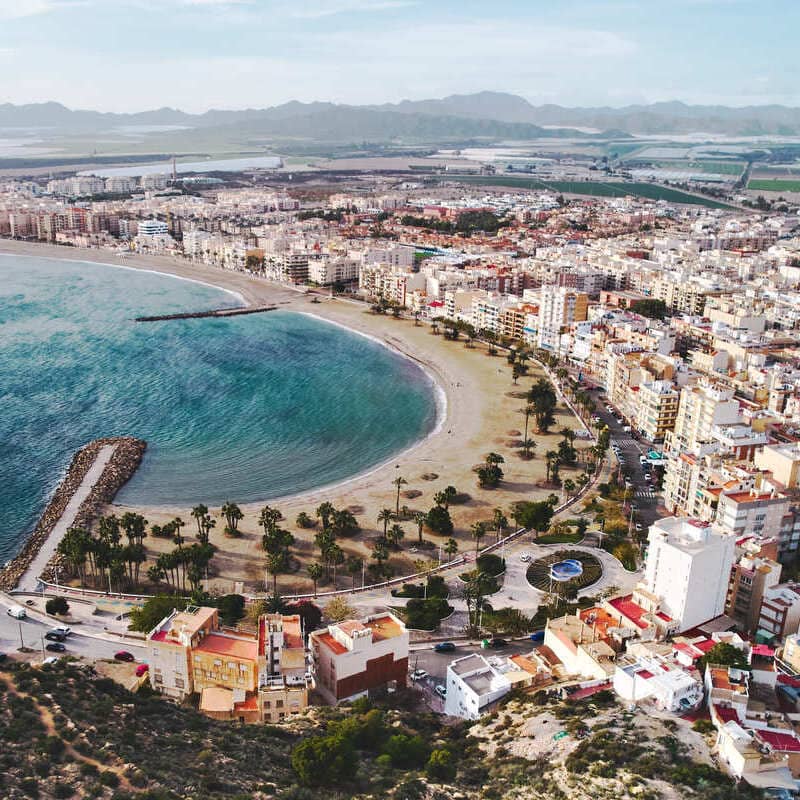
In sum, Águilas is that proper, semi-desert Mediterranean hub backed by rocky headlands, dry hills, and secret coves bathed by turquoise seas.
There are both smaller coves within short walking distance of town, and wider, open beaches a longer walk along the coast.
For that casual, budget meal on a sunny day out in Águilas, El Pimiento is that cheap, solid local tavern. Good value ($11–21), delicious seafood, and a lively local vibe.
Staying in town overnight? Private rooms in Pension Ramonetero start from only $55.
Mazarrón
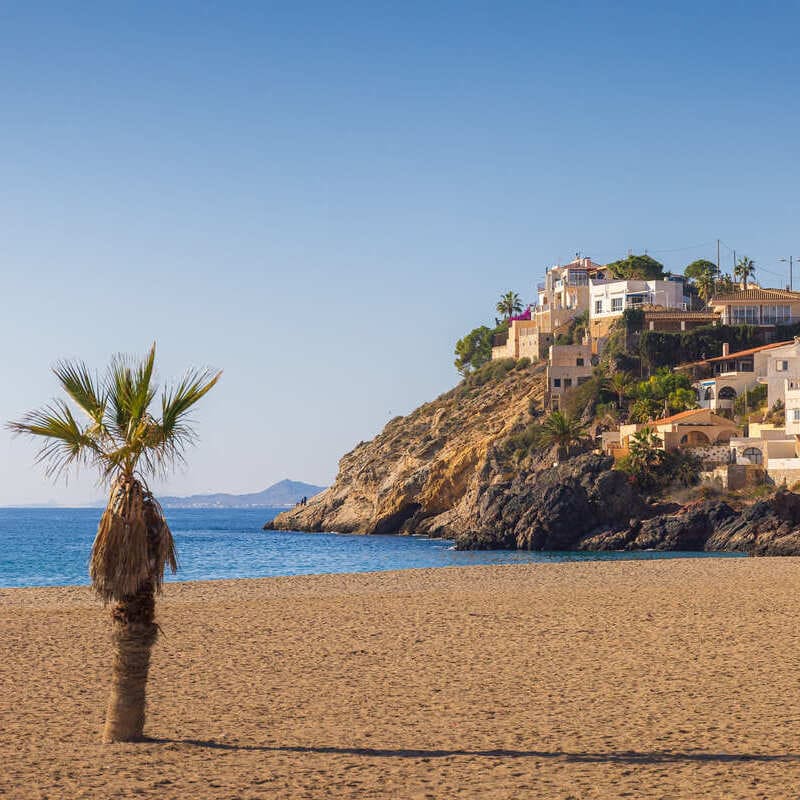
Last but most-definitely not least, Mazarrón is just as special because, similarly to Águilas, it has that less-polished, more-rugged, low-key vibe that’s great for some uncompromised beach-hopping, and soaking up the coastal sun without the hefty Marbella price tags.
For starters, there are 2 ‘Mazarróns’. The first one is an inland ‘main town’, where most of the locals are based and civic life is centered. The second is the ‘Puerto’, the beach/coastal stretch that tourists care about.
Mazarrón is great if you’re looking to unwind, and leaving your bags unpacked for a while in a typically-Spanish municipality a short drive away from the beach, but if you’d prefer being in the center of the action, Puerto de Mazarrón is where it’s at.
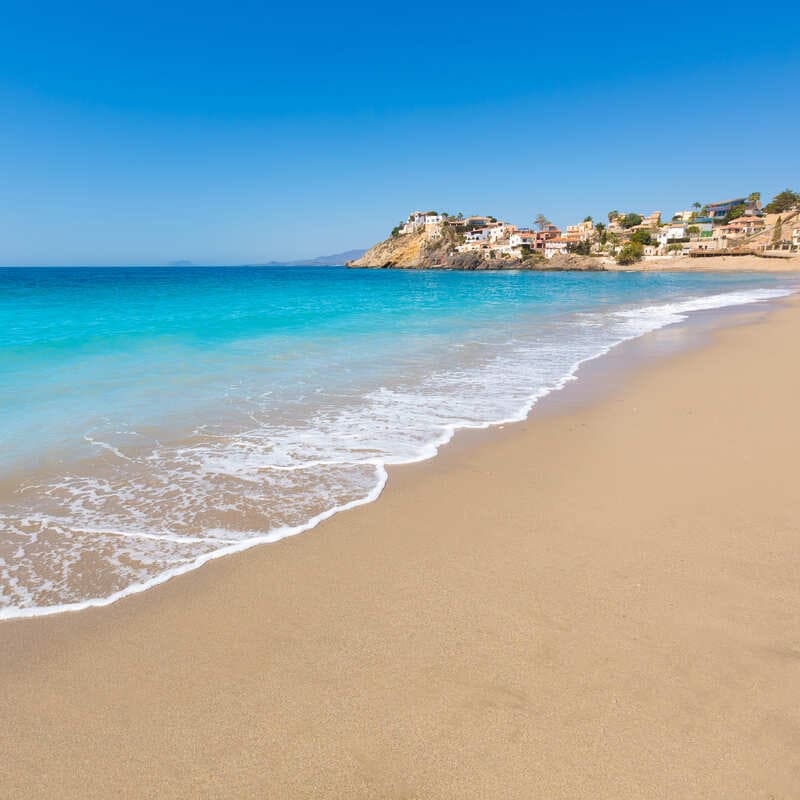
The coastline is truly the main flex. It’s long, varied, and largely-unspoiled:
Long sandy strips, smaller coves tucked between small coastal cliffs, rocky sections, and Mediterranean marine life—it just covers all bases and then some.
On top of that, it has less of those unappealing modernist high-rises and resort-zone weirdness.
It’s still pretty touristy, sure, but in a way, it’s that normal Spanish coastal life you’ll find here, as opposed to the Britified, built-to-impress, glossed-up alternative. Marbella, we’re looking at you.
You just can’t beat local seafood spots that feel like the real deal, and won’t make your wallet bleed dry, a laid-back marina atmosphere, and beachfront hotels from a practically-negligible $66 for 2 (Dos Playas – 30º hotels).
Spain Travel Rules Are Changing This Year


Now you know Costa Cálida is dirt-cheap by most Mediterranean and Caribbean standards, but how prepared are you to fly to Spain in the midst of all upcoming tighter entry requirements?
No idea what we’re on about?
Perhaps you’ve been living under a rock for the past 3 or 4 years, but Europe, and this includes our darling Eh-paña, will be soon introducing mandatory fingerprinting for American visitors, from as early as this summer.
The rollout will be gradual, and you may even be exempt if you’re flying to non-affected airports during the season, but wait until you hear that, from later this year, not only will fingerprinting be enforced across all EU entry points, you will no longer be able to travel to the Old Continent unless you obtain authorization in advance.


You read that right.
Yep, things are changing, and changing fast, amigo.
But wait, don’t fret: before you spill out all your travel concerns to ChatGPT, you should know we’ve built a human-reviewed, U.S. Department of State-powered Traveler Dashboard that tells you everything you need to know about your destination within seconds.
No AI hallucinations, no half-truths, no BS. For those going to Spain in the near future, this is the tool to use to stay up to date with changing entry regulations, ETAs, and even safety.
The best part? It’s free to use. Think of it as a gift from us, to you—because we know all too well how navigating an increasingly-complex world, marred by crazy visa rules and travel restrictions.