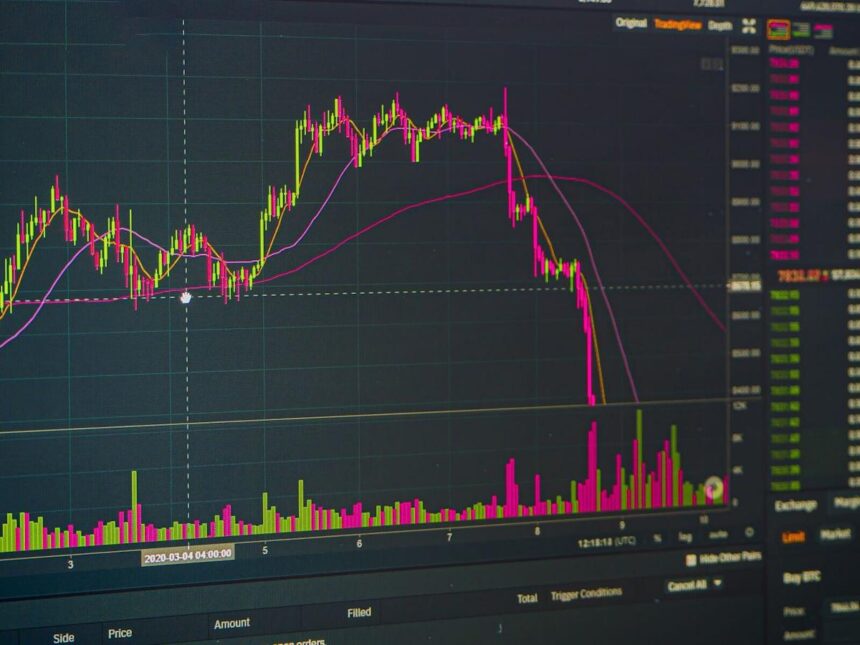
Markets feel unstable right now. Prices are reacting sharply to relatively small pieces of information. A smallish earnings miss leads to a selloff that feels disproportionate. A decent result sparks a rally that fades just as quickly. Investors look at the tape and reach for the same explanation. Volatility.
But volatility isn’t the story. It’s the symptom. What’s happening is repricing. And that distinction matters, because it changes how you interpret what you’re seeing and how you position what comes next. The market today is resting on three fragile pillars, and most investors are still approaching it as if the situation were a normal cycle. It isn’t. That mismatch is what is creating the friction people are feeling. Start with expectations.
For years, markets rewarded consistency and, increasingly, perfection. Models were built on assumptions of steady growth, expanding margins, and clean execution. Over time, those assumptions stopped feeling optimistic and started feeling standard. Investors started to view peak performance as a sustainable achievement. It rarely is.
Most businesses do not maintain peak margins indefinitely. Growth is never linear for long. But expectations were set as if both were normal. When those expectations begin to break, prices do not adjust gradually. They reset. That reset is what investors are experiencing. It feels like volatility because the move is sharp and uncomfortable. It is the market correcting assumptions that should not have been embedded in the first place.
Layer on ownership, and the moves start to make more sense. The composition of the market has changed materially. More capital today is short-term, more of it is leveraged, and a significant portion is structurally forced to act. When positioning becomes crowded, new information no longer solely drives price. It is driven by how that information interacts with positioning.
A small disappointment doesn’t just alter a valuation model. It triggers selling from participants who need to reduce exposure quickly. That selling cascades because others are positioned similarly. The move looks disproportionate, but it isn’t. The positioning was. This is where many investors misread the environment. They interpret sharp moves as evidence that the market is becoming irrational. The market is behaving exactly as it should when ownership is misaligned and capital is forced to move.
The third area is less visible but more important. A structural shift in the economy is underway, and it has not yet been fully priced. For much of the past decade, capital-light, high-margin businesses dominated market leadership. Investors paid for scalability, predictability, and the ability to grow without heavy reinvestment. Multiples expanded because the underlying assumption was that these characteristics would persist. That assumption is now being tested.
Artificial intelligence is often framed as an accelerant for these businesses, but in many cases, it is beginning to compress advantage rather than expand it. What was once differentiated is becoming easier to replicate. Margins that looked solid are starting to look a lot more vulnerable. At the same time, a quieter re-rating is taking place elsewhere. High capital-intensive businesses tied to infrastructure, energy, and supply chains are being analyzed, reassessed, and revaluated. These were not broken businesses. This is where to look as an investor. They were simply out of favor in a market that preferred asset-light growth. As conditions shift, they are being priced differently. This is not rotation driven by sentiment. It is a repricing driven by reality.
Everyone Is Talking About Volatility. That’s Not The Story.