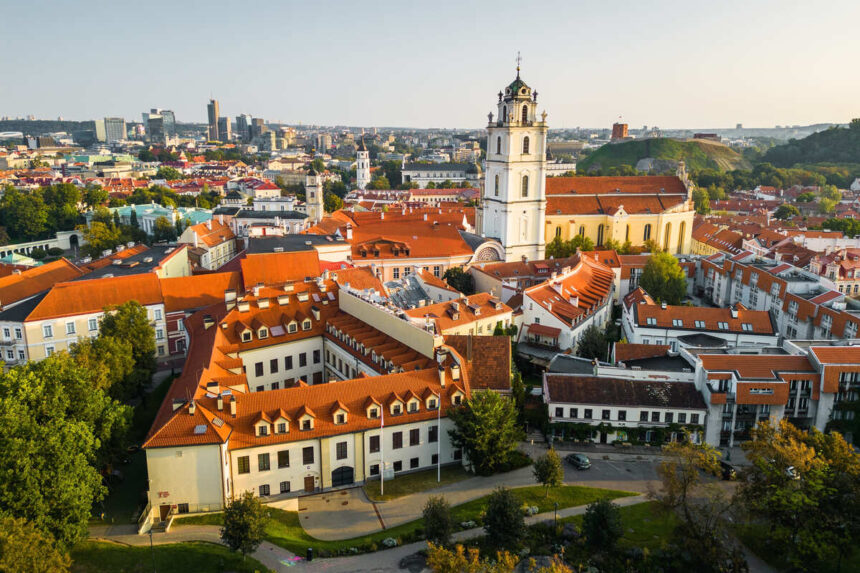
Enough with your Londons, Madrids, and Parises of the world: this year, it’s time for the lesser-known European capitals to step into the limelight.
The administrative hub and cultural heart of Lithuania, a small state in northeastern Europe, roughly the size of West Virginia, Vilnius hosted 1.5 million tourists in 2025. That might not sound like a lot, but that equals about 51.7% of the country’s entire population.
Plus, that’s a 4.4% rise compared to the preceding year.
Most visitors are deliberately coming to Vilnius, rather than merely passing through on their way to other Baltic states or Scandinavia, and a majority have good things to say about it:
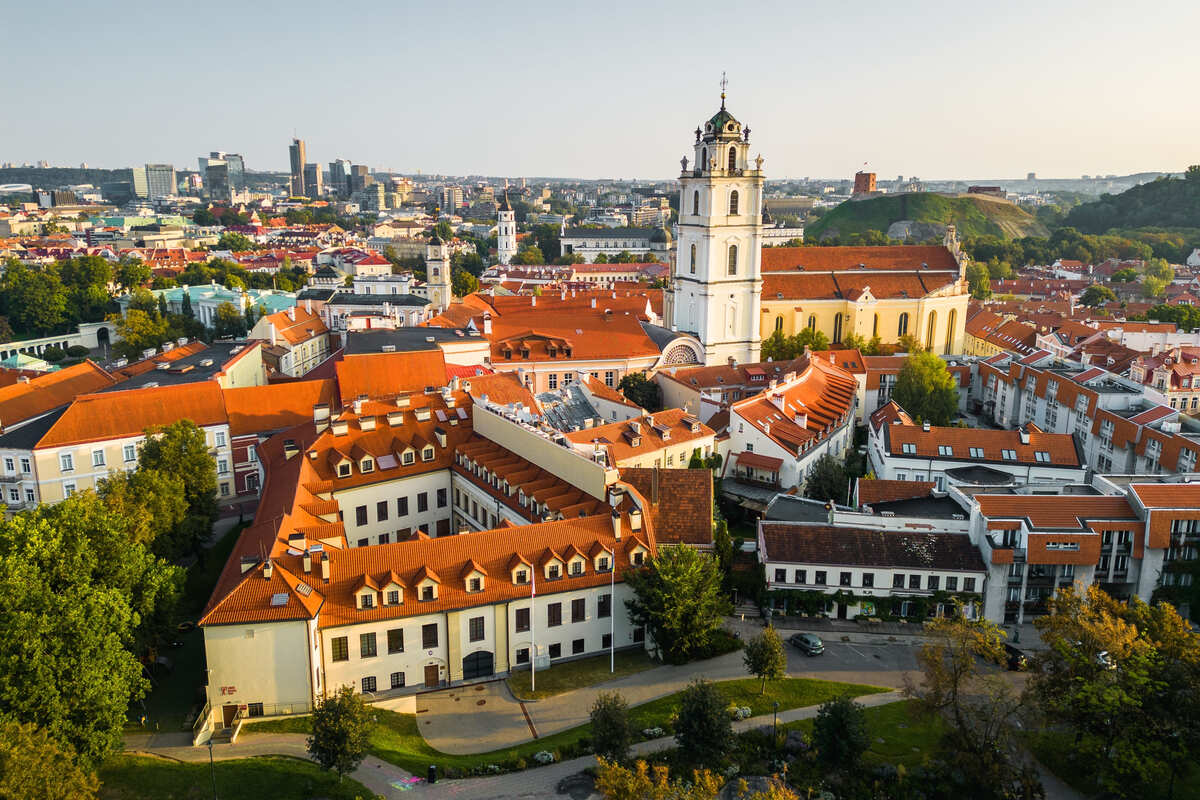
Why Tourists Are Obsessed With This Small Baltic Capital
According to the State Data Agency and a study published by Lithuania Travel, 77% of foreign visitors said Lithuania was their main travel destination. In other words, they went out of their way to visit, with a whopping 90% reporting an overall positive experience.
Needless to say, unless they’re coming from neighboring Baltic states for their yearly sauna break in Druskininkai, a majority will be headed straight for Vilnius.
Given how gorgeous it is, not to mention culturally-rich and affordable, we can’t say we’re surprised.
Vilnius boasts one of the largest medieval centers in Europe, perfectly preserved with historic townhouses and café terraces spilling onto narrow cobbled streets, ornate 15th-century churches with a Baroque façade, and, of course, the must-have hilltop castle.


It’s a UNESCO World Heritage Site covering 352 hectares, and there’s plenty of Old World wonders to explore around it:
Medieval Treasures Galore
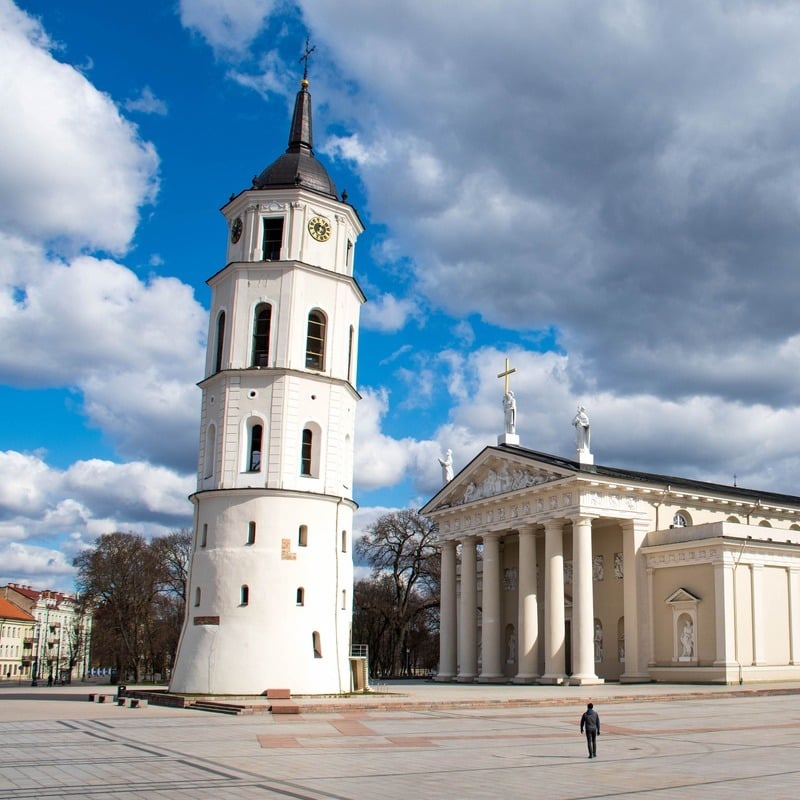
The ceremonial heart of Vilnius has to be Cathedral Square, flanked by a soaring neoclassical cathedral and a freestanding bell tower.
The cathedral itself isn’t the most impressive you’ll ever see, if we’re being quite honest: it’s quite bare, devoid of your usual carved woodwork and gold-clad altarpieces, if you know what we mean, but its quiet grandeur just pulls you in somehow.
Right next to it, the Palace of the Grand Dukes of Lithuania is a surviving remnant of the largest state medieval Europe has known: the Polish-Lithuanian Commonwealth, which would later be dissolved into at least four different countries.

If you only have time for one museum visit, you should make it this one. Lithuania’s sort of fallen back into anonymity on the European stage, at least as far as tourism is concerned, but there’s nowhere better to get a grasp of its glorious past as a European powerhouse than the palace.
Occupying the hill behind the square, Gediminas Tower is the visually striking red fort you see in the pictures. It’s the last-surviving bit of a once-imposing Vilnius Castle, and it’s free to visit.
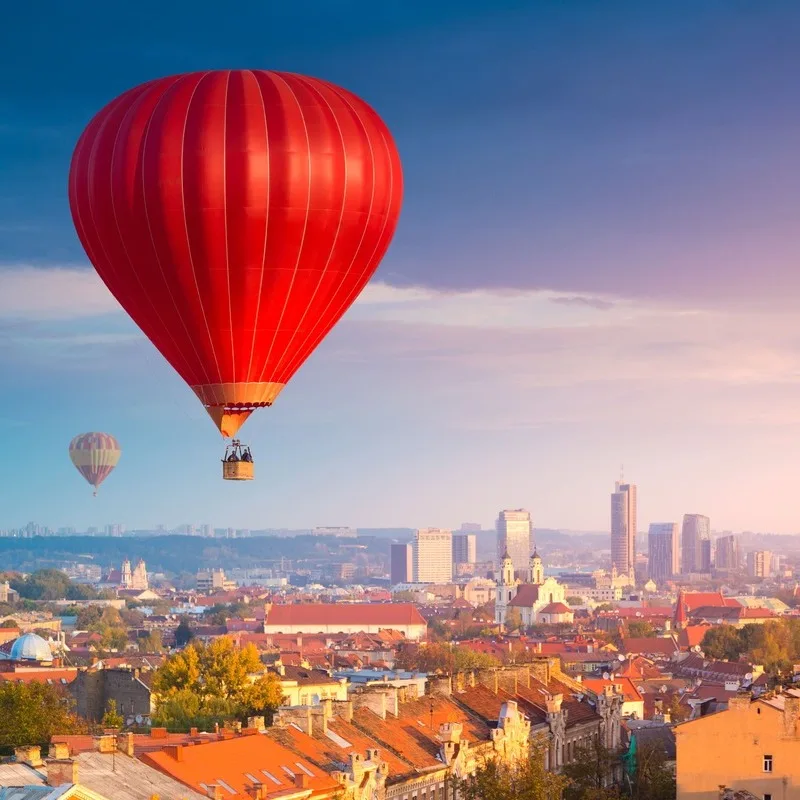
To get there, you can either walk up the hill—10-15 mins—or take the little funicular (approx. $3 one-way and $5 return). The view from the castle is definitely something you don’t want to miss, particularly at sunset, and if it’s hot-air balloon season.
Yep, who needs Capadoccia? Vilnius puts on its own show of colorful striped balloons in the fall.

But wait. That’s merely the tip of the iceberg.
Where Vilnius Truly Comes Alive
Town Hall Square is the main event here: a busy square bordered by coffee shops and beautiful end-of-century buildings, perfect for people-watching and grabbing a cup of coffee before you set off on your sightseeing adventure.
Pilies Street, cutting through the Old Town like a throbbing vein, is the classic Vilnius postcard: paved with cobblestones and full of shops and traditional eateries.
Speaking of which, local favorite Bernelių Užeiga tends to get the best word-of-mouth for traditional cepelinai (Lithuania’s signature zeppelin-shaped dumplings), and it’s right on Pilies.


Furthermore, don’t miss out on the Church of Sts. Peter and Paul, arguably the most ornate in Vilnius. The interior is truly insane, with over 2,000 white stucco figures.
On the southern edge of town, the Gate of Dawn is a landmark pale-blue 16th-century gateway into the old city, topped with a small, sacred chapel, housing an icon of the Virgin Mary.
An Artist’s Republic In The Heart Of The Old Town
The coolest thing about Vilnius by a mile is not any of its historic churches, nor centuries-old fortifications. Ever heard of the Republic of Užupis?
A quirky, bohemian district inside Vilnius Old Town, it mockingly declared its independence from Lithuania in 1997, on April Fools’ Day.
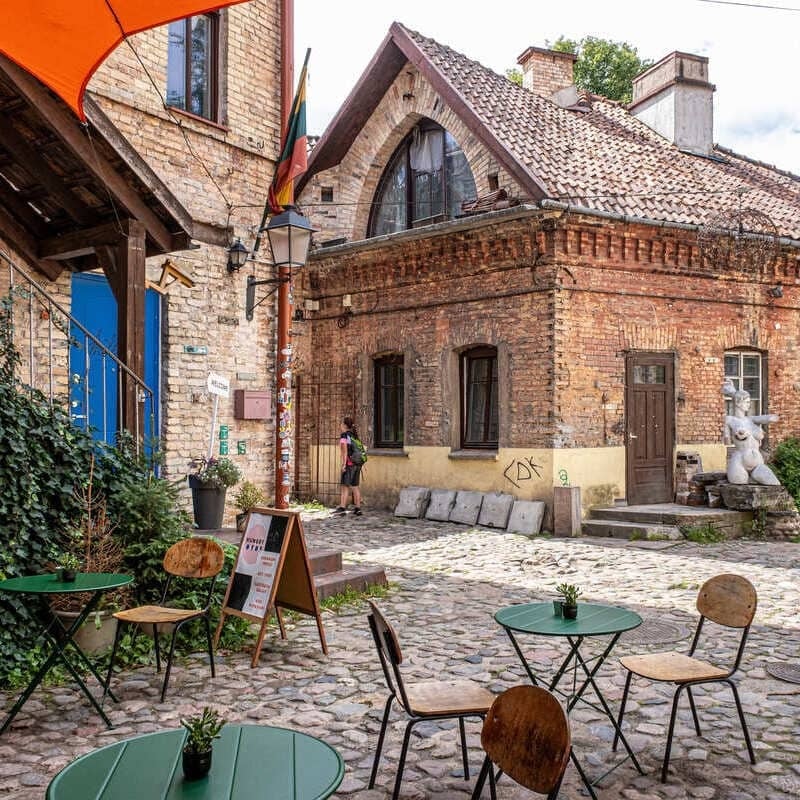
No one knows whether they were being serious or just taking the piss. Either way, the 7,000-people-strong community has a high degree of local autonomy, its own drafted constitution, with some crazy, outlandish laws governing daily life like:
- Everyone has the right to be happy
- Everyone has the right to be unhappy
- Everyone has the right to be lazy
- Everyone has the right to die
- People have the right to have no rights
- A cat is not obliged to love its owner, but must help in times of need
- A dog has the right to be a dog
If you’re looking for fun on a Friday night, a quirky kerbside pub in Užupis slinging $4 pints of draught beer is where you go.
Explore Lithuania Beyond The Capital
That’s Where The Real Hidden Gems Are


Vilnius is also a great hub for exploring the wider Lithuania.
A short 17 miles out of town, Trakai is a timeless Lithuanian village with chalet-style wooden abodes and an iconic red-brick castle on an islet, in a serene, mirror-like lake. It’s easily one of Europe’s most picturesque scenes.
There are multiple bus lines and trains linking Vilnius to the village, with the journey taking around 40 minutes, and tickets costing around $5, or the equivalent in euros, which is the local currency.
Kaunas, Lithuania’s second-largest city, is an equally-feasible 1.5 hour train ride away. It’s a completely different vibe from Trakai, with interwar modernist architecture, lingering Soviet heritage, and charming streetside cafés.
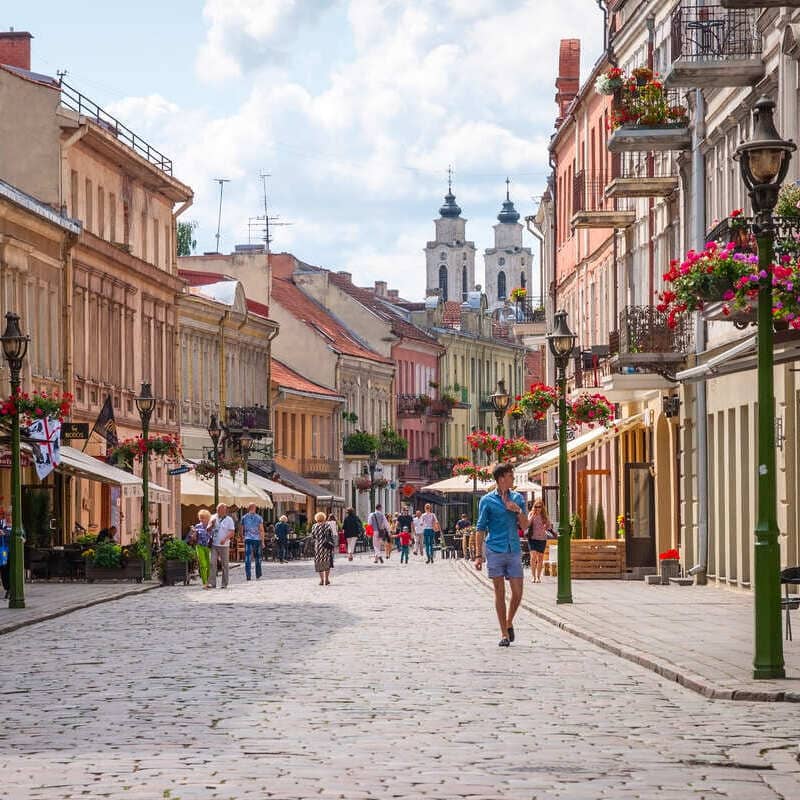
Druskininkai (some 2 hours away) is home to the nation’s beloved Aqua Park, and a plethora of sanatorium-style spa resorts offering mineral water treatments. In winter, it also hosts the Snow Arena, a popular hotspot for indoor skiing.
For the nature enthusiasts, Neris Regional Park, a mere half-hour drive outside of Vilnius, is great for hiking, river views, and forest exploration. It’s perfect if you fancy a nature escape to counterbalance the capital’s urban vibe, without attempting a long travel day.
Vilnius Is Super Safe
On top of the incredible culture, Vilnius is one of the safest European capitals out there.


No pickpockets in sight, at least not that we’ve noticed, and certainly no terrorist threats. You see, Lithuania handles its border situation a little differently than most of its European Union partners.
The country is officially a Level 1 destination, as ruled by the U.S. Department of State.
In non-technical terms, this simply means Americans are free to visit without taking extra precautions, and if you check the current safety status on our own Traveler Dashboard, informed by both U.S. authorities and live traveler reports, it’s a perfectly-stable 85:
We’re not saying let your guard down fully, or leave your bag unattended in a restaurant terrace trusting the odd, ill-intentioned passerby just won’t grab it, but we are saying this is far, far less likely to happen here than, say, Barcelona or Paris.
Violent crime affecting tourists? Practically unheard-of.
In fact, compared to your average European city break, Vilnius is basically risk-free.
All things considered, it’s no surprise Lithuania is all the rage right now.